

Broken Friendships? How to Give ‘Tough Love’ Advice in Korean like a Local
Introduction
Hello, it’s Daily Hangul!
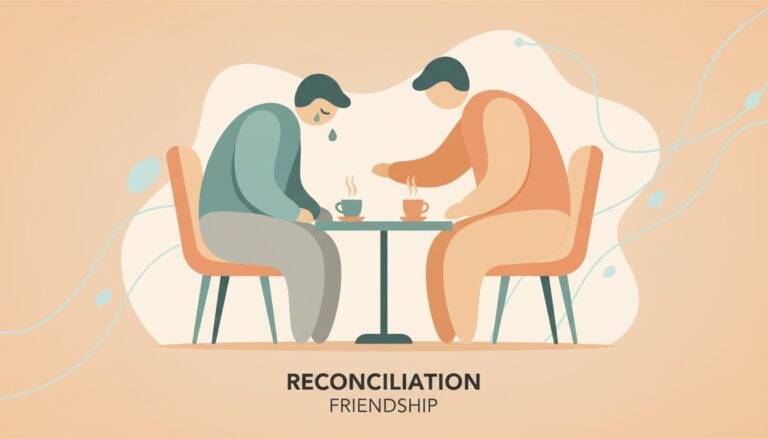
Have you ever seen a friend worrying about a mistake they made? Maybe they had a fight with their partner or sent a rude text by accident, and now they are just freezing up, afraid to fix it.
In these moments, you want to be a supportive friend. You want to say, “Hey, better late than never. Go fix it.”
Case Study (Composite Example):
Many of our learners, especially those living in shared houses in Seoul or working in diverse teams, report a common pattern. They see a Korean friend sulking or stressing over a conflict but don’t know how to intervene without sounding bossy. One learner, “Alex,” mentioned he just said “Go apologize!” (가서 사과해!) and his friend felt hurt because it sounded like a command, not advice.
Textbooks often teach commands, but real relationships run on suggestions and nudges. Today, we will learn how to give soft but firm advice to a friend who needs a push.
At a Glance: Today’s Summary
- Core Expressions: 3 phrases to suggest action softly.
- Safety Level: Casual to Polite (Friends, Close Colleagues).
- Difficulty: B1 (Intermediate) – Crucial for moving from “surviving” to “deepening relationships.”
Table of Contents
- Today’s Key Expressions Deep Dive
- Textbook vs. Real Korean
- Unique Analysis: The “Tone Thermometer”
- Real-Life Role Play
- Shadowing Challenge
- FAQ
- Wrap-up & Quiz
Today’s Key Expressions Deep Dive
Here are the three most natural ways to advise a friend in Korea.
1. 지금이라도 사과하는 게 좋겠어
(Jigeumirado sagwahaneun ge jokesseo)
- Meaning: You should apologize even now / It would be good to apologize even at this late hour.
- Usage & Register:
- Who: To a friend or a close junior (using Panmal/Casual).
- Vibe: Serious, sincere advice.
- Tutor’s Secret Note:
- The grammar
~는 게 좋겠어(~neun ge jokesseo) is the gold standard for advice. It literally means “Doing X would be good.” It shifts the focus from “I order you” to “The situation will improve if you do this.” - Warning: Do not use this to your boss! It implies you know better than they do.
- The grammar
- Pronunciation Clinic:
- 지금이라도: Link the ‘m’ sound -> [Jigeumirado]
- 좋겠어: The ‘h’ (ㅎ) is silent or weak, and ‘k’ becomes strong -> [Jokesso]
- Examples:
- Friend: 지금이라도 사과하는 게 좋겠어. (Jigeumirado sagwahaneun ge jokesseo) – You should apologize even now.
- Health: 지금이라도 병원에 가는 게 좋겠어. (Jigeumirado byeongwone ganeun ge jokesseo) – You should go to the hospital even now.
- Study: 지금이라도 시작하는 게 좋겠어. (Jigeumirado sijakhaneun ge jokesseo) – You should start even now.
- Mini Quiz:
- “It would be good to call him even now.” -> 지금이라도 [_______] 게 좋겠어.
-
Click to see answer
전화하는 (jeonhwahaneun)
2. 솔직하게 말해 봐
(Soljikhage malhae bwa)
- Meaning: Try telling the truth / Try speaking honestly.
- Usage & Register:
- Who: Close friends.
- Structure:
Verb stem + 아/어 봐means “Try doing X.”
- Tutor’s Secret Note:
- Koreans value “nunchi” (sensing the mood), but sometimes being
솔직하게(honestly) is the only cure. This phrase encourages courage.
- Koreans value “nunchi” (sensing the mood), but sometimes being
- Pronunciation Clinic:
- 말해: The ‘h’ acts strongly here but blends -> [Mal-hae]
- Examples:
- Conflict: 그냥 솔직하게 말해 봐. (Geunyang soljikhage malhae bwa) – Just try telling the truth.
- Shopping: 이거 입어 봐. (Igeo ibeo bwa) – Try this on.
- Food: 이거 먹어 봐. (Igeo meogeo bwa) – Try eating this.
3. 더 늦기 전에
(Deo neutgi jeone)
- Meaning: Before it gets any later / Before it’s too late.
- Usage: Usually added at the beginning or end of advice to add urgency.
- Pronunciation Clinic:
- 늦기: The bottom ‘ㅈ’ sounds like a ‘t’ or ‘d’ stop, and tenses the next sound -> [Neut-kki]
- Examples:
- 더 늦기 전에 연락해. (Deo neutgi jeone yeollakae) – Call them before it gets too late.
- 더 늦기 전에 예약하자. (Deo neutgi jeone yeyakhaja) – Let’s book it before it’s too late.
- 더 늦기 전에 가서 잡아. (Deo neutgi jeone gaseo jaba) – Go catch him before it’s too late.
Textbook vs. Real Korean
How do actual Koreans soften their advice compared to stiff textbook phrases?
| Context | Textbook / Formal | Real Korean (Daily Life) |
|---|---|---|
| Advising | 사과하십시오. (Sagwahasipsio) Please apologize. (Too military/robotic) |
사과하는 게 어때? (Sagwahaneun ge eottae?) How about apologizing? |
| Urgency | 즉시 행동해야 합니다. (Jeuksi haengdonghaeya hamnida) You must act immediately. |
지금 아니면 안 돼. (Jigeum animyeon an dwae) It’s now or never. |
Situation Checklist:
* Official Meeting: Use ~하셔야 합니다 (You must/should do…).
* Cafe with Friend: Use ~는 게 좋겠어 (It would be good to…) or ~는 건 어때? (How about…?).
Deep Analysis: The “Advice Tone Thermometer”
In Korean, the ending of your sentence changes the “temperature” of your advice. Let’s see how “Do it” changes.
| Level | Expression | Nuance | Temperature |
|---|---|---|---|
| 1 (Hot) | 해! / 하라고! (Hae! / Harago!) | “Do it!” (Command, can be aggressive) | 🔥 Command |
| 2 (Warm) | 하는 게 좋겠어 (Haneun ge jokesseo) | “It would be good to do it.” (Firm advice) | ☀️ Strong Suggestion |
| 3 (Mild) | 하는 건 어때? (Haneun geon eottae?) | “How about doing it?” (Soft suggestion) | 🌤️ Option |
| 4 (Cool) | 나 같으면 할 거야 (Na gateumyeon hal geoya) | “If it were me, I would do it.” (Indirect) | ☁️ Personal Opinion |
Tip: If you are unsure, stay at Level 3 (Mild). It is the safest way to give advice without offending anyone.
Real-Life Scenario Role Play
Setting: A quiet corner in a coffee shop. Min-su looks depressed because he argued with his girlfriend, Yuna, yesterday.
Characters:
* Min-su: Korean friend (Depressed)
* Alex: You (The wise friend)
Dialogue:
(Min-su sighs deeply)
Min-su: 아… 어제 유나랑 싸우고 아직 연락 못 했어. 어떡하지?
(Ah… eoje Yunarang ssaugo ajik yeollak mot haesseo. Eotteokhaji?)
Ah… I fought with Yuna yesterday and haven’t contacted her yet. What should I do?
Alex: 정말? 더 늦기 전에 연락하는 게 좋지 않을까?
(Jeongmal? Deo neutgi jeone yeollakhaneun ge jochi aneulkka?)
Really? Wouldn’t it be better to contact her before it gets too late?
Min-su: 근데 내가 먼저 사과하면 자존심 상하잖아.
(Geunde naega meonjeo sagwahamyeon jajonsim sanghajana.)
But if I apologize first, it hurts my pride.
Alex: 야, 자존심이 뭐가 중요해? 지금이라도 사과하는 게 좋겠어.
(Ya, jajonsimi mwoga jungyohae? Jigeumirado sagwahaneun ge jokesseo.)
*Hey, what does pride matter? It would be better to apologize even now.
Min-su: 그런가? 받아줄까?
(Geureonga? Badajulkka?)
You think? Will she accept it?
Alex: 응. 솔직하게 말해 봐. 진심은 통할 거야.
(Eung. Soljikhage malhae bwa. Jinsimeun tonghal geoya.)
Yeah. Try telling the truth. Sincerity will get through.
Manner Tip:
Notice Alex uses 야 (Hey) at the start of the sentence. This is very common between close friends to grab attention or emphasize a point, but never use it with people older than you or strangers!
Shadowing Challenge
Let’s practice the “Wise Friend” vibe. Repeat this 3 times to lock it into your muscle memory.
Script:
“Don’t worry too much. It’s better to fix it now than regret it later.”
Korean:
너무 걱정하지 마. 나중에 후회하는 것보다 지금 해결하는 게 좋아.
Romanization:
Neomu geokjeonghaji ma. Najunge huhoehaneun geotboda jigeum haegyeolhaneun ge joa.
Checklist:
* [ ] 1st Try (Slowly, checking pronunciation)
* [ ] 2nd Try (Normal speed)
* [ ] 3rd Try (With emotion, like you really care)
FAQ (Frequently Asked Questions)
Q1: Can I use “~는 게 좋겠어” to my boss or teacher?
A: Generally, no. It implies you are giving them direction. For a boss, it is better to ask as a question: “~하는 건 어떨까요?” (How about doing X…?) or “~하는 것이 좋을 것 같습니다” (It seems it would be good to do X…).
Q2: What if I want to be stronger? Like “You MUST do it!”
A: You can use ~해야 돼 (You have to…). Example: “지금 사과해야 돼.” (Jigeum sagwahaeya dwae). This is very direct, so only use it if the situation is critical.
Q3: How do I say “I told you so” without being mean?
A: Koreans often say “내가 말했잖아” (Naega malhaetjana). Use this carefully! It can be annoying if your friend is already sad.
Wrap-up & Action Item
Summary: Today we learned how to push a hesitating friend using 지금이라도 (even now) and ~는 게 좋겠어 (it’s better to…).
Today’s Mission:
If you are watching a K-Drama (like a romance or office drama), listen for when a character gives advice. Do they use ~해 (Do it!) or ~는 게 좋아 (It’s better to…)? Notice the “Temperature”!
Comment Question:
Have you ever had to apologize in Korean? How did you say it? Share your story below!
Final Quiz
1. Which phrase is the most polite/distant suggestion?
a) 사과해! (Sagwahae!)
b) 사과하는 게 좋겠어. (Sagwahaneun ge jokesseo.)
c) 사과하시는 건 어떨까요? (Sagwahasineun geon eotteolkkayo?)
2. How do you say “Try telling the truth” to a friend?
a) 솔직하게 말해 봐. (Soljikhage malhae bwa.)
b) 솔직하게 말하지 마. (Soljikhage malhaji ma.)
c) 거짓말해 봐. (Geojinmalhae bwa.)
3. Fill in the blank:
“Before it gets too late” = 더 [_______] 전에 (Deo neutgi jeone)
Click to reveal answers
1. c
2. a
3. 늦기 (neutgi)







