

Hello, I’m Daily Hangul!
Welcome back to Daily Hangul! Today, we are stepping into the fast lane of Mobility Innovation.
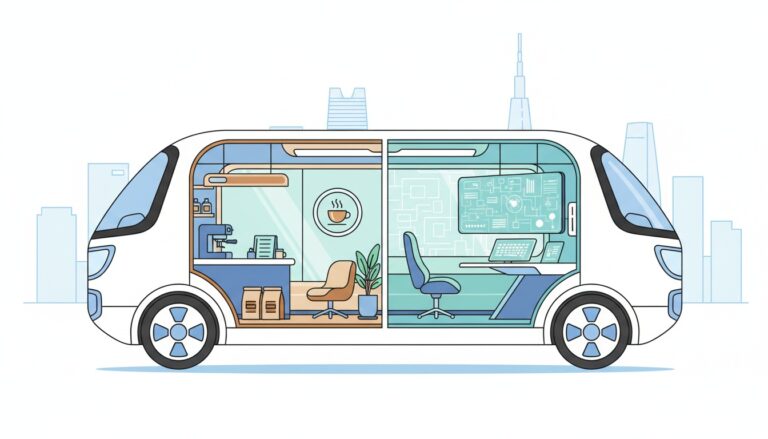
If you’ve visited Korea recently, especially the business districts like Gangnam or Pangyo (Korea’s Silicon Valley), you might have noticed strange-looking, boxy vehicles or heard enthusiastic discussions about the future of transportation. Korea is investing heavily in PBV (Purpose-Built Vehicles).
But how do you discuss this high-tech trend in Korean without sounding like a robot?
📖 Episode: The “Van” Misunderstanding (Synthetic Case)
(Note: This is a synthetic case combining common patterns from foreign professionals working in Korean tech sectors.)
Many foreign engineers or investors visit Korean mobility expos. A common mistake occurs when they refer to these high-tech PBVs simply as “Van” (승합차, Seunghap-cha) or “Truck.” While technically true, it misses the nuance.
One learner, “Alex,” kept asking a Korean partner about the “new van.” The partner looked confused because he saw it as a “Smart Device on wheels,” not just a van for moving boxes. Today, we will learn the specific language to bridge this gap between “just a car” and “future mobility.”
📋 Summary: Today’s Mobility Kit
Here are the 3 key expressions to make you sound like an industry insider.
- 맞춤형 (Machum-hyeong): Customized / Tailored
- 공간 활용 (Gonggan Hwalyong): Space utilization
- 이동 수단 (Idong Sudan): Means of transportation
- Safe Zone: Business meetings, Tech expos, Professional networking.
- Level: C1 (Advanced) – Essential for professional proficiency and discussing trends.
📑 Table of Contents
- Today’s Key Expressions Deep Dive
- Textbook vs. Real Korean
- Nuance Analysis: “Using” vs. “Utilizing”
- Real-World Role Play: At a Mobility Showroom
- Shadowing Challenge
- FAQ
- Wrap-up & Quiz
💡 Today’s Key Expressions Deep Dive
1. 맞춤형 (Machum-hyeong)
- Meaning: Customized / Tailored / Bespoke
- Usage & Register:
- Context: Marketing, Business, Tech features.
- Politeness: Standard formal (해요체 – Haeyo-che) is best.
- Tutor’s Secret Note: Koreans love this word. It implies “care,” “detail,” and “special treatment.” In the context of PBV, it means the car isn’t mass-produced for everyone, but tailored for a specific purpose (like a mobile hospital or a delivery hub).
- Pronunciation Clinic:
- [마춤형]: The
ㅊis an aspirated sound (strong ‘ch’). Linking happens naturally.
- [마춤형]: The
- Examples:
- Business: 고객의 니즈에 딱 맞는 맞춤형 솔루션입니다. (Gogaeg-ui nijeu-e ttak manneun machum-hyeong sollusyeon-imnida.) – It is a customized solution that fits the customer’s needs perfectly.
- Mobility: 이 PBV는 식당으로 쓸 수 있는 맞춤형 차량이에요. (I PBV-neun sikdang-euro sseul su inneun machum-hyeong charyang-ieyo.) – This PBV is a customized vehicle that can be used as a restaurant.
- Daily: 저는 맞춤형 정장이 더 편해요. (Jeoneun machum-hyeong jeongjang-i deo pyeonhaeyo.) – I feel more comfortable in a tailored suit.
- Alternatives:
- Casual: 딱 맞는 (Ttak manneun) – Fits perfectly
- Formal: 특수 제작된 (Teuksu jejak-doen) – Specially manufactured
📝 Mini Quiz (Click to see)
Q. “This is a tailored service.” -> 이것은 _____ 서비스입니다.
Answer: 맞춤형 (machum-hyeong)
2. 공간 활용 (Gonggan Hwalyong)
- Meaning: Space utilization / Use of space
- Usage & Register:
- Context: Describing architecture, interior design, and specifically PBV interiors.
- Tutor’s Secret Note: PBVs are all about the space inside, not the driving engine. If you praise a car’s “Gonggan Hwalyong,” you sound like you really understand the concept of future mobility.
- Pronunciation Clinic:
- [공간 화룡]: Be careful with
ㄹin 활용. It rolls slightly.
- [공간 화룡]: Be careful with
- Examples:
- Mobility: PBV의 핵심은 뛰어난 공간 활용이에요. (PBV-ui haeksim-eun ttwieonan gonggan hwalyong-ieyo.) – The core of PBV is excellent space utilization.
- Real Estate: 이 집은 공간 활용이 정말 잘 되어 있네요. (I jip-eun gonggan hwalyong-i jeongmal jal doe-eo inneyo.) – This house utilizes space really well.
- Tech: 자율 주행 덕분에 공간 활용이 자유로워졌어요. (Jayul juhaeng deokbune gonggan hwalyong-i jayurowojyeosseoyo.) – Thanks to autonomous driving, space utilization has become freer.
- Alternatives:
- Simple: 넓은 실내 (Neolbeun silnae) – Spacious interior
- Formal: 공간 효율성 (Gonggan hyoyulseong) – Space efficiency
3. 이동 수단 (Idong Sudan)
- Meaning: Means of transportation / Mode of mobility
- Usage & Register:
- Context: Formal presentations, news, serious discussions about traffic.
- Tutor’s Secret Note: Don’t just say “차 (Cha – Car).” In the era of PBVs and flying taxis (UAM), we use the broader term “I-dong Sudan.” It elevates your vocabulary level instantly.
- Pronunciation Clinic:
- [이동 수단]: Pronounce clearly. Don’t drag the vowels.
- Examples:
- Biz: 미래의 이동 수단은 단순히 움직이는 것 이상입니다. (Mirae-ui idong sudan-eun dansunhi umjigineun geot isang-imnida.) – Future means of transportation is more than just moving.
- Travel: 제주도에서 가장 편한 이동 수단은 렌터카예요. (Jejudo-eseo gajang pyeonhan idong sudan-eun renteoka-yeyo.) – The most convenient means of transport in Jeju Island is a rental car.
- Tech: 새로운 친환경 이동 수단이 필요해요. (Saeroun chinhwan-gyeong idong sudan-ipiryohaeyo.) – We need a new eco-friendly means of transportation.
🆚 Textbook vs. Reality (Mobility Edition)
| Context | Textbook Korean (Book) | Real Korean (Street/Biz) |
|---|---|---|
| Explaining Purpose | 이 차량은 배송 목적으로 제작되었습니다. (This vehicle was manufactured for delivery purposes.) |
이거 완전 배달 전용이에요. (Igeo wanjeon baedal jeonyong-ieyo. – This is totally exclusively for delivery.) |
| Describing Space | 내부 공간이 매우 넓습니다. (The internal space is very wide.) |
안이 완전 운동장이에요. (Ani wanjeon undongjang-ieyo. – The inside is practically a playground/stadium. = It’s huge.) |
⚠️ Checklist:
* Use Textbook phrases in formal presentations.
* Use Real Korean when chatting with colleagues while looking at the car.
🔍 Unique Analysis: Word Nuance
사용하다 (Sayong-hada) vs. 활용하다 (Hwalyong-hada)
Both mean “to use,” but in the mobility tech world, the difference is huge.
| Word | Meaning | Nuance in Mobility |
|---|---|---|
| 사용하다 (Use) | To use a tool simply. | Driving a car to get from A to B. Ex: 차를 사용하다 (Use a car). |
| 활용하다 (Utilize) | To make the most of something; apply it. | Turning the car into an office/cafe. Ex: 차를 사무실로 활용하다 (Utilize the car as an office). |
💡 Pro Tip: When talking about PBVs, always choose 활용하다. It shows you understand the value being added.
🎭 Real Scenarios: Role Play
Situation: At a Mobility Showroom in Seoul. You (Customer) are asking a staff member (Staff) about a new PBV concept model.
Customer: 이 차는 디자인이 특이하네요. 일반 승합차랑 뭐가 달라요?
(I cha-neun dijain-i teukihaneyo. Ilban seunghapcha-rang mwoga dallayo?)
This car has a unique design. How is it different from a regular van?
Staff: 네, 이건 목적 기반 모빌리티, 즉 PBV입니다. 고객의 필요에 따라 맞춤형으로 제작돼요.
(Ne, igeon mokjeok giban mobility, jeuk PBV-imnida. Gogaeg-ui piryo-e ttara machum-hyeong-euro jejak-doeyo.)
Yes, this is a Purpose-Built Vehicle, or PBV. It is customized according to customer needs.
Customer: 아, 그럼 내부를 사무실처럼 쓸 수도 있나요?
(Ah, geureom naebu-reul samusil-cheoreom sseul sudo innayo?)
Ah, then can I use the inside like an office?
Staff: 물론이죠. 공간 활용이 자유로워서 회의실로도 쓸 수 있습니다.
(Mullon-ijyo. Gonggan hwalyong-i jayurowoseo hoe-uisil-rodo sseul su itseumnida.)
Of course. The space utilization is flexible, so you can even use it as a meeting room.
💡 Manner Tip: In business settings (even at a showroom), ending sentences with ~요 (polite) is standard, but mixing in ~입니다 (formal) shows respect for the technology and the staff’s expertise.
🗣️ Shadowing & Speaking Challenge
Script (Repeat 3 times):
“미래에는 자동차가 단순한 이동 수단이 아니라, 생활 공간으로 활용될 거예요.”
(Mirae-eneun jadongcha-ga dansunhan idong sudan-i anira, saenghwal gonggan-euro hwalyong-doel geoyeyo.)
“In the future, cars will not just be simple means of transport, but utilized as living spaces.”
- [ ] 1st Try (Slow)
- [ ] 2nd Try (Normal Speed)
- [ ] 3rd Try (With Emotion/Confidence)
🎤 Pronunciation Point: Connect 이동 수단이 as [이동 수다니] (Idong sudani).
❓ FAQ (Frequently Asked Questions)
Q1: Can I use “맞춤형” for food ordering?
Yes! You can say “맞춤형 식단” (Customized diet plan). But for a simple burger order, just say “~빼 주세요” (Please remove ~).
Q2: How do I say “Self-driving”?
It is 자율 주행 (Jayul Juhaeng). This word often appears with PBV.
* Ex: 자율 주행 택시 (Self-driving taxi).
🎁 Wrap-up & Action Item
One-line Summary: When you see a futuristic van in Korea, don’t just call it a car—admire its 맞춤형 (customized) design and 공간 활용 (space utilization)!
Today’s Mission: Next time you take a taxi or Uber, look at the back seat space. Try to think in Korean: “공간 활용이 좋네” (Space utilization is good) or “좁네” (It’s narrow).
Discussion: What would you turn your PBV into? A mobile cafe? A gaming room? Tell me in the comments!
🧩 Final Quiz
- Which word implies “making the most/best use” of the space?
a) 사용 (Sayong)
b) 활용 (Hwalyong)
c) 소용 (Soyong) -
What is the Korean term for “Customized/Tailored”?
a) 맞춤형 (Machum-hyeong)
b) 일반형 (Ilban-hyeong)
c) 완성형 (Wanseong-hyeong) -
Fill in the blank: PBV stands for Purpose-Built ______ (Vehicle).
Korean: 목적 기반 _______ (Hint: English loanword often used in Korea)
Click for Answers
1. b) 활용 (Hwalyong)
2. a) 맞춤형 (Machum-hyeong)
3. 모빌리티 (Mobility)
Frequently Asked Questions (FAQ)
Q: What does "맞춤형 (Machum-hyeong)" mean in Korean and how do you pronounce it?
A: In Korean, "맞춤형 (Machum-hyeong)" is pronounced [see lesson guide] and means: Customized / Tailored / Bespoke
Q: What does "공간 활용 (Gonggan Hwalyong)" mean in Korean and how do you pronounce it?
A: In Korean, "공간 활용 (Gonggan Hwalyong)" is pronounced [see lesson guide] and means: Space utilization / Use of space
Q: What does "이동 수단 (Idong Sudan)" mean in Korean and how do you pronounce it?
A: In Korean, "이동 수단 (Idong Sudan)" is pronounced [see lesson guide] and means: Means of transportation / Mode of mobility







