

Introduction
Hello, this is Daily Hangul!
Seollal (Lunar New Year), one of Korea’s biggest holidays, is just around the corner. If you are invited to a Korean family gathering or plan to visit close Korean friends, you might feel a mix of excitement and anxiety. specifically about money.
Today’s episode is a composite case based on frequently asked questions from learners like Mark (Canada) and Sarah (UK). They often ask: “Do I really have to give cash to kids? How much? And why is everyone lining up at the bank to get new bills?”
If you give too little, you might look stingy. If you give too much, it’s burdensome. And if you give a crumpled, dirty bill? That’s a cultural faux pas. Textbook Korean teaches you “Happy New Year,” but it doesn’t teach you the “Price of Etiquette.” Let’s dive into the real world of Sebaetdon (New Year’s Cash Gifts).
At a Glance: Today’s Summary
- Topic: Sebaetdon (세뱃돈) Etiquette & Amounts.
- Safe Zone: Use these rules for family members or very close friends’ children.
- Level: C1 (Advanced Cultural Context) – Understanding the nunchi (senses) of money.
Table of Contents
- Today’s Key Expressions Deep Dive
- Textbook vs. Real Korean: The Bank Run
- Unique Analysis: The Sebaetdon Price List (by Age)
- Real-Life Role Play: The Living Room Scenario
- Shadowing Challenge
- FAQ & Wrap-up
Today’s Key Expressions Deep Dive
1. 세뱃돈 (Sebaetdon)
- Meaning: New Year’s cash gift (given to children/juniors after they bow)
- Pronunciation Clinic: [Se-baet-don] -> Connects as [세밷똔/Se-baet-tton]. Note the tensed sound (Double D) at the end.
- Context: Used when talking about the money given/received during Seollal.
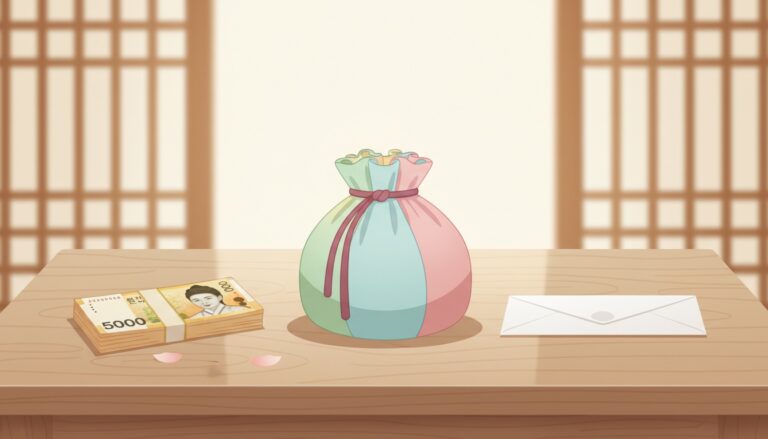
- Tutor’s Secret Note: This isn’t just “pocket money.” It symbolizes wishing the recipient good fortune for the year. Never hand it over directly from your pocket; putting it in an envelope (ideally a traditional one) is much classier.
Examples:
1. 조카들에게 세뱃돈을 줬어요. (Jokeadeul-ege sebaetdon-eul jwosseoyo.)
* I gave Sebaetdon to my nieces and nephews.
2. 올해 세뱃돈 예산이 부족해요. (Olhae sebaetdon yesan-i bujokhaeyo.)
* My budget for Sebaetdon is tight this year.
3. (Kid saying): 세뱃돈 많이 주세요! (Sebaetdon mani juseyo!)
* Please give me lots of Sebaetdon! (Playful)
2. 신권 (Singwon)
- Meaning: New banknotes / Crisp bills
- Pronunciation Clinic: [Sin-gwon] -> [신권/Sin-gwon]. Pronounce the ‘g’ clearly.
- Context: Used at the bank when exchanging old money for new money before the holiday.
- Tutor’s Secret Note: Giving a dirty, wrinkled bill is considered disrespectful in traditional culture. It implies you didn’t prepare. Singwon shows you planned ahead and cared enough to visit the bank.
Examples:
1. 은행에 가서 신권으로 교환했어요. (Eunhaeng-e gaseo singwon-euro gyohwan-haesseoyo.)
* I went to the bank and exchanged (money) for new bills.
2. 신권이 없으면 깨끗한 돈으로 주세요. (Singwon-i eopseumyeon kkaekkeutan don-euro juseyo.)
* If you don’t have new bills, please give me clean money.
3. 세뱃돈은 꼭 신권이어야 해요? (Sebaetdon-eun kkok singwon-ieoya haeyo?)
* Does Sebaetdon strictly have to be new bills?
3. 덕담 (Deokdam)
- Meaning: Words of blessing / Well-wishing remarks
- Context: You don’t just throw money at kids. You trade the money for advice or blessings.
- Usage: Adults give Deokdam while handing over Sebaetdon.
Examples:
1. 할아버지께서 좋은 덕담을 해주셨어요. (Harabeoji-kkeseo joeun deokdam-eul haejusyeosseoyo.)
* Grandfather gave me some good words of blessing.
2. 덕담 한마디 부탁드려요. (Deokdam hanmadi butakdeuryeoyo.)
* Please give us a word of blessing.
3. 돈보다 덕담이 중요하죠. (Don-boda deokdam-i jungyohajyo.)
* Words of blessing are more important than money. (Ideally… haha)
Mini Quiz:
Before Seollal, Koreans go to the bank to get [ ] to show respect.Click to see answer
Answer: 신권 (Singwon / New bills)
Textbook vs. Real Korean
Situation: Asking about the holiday money.
| Type | Expression | Context |
|---|---|---|
| Book Korean | 아이들에게 돈을 주었습니까? (Aideul-ege don-eul jueotseumnikka?) |
Grammatically correct, but sounds like a police interrogation. |
| Real Korean | 세뱃돈 좀 나갔어? (Sebaetdon jom nagasseo?) |
“Did some Sebaetdon go out?” (Did you spend a lot on kids?) – Very common among friends. |
Checklist: When to use what?
* To an elder: “세뱃돈 준비하셨어요?” (Did you prepare Sebaetdon?) – Polite
* To a friend: “야, 나 이번 달 거지야. 세뱃돈 때문에.” (Hey, I’m broke this month because of Sebaetdon.) – Casual
Unique Analysis: The Sebaetdon Price List (The “Guk-Rule”)
In Korea, there is an unwritten rule often jokingly called the “Guk-Rule” (National Rule) regarding amounts. Here is the 2024~2025 sentiment analysis.
| Recipient Age | Amount (KRW) | Note |
|---|---|---|
| Preschool (0-7) | 10,000 ~ 30,000 won | They just like the colorful paper. Usually, parents take it. |
| Elementary | 30,000 ~ 50,000 won | They know the value of money now. 50,000 won is the “Golden Standard.” |
| Middle/High School | 50,000 ~ 100,000 won | Inflation hits here. 50,000 is basic, 100,000 if you are a “cool uncle/aunt.” |
| University Student | 100,000 won ~ or Pass | Usually, once they have a job, they stop receiving and start giving. |
- Tip: If you have many nephews/nieces, just stick to 50,000 won (O-man-won) for everyone to avoid fights.
Real-Life Role Play
Context: Visiting your Korean friend Min-ji’s house for Seollal. You are meeting her young nephew (8 years old).
Nephew: (Does a deep bow – Sebae) 새해 복 많이 받으세요!
(Saehae bok mani badeuseyo!)
Happy New Year!
You: (Smiling) 오, 절을 참 잘하네! 자, 여기 세뱃돈.
(O, jeol-eul cham jalhane! Ja, yeogi sebaetdon.)
Oh, you bow very well! Here, here is Sebaetdon.
Nephew: (Receives with two hands) 감사합니다!
(Gamsahamnida!)
Thank you!
You: 학교 생활 재미있게 하고, 건강해라!
(Hakgyo saenghwal jaemiitge hago, geonganghaera!)
Have fun at school and stay healthy!
Min-ji (Friend): 야, 뭘 이런 걸 준비했어~ 부담스럽게.
(Ya, mwol ireon geol junbihaesseo~ budamseureopge.)
Hey, why did you prepare this~ You didn’t have to (it’s burdensome).
Culture Tip: Even if Min-ji says “You didn’t have to,” she appreciates the gesture toward her family. It’s polite to refuse once, but you should insist gently.
Shadowing Challenge
Let’s practice the sentence you say when handing over the envelope. Don’t just give it silently!
Script:
“맛있는 거 사 먹고, 공부도 열심히 해.”
(Masinneun geo sa meokgo, gongbudo yeolsimhi hae.)
“Buy something yummy, and study hard, too.”
- Listen (imagine the audio)
- Repeat Slow: Masinneun… geo… sa… meokgo…
- Repeat Natural: Masinneun geo sa meokgo, gongbudo yeolsimhi hae.
- Pronunciation Point: 먹고 sounds like [먹꼬 / meok-kko] due to tensing rules.
FAQ (Frequently Asked Questions)
Q1: What if I didn’t have time to go to the bank for New Bills (Singwon)?
A: It’s okay! Just try to find the cleanest bills you have in your wallet. If they are too wrinkled, try to flatten them out. The effort counts. You can say: “신권이 아니라서 미안해.” (Singwon-i aniraseo mianhae – Sorry it’s not a new bill).
Q2: Can I give gifts instead of money?
A: For children? No. They want cash. For adults (parents), gifts (ginseng, beef, fruit sets) or cash are both acceptable. But cash is king.
Wrap-up & Action Item
Today’s Summary: Sebaetdon is about “Heart + Etiquette.” The amount matters less than the preparation (envelope + clean bills + blessing).
Today’s Mission:
Check your wallet right now. do you have a crisp 50,000 won bill? If not, try visiting a bank this week just to say: “신권으로 바꿔 주세요” (Please exchange this for new bills).
Discussion:
In your country, do you give money on New Year’s? If so, how much? Tell me in the comments!
Final Quiz
1. What is the Korean term for “New Banknotes”?
a) Gu-gwon
b) Sin-gwon
c) Yong-don
2. Which age group typically receives about 50,000 KRW as the standard?
a) Babies
b) Elementary/Middle School students
c) Retirees
3. Fill in the blank:
Words of blessing given with money are called [ ].
Answers:
1. b) Sin-gwon (신권)
2. b) Elementary/Middle School students
3. Deokdam (덕담)
Frequently Asked Questions (FAQ)
Q: What does "세뱃돈 (Sebaetdon)" mean in Korean and how do you pronounce it?
A: In Korean, "세뱃돈 (Sebaetdon)" is pronounced [Clinic: [Se-baet-don] and means: New Year’s cash gift (given to children/juniors after they bow)
Q: What does "신권 (Singwon)" mean in Korean and how do you pronounce it?
A: In Korean, "신권 (Singwon)" is pronounced [Clinic: [Sin-gwon] and means: New banknotes / Crisp bills
Q: What does "덕담 (Deokdam)" mean in Korean and how do you pronounce it?
A: In Korean, "덕담 (Deokdam)" is pronounced [see lesson guide] and means: Words of blessing / Well-wishing remarks







