

Is Your Hair Too Long? Mastering ‘Long & Short’ in Korean Like a Pro
Introduction
Hello, this is Daily Hangul!
Have you ever gone to a hair salon in a foreign country, asked for a “trim,” and walked out with a buzz cut? Or perhaps you tried on a pair of beautiful jeans in Seoul, but they were dragging on the floor, and you didn’t know how to tell the clerk?
Composite Case (Synthesized from multiple learner experiences):
We often hear from students who visit hair salons in Hongdae. One student wanted to say, “The sides are a bit long,” but accidentally used a word for “tall” (height) instead of “long” (length), confusing the stylist. Another student simply said “Short!” without any polite ending, and the stylist cut it much shorter than expected because the nuance sounded like an urgent command.
In Korean, describing objects isn’t just about the adjective; it’s about the context (length vs. height) and the politeness. Textbooks teach you the words, but we teach you the nunchi (sense) to use them correctly.
At a Glance
Here is your survival kit for today. These expressions are safe to use with shop assistants, hair stylists, and new friends.
- Key Expressions:
- Gil-eo-yo (It is long)
- Jjal-b-a-yo (It is short)
- Jom (A little / A bit – Magic softener)
- Safe Zone: Use these with the polite ending -yo (-요) for general daily interactions.
- Level: A1 (Beginner). Why? You need this immediately for shopping, travel, and describing time.
Table of Contents
- Today’s Deep Dive: Length Expressions
- Textbook vs. Real Korean
- Analysis: The “Height vs. Length” Trap
- Real Life Role Play: At the Hair Salon
- Shadowing Challenge
- FAQ
- Wrap-up & Quiz
Today’s Deep Dive
1. 길어요 (Gil-eo-yo)
- Meaning: It is long / (Time) is long
- Usage & Register:
- To whom: Shop clerks, coworkers, acquaintances.
- Style: Polite informal (Ha-yo-che).
- Tutor’s Secret Note:
- Koreans use this for physical objects (hair, pants, bridges) AND time (duration).
- Warning: Do not use this to describe a person’s height. Calling a person “long” (Gireo-yo) sounds like you are describing them as a snake or a rope!
- Pronunciation Clinic:
- Liaison: The bottom consonant
ㄹ(l) carries over to the next vowel. - Sound: [Gi-reo-yo] (Think of “Gi-ro-yo” but softer).
- Liaison: The bottom consonant
- Examples:
- Travel: 줄이 너무 길어요. (Jul-i neo-mu gil-eo-yo.) – The line is too long.
- Shopping: 소매가 길어요. (So-mae-ga gil-eo-yo.) – The sleeves are long.
- Time: 영화가 길어요? (Yeong-hwa-ga gil-eo-yo?) – Is the movie long?
2. 짧아요 (Jjal-b-a-yo)
- Meaning: It is short
- Usage & Register:
- To whom: Stylists, tailors, friends.
- Tutor’s Secret Note:
- If you just point and say “Jjal-b-a-yo!” it sounds like a complaint (“It’s short!”). Always use “Jom” (a little) to soften it if you are asking for a change.
- Pronunciation Clinic:
- Double Consonant: The word
짧has two bottom consonants (ㄹ,ㅂ). When followed by a vowel (like -ayo), the second one (ㅂ) moves to the next syllable. - Sound: [Jjal-ba-yo] (Say it strongly: Jjal-Ba-Yo).
- Double Consonant: The word
- Examples:
- Hair Salon: 머리가 너무 짧아요. (Meo-ri-ga neo-mu jjal-ba-yo.) – The hair is too short.
- Fashion: 치마가 짧아요. (Chi-ma-ga jjal-ba-yo.) – The skirt is short.
- Time: 시간이 짧아요. (Si-gan-i jjal-ba-yo.) – The time is short (not enough time).
3. 좀 (Jom)
- Meaning: A little / Please (Softener)
- Usage: Place this before the adjective.
- Tutor’s Secret Note:
- This is the most important word for sounding “Korean.” It turns a complaint into a polite observation.
- “길어요” (It’s long) -> “좀 길어요” (It’s a bit long / It’s kind of long).
- Examples:
- Fitting Room: 바지가 좀 길어요. (Ba-ji-ga jom gil-eo-yo.) – The pants are a bit long.
- Hair Salon: 좀 짧아요. (Jom jjal-ba-yo.) – It’s a bit short.
Mini Quiz:
How would you tell a tailor the pants are “a bit long”?
바지가 ___ 길어요. (Ba-ji-ga ___ gil-eo-yo.)
(Answer is at the bottom!)
Textbook vs. Real Korean
Textbooks often teach you to describe things factually. Real life requires describing things relationally (how it fits me or the situation).
| Context | Book Korean (Grammatically Perfect) | Real Korean (Natural & Native) |
|---|---|---|
| Trying on clothes | 이 바지는 깁니다. (I ba-ji-neun gim-ni-da) “This pair of pants is long.” (Factual robot) |
이거 좀 기네요. (I-geo jom gi-ne-yo) “These are a bit long, huh?” (Inviting help) |
| Haircut Feedback | 머리카락이 짧습니다. (Meo-ri-ka-rak-i jjal-seum-ni-da) “The hair is short.” (Report style) |
생각보다 짧아요. (Saeng-gak-bo-da jjal-ba-yo) “It’s shorter than I thought.” |
Quick Checklist:
* Meeting the President? -> Use Book Korean (removes emotion).
* Talking to a clerk/stylist? -> Use Real Korean (expresses feeling/softness).
Analysis: The “Height vs. Length” Trap
One of the biggest mistakes foreigners make is mixing up Length and Height. In English, we use “short” for both a piece of string and a person. In Korean, they are different.
🚫 The Ohe (Misunderstanding) Scenario
Foreigner: (Describing a friend) 제 친구는 짧아요. (Je chin-gu-neun jjal-ba-yo.)
Korean Listener: (Shocked) …Your friend is short? Like a pencil? Or short-tempered?
Why is this weird?
짧아요 (Jjal-b-a-yo) refers to length or duration only.
✅ The Solution: Semantic Map
| Object | Long (English) | Korean | Short (English) | Korean |
|---|---|---|---|---|
| Inanimate (Hair, Pants, Movie) | Long | 길어요 (Gil-eo-yo) | Short | 짧아요 (Jjal-b-a-yo) |
| Person / Height (Stature) | Tall | 커요 (Keo-yo) (Lit: Big) |
Short | 작아요 (Jag-a-yo) (Lit: Small) |
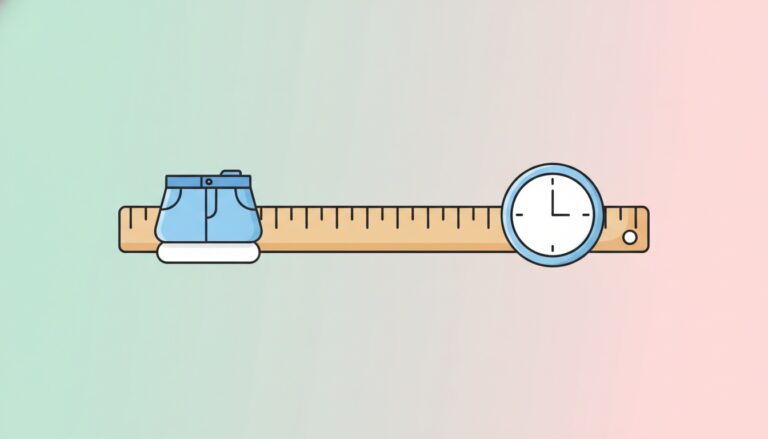
Rule of Thumb: If you can measure it with a ruler lying flat on a table, use Gil-eo-yo/Jjal-b-a-yo. If it stands up (like a person or tree), use Keo-yo/Jag-a-yo.
Real Life Scenario: Role Play
Setting: A hair salon in Gangnam. Saturday afternoon.
Characters:
* Min-su (You): An expat getting a haircut.
* Stylist: A friendly Korean hairdresser.
Dialog:
Stylist: 길이 어때요? 괜찮아요?
(Gil-i eo-ttae-yo? Gwaen-chan-a-yo?)
How is the length? Is it okay?
Min-su: 음, 앞머리가 좀 길어요.
(Eum, ap-meo-ri-ga jom gil-eo-yo.)
Hmm, the bangs are a bit long.
Stylist: 아, 그래요? 좀 더 자를까요?
(Ah, geu-rae-yo? Jom deo ja-reul-kka-yo?)
Ah, really? Shall I cut a bit more?
Min-su: 네, 조금만 더요. 너무 짧지 않게 해주세요.
(Ne, jo-geum-man deo-yo. Neo-mu jjal-ji an-ke hae-ju-se-yo.)
Yes, just a little more. Please make it not too short.
Cultural Tip:
In Korean salons, being specific is polite. Saying “It’s long” implies “Please cut it.” You don’t always have to say “Cut it” (Jal-la-ju-se-yo) directly; describing the state is enough.
Shadowing Challenge
Let’s practice the pronunciation of the double consonant and liaison. Repeat this 3 times.
Script:
“바지가 너무 길어요. 좀 짧게 해주세요.”
(The pants are too long. Please make them short/shorten them.)
Romanization:
Ba-ji-ga neo-mu gi-reo-yo. Jom jjal-ge hae-ju-se-yo.
Checklist:
* [ ] Did you link the sound in Gi-reo-yo?
* [ ] Did you pronounce Jjal-ge with a strong ‘jj’ sound?
* [ ] Did you add emotion (worried tone)?
Frequently Asked Questions (FAQ)
Q1: Can I say “Time is long” using Gil-eo-yo?
A: Yes! You can say “시간이 길어요” (Si-gan-i gil-eo-yo). However, to say “It takes a long time,” we usually use “오래 걸려요” (O-rae geol-lyeo-yo). But describing a movie or a class as “long” (길어요) is perfect.
Q2: What is the difference between ‘Gim-ni-da’ and ‘Gil-eo-yo’?
A: They mean the same thing, but Gim-ni-da (깁니다) is formal (military/news/formal presentation style). Gil-eo-yo (길어요) is what you use 99% of the time in daily life.
Q3: Can I use this for distance? Like “The road is long”?
A: Yes! “길이 길어요” (Gil-i gil-eo-yo) means “The road/path is long.”
Wrap-up & Action Item
Today we learned how to describe length without being rude. Remember, length is not height!
Today’s Mission:
Look at 3 objects in your room right now. Are they long or short? Say it out loud in Korean using the sentence: “This is [Adjective].”
* Example: “This pen is long.” -> “이 펜은 길어요 (I pen-eun gil-eo-yo).”
Tell me in the comments:
What is one thing you bought recently that was too long or too short?
Final Quiz
- Which word refers to physical length (like hair)?
A. 커요 (Keo-yo)
B. 길어요 (Gil-eo-yo)
C. 무거워요 (Mu-geo-wo-yo) -
How do you say “It is short”?
A. 짧아요 (Jjal-b-a-yo)
B. 작아요 (Jag-a-yo)
C. 좁아요 (Job-a-yo) -
Fill in the blank: To soften your sentence, use “____”.
“바지가 ____ 길어요.”
Answers:
1. B (Gil-eo-yo)
2. A (Jjal-b-a-yo)
3. 좀 (Jom) – Answer for Mini Quiz as well!
Frequently Asked Questions (FAQ)
Q: What does "길어요 (Gil-eo-yo)" mean in Korean and how do you pronounce it?
A: In Korean, "길어요 (Gil-eo-yo)" is pronounced [see lesson guide] and means: It is long / (Time) is long
Q: What does "짧아요 (Jjal-b-a-yo)" mean in Korean and how do you pronounce it?
A: In Korean, "짧아요 (Jjal-b-a-yo)" is pronounced [see lesson guide] and means: It is short
Q: What does "좀 (Jom)" mean in Korean and how do you pronounce it?
A: In Korean, "좀 (Jom)" is pronounced [see lesson guide] and means: A little / Please (Softener)







