

Hello, it’s Daily Hangul! 👋
Welcome back to Daily Hangul, your friendly guide to mastering real-life Korean. Today, we are diving into a topic that has taken Korea by storm: The MBTI Craze.
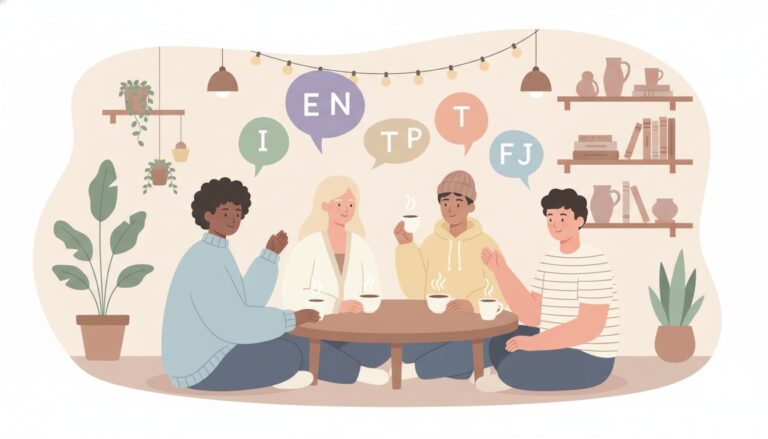
Imagine you just met a new Korean friend or a colleague. Within the first 5 minutes, they ask you a combination of four alphabets. If you look confused, the conversation might stall. But here is the catch: sometimes, people take it too seriously!
Case Study: The “Lazy P” Misunderstanding (Synthetic Case)
Note: This story is a composite based on common experiences shared by several foreign learners in Seoul.
“Sarah,” an office worker in Seoul, recently felt judged by her team leader. When she mentioned she is an ‘INFP’, her boss jokingly said, “Ah, P types are usually not good at planning, right?” Sarah felt unfair because she is actually very organized at work! She wanted to say, “Please don’t judge me just by a test result,” but didn’t know the polite Korean nuance.
In Korea, MBTI is the new “Blood Type” personality test, but on steroids. It’s an icebreaker, a compatibility test, and sometimes—unfortunately—a stereotype machine. Today, we will learn how to talk about it and, more importantly, how to say “Don’t take it too seriously!” in natural Korean.
📋 At a Glance: Today’s Key Expressions
- “MBTI가 어떻게 되세요?” (Asking politely)
- “그냥 재미로 보는 거죠.” (Drawing the line: It’s just for fun)
- “상황에 따라 달라요.” (Avoiding labels: It depends on the situation)
- Safe Zone: Casual meetups, first meetings, lunch breaks at work.
- Level: B1 (Intermediate) – Essential for social survival in modern Korea.
📑 Table of Contents
- Today’s Key Expressions Deep Dive
- Textbook vs. Real Korean
- Tutor’s Secret Analysis: “Are You a T?”
- Role Play: The Blind Date
- Speaking Challenge
- FAQ
💡 Today’s Key Expressions Deep Dive
1. MBTI가 어떻게 되세요?
(MBTI-ga eotteoke doeseyo?)
- Meaning: What is your MBTI? (Polite/Formal)
- Usage: First meetings, blind dates, or with colleagues. Use the Haeyo-che (해요체) style.
🤫 Tutor’s Secret Note:
Koreans ask this faster than they ask your age these days. It is a shortcut to understand your vibe. If you don’t know yours, it’s okay to say “몰라요” (I don’t know), but the conversation might pause!
⚠️ Warning: Don’t ask this in the middle of a very serious business report. Keep it for coffee breaks.
🗣️ Pronunciation Clinic:
* M-B-T-I: Pronounced clearly as individual English letters [엠비티아이].
* 어떻게 [eotteoke]: The ‘ㅎ’ blends with ‘ㄱ’ to make a ‘k’ sound.
Examples:
* 실례지만, MBTI가 어떻게 되세요? (Sillyejiman, MBTI-ga eotteoke doeseyo?)
Excuse me, but what is your MBTI?
* 저는 ENFP인데, 혹시 MBTI가 어떻게 되세요? (Jeoneun ENFP-inde, hoksi MBTI-ga eotteoke doeseyo?)
I’m an ENFP, by the way, what is yours?
* MBTI 검사 해보셨어요? (MBTI geomsa haebosyeosseoyo?)
Have you tried the MBTI test?
2. 그냥 재미로 보는 거죠.
(Geunyang jaemiro boneun geojyo.)
- Meaning: I just look at it for fun. / It’s just for fun.
- Usage: Use this when someone is taking the test too seriously or judging you. It politely signals, “Don’t believe it 100%.”
🤫 Tutor’s Secret Note:
This is the perfect shield. If someone says, “Oh, you are ‘I’ so you must be shy,” you can smile and use this phrase. It lightens the mood without starting a fight.
🗣️ Pronunciation Clinic:
* 재미로 [jaemiro]: Make sure ‘ro’ flows smoothly.
* 거죠 [geojyo]: Short for ‘것이지요’. Pronounce ‘jyo’ softly.
Examples:
* 너무 믿지 마세요. 그냥 재미로 보는 거죠. (Neomu mitji maseyo. Geunyang jaemiro boneun geojyo.)
Don’t believe it too much. It’s just for fun.
* 과학적인 건 아니고, 그냥 재미로 보는 거예요. (Gwahakjeogin geon anigo, geunyang jaemiro boneun geoyeyo.)
It’s not scientific, just for fun.
* 맞아요, 근데 전 그냥 재미로 봐요. (Majayo, geunde jeon geunyang jaemiro bwayo.)
That’s right, but I just view it for fun.
3. 상황에 따라 달라요.
(Sanghwang-e ttara dallayo.)
- Meaning: It depends on the situation.
- Usage: The best answer for “Ambiverts” or anyone who doesn’t want to be boxed in.
Examples:
* 저는 E랑 I가 반반이라, 상황에 따라 달라요. (Jeoneun E-rang I-ga banbanira, sanghwang-e ttara dallayo.)
I’m half E and half I, so it depends on the situation.
* 성격은 상황에 따라 다르지 않나요? (Seonggyeog-eun sanghwang-e ttara dareuji annayo?)
Doesn’t personality depend on the situation?
* 일할 때는 J인데, 놀 때는 P예요. 상황에 따라 달라요. (Ilhal ttaeneun J-inde, nol ttaeneun P-yeyo. Sanghwang-e ttara dallayo.)
I’m ‘J’ when working, but ‘P’ when playing. It depends.
🧩 Mini Quiz
Fill in the blank to say: “Don’t trust it too much.”
“MBTI를 너무 (____) 마세요.”
Click to see the answer
맹신하지 (maengsinhaji) – Meaning: to believe blindly
📚 Textbook vs. Reality
| Context | Textbook Korean (Book Korean) 📘 | Real Korean (Street/Internet) 🚀 |
|---|---|---|
| Asking Personality | 성격이 어떠세요? (How is your personality?) |
E세요, I세요? (Are you E or I?) |
| Describing Logic | 논리적이시네요. (You are logical.) |
너 T야? / T발 C야? (Are you a T? / Meme slang) |
| Planning | 계획을 잘 세워요. (I plan well.) |
완전 J예요. (I’m totally J.) |
✅ Situation Check:
* Job Interview: Use “꼼꼼한 편입니다” (I am meticulous) instead of “I am J.”
* Pub with friends: Use “너 T야?” (Are you a T?) as a joke when someone is too cold.
🔍 Tutor’s Secret Analysis: “The ‘T’ Trauma” 🌡️
In the Korean MBTI universe, the biggest divide is between F (Feeling) and T (Thinking).
Scenario: You say, “I had a bad day at work.”
* F Reaction: “Oh no, are you okay? What happened?” (Empathy)
* T Reaction: “Why? Did you make a mistake?” (Analysis)
Because of this, the phrase “너 T야?” (Neo T-ya? – Are you a T?) has become a viral meme. It basically means: “Why are you so cold/heartless? Can’t you just empathize with me?”
If someone asks you this, they aren’t actually asking your result. They are jokingly complaining that you are being too logical!
🎭 Real-Life Role Play: The Blind Date
📍 Setting: A trendy café in Hongdae. First date.
Min-su: 안녕하세요! 혹시 MBTI가 어떻게 되세요?
(Annyeonghaseyo! Hoksi MBTI-ga eotteoke doeseyo?)
Hello! By the way, what is your MBTI?
Lisa: 음, 저는 INFP예요. 민수 씨는요?
(Eum, jeoneun INFP-yeyo. Minsu-ssi-neunyo?)
Hmm, I’m INFP. What about you, Minsu?
Min-su: 아, 진짜요? 저 ESTJ인데! 우리 궁합 안 맞을 수도 있겠는데요?
(A, jinjjayo? Jeo ESTJ-inde! Uri gunghap an majeul sudo itgenneundeyo?)
Oh, really? I’m ESTJ! Our chemistry might not be good then?
Lisa: 에이, 그냥 재미로 보는 거죠. 너무 맹신하지 마세요.
(Ei, geunyang jaemiro boneun geojyo. Neomu maengsinhaji maseyo.)
Ey, it’s just for fun. Don’t believe it blindly.
Min-su: 하하, 농담이에요. 저도 상황에 따라 달라요.
(Haha, nongdam-ieyo. Jeodo sanghwang-e ttara dallayo.)
Haha, I’m joking. I also change depending on the situation.
💡 Culture Tip: Even if Min-su was joking, mentioning “bad chemistry” (궁합) on a first date based on MBTI is risky! Lisa’s response was perfect—polite but firm.
🗣️ Shadowing Challenge
Listen and repeat this 3 times to sound natural!
“MBTI는 그냥 참고만 하세요. 사람 성격을 어떻게 네 글자로 다 설명해요?”
(MBTI-neun geunyang chamgoman haseyo. Saram seonggyeog-eul eotteoke ne geuljaro da seolmyeonghaeyo?)
Meaning: Just use MBTI as a reference. How can you explain a person’s whole personality with just four letters?
- [ ] Attempt 1 (Slowly)
- [ ] Attempt 2 (Normal Speed)
- [ ] Attempt 3 (With Emotion!)
❓ FAQ (Frequently Asked Questions)
Q1: Is it rude if I refuse to tell my MBTI?
It’s not “rude,” but it might make you seem unenthusiastic about getting to know them. A better approach is to say “아직 안 해봤어요” (I haven’t tried it yet) or “기억이 안 나요” (I don’t remember).
Q2: Can I put my MBTI on my resume in Korea?
Some young startups might like it, but for traditional companies, it is not recommended. Stick to professional adjectives like “responsible” (책임감 있는) or “cooperative” (협력적인).
📝 Wrap-up & Mission
Today we learned that while Korea loves MBTI, you don’t have to let it define you! The key is to enjoy the conversation but gently remind others that you are more than four letters.
🔥 Today’s Mission:
Ask a Korean friend or language partner: “MBTI 맹신하세요?” (Do you blindly believe in MBTI?) and see what they say!
Tell me in the comments: What is your MBTI, and do you think it fits you? 👇
🧩 Final Quiz
1. What is the most natural way to say “It depends on the situation”?
A) 상황이 달라요 (Sanghwang-i dallayo)
B) 상황에 따라 달라요 (Sanghwang-e ttara dallayo)
C) 상황을 믿지 마세요 (Sanghwang-eul mitji maseyo)
2. If someone calls you a “T” in Korea, what do they usually imply?
A) You are very warm and emotional.
B) You are too logical or factual.
C) You are tired.
3. Fill in the blank: Just watch it for fun.
“그냥 (____)로 보는 거죠.”
[Answers]
1. B
2. B
3. 재미 (Jaemi)
Frequently Asked Questions (FAQ)
Q: What does "어떻게" mean in Korean and how do you pronounce it?
A: In Korean, "어떻게" is pronounced [eotteoke] and means: The 'ㅎ' blends with 'ㄱ' to make a 'k' sound.
Q: What does "재미로" mean in Korean and how do you pronounce it?
A: In Korean, "재미로" is pronounced [jaemiro] and means: Make sure 'ro' flows smoothly.
Q: What does "거죠" mean in Korean and how do you pronounce it?
A: In Korean, "거죠" is pronounced [geojyo] and means: Short for '것이지요'. Pronounce 'jyo' softly.
Q: What does ""너 T야?"" mean in Korean and how do you pronounce it?
A: In Korean, ""너 T야?"" is pronounced [Neo T-ya? - Are you a T?] and means: has become a viral meme. It basically means:







