

👋 안녕하세요! Welcome to Daily Hangul!
Hello, K-Culture fans! I’m your friendly Korean tutor, Daily Hangul.
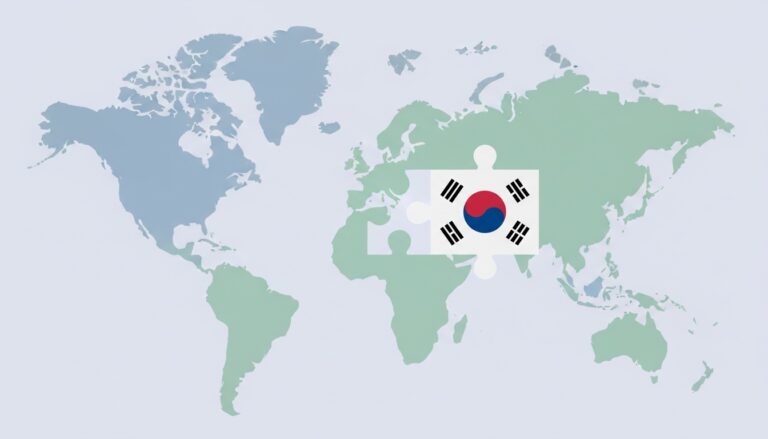
Have you ever seen a “Kimchi Refrigerator” or “Bulgogi Pizza”? These are perfect examples of adapting a product to fit a specific country! Today, we are stepping into the office of a K-Drama company. We will learn how to discuss “Product Localization” for the Korean market.
Whether you are planning a business trip to Seoul or just want to understand the cool business terms used by the CEO in your favorite drama (like Start-Up or King the Land), this lesson is for you! Let’s get down to business! 💼✨
🔑 Key Expressions
Here are 3 essential words to sound like a pro in a Korean business meeting!
1. 현지화 (Hyeonjihwa)
- Pronunciation: [Hyeonjihwa]
- Meaning: Localization
- Explanation: This is the most important word today! It combines 현지 (local area) and 화 (becoming/transformation). It means adapting a product to fit the local culture.
- 💡 Pronunciation Tip: The ‘h’ sound in ‘hwa’ can be soft. Try saying it smoothly like “Hyeon-ji-wa.”
2. 맞춤형 (Matchumhyeong)
- Pronunciation: [Matchumhyeong]
- Meaning: Customized / Tailored
- Explanation: When you buy a suit that fits perfectly, it’s ‘custom-made’. In business, a product designed specifically for Koreans is ‘한국 맞춤형’ (Korea-tailored).
- 💡 Pronunciation Tip: The ‘m’ in ‘Matchum‘ flows into the next sound. It sounds distinct and firm.
3. 반응 (Baneung)
- Pronunciation: [Baneung]
- Meaning: Reaction / Response
- Explanation: You want to know if customers like your product, right? You check their ‘reaction’. In dramas, you often hear “반응이 좋아요!” (The reaction is good!).
💬 Real Conversation: Strategy Meeting
Let’s imagine Min-su (Korean Team Leader) and Sarah (Global Marketer) are discussing a new coffee product launch in Korea.
Min-su: 이번 커피 제품, 한국에서 성공할 수 있을까요?
(Ibeon keopi jeplum, Hangugeseo seonggonghal su isseulkkayo?)
Meaning: Will this coffee product be successful in Korea?
Sarah: 맛을 한국 사람 입맛에 맞게 현지화해야 해요.
(Maseul Hanguk saramim-mase matge hyeonjihwahaeya haeyo.)
Meaning: We need to localize the taste to fit Korean people’s palate.
Min-su: 맞아요. 한국인을 위한 맞춤형 메뉴가 필요해요.
(Majayo. Hangugineul wihan matchumhyeong menyuga piryohaeyo.)
Meaning: That’s right. We need a customized menu for Koreans.
Sarah: 그러면 시장 반응이 아주 좋을 거예요!
(Geureomyeon sijang baneungi aju joeul geoyeyo!)
Meaning: Then the market reaction will be very good!
🌏 Culture Tip & K-Drama Context
“K-Style Adaptation”
In Korea, localization (현지화) is huge! Did you know that when global burger chains came to Korea, they created “Bulgogi Burgers”? Or that coffee shops sell “Sweet Potato Lattes”?
Koreans appreciate it when foreign brands try to understand their unique culture, famously known as “Jeong (정)” (affection/connection) or their love for spicy food!
In business K-Dramas, if you suggest a “localized strategy” to the stubborn Chairman, you will definitely be the hero of the episode! 😉
📝 Wrap-up & Quiz
Today we learned how to adapt products for Korea! Remember, fitting in is the key to success.
Let’s test your knowledge!
- Fill in the blank: Making a product fit the local culture is called ______.
- (Hint: H_ _ _ j _ h _ a)
- True or False: “Matchumhyeong” means “expensive product.”
- (True / False)
See you next time! 안녕! 👋
[Answers]
1. 현지화 (Hyeonjihwa)
2. False (It means ‘Customized’ or ‘Tailored’)
Frequently Asked Questions (FAQ)
Q: What does "현지화 (Hyeonjihwa)" mean in Korean and how do you pronounce it?
A: In Korean, "현지화 (Hyeonjihwa)" is pronounced [Hyeonjihwa] and means: Localization
Q: What does "맞춤형 (Matchumhyeong)" mean in Korean and how do you pronounce it?
A: In Korean, "맞춤형 (Matchumhyeong)" is pronounced [Matchumhyeong] and means: Customized / Tailored
Q: What does "반응 (Baneung)" mean in Korean and how do you pronounce it?
A: In Korean, "반응 (Baneung)" is pronounced [Baneung] and means: Reaction / Response







