

Hello! This is Maeil Hangul, here to upgrade your Korean skills!
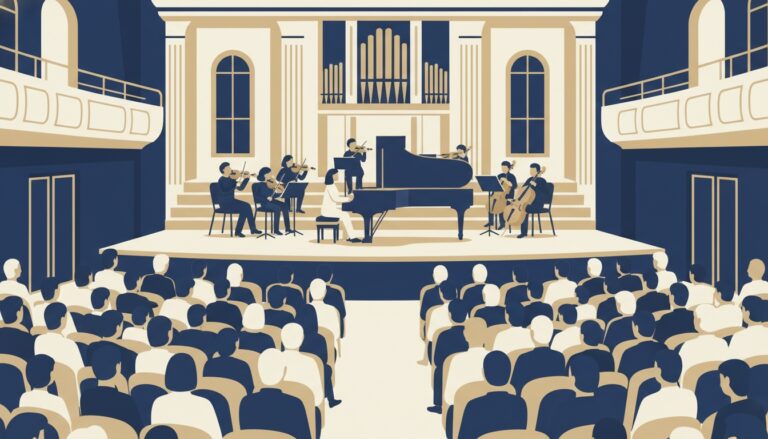
Have you ever wanted to enjoy a beautiful classical music concert in Korea but felt nervous about the rules? You’re not alone! Today, we’re going to learn the essential etiquette and phrases to help you enjoy the performance with confidence. Lately in Korea, attending concerts has become a super popular ‘healing’ activity for young people to relax and de-stress. So, let’s learn how to enjoy it like a local!
Key Expressions for the Concert Hall
Here are some essential phrases you’ll need.
1. 박수 (Baksu)
* Pronunciation [Romanization]: Baksu
* English Meaning: Applause, clapping
* Detailed Explanation: This is the most important word! In classical concerts, there’s a special rule for 박수. You should only clap after a full piece (like a whole symphony or concerto) is finished, not between the shorter parts called ‘movements’. If you’re not sure, just wait until most other people start clapping!
* 💡 Pronunciation Tip: The first letter ‘ㅂ’ (b) is a soft sound, somewhere between a ‘b’ and a ‘p’ in English. Don’t make it a strong, airy ‘p’ sound. Think of the ‘b’ in ‘absorb’.
2. 앙코르 (Angkoreu)
* Pronunciation [Romanization]: Angkoreu
* English Meaning: Encore
* Detailed Explanation: If the performance was absolutely amazing, the audience might shout for an extra song. This word comes from French, so it’s easy to remember! When the main performance ends and the performers take a bow, you can join the crowd in shouting “앙코르!”
* 💡 Pronunciation Tip: Korean doesn’t have an ‘en’ sound like in English. So, ‘encore’ is broken into three distinct syllables: 앙 (Ang) – 코 (ko) – 르 (reu). Practice saying it this way to sound natural.
3. 촬영은 금지입니다 (Chwaryeong-eun geumji-imnida)
* Pronunciation [Romanization]: Chwaryeong-eun geumji-imnida
* English Meaning: Photography/filming is prohibited.
* Detailed Explanation: This is a very common and important rule you will hear or see on signs. 촬영 (Chwaryeong) means filming or taking pictures, and 금지 (geumji) means ‘prohibited’. The ending 입니다 (imnida) makes it a formal and polite statement.
* 💡 Pronunciation Tip: The final consonant ‘ㅂ’ (b) in 입니다 (imnida) is followed by ‘ㄴ’ (n). In this case, the ‘ㅂ’ sound changes to an ‘ㅁ’ (m) sound to make it easier to say. So, you pronounce it as [im-ni-da], not [ip-ni-da]. This is a common sound change rule called ‘nasalization’.
Example Dialogue
Let’s see how these words are used at a concert hall.
- A: 와, 이 피아니스트 정말 인기가 많네요! (Wa, i pianiseuteu jeongmal ingiga manneyo!) – Wow, this pianist is so popular!
- B: 네. 공연 중에는 촬영은 금지입니다. 휴대폰은 꺼주세요. (Ne. Gongyeon jung-eneun chwaryeong-eun geumji-imnida. Hyudaepon-eun kkeojuseyo.) – Yes. Photography is prohibited during the performance. Please turn off your phone.
- A: 알겠어요. 언제 박수를 쳐야 해요? (Argesseoyo. Eonje baksureul chyeoya haeyo?) – I understand. When should we clap?
- B: 곡이 완전히 끝났을 때요. 정말 멋진 연주라면 다 같이 앙코르를 외쳐요! (Gogi wanjeonhi kkeutnasseul ttaeyo. Jeongmal meotjin yeonjuramyeon da gachi angkoreureul oechyeoyo!) – When the piece is completely finished. If it’s a great performance, let’s all shout for an encore!
Culture Tip & Trend Deep Dive
While 촬영은 금지입니다 (filming is prohibited) during the show, taking photos is a huge part of the concert experience in Korea! Most modern concert halls, like the Seoul Arts Center, have beautiful lobbies with special ‘photo zones’ (포토존). The MZ generation in Korea loves taking proof shots (‘인증샷’ – injeung-syat) here before the concert or during intermission to post on Instagram. So, arrive a little early, find the photo wall with the posters, and snap a picture to remember your classy cultural day out!
Wrap-up & Practice Quiz
Great job! Today you learned key phrases and cultural etiquette for enjoying a classical concert in Korea. Now you can confidently attend a performance and impress your friends!
Let’s check what you’ve learned:
- What do you shout if you want the artist to perform one more song?
(A) 박수 (Baksu)
(B) 앙코르 (Angkoreu) - Fill in the blank: Taking photos during the performance is not allowed. In Korean, this is “촬영은 ___________.”
Leave your answers in the comments using the phrases you learned today. Enjoy the music!
Frequently Asked Questions (FAQ)
Q: What does "촬영" mean in Korean and how do you pronounce it?
A: In Korean, "촬영" is pronounced [Chwaryeong] and means: means filming or taking pictures, and
Q: What does "금지" mean in Korean and how do you pronounce it?
A: In Korean, "금지" is pronounced [geumji] and means: means 'prohibited'. The ending
Q: What does "입니다" mean in Korean and how do you pronounce it?
A: In Korean, "입니다" is pronounced [imnida] and means: makes it a formal and polite statement.
Q: What does "입니다" mean in Korean and how do you pronounce it?
A: In Korean, "입니다" is pronounced [imnida] and means: is followed by 'ㄴ' (n). In this case, the 'ㅂ' sound changes to an 'ㅁ' (m) sound to make it easier to say. So, you pronounce it as







