

Returning Your Rental Car in Korea? Ask These 3 Questions Like a Pro!
Hello! It’s your favorite Korean teacher from [Maeil Hangeul], here to upgrade your Korean skills! 😊
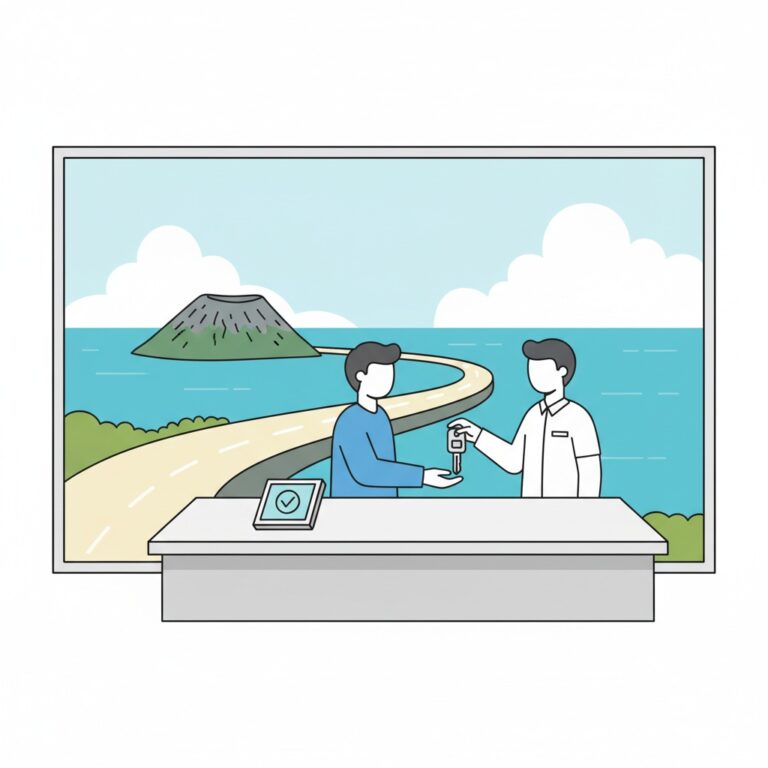
Have you ever dreamed of driving along the beautiful coastline of Jeju Island or exploring the serene countryside of Korea? Lately in Korea, domestic road trips are a huge trend! People are renting cars to discover hidden cafes, scenic routes, and all the amazing spots off the beaten path.
But after a fantastic trip, there’s one last step: returning the car. It can feel a little intimidating if you don’t know what to say. Don’t worry! Today, we’ll learn three simple but powerful questions to make your rental car return smooth and stress-free. Let’s get started! 🚗💨
Core Expressions You Need to Know
Here are three essential questions that will make you sound confident and prepared.
1. Where should I return the car?
- Korean: 차를 어디에 반납하면 되나요?
- Pronunciation [Romanization]: Cha-reul eo-di-e ban-na-pa-myeon doe-na-yo?
- English Meaning: Where should I return the car?
- Detailed Explanation: This is the most important question to start with!
차(cha)means ‘car,’ and어디에(eodie)means ‘where.’ The key verb here is반납하다(bannapada), which means ‘to return’ something you’ve borrowed or rented. The grammar pattern-(으)면 되다(-eumyeon doeda)is a soft and polite way to ask for instructions, meaning “Is it okay if I…?” or “Should I just…?” It’s the perfect way to ask for the return location. - 💡 Pronunciation Tip:
Let’s look at반납하면(bannapamyeon). The final consonantㅂ(b)in반납meets theㅎ(h)in하면. In Korean, theㅎ(h)sound is very soft and often blends with the consonant before it. So, instead of a hard stop like “ban-nap ha-myeon,” theㅂ(b)sound carries over and softens, sounding like [반나파면 | ban-na-pa-myeon]. It makes the pronunciation flow much more smoothly!
2. Do I have to fill up the gas tank?
- Korean: 주유는 가득 채워야 하나요?
- Pronunciation [Romanization]: Ju-yu-neun ga-deuk chae-wo-ya ha-na-yo?
- English Meaning: Do I have to fill up the gas tank?
- Detailed Explanation: Most rental companies in Korea have a “full-to-full” policy. Let’s break this phrase down:
주유(juyu)means ‘refueling,’가득(gadeuk)means ‘full,’ and채우다(chaeuda)means ‘to fill.’ The grammar here is-어야/아야 하다(-eoya/aya hada), which means ‘must’ or ‘have to.’ So you are literally asking, “As for refueling, must I fill it up fully?” - 💡 Pronunciation Tip:
The word채워야(chaewoya)can be tricky. The vowelㅝ(wo)is a combination ofㅜ(u)andㅓ(eo). Try saying “ooh” and “uh” and then blend them together quickly: “wo.” Practice a few times:채워요(chaewoyo),채워야(chaewoya). You’ll get it in no time!
3. Is there anything else I need to do?
- Korean: 제가 더 해야 할 일이 있나요?
- Pronunciation [Romanization]: Je-ga deo hae-ya hal i-ri in-na-yo?
- English Meaning: Is there anything else I need to do?
- Detailed Explanation: This is a fantastic question to ask at the end to make sure you haven’t forgotten anything.
제가(jega)is the polite way to say ‘I,’더(deo)means ‘more,’ and해야 할 일(haeya hal il)is a useful chunk that means ‘things I have to do.’ It shows you’re being thorough and responsible. - 💡 Pronunciation Tip:
Listen closely to할 일이(hal iri). This is a perfect example of a Korean pronunciation rule called linking, or연음(yeoneum). The final consonantㄹ(l)from할(hal)doesn’t stay silent—it “links” to the next syllable that starts with a vowel. So, instead of “hal il,” it sounds like [할리리 | hal-li-ri]. This is why Korean can sound so connected and fluid!
Example Dialogue
Let’s see how these phrases work in a real conversation. Imagine you (B) are calling the rental car company and speaking to an employee (A).
A: 여보세요, 매일 렌터카입니다.
(Yeoboseyo, Maeil Renteoka-imnida.)
Hello, this is Maeil Rental Car.B: 안녕하세요. 내일 차를 반납하려고 하는데요. 차를 어디에 반납하면 되나요?
(Annyeonghaseyo. Naeil cha-reul ban-na-pa-ryeogo ha-neun-de-yo. Cha-reul eo-di-e ban-na-pa-myeon doe-na-yo?)
Hello. I’m planning to return the car tomorrow. Where should I return the car?A: 제주공항 주차장 A구역으로 오시면 됩니다.
(Jeju-gonghang juchajang A-guyeo-geuro o-si-myeon doem-ni-da.)
You can come to Section A of the Jeju Airport parking lot.B: 알겠습니다. 혹시 주유는 가득 채워야 하나요?
(Algesseumnida. Hoksi ju-yu-neun ga-deuk chae-wo-ya ha-na-yo?)
I understand. By any chance, do I have to fill up the gas tank?A: 네, 받으셨을 때와 같이 가득 채워주세요.
(Ne, badeusyeosseul ttae-wa gachi gadeuk chae-wo-juseyo.)
Yes, please fill it up completely, just like when you received it.B: 좋습니다. 그럼 제가 더 해야 할 일이 있나요?
(Josseumnida. Geureom je-ga deo hae-ya hal i-ri in-na-yo?)
Sounds good. Then, is there anything else I need to do?A: 없습니다. 내일 뵙겠습니다!
(Eopsseumnida. Naeil boep-get-sseum-ni-da!)
That’s all. We’ll see you tomorrow!
Culture Tip: The Korean Road Trip Trend! 📸
As I mentioned, road-tripping is incredibly popular in Korea right now, especially among the younger generation. The ultimate road trip destination is Jeju Island (제주도). Renting a car there is considered essential to truly experience its stunning coastal roads, volcanic landscapes, and countless trendy cafes.
You’ll see thousands of posts on Instagram under hashtags like #제주도여행 (Jeju-do Yeohaeng / Jeju Island Trip) or #드라이브 (Deuraibeu / Drive). Knowing how to handle a rental car, including the return process, is a key part of this modern Korean travel experience. When you use these phrases, you’re not just speaking Korean; you’re participating in a cultural trend! You’ll sound just like a local planning their weekend getaway.
Let’s Practice!
You did an amazing job today! Let’s quickly check what you’ve learned.
1. Fill in the blank:
You’re about to return the car, but you want to double-check if you’ve missed any steps. You ask the staff:
“저기요, 제가 더 ______ 할 일이 있나요?”
(Excuse me, is there anything more I have to do?)
2. Make a sentence:
How would you ask, “Where should I return the car?” using the following words?
(차를 / 반납하면 되나요 / 어디에)
Great work! You’re now ready to confidently handle your rental car return in Korea.
Why not try making your own sentence in the comments below using one of today’s expressions? Happy and safe driving! ✨
Frequently Asked Questions (FAQ)
Q: What does "#드라이브" mean in Korean and how do you pronounce it?
A: In Korean, "#드라이브" is pronounced [Deuraibeu / Drive] and means: . Knowing how to handle a rental car, including the return process, is a key part of this modern Korean travel experience. When you use these phrases, you're not just speaking Korean; you're participating in a cultural trend! You'll sound just like a local planning their weekend getaway.







