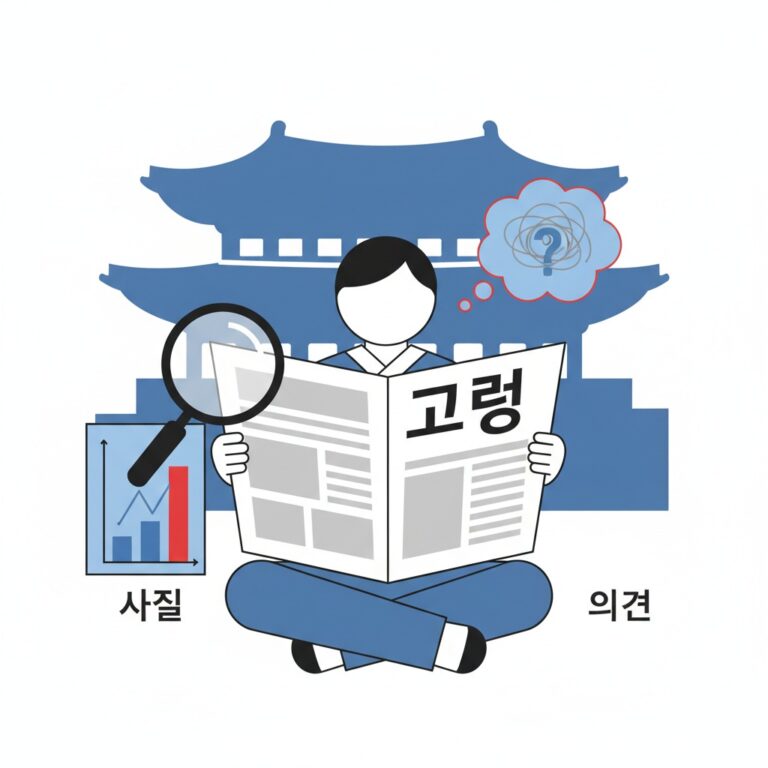
This blog post teaches Korean learners how to distinguish between facts and opinions when consuming Korean news. It introduces three key grammatical patterns: ‘-에 따르면’ (According to…), used for stating facts from a source; ‘-는 것으로 나타났다’ (It was revealed that…), used for reporting factual findings from data or studies; and ‘-(으)ㄹ 것으로 보인다’ (It seems/is expected that…), used for expressing opinions, predictions, or analysis. The post provides detailed explanations, pronunciation tips, example sentences, and cultural context about ‘fact-checking’ in the fast-paced Korean media.
 TOPIK 3
· 1 min read
Finding Truth in the News: How to Tell Facts from Opinions