

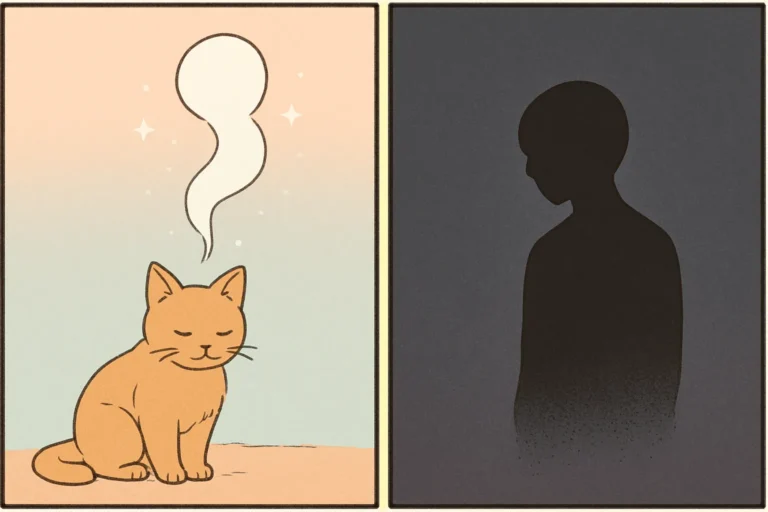
Debating the Afterlife: Reincarnation vs. Eternal Rest
Introduction
Hello! This is [Daily Hangeul], here to upgrade your Korean proficiency to a master level! 👋
Today, we are diving into a profound and intellectually stimulating topic: Philosophy of Religion and Secularism. specifically comparing views on the afterlife.
Recently in Korea, dramas and webtoons involving “regression” (returning to the past) or “reincarnation” (being born again), such as Reborn Rich (재벌집 막내아들) or Death’s Game (이재, 곧 죽습니다), have become massive trends. These stories aren’t just fantasy; they reflect a modern curiosity about what happens after death.
As an advanced learner (C2), being able to discuss these philosophical concepts allows you to participate in deep, meaningful debates with Koreans. Let’s explore the vocabulary you need to discuss the great beyond! 🌌
Key Expressions (Core Vocabulary)
Here are 3 high-level expressions to help you discuss religious and secular views on death.
1. 윤회 (Reincarnation / Samsara)
- Pronunciation [Romaja]: [Yun-hoe] (Often pronounced [Yun-e] or [Yu-noe] in fast speech)
- English Meaning: Reincarnation; the cycle of birth, death, and rebirth.
- Detailed Explanation: Originating from Buddhism, this term describes the cycle of life. While it is a religious term, it is widely used in literature and daily conversation when joking about one’s “next life” (e.g., “I want to be born as a cat in my next life”).
- 💡 Pronunciation Tip:
- Technically, it is written as yun-hoe. However, in Korean, the ‘ㅎ(h)’ sound often becomes weak or silent when it appears between voiced sounds (vowels or n, m, l, ng).
- So, instead of a harsh “Yun-Hoe,” it flows softly like [Yu-noe]. This makes your speech sound much more fluid and native-like!
2. 내세관 (View of the Afterlife)
- Pronunciation [Romaja]: [Nae-se-gwan]
- English Meaning: One’s perspective or concept of the afterlife.
- Detailed Explanation: This is a compound word: 내세 (Next world/Afterlife) + 관 (View/Perspective). It is a formal, academic term used when comparing different religions or cultures (e.g., “Christian vs. Buddhist views of the afterlife”).
- 💡 Pronunciation Tip:
- The syllable ‘관(gwan)’ represents a “viewpoint.”
- Pronounce each syllable clearly. Unlike some words that undergo drastic changes, this word follows a relatively standard pronunciation, but ensure the ‘n’ in ‘gwan’ is distinct.
3. 허무주의 (Nihilism)
- Pronunciation [Romaja]: [Heo-mu-ju-ui] (Often pronounced [Heo-mu-ju-i])
- English Meaning: Nihilism; the belief that life is meaningless.
- Detailed Explanation: In the context of death, this refers to the secular belief that there is nothing after death—total non-existence. It contrasts sharply with religious views.
- 💡 Pronunciation Tip:
- The final syllable ‘의(ui)’ can be tricky.
- Rule: When ‘의’ is used as a possessive particle OR as the last syllable of a compound word (like -ism), it is often pronounced as [이(i)] for ease of articulation.
- So, [Heo-mu-ju-i] is perfectly standard and acceptable!
Example Dialogue
Let’s look at how two friends, Min-jun and Sophie, discuss a recent movie they watched.
Min-jun: 방금 본 영화 결말이 좀 충격적이었어. 주인공이 결국 다시 태어나지 않고 소멸을 택하다니.
(The ending of the movie we just watched was a bit shocking. I can’t believe the protagonist chose extinction instead of being reborn.)
Sophie: 나는 오히려 그게 더 현실적이라고 느꼈어. 나는 윤회(yunhoe)보다는 허무주의(heomujuui)에 가깝거든. 죽음 이후에는 그냥 ‘무(Nothingness)’로 돌아가는 게 아닐까?
(I actually felt that was more realistic. I lean closer to nihilism than reincarnation. Isn’t it likely that we just return to ‘nothingness’ after death?)
Min-jun: 그래? 한국에서는 전통적으로 조상님이 우리를 지켜준다는 내세관(naesegwan)이 강해서 그런지, 나는 영혼이 계속어진다고 믿고 싶어.
(Really? Maybe because Korea traditionally has a strong view of the afterlife where ancestors protect us, I want to believe that the soul continues on.)
Culture Tip & Trend Analysis 🧐
“Hell Joseon” and the “Next Life” Meme
While we discussed serious philosophy, did you know that young Koreans often use these terms in a satirical way?
- “Ibeon saeng-eun mang-haesseo” (This life is ruined): Due to high competition and economic pressure (sometimes referred to as “Hell Joseon”), a popular joke among Gen Z is to say, “This life is ruined, I’m betting on the next one.”
- The Shift to Secularism: Historically, Korea was deeply influenced by Confucianism (ancestral rites) and Buddhism (reincarnation). However, recent statistics show that over 50% of Koreans now identify as non-religious.
- Trend: This has led to a clash in values. While traditional funerals involve bowing to the deceased believing their spirit is present, many modern youths view death scientifically/secularly. However, content like Goblin or Hotel del Luna remains popular because it romanticizes the afterlife, bridging the gap between modern skepticism and traditional longing for meaning.
Using words like 내세관 or 허무주의 in these discussions shows you understand not just the language, but the shifting philosophical landscape of modern Korea.
Wrap-up & Practice
Today, we explored deep philosophical terms like Reincarnation (윤회), View of the Afterlife (내세관), and Nihilism (허무주의). These words will elevate your Korean from “conversational” to “intellectual.”
📝 Mini Quiz:
Fill in the blank with the correct word from today’s lesson!
“Unlike religious people who believe in heaven or rebirth, Cheol-su believes that death is the absolute end. His view is close to ________.”
(종교적인 사람들과 달리, 철수는 죽음이 완전한 끝이라고 믿는다. 그의 견해는 ________에 가깝다.)
Leave your answer in the comments below! 👇
Do you believe in a “Next Life,” or is this it? Let’s discuss in Korean!
See you in the next post, [Daily Hangeul] fans! 💖
Frequently Asked Questions (FAQ)
Q: What does "관" mean in Korean and how do you pronounce it?
A: In Korean, "관" is pronounced [View/Perspective] and means: . It is a formal, academic term used when comparing different religions or cultures (e.g., "Christian vs. Buddhist views of the afterlife").
Q: What does "허무주의" mean in Korean and how do you pronounce it?
A: In Korean, "허무주의" is pronounced [heomujuui] and means: 에 가깝거든. 죽음 이후에는 그냥 '무(Nothingness)'로 돌아가는 게 아닐까?
Q: What does "내세관" mean in Korean and how do you pronounce it?
A: In Korean, "내세관" is pronounced [naesegwan] and means: 이 강해서 그런지, 나는 영혼이 계속어진다고 믿고 싶어.







