

Your ₩500 Subway Secret in Korea!
안녕하세요! It’s your favorite Korean language guide, [Daily Hangul], here to upgrade your skills!
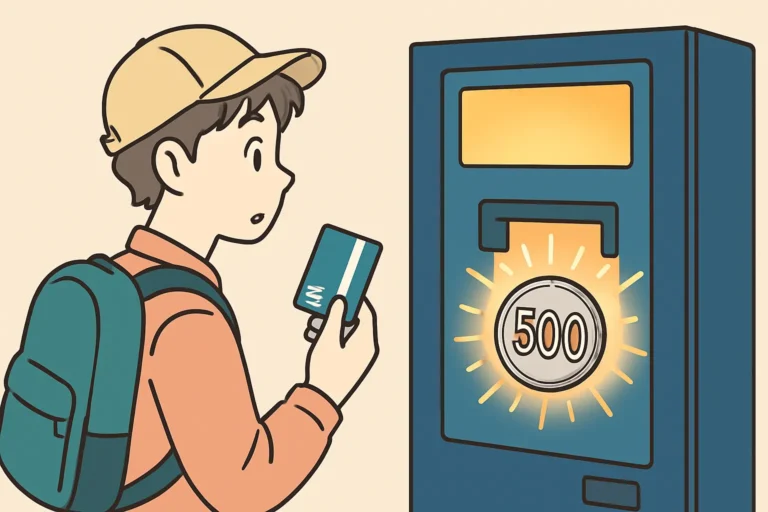
Imagine this: you’ve had an amazing day exploring Seoul using the super-efficient subway. You’re heading home, and you have that little single-use transportation card in your pocket. Don’t throw it away! That small piece of plastic holds a secret: your money! Recently in Korea, with so many wonderful tourists visiting again, this little trick is becoming a hot topic. Today, we’ll learn the essential Korean phrases to get your ₩500 deposit back like a local. Let’s get that coin!
Core Expressions You Need to Know
Here are the key phrases to master the deposit refund machine!
1. 보증금 (Bogeumgeum)
- Pronunciation [Romanization]: Bo-jeung-geum
- English Meaning: Security Deposit
- Detailed Explanation: This is the magic word! When you buy a single-use subway card (called a ‘1회용 교통카드’), you pay an extra ₩500. This is the 보증금. It’s a promise that you’ll return the card. So when you return it, you get this money back. You’ll see this word on the ticket machines and the special refund machines.
- 💡 Pronunciation Tip:
The final ‘금 (geum)’ sound is important. The vowel ‘으 (eu)’ is pronounced by keeping your lips wide (like a flat smile) and making a sound from the back of your throat. The final consonant ‘ㅁ (m)’ is a clear ‘m’ sound. Try saying “geum” with your lips closing at the end.
2. 환급 받다 (Hwan-geup batda)
- Pronunciation [Romanization]: Hwan-geup bat-da
- English Meaning: To get a refund
- Detailed Explanation: This is the action you want to do! 환급 (Hwan-geum) means ‘refund’, and 받다 (batda) means ‘to receive’. Together, they form the verb ‘to get a refund’. This is a slightly formal but very accurate phrase. When you want to ask how to get your refund, you can use this verb.
- 💡 Pronunciation Tip:
Pay attention to the 받다 (batda) part. The first letter ‘ㅂ (b)’ is a soft sound, somewhere between an English ‘b’ and ‘p’. The final letter ‘ㄷ (d)’ is pronounced like a ‘t’ when it’s at the end of a block (like in받), but here it’s followed by다, so it keeps its soft ‘d’ sound. Practice saying [bat-da], not [pat-ta].
3. 이 카드요 (I kadeu-yo)
- Pronunciation [Romanization]: I ka-deu-yo
- English Meaning: This card. (in a polite way)
- Detailed Explanation: This is a super simple and useful phrase for beginners! 이 (i) means ‘this’, and 카드 (kadeu) is the Korean way of saying ‘card’. The magic part is -요 (-yo) at the end, which instantly makes your sentence polite. If you’re lost or confused, you can simply hold up your card, point to it, and say “이 카드요?” to a station employee. They’ll understand you need help with the card!
- 💡 Pronunciation Tip:
카드 (kadeu) is a loanword from English, so it sounds very similar! The key is to not stress either syllable too much. It’s a flat ‘ka-deu’. The ending ‘-요 (-yo)’ should have a slightly rising intonation, as if you’re politely asking a question.
Example Dialogue in Action!
Here’s how these phrases work in a real conversation. Imagine two friends, Sarah (a tourist) and Jisun (a local), at a subway station.
- Sarah: “Jisun, my subway ride is finished. What do I do with this?” (Holds up her single-use card)
- Jisun: “아, 이 카드요? (Ah, this card?) You need to get your 보증금 back!”
- Sarah: “My deposit? How do I 환급 받다 (get a refund)?”
- Jisun: “Easy! Just put the card into that machine over there. It’s a ‘보증금 환급기’ (deposit refund machine). You’ll get a ₩500 coin back!”
Culture Tip & Trend Deep Dive
Why the ₩500 Deposit? It’s Smart and Green!
You might wonder why you have to go through this process. It’s actually a very clever part of Korean culture that values efficiency and sustainability! The 보증금 system encourages everyone to return their cards instead of throwing them away. This allows the cards to be reused, reducing plastic waste.
Lately, many Korean travel vloggers and TikTok creators have been making short, fun videos about this. They call it the “₩500 challenge” or a “must-do Seoul travel hack.” It’s become a small, satisfying mission for tourists to complete at the end of their journey. So when you get your coin back, you’re not just saving a little money—you’re participating in Korea’s eco-conscious culture!
Let’s Review and Practice!
Great job! You learned how to get your subway deposit back and save some money for a snack.
Practice Time:
- Fill in the blank: You used a single-use card. To get your money back, you need to find the machine and get your _________.
(Answer: 보증금) -
Make a sentence: You want to ask a station employee where you can get a refund. How would you ask politely? (Hint: Use “어디에서” (eodieseo – where) and the verb we learned today).
(Answer: 어디에서 환급 받아요? / Eodieseo hwan-geup badayo?)
You’re all set to conquer the Korean subway! Now, it’s your turn. Try leaving a comment below using one of today’s new expressions! See you next time at [Daily Hangul]
Frequently Asked Questions (FAQ)
Q: What does "환급" mean in Korean and how do you pronounce it?
A: In Korean, "환급" is pronounced [Hwan-geum] and means: means 'refund', and
Q: What does "받다" mean in Korean and how do you pronounce it?
A: In Korean, "받다" is pronounced [batda] and means: means 'to receive'. Together, they form the verb 'to get a refund'. This is a slightly formal but very accurate phrase. When you want to ask how to get your refund, you can use this verb.
Q: What does "이" mean in Korean and how do you pronounce it?
A: In Korean, "이" is pronounced [i] and means: means 'this', and
Q: What does "카드" mean in Korean and how do you pronounce it?
A: In Korean, "카드" is pronounced [kadeu] and means: is the Korean way of saying 'card'. The magic part is






