

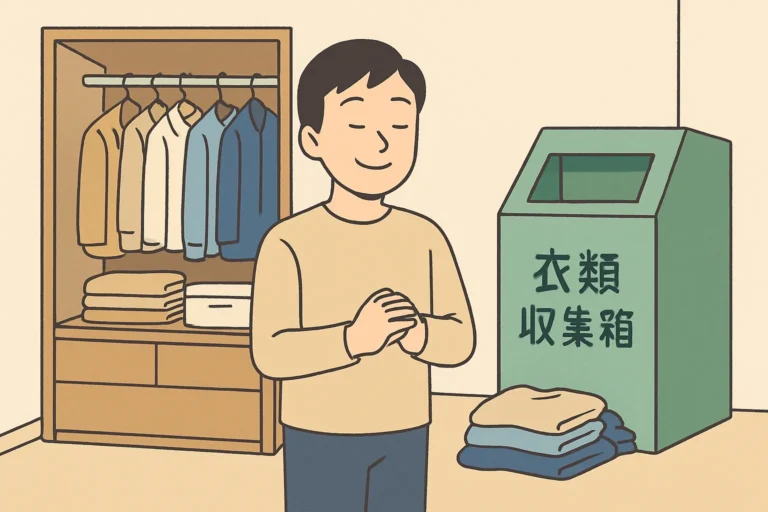
Give Your Closet a K-Style Makeover: Decluttering in Korean!
Hello! Welcome to Maeil Hangeul, your go-to blog for upgrading your Korean skills!
Have you ever looked at your closet and thought, “I have nothing to wear!” even though it’s overflowing with clothes? You’re not alone! Today, we’re going to tackle a very practical and satisfying topic: how to talk about organizing, donating, and recycling your clothes in Korean.
Lately in Korea, there’s a huge trend of living a “미니멀 라이프” (minimal life) and embracing sustainable fashion. So, learning these phrases will not only help you clean your room but also let you join in on conversations about modern Korean culture and eco-friendly living. Let’s get organizing!
Core Expressions for Your Closet Clean-out
Here are some essential phrases to help you talk about your decluttering journey like a native speaker.
1. 안 입는 옷 (an ipneun ot)
- Pronunciation [Romanization]: an ipneun ot
- English Meaning: Clothes (I) don’t wear
- Detailed Explanation: This is the most natural way to describe the clothes that have been sitting in your closet for ages. It’s a combination of 안 (not), 입다 (to wear) in its present descriptive form (-는), and 옷 (clothes). You can use it to talk about any piece of clothing you no longer use.
- 💡 Pronunciation Tip:
Notice the 받침 (final consonant) ‘ㅂ’ in ‘입’ followed by ‘는’. In Korean, when ‘ㅂ’ is followed by a nasal sound like ‘ㄴ’, it often changes to an ‘ㅁ’ sound to make the pronunciation smoother. So, instead of a harsh “ip-neun,” it sounds more like [임는 / imneun]. This small change will make you sound much more natural!
2. 옷을 정리하다 (oseul jeongrihada)
- Pronunciation [Romanization]: oseul jeong-ri-ha-da
- English Meaning: To organize/declutter clothes
- Detailed Explanation: 정리하다 is a magic verb in Korean! It means “to organize,” “to arrange,” or “to clean up.” You can use it for anything: organizing your room (방을 정리하다), your desk (책상을 정리하다), or even your thoughts (생각을 정리하다). It perfectly captures the feeling of tidying up your wardrobe.
- 💡 Pronunciation Tip:
This is a classic example of a linking sound rule called ‘연음’ (yeon-eum). The final consonant ‘ㅅ’ in ‘옷’ moves over to the next empty syllable ‘을’. So, instead of pronouncing it as “ot-eul,” the ‘ㅅ’ sound links, making it sound like [오슬 / oseul].
3. 의류 수거함에 넣다 (uiryu sugeohame neota)
- Pronunciation [Romanization]: ui-ryu su-geo-ham-e neo-ta
- English Meaning: To put (clothes) in a clothing collection bin
- Detailed Explanation: If you’ve walked around any residential area in Korea, you’ve probably seen large green or white bins on the street. These are 의류 수거함 (clothing collection bins). This phrase is super practical! Let’s break it down: 의류 (clothing – a slightly more formal word than 옷), 수거함 (collection bin), -에 (in/to), and 넣다 (to put in).
- 💡 Pronunciation Tip:
The double vowel ‘의’ can be tricky for learners. When it’s at the beginning of a word like in ‘의류’, it’s pronounced clearly as [ui-ryu]. However, in other positions or when spoken quickly, it often simplifies to an [이/i] sound. For now, focus on the clear [ui] sound for this word!
4. 상태가 좋다 (sangtaega jota)
- Pronunciation [Romanization]: sang-tae-ga jo-ta
- English Meaning: To be in good condition
- Detailed Explanation: When you’re donating clothes, you want to make sure they’re in good shape. This phrase is perfect for that. 상태 means “state” or “condition,” and 좋다 means “to be good.” You can use it for anything secondhand, not just clothes. For example, “이 책은 상태가 좋아요” (This book is in good condition).
- 💡 Pronunciation Tip:
Pay attention to the ‘ㅎ’ in ‘좋다’. When ‘ㅎ’ is followed by a consonant like ‘ㄷ’, the two sounds merge to create an aspirated (stronger, breathy) sound. So, ‘좋다’ is not pronounced “jot-da,” but rather [조타 / jota], where the ‘ㄷ’ becomes a ‘ㅌ’ sound. It’s a common rule that will instantly improve your accent!
Example Dialogue
Let’s see how these phrases are used in a real conversation.
A: 소미야, 이 옷들 다 뭐야? (Somi, what’s with all these clothes?)
B: 아, 주말에 옷을 정리했어. 안 입는 옷이 너무 많더라고. (Ah, I organized my clothes over the weekend. I realized I have so many clothes I don’t wear.)
A: 진짜 많네! 다 버릴 거야? (Wow, that’s a lot! Are you throwing them all away?)
B: 아니. 이건 거의 새것처럼 상태가 좋아서 기부할 거고, 나머지는 의류 수거함에 넣으려고. (No. This one is in good condition, almost like new, so I’ll donate it. I plan to put the rest in the clothing collection bin.)
A: 좋은 생각이다! 나도 이번 주에 옷장 정리 좀 해야겠다. (That’s a great idea! I should organize my closet this week, too.)
Culture Tip & Trend Deep Dive
In Korea, conscious consumption is more than just a trend; it’s becoming a lifestyle, especially for the younger generation (MZ 세대).
- The Ubiquitous 의류 수거함: These collection bins are everywhere in Korea. They are typically managed by non-profit organizations that sort the clothes for donation, resale in developing countries, or recycling into industrial materials. It’s the most common and convenient way for people to get rid of old clothes.
- Thrift Stores & Donation Culture: While thrift shopping wasn’t always mainstream, it’s gaining huge popularity. Stores like ‘아름다운 가게’ (The Beautiful Store) are well-known social enterprises where people can donate goods, and the profits are used for charity. Mentioning you donated clothes there will definitely make you sound like you know your stuff!
- Idols and Sustainable Fashion: Many K-pop idols and celebrities are now promoting sustainable brands or participating in clothing donation campaigns. For instance, when a member of a famous group is seen wearing an upcycled brand or talking about donating their old stage outfits, it becomes a hot topic on social media, encouraging fans to participate in the movement. Using today’s phrases can help you understand and talk about these cool, eco-conscious trends!
Let’s Review & Practice!
Great job today! We learned some very useful expressions for talking about decluttering and donating clothes. You can now identify 안 입는 옷, decide to 옷을 정리하다, check if the 상태가 좋다, and know to put them in an 의류 수거함.
Now, it’s your turn to practice!
- Fill in the blank:
This sweater is almost new. It is ____ ________.
(이 스웨터는 거의 새것이에요. _________ 좋아요.) - Make a short sentence:
Imagine you’re cleaning your room this weekend. What would you say in Korean? (Hint: Use the verb 정리하다).
Leave your answers in the comments below! We’d love to see you use the phrases we learned today. Happy decluttering
Frequently Asked Questions (FAQ)
Q: What does "'연음'" mean in Korean and how do you pronounce it?
A: In Korean, "'연음'" is pronounced [yeon-eum] and means: . The final consonant 'ㅅ' in '옷' moves over to the next empty syllable '을'. So, instead of pronouncing it as "ot-eul," the 'ㅅ' sound links, making it sound like
Q: What does "'아름다운 가게'" mean in Korean and how do you pronounce it?
A: In Korean, "'아름다운 가게'" is pronounced [The Beautiful Store] and means: are well-known social enterprises where people can donate goods, and the profits are used for charity. Mentioning you donated clothes there will definitely make you sound like you know your stuff!







