

Hello! Welcome to [Maeil Hangeul], here to upgrade your Korean skills!
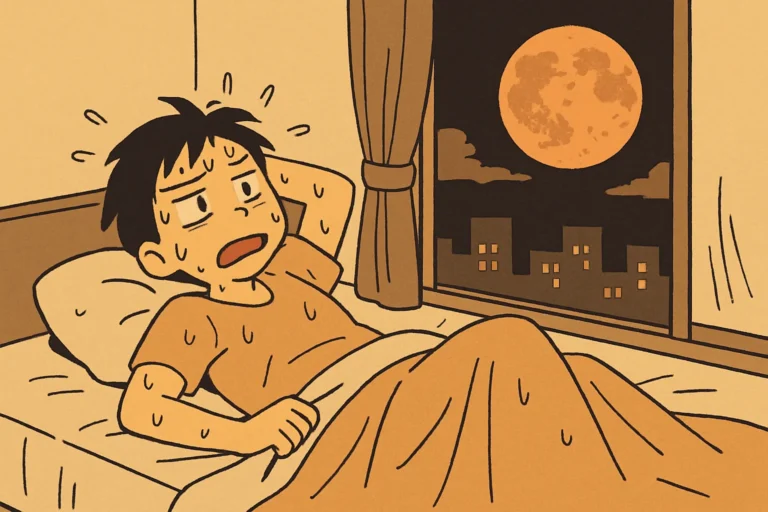
Ever spent a summer night in Korea tossing and turning, feeling like the heat just won’t quit? You’re not alone! Today, we’re diving into a super common topic you’ll hear every summer: the dreaded 열대야 (yeoldaeya), or “tropical night.” Lately in Korea, the humidity has been no joke, and complaining about the heat is practically a national sport. Mastering these phrases will not only help you share your suffering but also make you sound just like a local. Let’s get started!
Core Expressions for Sweltering Nights
Here are the essential phrases you need to talk about those hot, sleepless summer nights.
1. 열대야 (Yeoldaeya)
- Pronunciation [Romanized]: Yeoldaeya
- English Meaning: Tropical Night
- Detailed Explanation: This is your main keyword! 열대야 (yeoldaeya) specifically refers to a night when the temperature does not drop below 25°C (77°F). It’s a combination of 열대 (yeoldae), meaning “tropical,” and 야 (ya), meaning “night.” You’ll hear this word constantly on the Korean news during summer weather forecasts.
- 💡 Pronunciation Tip: The first syllable ‘열’ (yeol) can be tricky. The vowel ‘ㅕ’ (yeo) is like the ‘yo’ in ‘yonder’ but without rounding your lips. The final consonant ‘ㄹ’ (l) is a light ‘L’ sound made by tapping the tip of your tongue just behind your top teeth.
2. 잠을 설치다 (Jameul seolchida)
- Pronunciation [Romanized]: Jameul seolchida
- English Meaning: To sleep poorly / To toss and turn
- Detailed Explanation: This is the perfect phrase for when the heat keeps you from getting a good night’s rest. While you could say “못 잤어요” (I couldn’t sleep), 잠을 설치다 (jameul seolchida) has a more specific nuance. It means you slept on and off, waking up frequently, or just couldn’t fall into a deep sleep. It’s the ideal way to complain about a restless night.
- 💡 Pronunciation Tip: Let’s look at ‘설치다’ [seolchida]. The consonant ‘ㅊ’ (ch) is an “aspirated” sound. This means you should release a strong puff of air when you say it, like the ‘ch’ in “chart.” To practice, hold a piece of paper in front of your mouth. It should flutter when you correctly pronounce 치 (chi)!
3. 푹푹 찌다 (Pukpuk jjida)
- Pronunciation [Romanized]: Pukpuk jjida
- English Meaning: To be boiling / sweltering hot
- Detailed Explanation: This is a fantastic descriptive phrase! 찌다 (jjida) means “to steam,” like steaming dumplings (만두). The word 푹푹 (pukpuk) is a mimetic word that describes the feeling of intense, suffocating heat and humidity. When you say “날씨가 푹푹 쪄요” (Nalssiga pukpuk jjyeoyo), you’re vividly saying, “The weather is steamy hot!”
- 💡 Pronunciation Tip: This phrase features a “tense” consonant: ‘ㅉ’ (jj) in 찌다 [jjida]. Unlike the ‘j’ in “jump” or the ‘ch’ in “church,” this sound is made with a tighter throat and no puff of air. It’s a sharp, clipped sound. Practice distinguishing between 자다 (jada – to sleep), 차다 (chada – to kick), and 짜다 (jjada – to be salty) to master it!
Example Conversation
Let’s see how these expressions work in a real chat between two friends.
A: 와, 어제 너무 더워서 잠을 설쳤어.
A: Wa, eoje neomu deowoseo jameul seolcheosseo.
(Wow, I slept so poorly last night because it was too hot.)
B: 나도! 어젯밤 완전 열대야였잖아. 날씨가 정말 푹푹 찐다.
B: Nado! Eojetbam wanjeon yeoldaeya-yeotjanha. Nalssiga jeongmal pukpuk jjinda.
(Me too! Last night was a total tropical night. The weather is absolutely sweltering.)
A: 맞아. 이러다가 더위 먹겠어. 시원한 팥빙수 먹으러 갈래?
A: Maja. Ireodaga deowi meokgesseo. Siwonhan patbingsu meoreureo gallae?
(I know. I think I might get sunstroke at this rate. Wanna go get some cold patbingsu?)
B: 좋아! 요즘 인기 있는 아이돌 여름 노래 들으면서 먹자!
B: Joa! Yojeum ingi inneun aidol yeoreum norae deureumyeonseo meokja!
(Sounds great! Let’s eat while listening to that popular new idol summer song!)
Culture Tip & Trend Deep Dive
How do Koreans beat the heat?
When a 열대야 hits, people get creative! It’s common for friends and families to escape to places with powerful air conditioning, like a PC방 (PC Bang – Internet Cafe), a 24-hour cafe, or even a 찜질방 (Jjimjilbang – Korean Spa) to cool down.
“Pukpuk Jjinda” on Social Media
You’ll see the phrase “푹푹 찐다” all over Korean social media in the summer. It’s often used as a caption for funny memes or pictures of people (or pets!) looking like they’re melting from the heat. If you use this phrase on your Instagram story with a sweaty selfie, you’ll definitely get some laughs from your Korean friends! It shows you understand the true feeling of a Korean summer.
Let’s Practice!
Time to check what you’ve learned.
1. Fill in the blank:
It was a tropical night yesterday, so I couldn’t sleep well.
어제는 ______여서 잠을 _______.
(Answer: 열대야, 설쳤어요)
2. Make a sentence:
Imagine you’re texting a friend to complain about the sweltering weather. How would you say, “The weather is so steamy hot today!” using an expression we learned?
Great job today! The Korean summer is tough, but now you’re fully equipped to talk about it.
Try using one of today’s phrases in the comments below! How’s the weather where you are?
Frequently Asked Questions (FAQ)
Q: What does "열대야" mean in Korean and how do you pronounce it?
A: In Korean, "열대야" is pronounced [yeoldaeya] and means: , or "tropical night." Lately in Korea, the humidity has been no joke, and complaining about the heat is practically a national sport. Mastering these phrases will not only help you share your suffering but also make you sound just like a local. Let's get started!
Q: What does "열대야" mean in Korean and how do you pronounce it?
A: In Korean, "열대야" is pronounced [yeoldaeya] and means: specifically refers to a night when the temperature does not drop below 25°C (77°F). It's a combination of
Q: What does "열대" mean in Korean and how do you pronounce it?
A: In Korean, "열대" is pronounced [yeoldae] and means: , meaning "tropical," and
Q: What does "야" mean in Korean and how do you pronounce it?
A: In Korean, "야" is pronounced [ya] and means: , meaning "night." You'll hear this word constantly on the Korean news during summer weather forecasts.







