

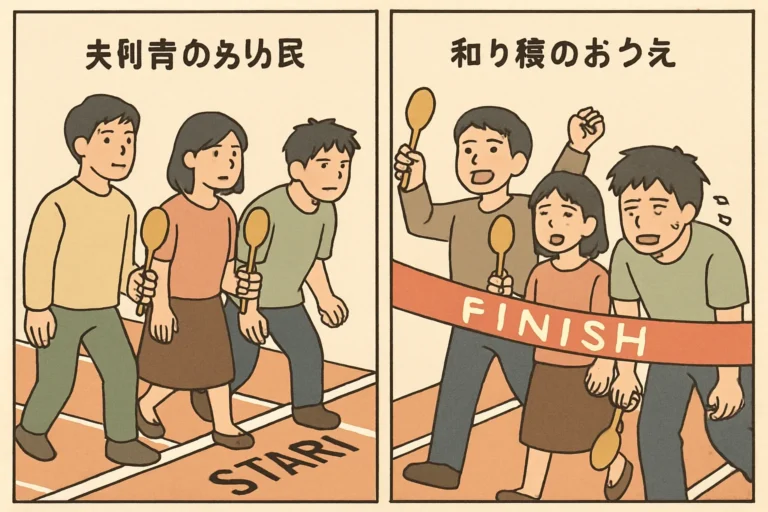
Korea’s Great Debate: Opportunity vs. Outcome – Let’s Talk!
Hello! Welcome to [Maeil Hangul], your friendly guide to upgrading your Korean skills!
Today, we’re diving into a topic you’ll hear everywhere in Korea, from news debates to K-dramas: social fairness. Have you ever wondered how to discuss complex ideas like equality? We’ll learn the exact Korean phrases you need to talk about the difference between “equality of opportunity” and “equality of outcome.”
Lately in Korea, the idea of ‘공정성’ (gongjeongseong – fairness) is a huge deal, especially for young people navigating intense competition in school and the job market. You’ll see this theme in hit dramas like Sky Castle or Parasite, where characters grapple with unfair starting lines. Understanding this topic will not only boost your Korean but also give you a much deeper insight into modern Korean society. Let’s get started!
Core Expressions for Your Debate Toolkit
Here are the essential phrases you need to sound like a pro when discussing fairness and equality.
1. 기회의 평등 (Equality of Opportunity)
- Pronunciation [Romanized]: Gihoe-ui pyeongdeung
- English Meaning: Equality of opportunity
- Detailed Explanation: This is a core concept in discussions about fairness. It refers to the idea that everyone should have the same starting point and a fair chance to succeed, regardless of their background (family, wealth, etc.). It emphasizes fair processes.
- 💡 Pronunciation Tip: The particle ‘의’ (ui) is a possessive marker, like ‘of’ in English. While its official pronunciation is [ui], in everyday speech, it’s often pronounced like [에/e] when it follows a noun. So, you’ll sound very natural saying [기회에 평등 / gihoe-e pyeongdeung].
2. 결과의 평등 (Equality of Outcome)
- Pronunciation [Romanized]: Gyeolgwa-ui pyeongdeung
- English Meaning: Equality of outcome
- Detailed Explanation: This concept is the counterpart to the first one. It focuses on the finish line, arguing that a fair society should ensure people end up with similar results or conditions, even if it means providing more help to those who started with less.
- 💡 Pronunciation Tip: Let’s look at ‘결과’ [gyeolgwa]. The first syllable ends with a 받침 ‘ㄹ’ (l/r), which is pronounced as a clear [l] sound when it comes before a consonant like ‘ㄱ’ (g). So, it’s “gyeol,” not “gyeo.” Practice making that distinct [l] sound!
3. -(는)다고 해서 (…Doesn’t Mean…)
- Pronunciation [Romanized]: -(neun)dago haeseo
- English Meaning: Just because… doesn’t mean…
- Detailed Explanation: This grammar pattern is a debater’s best friend! It allows you to acknowledge one fact while refuting the conclusion someone might draw from it. It’s perfect for making nuanced arguments.
- Verb + -는다고 해서 (e.g., 노력한다고 해서 – Just because you try hard…)
- Adjective + -다고 해서 (e.g., 비싸다고 해서 – Just because it’s expensive…)
- 💡 Pronunciation Tip: This pattern connects several parts: -다 (da) + -고 (go) + 해서 (haeseo). When spoken quickly, the sounds flow together. Focus on saying it as a single, smooth unit: [다고해서 / dagohaeseo]. For example, ‘한다고 해서’ sounds like [handagohaeseo].
4. 오히려 (On the Contrary)
- Pronunciation [Romanized]: Ohiryeo
- English Meaning: Rather, on the contrary, instead
- Detailed Explanation: This is a fantastic adverb for introducing an opposing or unexpected idea. It signals that you’re about to present a different perspective. For example, “Some think that policy will help, but on the contrary, it could make things worse.”
- 💡 Pronunciation Tip: The syllable ‘려’ (ryeo) can be tricky. It’s a combination of the ‘ㄹ’ (r/l) sound and the vowel ‘ㅕ’ (yeo). Start by saying “yeo,” then add a light ‘r’ sound at the beginning. It’s not a hard, rolled ‘r’ but a gentle tap of the tongue, similar to the ‘r’ in the Spanish word “pero.”
Example Dialogue
Let’s see how these expressions work in a real conversation. Friends A and B are discussing a popular webtoon about students in a competitive high school.
A: 요즘 인기 웹툰을 보는데, 주인공이 아무리 노력해도 출발선이 다른 친구들을 이기기 힘들어 보여. 기회의 평등만으로는 부족한 것 같아.
A: I’m reading a popular webtoon lately, and no matter how hard the main character tries, it seems impossible to beat friends with different starting lines. I don’t think equality of opportunity is enough.
B: 맞아. 기회의 평등을 보장한다고 해서 모두가 성공하는 건 아니지. 오히려 그런 경쟁이 사회적 격차를 더 키울 수도 있어.
B: I agree. Just because you guarantee equality of opportunity doesn’t mean everyone will succeed. On the contrary, that kind of competition could actually widen the social gap.
A: 네 말이 맞아. 그래서 결과의 평등에 대한 논의도 필요한 거겠지. 정말 어려운 문제야.
A: You’re right. I guess that’s why we also need to discuss equality of outcome. It’s such a difficult issue.
Culture Tip & Trend Deep Dive
In Korea, the term ‘수저계급론’ (sujeo gyegeumnon), or “spoon class theory,” is a popular way to talk about social inequality. It uses spoons to represent one’s family background:
* 금수저 (geumsujeo): Gold spoon (born into a very wealthy family)
* 은수저 (eunsujeo): Silver spoon (born into an upper-middle-class family)
* 흙수저 (heuksujeo): Dirt spoon (born into a low-income family)
This theory suggests that your “spoon” (your starting line) has a huge impact on your life’s opportunities, making the debate between 기회의 평등 and 결과의 평등 incredibly relevant. When you use today’s vocabulary, you’re not just practicing Korean; you’re tapping into one of the most important social conversations happening in Korea today! Using a phrase like “기회의 평등만으로는 흙수저가 금수저를 이기기 힘들어요” (With only equality of opportunity, it’s hard for a dirt spoon to beat a gold spoon) will show you have a deep understanding of Korean culture.
Let’s Review and Practice!
Great job today! We learned how to discuss the complex but important topics of fairness and equality. You now know:
* 기회의 평등 (Equality of opportunity)
* 결과의 평등 (Equality of outcome)
* The grammar pattern -(는)다고 해서 (Just because…)
* The useful adverb 오히려 (On the contrary)
Now, let’s put it to the test!
1. Fill in the blank:
열심히 공부한다고 해서 항상 시험을 잘 보는 것은 아니다. ________, 너무 스트레스를 받아서 시험을 망칠 수도 있다.
(Just because you study hard doesn’t always mean you’ll do well on the test. ________, you might get too stressed and ruin the test.)
(Answer: 오히려)
2. Make your own sentence:
Try creating a sentence using “기회의 평등” or “결과의 평등”. What do you think is more important for a fair society?
Leave your answers and sentences in the comments below! I’d love to hear your thoughts. Keep up the amazing work
Frequently Asked Questions (FAQ)
Q: What does "‘공정성’" mean in Korean and how do you pronounce it?
A: In Korean, "‘공정성’" is pronounced [gongjeongseong - fairness] and means: is a huge deal, especially for young people navigating intense competition in school and the job market. You'll see this theme in hit dramas like
Q: What does "'결과'" mean in Korean and how do you pronounce it?
A: In Korean, "'결과'" is pronounced [gyeolgwa] and means: . The first syllable ends with a 받침 'ㄹ' (l/r), which is pronounced as a clear
Q: What does "'수저계급론'" mean in Korean and how do you pronounce it?
A: In Korean, "'수저계급론'" is pronounced [sujeo gyegeumnon] and means: , or "spoon class theory," is a popular way to talk about social inequality. It uses spoons to represent one's family background:
Q: What does "금수저" mean in Korean and how do you pronounce it?
A: In Korean, "금수저" is pronounced [geumsujeo] and means: Gold spoon (born into a very wealthy family)







