

[K-Art Deep Dive] 백남준처럼 생각하기: 세상을 바꾼 질문들
(Thinking Like Paik Nam June: The Questions That Changed the World)
Hello! Welcome to [Maeil Hangeul], your personal guide to upgrading your Korean skills!
Today, we’re diving deep into the world of Korean art and philosophy. Have you ever stood in front of a piece of modern art and wondered what it’s truly trying to say? We’ll be exploring the profound questions posed by the legendary Paik Nam June, the father of video art. In Korea today, his influence is everywhere, from the massive media art displays in Seoul’s COEX to the interactive digital experiences popping up in galleries across the country. Understanding his work isn’t just about art history; it’s about understanding the philosophical questions that modern Korea is still grappling with. Let’s learn the vocabulary to discuss art like a true connoisseur!
Core Expressions for Art Critics
Here are some advanced expressions that will help you articulate complex ideas about art and philosophy, inspired by the visionary Paik Nam June.
1. 화두를 던지다 (Hwadureul deonjida)
- Romanization: [Hwadureul deonjida]
- English Meaning: To raise a critical question; to present a key topic for meditation or discussion.
- Detailed Explanation: ‘화두’ (hwadu) is a term originating from Zen Buddhism, referring to a question or story that cannot be solved by rational thought, used as a focus for meditation. In a modern context, ‘화두를 던지다’ means to pose a fundamental, thought-provoking question that challenges the audience’s perspective. It’s a powerful phrase used in academic and critical discussions to describe an artist or thinker who introduces a groundbreaking concept.
- 💡 Pronunciation Tip: The word ‘던지다’ is pronounced as it’s written, but focus on the clear distinction between the ‘ㅓ’ (eo) in ‘던’ and the ‘ㅣ’ (i) in ‘지’. Avoid blending them. It’s a crisp [deon-ji-da].
2. 기존의 틀을 깨다 (Gijonui teureul kkaeda)
- Romanization: [Gijonui teureul kkaeda]
- English Meaning: To break the existing mold/framework.
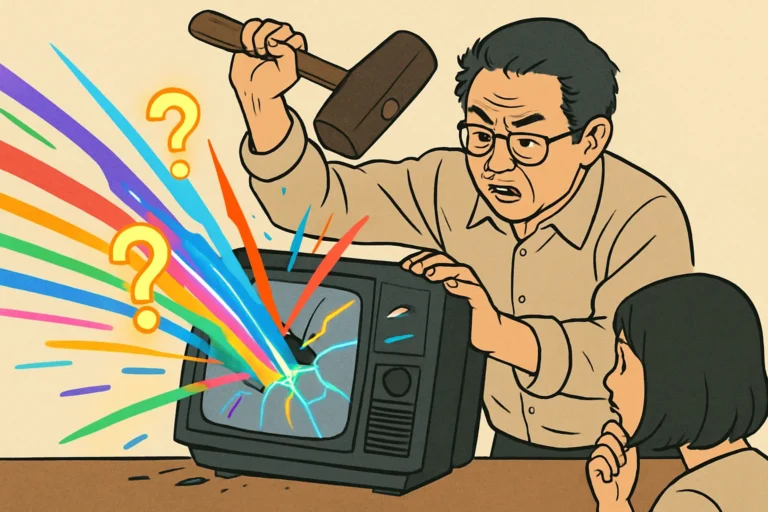
- Detailed Explanation: This is a fantastic idiom for describing any kind of innovation or revolution. ‘기존의 틀’ (gijonui teul) means “the existing frame” or “conventional structure,” and ‘깨다’ (kkaeda) means “to break” or “shatter.” Paik Nam June did this literally by dismantling and reassembling televisions, and figuratively by shattering the conventional definition of art. You can use this to talk about innovators in any field, from technology to music.
- 💡 Pronunciation Tip: When ‘틀’ (teul) is followed by the particle ‘을’ (eul), the ‘ㄹ’ (l) sound from the bottom of ‘틀’ moves over to the empty consonant spot in ‘을’. So, instead of saying “teul / eul,” it flows together smoothly as [teureul]. This is a key linking rule (연음 법칙) that makes your Korean sound much more natural.
3. 상호작용을 유도하다 (Sanghojagyong-eul yudohada)
- Romanization: [Sanghojagyong-eul yudohada]
- English Meaning: To induce interaction.
- Detailed Explanation: This phrase is essential for discussing contemporary and interactive art. ‘상호작용’ (sanghojakyong) means “interaction” or “interactivity,” and ‘유도하다’ (yudohada) means “to guide” or “to induce.” Paik Nam June’s work often required the viewer’s participation, transforming them from a passive observer into an active part of the artwork. This term perfectly captures that intention.
- 💡 Pronunciation Tip: The ‘ㅇ’ (ng) in ‘상’ (sang) is a final consonant, but the ‘ㅇ’ at the beginning of ‘용’ (yong) is just a placeholder. Pay attention to the clear nasal sound of the final ‘ㅇ’ [ng] in both ‘상’ and ‘용’. It’s not [sang-ho-ja-gyong], but a more connected [sang-ho-ja-gyong].
4. ~에 대한 고찰 (e daehan gochal)
- Romanization: [-e daehan gochal]
- English Meaning: A deep inquiry into ~; a philosophical examination of ~.
- Detailed Explanation: ‘고찰’ (gochal) is a sophisticated, academic term for “deep consideration,” “examination,” or “inquiry.” It implies a much deeper level of thought than ‘생각’ (saenggak). When you describe a work of art as “기술과 인간의 관계에 대한 고찰” (a deep inquiry into the relationship between technology and humanity), you are elevating the discussion to a philosophical level. It’s a perfect term for writing essays or having intellectual conversations about art.
- 💡 Pronunciation Tip: The ‘ㅊ’ (ch) in ‘고찰’ (gochal) is an aspirated consonant. This means you should release a stronger puff of air than you would for ‘ㅈ’ (j). Practice by holding a piece of paper in front of your mouth; it should flutter significantly when you say [go-chal].
Example Dialogue (At the Nam June Paik Art Center)
A: 와, 백남준의 ‘다다익선’은 실제로 보니까 압도적이네. 그냥 TV를 쌓아놓은 게 아니었어.
(Wa, Baek Namjun-ui ‘Dadaikseon’-eun siljero bonikka apdojeogine. Geunyang tibireul ssaanoeun ge anieosseo.)
Wow, seeing Paik Nam June’s ‘The More, The Better’ in person is overwhelming. It wasn’t just a pile of TVs.
B: 맞아. 1988년에 이미 기술의 본질과 소통에 대한 고찰을 시도했다는 게 놀라워. 그는 정말 기존의 틀을 깨는 예술가였어.
(Maja. Cheongubaekpalsippalnyeone imi gisurui bonjilgwa sotong-e daehan gochal-eul sidohaetdaneun ge nollawo. Geuneun jeongmal gijonui teureul kkaeneun yesulgayeosseo.)
I agree. It’s amazing that he was already attempting a deep inquiry into the nature of technology and communication back in 1988. He was truly an artist who broke the existing mold.
A: 그리고 이 작품은 관객이 계단을 오르내리면서 봐야 하잖아. 이런 식으로 관객의 상호작용을 유도하는 점이 인상 깊어.
(Geurigo i jakpumeun gwangaegi gyedaneul oreunaerimyeonseo bwayaajana. Ireon sigeuro gwangaegui sanghojagyong-eul yudohaneun jeomi insang gipeo.)
And this piece requires the audience to walk up and down the stairs to see it all, right? The way it induces interaction from the viewer like this is impressive.
B: 응. 단순히 ‘보는’ 예술이 아니라 ‘체험하는’ 예술이라는 새로운 화두를 던진 거지. 오늘날 미디어 아트의 시작점이라고 할 수 있어.
(Eung. Dansunhi ‘boneun’ yesuri anira ‘cheheomhaneun’ yesuriraneun saeroun hwadureul deonjin geoji. Oneullal midieo ateuui sijakjeomirago hal su isseo.)
Exactly. He raised the critical question that art isn’t just for ‘seeing’ but for ‘experiencing.’ You could say this is the starting point of modern media art.
Cultural Tip & Deeper Dive
Paik Nam June is often called a “prophet” in Korea. His famous quote, “The future is now,” and his predictions about an “electronic superhighway” (what we now call the internet) in the 1970s were astonishingly accurate.
His philosophy of breaking boundaries (틀을 깨다) is deeply embedded in the Korean mindset today, especially in the tech and entertainment industries. Think of how K-pop groups like BTS use social media to create direct interaction (상호작용) with their global fanbase, or how Korean cinema like Parasite posed critical questions (화두를 던지다) about social class to a worldwide audience.
When you use these expressions, you’re not just describing art; you’re tapping into a core Korean cultural value: a relentless drive for innovation and a deep, philosophical examination (고찰) of modernity’s challenges and promises.
Let’s Practice!
Ready to think like an art critic? Let’s put your new vocabulary to the test.
Practice Question:
Think of a piece of art, a film, or even a song that you believe “broke the mold.” Using at least two of the expressions we learned today (화두를 던지다, 기존의 틀을 깨다, 상호작용을 유도하다, ~에 대한 고찰), write one or two sentences in Korean describing its impact.
Example Answer: “봉준호 감독의 영화 ‘기생충’은 계급 문제에 대한 날카로운 고찰을 통해 전 세계 관객에게 무거운 화두를 던졌다.” (Director Bong Joon-ho’s film ‘Parasite’ threw a heavy question to the global audience through its sharp inquiry into class issues.)
Now it’s your turn! Leave your own critical analysis in the comments below. We can’t wait to read your profound thoughts






