안녕하세요! 매일한글 에디터입니다. (Hello, this is your Daily Hangul editor!)
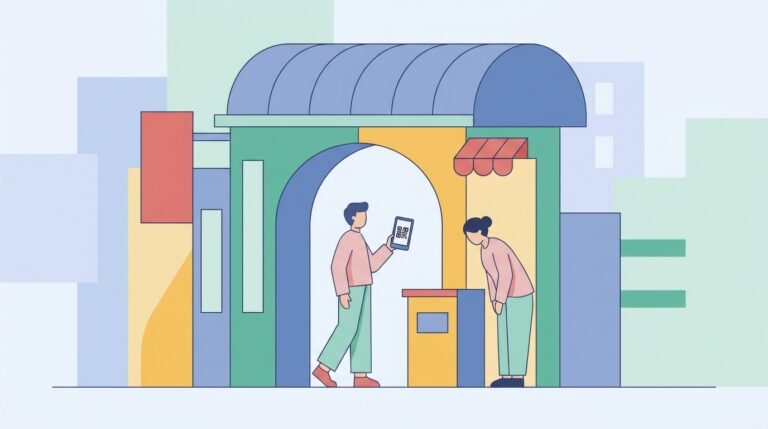
Picture this: you arrive at The Hyundai Seoul for a K-Pop idol’s pop-up store. You won the online booking battle, and your heart is racing! At the entrance, a staff member speaks fast in Korean. Suddenly your mind goes blank while hunting for your reservation QR code on your phone. Don’t worry—even I panicked at my first beauty pop-up! Based on real feedback from our beginner learners, this guide shares the exact phrases you need. Learn these easy Level 2 expressions today, and breeze inside to grab your limited merch like a Seoul local!
Phase 2: Top 3 Key Expressions Deep Dive
1. 사전 예약했어요. (Sajeon yeyakaesseoyo.)
- Pronunciation: [Sajeon yeyakaesseoyo] (Sounds like: “Sah-juhn yeh-yah-keh-ssuh-yo” — notice how ㄱ and ㅎ blend into a crisp ‘k’ sound, just like the ‘k’ in ketchup!)
- Meaning: Literally “Did prior reservation.” In real life, it means “I have a pre-booking / I reserved in advance.”
- K-Culture Moment: Picture fans lining up outside a limited-edition NewJeans or SEVENTEEN department store pop-up, phones in hand, ready to prove they survived the fierce booking war.
- Editor’s Insight: Korean pop-up stores strictly separate
사전 예약 (sajeon yeyak / advance booking)from현장 대기 (hyeonjang daegi / walk-in waitlist). Saying this phrase first immediately puts you in the fast lane!- Situation Spectrum: Casual: 🚫 (Too stiff for close friends) | Semi-formal: ✅ (The sweet spot for store staff!) | Formal: ⚠️ (Use
사전 예약했습니다 (sajeon yeyakaesseumnida)in formal business events)- 🤔 Think About It: In English, people casually say “I’m on the list” or “I booked online.” Korean uses a very clear noun-plus-verb combo (
예약했어요). Why do you think Korean public spaces prioritize fast, unambiguous status labels over casual phrasing?2. 여기 QR코드 있어요. (Yeogi QRkode isseoyo.)
- Pronunciation: [Yeogi kyu-al-ko-deu isseoyo] (Sounds like: “Yuh-gee Q-R-koh-duh ee-ssuh-yo” — add a soft, relaxed “uh” vowel at the end of “code” so it flows like “koh-duh.”)
- Meaning: Literally “Here QR code exists.” Naturally means “Here is my QR code.”
- K-Culture Moment: Just like trendy travelers in Seoul travel vlogs smoothly flashing their digital ticket at an exhibition or character café counter without missing a beat.
- Editor’s Insight: Notice there is no word for “my” (
제 / je) here! In everyday Korean, dropping “my” when holding something right in front of the listener sounds 10x more natural.- Situation Spectrum: Casual: ⚠️ (Drop
-요to있어 (isseo)with friends) | Semi-formal: ✅ (Polite, friendly, and completely natural) | Formal: ⚠️ (Swap to있습니다 (isseumnida)in formal ceremonies)- 🤔 Think About It: Instead of saying “I have a QR code,” Korean frames it as “A QR code exists here.” How does shifting focus from who owns it to what is present make the interaction feel softer?
3. 지금 들어가도 돼요? (Jigeum deureogado dwaeyo?)
- Pronunciation: [Jigeum deureogado dwaeyo] (Sounds like: “Jee-geum duh-ruh-gah-doh dweh-yo” — the ㄹ in
들어가도is a quick tongue tap, very similar to the fast ‘tt’ in American English “water.”)- Meaning: Literally “Even if I enter now, is it okay?” Nuance: “May I go inside now?”
- K-Culture Moment: You will hear this classic
-아/어도 돼요? (-a/eodo dwaeyo?)pattern in almost every K-Drama whenever a character politely checks before stepping into a room or exclusive VIP space.- Editor’s Insight: Even after your QR code beeps green, pop-up staff often pause to hand you a paper wristband, stamp your hand, or explain photo rules. Asking this shows top-tier manners!
- Situation Spectrum: Casual: ⚠️ (Say
들어가도 돼? (deureogado dwae?)with buddies) | Semi-formal: ✅ (Warm, respectful, and ideal for retail staff) | Formal: ⚠️ (Upgrade to들어가도 될까요? (deureogado doelkkayo?)for extra politeness)- 🤔 Think About It: English asks directly “Can I go in?” while Korean asks “If I go in, does it become okay?” How does framing a request as a gentle condition reflect Korean social harmony?
Phase 3: Textbook Korean vs. Real Korean
Situation 1: Telling the staff your reservation time
- 📖 Textbook Korean: 저는 오늘 2시에 사전 예약을 했습니다. 확인해 주세요. (Jeoneun oneul dusie sajeon yeyageul haesseumnida. Hwaginhae juseyo. / I made an advance reservation for 2 PM today. Please check it.)
- 🗣️ Real Korean: 저 2시 예약자예요! (Jeo dusi yeyakjayeyo! / I’m a 2 PM reservation holder!)
- 💡 Why is it different? Staff at popular department store pop-ups check hundreds of fans every hour. Dropping long sentences for
예약자 (yeyakja / reservation holder)plus your time slot lets them scan you in three seconds flat!
Situation 2: When your phone screen is still loading
- 📖 Textbook Korean: 잠시만 기다려 주십시오. 화면이 나오지 않습니다. (Jamsiman gidaryeo jusipsio. Hwamyeoni naoji anseumnida. / Please wait a moment. The screen is not appearing.)
- 🗣️ Real Korean: 어, 잠깐만요! 화면이 지금 뜨고 있어요. (Eo, jamkkanmanyo! Hwamyeoni jigeum tteugo isseoyo. / Oh, just a sec! The screen is loading right now.)
- 💡 Why is it different? In real life, Koreans use
잠깐만요 (jamkkanmanyo / just a sec)and the everyday verb뜨다 (tteuda / to pop up on a screen)instead of stiff textbook phrasing.
Phase 4: K-Culture Deep Dive & Non-Verbal Manners
4-1. Nunchi (눈치) & Gestures at the Entrance
In Korea, showing your smartphone isn’t just about technology—it’s about 눈치 (nunchi / social awareness). Before you reach the front of the queue, crank your phone screen brightness up to 100% so the scanner reads your QR code instantly without holding up the line behind you! When handing over or holding out your phone, gently support your right wrist or elbow with your left hand (or hold the phone lightly with both hands) paired with a friendly nod (고개 숙여 인사 / gogae sugyeo insa). That tiny gesture immediately earns warm smiles from Korean staff.
4-2. Cultural Code: Why Korean Department Store Pop-Ups Are Next Level
If you’ve watched K-Travel vlogs at The Hyundai Seoul (Yeouido), Lotte World Mall (Jamsil), or Shinsegae Gangnam, you already know Korean department stores are basically indoor K-Culture theme parks! Pop-ups aren’t just racks of clothes—they are limited-time immersive worlds for K-Pop albums, K-Beauty brands, and webtoon characters. Because space is tight and limited-edition merch sells out fast, brands use strict timed entry via QR codes so every visitor gets room to take cute photos without chaos.
Phase 5: Real-Life Roleplay Scenario
Setting: Basement 2 (지하 2층 / jiha icheung) of The Hyundai Seoul. Neon lights glow, upbeat K-Pop hits bounce off the walls, and fans are buzzing with excitement outside a pastel-colored pop-up booth.
NPC: Minji (민지) — an energetic, super friendly pop-up staff member wearing a cute character headband and holding a handheld QR scanner.
- Minji: 안녕하세요! 사전 예약하셨어요? (Annyeonghaseyo! Sajeon yeyakasyeosseoyo? / Hello! Did you make an advance reservation?)
- 🎭 Minji smiles brightly and gestures toward the booking lane.
- You: 네! 저 2시 예약자예요. (Ne! Jeo dusi yeyakjayeyo. / Yes! I’m a 2 PM reservation holder.)
- 🎭 You smile back and tap your phone screen to pull up your booking page.
- Minji: 아, 네! 예약 확인 QR코드 보여주세요. (A, ne! Yeyak hwagin QRkode boyeojuseyo. / Oh, yes! Please show me your reservation confirmation QR code.)
- 🎭 Minji lifts her scanner ready to beep your screen.
- You: 여기 QR코드 있어요! 잠깐만요, 밝기 올릴게요. (Yeogi QRkode isseoyo! Jamkkanmanyo, balkgi ollilgeyo. / Here is my QR code! Just a sec, I’ll turn up the brightness.)
- 🎭 You swipe up your brightness bar and hold out your phone politely with both hands.
- Minji: 삐빅! 확인되었습니다! 팔찌 먼저 드릴게요. (Ppibik! Hwagindoeeotseumnida! Paljji meonjeo deurilgeyo. / Beep! Confirmed! I’ll give you a wristband first.)
- 🎭 Minji scans your code and hands you a cute paper entry wristband.
- You: 감사합니다! 지금 들어가도 돼요? (Gamsahamnida! Jigeum deureogado dwaeyo? / Thank you! Can I go in now?)
- 🎭 You slip on the wristband and glance toward the sparkling entrance.
- Minji: 네, 사진 많이 찍으시고 즐거운 쇼핑 되세요! (Ne, sajin mani jjigeusigo jeulgeoun syoping doeseyo! / Yes, take lots of photos and enjoy your shopping!)
- 🎭 Minji opens the velvet rope with a cheerful bow.
- You: 네, 감사합니다! (Ne, gamsahamnida! / Yes, thank you!)
- 🎭 You step inside, eyes already locked on the limited-edition keyring display.
🔀 Interactive Branching Point
Uh-oh! Imagine Minji scans your phone and says: “Excuse me, your reservation is for 3:00 PM, and it’s 2:30 PM right now!” What do you say?
- Option A: 아, 죄송해요! 3시에 다시 올게요. (A, joesonghaeyo! Sesie dasi olgeyo. / Oh, sorry! I’ll come back at 3 PM.)
- Feedback (Best!): 10/10 nunchi! Korean pop-ups enforce timed entry strictly to control crowds. Being polite and returning on time keeps everything smooth.
- Option B: 지금 들어가면 안 돼요? 안에 사람 없잖아요. (Jigeum deureogamyeon an dwaeyo? Ane saram eopjanayo. / Can’t I go in now? Obviously there’s nobody inside.)
- Feedback (Bad!): Using
-잖아요 (-janayo)sounds confrontational, like you’re scolding the staff. Even if the room looks quiet, strict capacity limits exist for safety and fair merch stock.
- Feedback (Bad!): Using
- Option C: 혹시 조금 일찍 들어가도 돼요? (Hoksi jogeum iljjik deureogado dwaeyo? / By any chance, is it okay to go in a little early?)
- Feedback (Risk!): Adding
혹시 (hoksi / by any chance)makes the question super polite, so you won’t offend anyone! Just be ready for a polite “no” (죄송하지만 어렵습니다) if the slot is full.
- Feedback (Risk!): Adding
Phase 6: 10-Second Emotion Shadowing Drill
Read these out loud! Pause briefly at each / and match the emotion tag:
- [😊 Excited & Cheerful] 안녕하세요! / 저 2시 예약자예요! (Annyeonghaseyo! / Jeo dusi yeyakjayeyo! / Hello! I’m a 2 PM reservation holder!)
- [📱 Helpful & Smooth] 여기 / QR코드 있어요! (Yeogi / QRkode isseoyo! / Here is my QR code!)
- [🥺 Polite & Eager] 감사합니다! / 지금 들어가도 돼요? (Gamsahamnida! / Jigeum deureogado dwaeyo? / Thank you! Can I go in now?)
Phase 7: K-Culture Mini Dictionary
- 사전 예약 (Sajeon yeyak) | Advance Reservation | Essential for trendy Seoul pop-ups, Michelin restaurants, and hot exhibitions.
- 현장 대기 (Hyeonjang daegi) | Walk-in Waitlist | Entering your name or phone number on a tablet outside the store without a prior booking.
- 한정판 굿즈 (Hanjeongpan gutjeu) | Limited-Edition Merch | Special photocards, plushies, or beauty sets only sold during that pop-up run.
- 오픈런 (Opeunreon) | “Open Run” | Popular Konglish for lining up before a department store opens its doors to buy rare items.
Phase 8: Traveler’s Survival Kit
Top 3 Bonus Survival Phrases
- 화면 밝기 올렸어요. (Hwamyeon balkgi ollyeosseoyo.) — “I turned up my screen brightness.” Pro Tip: Say this proudly if the scanner struggles under bright store lights!
- 와이파이 비밀번호 있어요? (Waipai bimilbeonho isseoyo?) — “Is there a Wi-Fi password?” Pro Tip: Department store basements (B2) can have weak cell data when loading your QR page.
- 신분증 필요해요? (Sinbunjeung piryohaeyo?) — “Do I need an ID?” Pro Tip: Many K-Pop idol pop-ups verify your physical passport against your booking name!
Editor’s Travel Note
- Must-Have Apps: Before landing in Incheon, make sure to Download the Naver Map App for Accurate Seoul Directions (Google Maps walking directions don’t work well in Korea) and Set Up CatchTable Global for Pop-Up and Café Bookings.
- Smart Local Tip: Always take a backup screenshot of your confirmation page (just in case the app logs you out), though note that some live QR codes refresh every 30 seconds! Also carry a physical passport for K-Pop events and a WOWPASS or T-money card for smooth subway transfers to Yeouido (The Hyundai Seoul) or Jamsil.
Phase 9: One Step Deeper
Have you ever wondered why a simple pop-up entry in Seoul feels so organized compared to a chaotic Black Friday sale? In Korean society, 예약 문화 (yeyak munhwa / reservation culture) and 배려 (baeryeo / consideration for others) go hand in hand. When millions of people share a mega-city, polite softeners like -아/어도 돼요? and respecting time slots keep crowded spaces peaceful and fair for everyone. Learning these phrases isn’t just about getting inside a store—it’s your VIP pass into Korea’s rhythm of mutual respect.
💬 Your Turn: Which K-Pop group, K-Beauty brand, or character pop-up store is #1 on your Seoul bucket list? Drop a comment below and tell me what limited-edition merch you want to grab!
Phase 10: FAQ & Myth-Busting
Q: Can I enter a Korean pop-up store with a screenshot of my QR code?
A: Usually no! Many Korean booking apps (like Naver Booking or Melon Ticket) use dynamic, moving QR codes that refresh for security. Always keep your live app screen ready, though having a screenshot of your booking number helps if there’s an error.
Q: What if I don’t have a Korean phone number for 사전 예약 (advance booking)?
A: Many major pop-ups now offer global booking pages on Interpark Global, Creatrip, or CatchTable Global using your email! If a store only allows local bookings, check if they offer 현장 대기 (hyeonjang daegi / walk-in queue) early in the morning.
Q: Do I really need my passport just to show a QR code?
A: For K-Beauty or character pop-ups, usually your QR code is enough. However, for high-demand K-Pop idol pop-ups, staff almost always check your physical passport to stop ticket scalpers!
🚨 Common Mistakes Alert (TOP 3)
- Mistake: Showing up 30 minutes early expecting to walk straight in. → Correct Action: Wait near a nearby café until 5–10 minutes before your exact slot.
- Mistake: Keeping your phone brightness low or dark mode on. → Correct Action: Switch off dark mode if needed and slide brightness to max before reaching the staff.
- Mistake: Saying
들어가요! (Deureogayo!)(“I’m going in!”) abruptly to staff. → Correct Action: Gently ask지금 들어가도 돼요? (Jigeum deureogado dwaeyo?)after your code beeps!
Phase 11: Action Mission & Engagement
- 🥉 Bronze Mission (Solo Practice): Pull up any QR code on your phone right now, hold it with both hands, and say “여기 QR코드 있어요! 지금 들어가도 돼요?” out loud 5 times.
- 🥈 Silver Mission (Share It): Post a picture of your favorite K-Pop or K-Culture merch on Instagram/X with the caption
다음엔 사전 예약하고 갈래요! (Daeumen sajeon yeyakago gallaeyo! / Next time I'll book in advance and go!)and tag Daily Hangul! - 🥇 Gold Mission (Real-World Use): On your next trip to Korea (or at a local Korean pop-up/restaurant!), use
사전 예약했어요with the staff! - 🎮 K-Culture Mission: Watch a recent Seoul shopping vlog on YouTube and listen closely when the creator checks into a pop-up or café—can you catch the word
예약orQR코드?
Phase 12: Interactive Quiz Challenge
Test your Seoul pop-up survival skills before hitting the big button below!
- Situational Judgment: You arrive at The Hyundai Seoul for your 4:00 PM reservation. The staff asks,
사전 예약하셨어요?Which response is the most natural and polite?- A) 네, 4시 예약자예요! (Ne, nesi yeyakjayeyo!)
- B) 들어가고 싶어요! (Deureogago sipeoyo!)
- C) 현장 대기 안 해요! (Hyeonjang daegi an haeyo!)
- Fill in the Blank: Complete the polite permission question:
지금 _______ 돼요?(May I go in now?)- A) 먹어도 (meogeodo)
- B) 들어가도 (deureogado)
- C) 사도 (sado)
- True or False (Culture Quiz): In Korea, dropping the word “my” (
제) in여기 QR코드 있어요sounds rude to department store staff.
Click here to reveal the answers & explanations!
- Answer: A (
네, 4시 예약자예요!)- Explanation: Option A clearly confirms your booking and time slot like a local! Option B (“I want to go in!”) doesn’t answer whether you booked, and Option C (“I’m not doing walk-in waiting!”) sounds overly abrupt.
- Answer: B (
들어가도)- Explanation:
들어가다means “to enter,” and adding-아/어도 돼요?turns it into “Is it okay if I enter?” (먹어도= eat,사도= buy).
- Explanation:
- Answer: False!
- Explanation: Dropping
제 (my)when holding your phone right in front of the staff is completely polite and much more natural in everyday Korean!
- Explanation: Dropping
🎬 Watch Our Daily Videos! (Daily Hangul Official Instagram)
Review the expressions you learned in this article with our fun daily short videos! Check out native pronunciation and real-life nuances in action.
- Instagram @dailyhangul_en