

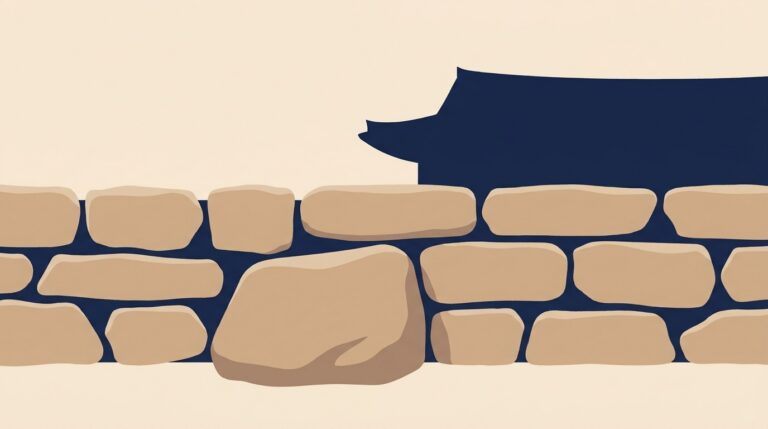
Phase 1: Why Stopgap Fixes Fail in K-Dramas and Real Life
안녕하세요! 매일한글 에디터입니다. (Hello! This is your Daily Hangul Editor.) Have you ever watched a Korean drama where a panicked executive hides a massive debt by borrowing from another department, only to make the disaster ten times worse? We have all felt that cringe—whether in a chaotic startup or a Seoul office. At Level 5, you know basic vocabulary, yet native speakers still stun you with razor-sharp four-character idioms called Sajaseongeo. Based on feedback from hundreds of advanced Daily Hangul learners, mastering Haseoksangdae (하석상대)—pulling the bottom stone to prop up the top—lets you critique short-sighted stopgap fixes and champion root-cause solutions like a true Korean insider.
Phase 2: Deep Dive into 3 Core Expressions
1. 하석상대 (下石上臺)
- Pronunciation: Haseoksangdae (hah-suhk-sahng-deh — think of saying “ha-suck-song-day” briskly with a flat “uh” sound in “suhk”)
- Meaning: Literally “pulling out the bottom stone to prop up the top platform.” In real usage, it sharply mocks a desperate, short-sighted “robbing Peter to pay Paul” tactic where fixing one urgent problem immediately weakens the foundation and creates a bigger collapse.
- K-Culture Moment: Picture a classic scene in the corporate drama Misaeng (미생) or Reborn Rich (재벌집 막내아들). A branch manager secretly shifts deficit numbers into next quarter’s budget to pass an audit. The sharp-eyed protagonist looks at the spreadsheet and mutters, “이건 완전 하석상대네요 (Igeon wanjeon haseoksangdaeneyo / This is completely robbing Peter to pay Paul).”
- Editor’s Insight: Unlike casual English slang like “Band-Aid fix,” Haseoksangdae carries intellectual weight. When you drop this idiom in a Korean meeting or essay, listeners instantly recognize high-level critical thinking and structural awareness. Note that it is almost always used critically—never praise someone’s hustle with it!
- Situation Spectrum: Casual ⚠️ (a bit bookish with close friends unless joking) / Semi-formal ✅ / Formal ✅
- 🤔 Think About It: English says “robbing Peter to pay Paul,” focusing on money and interpersonal fairness. Korean Haseoksangdae uses an architectural metaphor—stones supporting a wall. How does viewing a problem as a shaky foundation change the way Korean speakers think about accountability compared to your native language?
2. 임시방편 (臨時方便)
- Pronunciation: Imsibangpyeon (eem-shee-bahng-pyuhn — “im-she” like “shim” without the sh, followed by “bang” with an “ah” vowel, and “pyuhn” like “p-yawn” clipped short)
- Meaning: Literally “a temporary convenient method.” Unlike Haseoksangdae, which highlights actively damaging the base, Imsibangpyeon describes any makeshift, stopgap measure used just to survive the immediate moment.
- K-Culture Moment: In Korean medical dramas like Hospital Playlist (슬기로운 의사생활), when an ER doctor stabilizes a patient’s fever with ice packs while waiting for surgery, they might sigh, “지금은 임시방편일 뿐이에요 (Jigeumeun imsibangpyeonil ppunieyo / Right now, this is just a temporary measure).” It also pops up constantly in K-pop agency statements when a schedule is patched over without solving a deeper issue.
- Editor’s Insight: This is the indispensable daily cousin of 미봉책 (Mibongchaek / stopgap policy). While 미봉책 sounds slightly more journalistic or political, 임시방편 flows naturally in everyday adult conversations, business emails, and debates. Pair it with ~에 불과하다 (~e bulgwahada / amounts to nothing more than) for effortless Level 5 sophistication.
- Situation Spectrum: Casual ✅ / Semi-formal ✅ / Formal ✅
- 🤔 Think About It: Sometimes a temporary fix is actually necessary to buy time, whereas Haseoksangdae implies foolishness. Does your native language clearly separate “a necessary temporary measure” from “a reckless cover-up”?
3. 발본색원 (拔本塞源)
- Pronunciation: Balbonsaegwon (bahl-bohn-sek-wuhn — “bahl” like “ball” with an “ah,” “bohn” like “bone,” “sek” like “sec-ond,” and “wuhn” like “won”)
- Meaning: Literally “pulling out the root and blocking the water source.” It is the ultimate contrast to Haseoksangdae: an uncompromising, root-cause solution that eradicates a problem so it can never return.
- K-Culture Moment: Think of crime thrillers like Signal (시그널) or Vincenzo (빈센조). When the detective or anti-hero vows to dismantle an entire corrupt cartel instead of just arresting one scapegoat, they declare, “이번 기회에 부정부패를 발본색원해야 합니다 (Ibeon gihoee bujeongbupaereul balbonsaegwonhaeya hamnida / We must eradicate corruption at its root this time).”
- Editor’s Insight: Because 발본색원 sounds resolute and dramatic, Koreans use it for serious systemic issues—cybersecurity leaks, school bullying, or chronic workflow bottlenecks. Using it for minor annoyances (like a squeaky chair) sounds hilariously over-the-top, which actually makes it a great comedic exaggeration among close friends!
- Situation Spectrum: Casual ⚠️ (humorous hyperbole only) / Semi-formal ✅ / Formal ✅
- 🤔 Think About It: Notice how Korean contrasts Haseoksangdae (shifting stones at the base) with Balbonsaegwon (uprooting and sealing the source). Why do East Asian idioms so frequently draw on nature and construction to teach moral or strategic lessons?
Phase 3: Textbook Korean vs. Real Korean
Situation 1: Calling out a short-term cover-up at work
- 📖 Textbook Korean (교과서 한국어): 그 방법은 단기적인 해결책에 지나지 않습니다. (Geu bangbeobeun dangijeogin haegyeolchaege jinaji anseumnida. / That method is nothing more than a short-term solution.)
- 🗣️ Real Korean (진짜 한국어): 그렇게 돌려막기 하는 건 하석상대나 다름없죠. (Geureoke dollyeomakgi haneun geon haseoksangdaena dareumeopjyo. / Shifting things around like that is no different from robbing Peter to pay Paul.)
- 💡 Why the difference? (왜 다를까?): Textbook phrasing is grammatically flawless yet emotionally flat. In real Korean offices, speakers pair vivid everyday idioms like 돌려막기 (dollyeomakgi / juggling debts or tasks) with 하석상대 to deliver a punchy, memorable critique that still sounds articulate.
Situation 2: Demanding a permanent structural fix
- 📖 Textbook Korean (교과서 한국어): 문제의 근본적인 원인을 찾아서 고쳐야 합니다. (Munjeui geunbonjeogin wonineul chajaseo gochyeoya hamnida. / We must find and fix the fundamental cause of the problem.)
- 🗣️ Real Korean (진짜 한국어): 땜질 처방만 하지 말고 이제 좀 발본색원합시다. (Ttaemjil cheobangman haji malgo ije jom balbonsaegwonhapsida. / Let’s stop doing patchwork fixes and actually uproot the root cause now.)
- 💡 Why the difference? (왜 다를까?): 땜질 처방 (ttaemjil cheobang / soldering patch) evokes slapping metal tape over a leaking pipe. Contrasting a gritty colloquial metaphor with a formal four-character idiom (발본색원) creates rhythmic rhetorical power that native Koreans love.
Phase 4: K-Culture Deep Dive & Non-Verbal Manners
4-1. Nunchi (눈치) & Gestures
When pointing out Haseoksangdae in a Korean workplace, blunt finger-pointing is a quick way to trigger defensive pushback. Instead, watch how Korean colleagues use Nunchi: they soften their posture, tilt their head slightly while glancing down at the report or tablet (never glaring straight into a senior’s eyes), and use an open palm gesture sweeping gently from bottom to top to mimic “stacking stones.” Keeping your tone calm and slightly reflective—ending with ~지 않을까요? (~ji aneulkkayo? / wouldn’t that be…?)—lets you deliver a razor-sharp critique without breaking hierarchical harmony.
4-2. Cultural Code Analysis: Ppalli-ppalli vs. Structural Integrity
Korea’s famous 빨리빨리 (ppalli-ppalli / hurry-hurry) culture helped build one of the fastest-growing economies on Earth, yet Koreans themselves are the fiercest critics of its dark side: 부실 공사 (busil gongsa / shoddy construction) and 땜질식 대책 (ttaemjilsik daechaek / patchwork policies). That is why idioms like 하석상대 and 미봉책 appear daily in Korean editorials, YouTube news commentary, and K-dramas about corporate whistleblowers. Knowing these phrases tunes you directly into Korea’s ongoing cultural debate between speed and lasting quality.
Phase 5: Real-Life Roleplay Scenario
Setting: A sleek, glass-walled meeting room in Seongsu-dong, Seoul, at 9:30 PM. Empty iced Americano cups litter the table. Your K-Beauty startup’s global app keeps crashing before tomorrow’s influencer launch.
NPC: 박 팀장님 (Team Leader Park) — A sharp, exhausted strategist who respects direct logic if you phrase it thoughtfully.
- 박 팀장님: 🎭 rubbing his temples while staring at the server monitor 이번 주만 버티면 되니까, 일단 결제 서버 용량을 다른 기능에서 끌어옵시다. (Ibeon juman beotimyeon doenikka, ildan gyeolje seobeo yongnyangeul dareun gineungeseo kkeureoopsida. / We only need to survive this week, so let’s pull capacity for the payment server from another feature for now.)
- 나 (You): 🎭 leaning forward calmly with an open notebook 팀장님, 급한 건 알지만 그건 하석상대 아닌가요? (Timjangnim, geupan geon aljiman geugeon haseoksangdae aningayo? / Team Leader, I know it’s urgent, but isn’t that pulling the bottom stone to prop up the top?)
- 박 팀장님: 🎭 pausing, slightly surprised by your sharp idiom 하석상대라니? 당장 내일 오픈인데 임시방편이라도 써야지. (Haseoksangdaerani? Dangjang naeil opeuninde imsibangpyeonirado sseoyaji. / What do you mean Haseoksangdae? We launch tomorrow, so we have to use at least a temporary measure.)
- 나 (You): 🎭 tapping the error log gently without raising your voice 로그인 서버 자원을 빼 오면, 내일 해외 유저들이 접속 자체를 못 할 텐데요. (Rogeuin seobeo jawoneul ppae omyeon, naeil haeoe yujeodeuri jeopsok jachereul mot hal tendeyo. / If we pull resources from the login server, overseas users won’t even be able to log in tomorrow.)
- 박 팀장님: 🎭 frowning thoughtfully as he checks the traffic forecast 아, 거기까지 트래픽이 몰릴 줄은 계산에 못 넣었네. (A, geogikkaji teuraepigi mollil jureun gyesane mot neoeonne. / Ah, I didn’t factor in traffic surging there too.)
- 나 (You): 🎭 offering a reassuring nod 땜질 처방으로 넘기면 고객 신뢰만 잃을 수 있어요. (Ttaemjil cheobangeuro neomgimyeon gogaek silloeman ireul su isseoyo. / If we brush past it with a patchwork fix, we could just lose customer trust.)
- 박 팀장님: 🎭 sighing and nodding slowly 맞는 말이에요. 그럼 아예 이 기회에 오류의 원인을 발본색원할 방법부터 봅시다. (Matneun marieyo. Geureom aye i gihoee oryuui wonineul balbonsaegwonhal bangbeopbuteo bopsida. / You’re right. Then let’s take this chance to look at how to eradicate the root cause of the error.)
- 나 (You): 🎭 smiling with relief and pulling up the diagnostic chart 네! 제가 핵심 병목 구간을 정리해 뒀습니다. (Ne! Jega haeksim byeongmok guganeul jeongnihae dwotseumnida. / Yes! I’ve organized the core bottleneck sections right here.)
🔀 Interactive Branching Point
Right after Turn 3, when Team Leader Park insists on an 임시방편 (temporary measure), how could you respond? Choose your path:
* Option A: “그냥 시키는 대로 하면 나중에 다 망합니다! (Geunyang sikineun daero hamyeon najunge da manghamnida! / If we just do as told, everything will crash later!)”
* Feedback (Bad): Too blunt and emotionally charged. Challenging a senior with 망하다 (to be ruined) shuts down constructive dialogue and hurts Nunchi.
* Option B: “팀장님 말씀대로 시간은 벌겠지만, 근본 대책 없이는 같은 오류가 반복될 위험이 큽니다. (Timjangnim malsseumdaero siganeun beolgetjiman, geunbon daechaek eopsineun gateun oryuga banbokdoel wiheomi keumnida. / As you said, it would buy time, yet without a fundamental measure, the risk of repeating the same error is high.)”
* Feedback (Best): Masterful Level 5 Korean! You validate his urgency first (말씀대로), then logically contrast short-term gain against systemic risk.
* Option C: “뭐, 이번 한 번만 대충 넘어가 보죠. (Mwo, ibeon han beonman daechung neomeoga bojyo. / Well, let’s just gloss over it roughly this once.)”
* Feedback (Risk): Using 대충 (roughly/carelessly) makes you sound uncommitted to product quality, potentially damaging your professional reputation.
Phase 6: 10-Second Emotional Shadowing Drill
Read these aloud, pausing briefly at / and matching the emotional cue:
- [😒 Skeptical and exasperated]
아랫돌 빼서 / 윗돌 괴는 식으로 / 언제까지 버틸 건가요? (Araetdol ppaeseo / witdol goeneun sigeuro / eonjekkaji beotil geongayo? / Pulling the bottom stone to prop up the top—how long are you planning to hold out like this?) - [🧐 Calm, analytical, and firm]
임시방편으로는 / 한계가 있으니까 / 이제 근본적인 해결책을 찾읍시다. (Imsibangpyeon-euroneun / hangyega isseunikka / ije geunbonjeogin haegyeolchaegeul chajeupsida. / Since a stopgap measure has limits, let’s find a fundamental solution now.) - [🔥 Determined and visionary]
이번만큼은 / 미봉책으로 넘기지 말고 / 문제를 발본색원해야 합니다. (Ibeonmankeumeun / mibongchaegeuro neomgiji malgo / munjereul balbonsaegwonhaeya hamnida. / This time at least, let’s not gloss over it with a stopgap policy—we must eradicate the problem at its root.)
Phase 7: K-Culture Mini Dictionary
- 돌려막기 (Dollyeomakgi) | Shifting debts/resources in circles | Originally from paying off one credit card with another, now widely used in K-dramas and offices whenever someone hides a shortfall by borrowing elsewhere.
- 땜질 처방 (Ttaemjil cheobang) | Patchwork prescription/fix | A vivid everyday metaphor for slapping a quick patch on a recurring problem rather than fixing the broken system.
- 미봉책 (Mibong책 / Mibongchaek) | Stopgap policy / Band-Aid measure | Literally “a plan that merely stitches up the surface.” Extremely common in Korean news anchors’ critiques of government or corporate announcements.
- 근본 대책 (Geunbon daechaek) | Fundamental countermeasure | The go-to business and policy noun phrase meaning a long-term structural fix—the direct opposite of 임시방편.
Phase 8: Survival Kit for Travelers
Even while traveling in Korea, you might run into a temporary fix—like a hotel giving you a noisy portable fan instead of fixing a broken AC. Here is how to politely advocate for a real solution:
- 임시방편 말고 제대로 고쳐 주실 수 있나요? (Imsibangpyeon malgo jedaero gochyeo jusil su innayo?)
- Meaning: Could you fix it properly rather than a temporary workaround?
- Pro Tip: Smile warmly and keep your voice gentle; Koreans respond very helpfully to polite clarity.
- 이건 일시적인 해결책일 뿐인 것 같아요. (Igeon ilsijeogin haegyeolchaegil ppunin geot gatayo.)
- Meaning: I feel like this is only a temporary fix.
- Pro Tip: Adding ~인 것 같아요 softens your pushback so it never sounds confrontational.
- 근본적으로 문제가 해결됐으면 좋겠습니다. (Geunbonjeogeuro munjega haegyeoldwaesseumyeon jokesseumnida.)
- Meaning: I hope the problem gets resolved fundamentally.
- Pro Tip: Ideal for customer service chats on KakaoTalk or hotel reception desks.
Editor’s Travel Note: Navigating delays or re-routing during a busy Seoul trip? Avoid patchwork guesswork by grabbing Naver Map for accurate Seoul subway and bus routes and Papago AI translator for nuanced customer service chats before you board. Load a T-money card at any GS25 or CU convenience store so you can hop effortlessly between buses and subways without scrambling for cash.
Phase 9: One Step Deeper
In Korean society, preserving 체면 (chemyeon / face) and group harmony often tempts people to smooth over crises quietly with an 임시방편. Yet Korean intellectual history equally prizes principled candor—using classical Sajaseongeo like 하석상대 or 발본색원 to diagnose systemic flaws without turning the critique into a personal attack. By borrowing wisdom from stone walls and deep roots, Korean allows speakers to point at the structure of a failure rather than shaming the individual. Mastering this balance lets you step beyond mere fluency into true cultural empathy.
💬 Your Turn: Has someone in your workplace or a favorite K-drama ever pulled a classic Haseoksangdae move? Drop your story or practice sentence in the comments below!
Phase 10: FAQ & Misconception Prevention
Q: Is 하석상대 (Haseoksangdae) commonly used in casual conversations with friends?
A: Not very often in laid-back chit-chat, unless you are deliberately sounding dramatic or witty! In daily chats, Koreans usually say 아랫돌 빼서 윗돌 괴기 (the native Korean proverb version) or 돌려막기, while reserving 하석상대 for debates, news, essays, and sharp workplace discussions.
Q: What is the subtle difference between 임시방편 (Imsibangpyeon) and 미봉책 (Mibongchaek)?
A: 임시방편 is neutral-to-critical and simply means a temporary measure used in an emergency—it can even be necessary at times. 미봉책, however, almost always carries a negative nuance of covering up a flaw superficially to avoid responsibility.
Q: Can I use 발본색원 (Balbonsaegwon) for positive habits, like building good study routines?
A: No! 발본색원 specifically means eradicating something harmful or broken (corruption, bugs, bad habits). For building something positive from the ground up, use 기초를 다지다 (gichoreul dajida / to lay a solid foundation).
🚨 Common Mistakes Warning Board
- Mistake: Saying 하석상대 to praise clever improvisation. -> Correct Action: Use 임기응변 (imgieungbyeon / quick wit) for clever adaptability, and save 하석상대 strictly for self-defeating patchwork.
- Mistake: Dropping 발본색원 over tiny everyday glitches (“Let’s uproot the source of this lukewarm coffee!”). -> Correct Action: Keep 발본색원 for serious or systemic problems unless you are intentionally aiming for comedic exaggeration.
- Mistake: Translating “Band-Aid fix” literally as 반창고 해결. -> Correct Action: Use natural Korean equivalents like 땜질 처방, 미봉책, or 임시방편.
Phase 11: Action Mission & Engagement
- 🥉 Bronze Mission (Solo Practice): Record a 15-second voice memo contrasting 하석상대 and 발본색원 in two sentences using the Phase 6 emotional pauses.
- 🥈 Silver Mission (Share It): Post your favorite metaphor from today—돌려막기 or 하석상대—on your study journal or social feed with a short K-drama example.
- 🥇 Gold Mission (Real-World Use): Next time you write a Korean essay, work update, or language-exchange message about solving a recurring problem, weave in 임시방편 and 근본 대책 naturally.
🎮 K-Culture Mission: Search Korean YouTube news clips or K-drama review channels for “미봉책” or “하석상대” and listen for how hosts stress the contrast between quick fixes and real reform!
Phase 12: Interactive Quiz Challenge
Quiz 1 (Situation Judgment): Your company deletes user complaints from social media instead of fixing a defective product, causing even bigger backlash next week. Which idiom best captures this blunder?
A) 발본색원 (Balbonsaegwon)
B) 하석상대 (Haseoksangdae)
C) 임기응변 (Imgieungbyeon)
Quiz 2 (Fill in the Blank):
이번 사태는 ______으로 넘길 수 없으니, 철저한 조사를 통해 원인을 ______해야 합니다. (We cannot pass over this incident with a stopgap policy, so we must eradicate the cause through a thorough investigation.)
Quiz 3 (True or False):
“You can comfortably use 발본색원 to praise a friend for starting a healthy morning workout routine.” (True / False)
Click here to reveal the answers and explanations!
- Quiz 1 Answer: B) 하석상대 (Haseoksangdae) — Suppressing symptoms only destabilizes the foundation of trust and causes a worse collapse. (Option A means uprooting the root cause—if you picked A, remember that 발본색원 is the solution, not the mistake! Option C means clever improvisation in a pinch.)
- Quiz 2 Answer: 미봉책 (or 임시방편) / 발본색원 — “이번 사태는 미봉책으로 넘길 수 없으니, 철저한 조사를 통해 원인을 발본색원해야 합니다.” Notice the crisp contrast between superficial patching and root eradication!
- Quiz 3 Answer: False — 발본색원 is only for eliminating negative, broken, or corrupt issues—never for growing positive habits.
🎬 Watch Our Daily Videos! (Daily Hangul Official Instagram)
Review the expressions you learned in this article with our fun daily short videos! Check out native pronunciation and real-life nuances in action.
- Instagram @dailyhangul_en






