

Phase 1: Why Does Catching Up Suddenly Feel So Quiet?
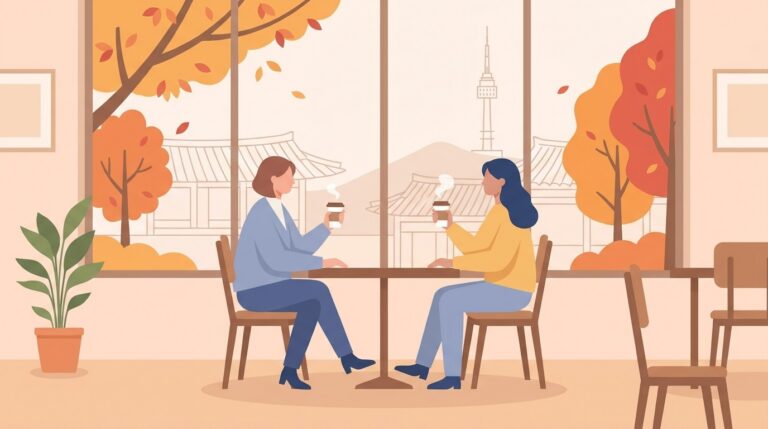
안녕하세요! 매일한글 에디터입니다. (Annyeonghaseyo! Hello! I am your Daily Hangul editor.) Picture a bittersweet scene straight out of a K-drama like Hello, My Twenties! or Thirty-Nine: two college best friends reunite at a cozy Seoul cafe after years apart. One wears a sharp office badge, the other scrolls through wedding venue photos, and after the initial laughs, a quiet pause settles in. Sound familiar? As our paths diverge through jobs, studying abroad, or marriage, running out of shared topics is completely normal. Based on real feedback from our B1 learners who felt awkward during these reunions, this guide equips you with warm, natural Korean to express these feelings gracefully without sounding cold.
Phase 2: Deep Dive into 3 Core Expressions
1. 자연스럽게 멀어지다 (Natural drifting apart)
- Pronunciation: jayeonseureopge meoreojida (Sounds like “jah-yeon-seu-reop-geh muh-ruh-jee-dah” — pronounce the eo like the “uh” in “uh-oh,” and keep your lips flat when saying eu)
- Meaning: Literally “to become far away naturally.” In real life, it gently describes drifting apart without anyone being at fault.
- K-Culture Moment: In slice-of-life K-dramas like Twenty-Five Twenty-One, characters look through old photo albums and softly tell a sibling or partner that they simply drifted apart from an old friend as adulthood set in.
- Editor’s Insight: Unlike English “we grew apart,” which can sometimes sound slightly heavy, adding 자연스럽게 (jayeonseureopge) removes all blame. It signals emotional maturity and acceptance of time passing.
- Situation Spectrum: Casual (자연스럽게 멀어졌어 / jayeonseureopge meoreojyeosseo) ✅ / Semi-formal (자연스럽게 멀어졌어요 / jayeonseureopge meoreojyeosseoyo) ✅ / Formal (자연스럽게 멀어졌습니다 / jayeonseureopge meoreojyeotseumnida) ⚠️ (A bit personal for stiff business meetings, though fine in essays)
- 🤔 Think About It: In English, we often say “we fell out of touch” or “we drifted apart.” Why do you think Korean speakers so frequently attach the adverb “naturally” (자연스럽게) when talking about fading friendships?
2. 공통분모가 줄어들다 (Having less in common)
- Pronunciation: gongtongbunmoga jureodeulda (Sounds like “gong-tong-boon-moh-gah joo-ruh-deul-dah” — crisp “g” and rounded “o” like “go”)
- Meaning: Literally “the common denominator shrinks.” Practically, it means you have fewer shared experiences or conversation topics left.
- K-Culture Moment: On Korean talk shows or YouTube vlogs where 30-something friends chat over coffee, a guest often laughs and admits their common ground shrank once some friends became parents while others stayed single.
- Editor’s Insight: 공통분모 (gongtongbunmo) originally comes from math, just like “common denominator” in English! At the B1 level, using this phrase makes your Korean sound thoughtful, articulate, and remarkably native-like.
- Situation Spectrum: Casual (공통분모가 줄어들었어 / gongtongbunmoga jureodeureosseo) ✅ / Semi-formal (공통분모가 줄어들었어요 / gongtongbunmoga jureodeureosseoyo) ✅ / Formal (공통분모가 줄어들었습니다 / gongtongbunmoga jureodeureotseumnida) ✅
- 🤔 Think About It: Does using a logical, math-inspired word like 공통분모 make an emotional topic easier to talk about in your native language too, or does it sound too analytical?
3. 서로 환경이 달라지다 (Our environments and situations change)
- Pronunciation: seoro hwangyeongi dallajida (Sounds like “suh-roh hwan-gyeong-ee dahl-lah-jee-dah” — crisp double “l” sound in dallajida)
- Meaning: Literally “each other’s environments become different.” It refers to major life shifts like getting a job (취업), studying abroad (유학), or getting married (결혼).
- K-Culture Moment: In Reply 1988, the neighborhood kids who spent every evening together gradually scatter into different jobs and adult responsibilities, realizing their daily worlds no longer overlap.
- Editor’s Insight: Koreans rely heavily on context (상황 / sanghwang) to explain relationship changes. Saying 환경이 달라지다 shifts focus from personal feelings to external life stages, which helps keep the relationship warm even if you rarely meet.
- Situation Spectrum: Casual (서로 환경이 달라졌지 / seoro hwangyeongi dallajyeotji) ✅ / Semi-formal (서로 환경이 달라졌어요 / seoro hwangyeongi dallajyeosseoyo) ✅ / Formal (서로 환경이 달라졌습니다 / seoro hwangyeongi dallajyeotseumnida) ✅
- 🤔 Think About It: When someone moves abroad or gets married, do people in your culture focus more on individual personality changes or on changes in their surrounding environment?
Phase 3: Textbook Korean vs. Real Korean
Situation 1: Admitting you have less to talk about these days
* 📖 Textbook Korean: 우리는 공통의 관심사가 적어서 대화가 잘 안 통합니다. (Urineun gongtongui gwansimsaga jeogeoseo daehwaga jal an tonghamnida.)
* 🗣️ Real Korean: 요즘엔 예전처럼 딱히 할 말이 없더라고요. (Yojeumen yejeoncheoreom ttakhi hal mari eopdeoragoyo.)
* 💡 Why is it different? The textbook version sounds like a robotic complaint! Real Koreans soften the observation with 딱히 (not particularly) and the reflective ending -더라고요 (I noticed that…), turning a harsh fact into a gentle reflection.
Situation 2: Accepting that busy adult lives pull friends apart
* 📖 Textbook Korean: 취업과 결혼 때문에 친구와 관계가 소원해졌습니다. (Chwieopgwa gyeolhon ttaemune chinguwa gwangyega sowonhaejyeotseumnida.)
* 🗣️ Real Korean: 다들 각자 살기 바쁘다 보니 자연스럽게 그렇게 되네요. (Dadeul gakja salgi bappeuda boni jayeonseureopge geureoke doeneyo.)
* 💡 Why is it different? Words like 소원해지다 (to become estranged) feel overly literary, like a newspaper article. In daily conversation, blaming busy schedules with 각자 살기 바쁘다 보니 (since everyone is busy living their own life) feels empathetic and relatable.
Phase 4: K-Culture Deep Dive & Non-Verbal Manners
4-1. Nunchi (눈치) & Gestures
When Koreans acknowledge that a friendship is drifting, the atmosphere calls for gentle nunchi (social awareness). Avoid staring intensely right after an awkward silence; instead, wrap both hands around a warm coffee cup or gently swirl your glass while giving a soft, understanding smile. Slow nodding (고개를 끄덕이다 / gogaereul kkeudeogida) paired with a quiet, empathetic sigh (휴…) shows that you are not upset—you simply accept the natural rhythm of growing older together.
4-2. Cultural Code Analysis: K-Drama & Cafe Culture
In Korea, adult reunions often unfold either in a quiet neighborhood cafe over iced americanos or at a noisy pojangmacha (포장마차, street tent bar) over soju and warm soup. Unlike Western movies where characters might dramatically confront each other about drifting apart, K-dramas like Hospital Playlist highlight how real Korean adulthood mixes seopseopham (섭섭함, bittersweet regret) with enduring jeong (정, deep emotional bond). Even if you only catch up once a year, sharing honest thoughts over a warm table reassures both friends that the past affection is still intact.
Phase 5: Real-Life Roleplay Scenario
Setting: A rainy Friday evening at a vintage cafe in Euljiro, Seoul. Raindrops tap against the window, and indie ballads play softly.
Characters: You (a B1 learner who recently returned to Korea after studying abroad) and Minji (your old university friend, now newly married and juggling a demanding marketing job).
- Minji: 🎭 (Waves eagerly from a corner table as you walk in) 민지야, 진짜 오랜만이다! 아니, 너 진짜 오랜만이야! 잘 지냈어? (Minjiya, jinjja oraenmanida! Ani, neo jinjja oraenmaniya! Jal jinaesseo? / Hey! It has been so long! Have you been doing well?)
- You: 🎭 (Shakes off your umbrella and sits down with a warm smile) 응! 너 유학 갔다가 돌아온 뒤로 처음이지? (Eung! Neo yuhak gatdaga doraon dwiro cheoeumiji? / Wait—actually, it’s our first time since I got back from studying abroad, right?)
- Minji: 🎭 (Laughs and slides a menu across the table) 맞아! 벌써 2년이나 지났네. 결혼 준비하느라 정신없다면서? (Maja! Beolseo inyeonina jinanne. Gyeolhon junbihaneura jeongsineopdamyeonseo? / Right! Two years flew by. Wait, I heard you were super busy—oh, that’s me! Let me fix that: I mean, you were busy adjusting back, and I’m busy with newlywed life!)
- You: 🎭 (Takes a sip of warm tea and smiles gently) 말도 마. 한국 다시 적응하랴 취업 준비하랴 정신이 하나도 없어. 너도 회사 일에 결혼까지 겹쳐서 바쁘지? (Maldo ma. Hoesa ire gyeolhonkkaji gyeopchyeoseo bappeuji? Hanguk dasi jeogeungharya chwieop junbiharya jeongsini hanado eopseo. / Don’t even get me started. Adjusting back to Korea and job hunting has been hectic. You must be swamped with work and marriage too, right?)
- Minji: 🎭 (Nods slowly, looking out the rainy window for a moment) 응. 우리 예전에는 만나면 밤새 수다 떨었는데, 요즘은 서로 환경이 달라져서 그런가 공통분모가 좀 줄어든 것 같아. (Eung. Uri yejeoneneun mannamyeon bamsae suda tteoreonneunde, yojeumeun seoro hwangyeongi dallajyeoseo geureonga gongtongbunmoga jom jureodeun geot gata. / Yeah. We used to chat all night when we met, but lately, maybe because our environments changed, it feels like our common ground has shrunk a bit.)
- You: 🎭 (Pauses empathetically and nods) 맞아, 나도 가끔 아쉽긴 해. 그래도 나이가 들면서 자연스럽게 멀어지는 건 어쩔 수 없는 현상인 것 같아. (Maja, nado gakkeum aswipgin hae. Geuraedo naiga deulmyeonseo jayeonseureopge meoreojineun geon eojjeol su eomneun hyeonsangin geot gata. / True, I do miss it sometimes. Still, naturally drifting apart as we get older feels like an unavoidable part of life.)
- Minji: 🎭 (Looks relieved and smiles brightly) 다행이다. 나만 그렇게 느끼는 줄 알았거든. (Dahaengida. Naman geureoke neukkineun jul aratgeodeun. / What a relief. I thought I was the only one feeling that way.)
- You: 🎭 (Raises your cup for a gentle cheer) 무슨 소리야. 자주 못 봐도 마음만은 그대로잖아. (Museun soriya. Jaju mot bwado maeummaneun geudaerojana. / What are you talking about? Even if we can’t meet often, our hearts stay the same.)
🔀 Interactive Branching Point: How would you respond to Turn 5?
- Option A: “맞아, 서로 환경이 달라져서 자연스러운 현상인 것 같아. 그래도 가끔 이렇게 보면 좋지.” (Maja, seoro hwangyeongi dallajyeoseo jayeonseureoun hyeonsangin geot gata. Geuraedo gakkeum ireoke bomyeon jochi.) — Best! Validates her honesty, uses natural B1 phrasing, and keeps the door open warmly.
- Option B: “네가 결혼하고 나서 나한테 관심이 없어진 거 아니야?” (Nega gyeolhonhago naseo nahante gwansimi eopseojin geo aniya?) — Bad! Sounds accusatory and ignores Korean nunchi, instantly turning a peaceful catch-up into an uncomfortable argument.
- Option C: “글쎄, 나는 별로 안 변한 것 같은데 너만 바쁜가 봐.” (Geulsse, naneun byeollo an byeonhan geot gateunde neoman bappeunga bwa.) — Risk! A bit passive-aggressive; while casual friends sometimes tease like this, it can sound bitter during a serious conversation.
Phase 6: 10-Second Emotional Shadowing Drill
Read each line aloud, pausing briefly at the / marks and matching the emotion!
- [🥺 Wistfully and gently]
요즘엔 / 서로 환경이 달라져서 그런가 / 할 말이 예전만큼 많지는 않네요. (Yojeumen / seoro hwangyeongi dallajyeoseo geureonga / hal mari yejeonmankeum manchineun anneyo. / Lately, maybe because our situations changed, we don’t have as much to talk about as before.) -
[😌 Calmly and understandingly]
나이가 들면서 / 자연스럽게 멀어지는 건 / 어쩔 수 없는 현상이에요. (Naiga deulmyeonseo / jayeonseureopge meoreojineun geon / eojjeol su eomneun hyeonsangieyo. / Naturally drifting apart as we grow older is an unavoidable phenomenon.) -
[😊 Warmly and reassuringly]
공통분모가 줄어들어도 / 자주 연락 못 해도 / 응원하는 마음은 그대로예요. (Gongtongbunmoga jureodeureodo / jaju yeollak mot haedo / eungwonhaneun maeumeun geudaeroyeyo. / Even if we have less in common and can’t talk often, my cheering heart stays the same.)
Phase 7: K-Culture Mini Dictionary
- 공통분모 (gongtongbunmo) | Common denominator / common ground | Used constantly in both daily chats (shared hobbies, values) and business meetings (finding mutual interests between two companies).
- 인연 (inyeon) | Fateful bond / connection | Deeply cultural word describing ties between people; Koreans say 인연이 다하다 when a relationship naturally reaches its end without hard feelings.
- 사회생활 (sahoeseanghwal) | Social / working life | Refers to navigating adult responsibilities, office politics, and career duties that often leave less energy for old school friends.
- 어색하다 (eosaekhada) | Awkward / uncomfortable | Very common adjective used when two people who used to be close run out of conversation topics after a long time apart.
Phase 8: Survival Kit for Travelers
Heading to Korea to reunite with old language exchange partners or university friends? Keep these 3 phrases handy!
- 1. 오랜만에 보니까 정말 반갑다! (Oraenmane bonikka jeongmal bangapda!) — “It is so good to see you after so long!” | Pro Tip: Use 반가워요 (bangawoyo) if you normally speak in polite -요 form with them.
- 2. 요즘 어떻게 지내? (Yojeum eotteoke jinae?) — “How have you been lately?” | Pro Tip: A gentle opener that lets your friend share as much or as little about work or family as they want.
- 3. 다음에는 내가 살게! (Daeumeneun naega salge!) — “Next time, it’s on me!” | Pro Tip: Even if you don’t meet right away, saying this leaves a warm, generous final impression.
Editor’s Travel Note: Before meeting friends in trendy areas like Seongsu or Euljiro, be sure to Download the Naver Map App for Seoul Navigation since global map apps rarely show accurate walking routes in Korea, and Install the KakaoTalk Messaging App to confirm cafe locations on the go. For transit, tap a T-money card at any subway gate, and remember: splitting the bill (더치페이 / deochipei or 엔빵 / enppang) is standard among younger adults, though one friend might insist on buying coffee if the other paid for dinner!
Phase 9: “One Step Deeper” — A Moment of Reflection
In Korean society, friendships are often tied to shared timelines—being 동갑 (donggap, born in the same year) or graduating from the same university cohort. Because people build deep 정 (jeong, unspoken attachment) through years of shared struggles, watching those ties loosen can feel unusually bittersweet. Yet modern Korean culture is increasingly embracing the idea that relationships evolve with life stages rather than failing. Accepting distance with grace allows you to cherish past memories without pressuring the present.
💬 Your Turn: Have you ever reconnected with an old friend only to realize your worlds had completely changed? Share how you handled that moment in the comments below!
Phase 10: FAQ & Myth-Busting
Q: Is it rude to tell a Korean friend directly that we have drifted apart?
A: Saying it bluntly like “we aren’t close anymore” can sound hurtful, so Koreans frame it around external circumstances instead. Using phrases like 서로 바쁘다 보니 (since we are both busy) or 환경이 달라져서 (because our environments changed) expresses the same truth gently and respectfully.
Q: Is “공통분모” too advanced or stiff for a B1 conversation?
A: Not at all! While it comes from math, adult Koreans use 공통분모 very naturally in everyday cafes and podcasts when talking about relationships, dating, and hobbies. Using it accurately will impress native speakers.
Q: What if we used to speak Banmal (casual speech), but now it feels awkward after years apart?
A: Don’t panic—many Koreans feel this too! Usually, starting with light casual speech paired with polite gestures, or playfully joking 우리 너무 오랜만이라 좀 어색하다! (It’s a bit awkward since it’s been so long!), breaks the ice instantly.
🚨 Common Mistakes TOP 3
- Mistake: Saying 우리는 친구가 아니에요 (We are not friends) to mean you aren’t close anymore. Correct Action: Use 예전만큼 자주 못 봐요 (We don’t meet as often as before) or 자연스럽게 멀어졌어요 (We naturally drifted apart).
- Mistake: Blaming the other person directly with 네가 연락을 안 해서 (Because you never contacted me). Correct Action: Use inclusive phrasing like 서로 바빠서 (Because we were both busy) to keep the tone mature.
- Mistake: Translating “common ground” word-for-word as 공통의 땅. Correct Action: Always use 공통분모 (gongtongbunmo) or 공통점 (gongtongjeom).
Phase 11: Action Mission & Engagement
- 🥉 Bronze Mission (Solo Practice): Record yourself reading the 3 Phase 6 shadowing sentences aloud once today, focusing on gentle pauses.
- 🥈 Silver Mission (Share Online): Post one new Korean expression you learned today on your study account or with a study buddy and write a 1-sentence example.
- 🥇 Gold Mission (Real-World Use): Message a Korean friend or language partner you haven’t texted in months with 요즘 어떻게 지내? and ask what’s new in their world.
- 🎮 K-Culture Mission: Watch a slice-of-life K-drama or a Korean 30-something lifestyle vlog on YouTube and listen for words like 환경 (environment), 자연스럽게 (naturally), or 어색하다 (awkward).
Phase 12: Interactive Quiz Challenge
Quiz 1 (Situation Judgment): Your Korean friend mentions that since she started working full-time and you moved abroad, you two haven’t had much to chat about lately. Which response sounds most natural and warm?
A) 그건 네가 너무 바빠서 그래. (That’s because you’re too busy.)
B) 맞아, 서로 환경이 달라지면 자연스럽게 그렇게 되는 것 같아. (Right, when our environments change, it naturally happens.)
C) 우리는 이제 공통의 관심사가 전혀 없습니다. (We now have zero common interests.)
Click to see the answer & explanation
Answer: B! Option B empathetically agrees using natural B1 phrasing (서로 환경이 달라지면) without blaming your friend. Option A sounds accusatory, and Option C is far too stiff and cold!
Quiz 2 (Fill in the Blank): Complete the sentence meaning “Because our common ground shrank, we have less to talk about.”
“_______가 줄어들어서 할 말이 줄었어요.” (_______ga jureodeureoseo hal mari jureosseoyo.)
Click to see the answer & explanation
Answer: 공통분모 (gongtongbunmo)! Remember, 공통분모 means common denominator / common ground—the perfect B1 noun for shared interests and conversation topics.
Quiz 3 (True or False — Cultural Quiz): In Korea, saying that you naturally drifted apart (자연스럽게 멀어지다) because of jobs or marriage is generally considered an insult to the friendship.
Click to see the answer & explanation
Answer: False! In Korean culture, acknowledging that life stages (취업, 유학, 결혼) naturally shift your daily focus is seen as mature and realistic, especially when paired with warm nunchi and no hard feelings.
🎬 Watch Our Daily Videos! (Daily Hangul Official Instagram)
Review the expressions you learned in this article with our fun daily short videos! Check out native pronunciation and real-life nuances in action.
- Instagram @dailyhangul_en







