

Phase 1: Empathy & Story Opening
“안녕하세요! 매일한글 에디터입니다.” (Annyeonghaseyo! Maeil Hangeul editeo-imnida. — Hello! I’m the Daily Hangul Editor.)
Have you ever watched Daily Dose of Sunshine and teared up when Nurse Jung Da-eun finally sits across from a psychiatrist, realizing her heart needs care just like a broken bone? Many learners tell me they freeze at a clinic desk in Seoul—not from pain, but from not knowing how to explain burnout or insomnia in Korean. Reaching out to a professional early when your mind hurts is the wisest form of courage. Built on real student feedback, this B2 guide gives you the gentle Korean phrases to advocate for your mental well-being with confidence.
Phase 2: Deep Dive into 3 Core Expressions
1. 마음이 지쳐서 상담을 받고 싶어요 (Maeumi jichyeoseo sangdameul batgo sipeoyo)
- Pronunciation: Mah-eum-ee jee-chyuh-suh sahng-dahm-eul baht-goh shee-puh-yoh. Imagine
eosounding like the relaxed “uh” in “cup,” andeulike saying “oo” while pulling your lips back in a tight smile.- Meaning: Literally “Because my heart is exhausted, I want to receive counseling.” Real Nuance: A warm, honest, and non-clinical way to express emotional burnout at a clinic without sounding overly dramatic.
- K-Culture Moment: In healing K-Dramas like My Liberation Notes or It’s Okay to Not Be Okay, characters often bypass stiff medical jargon and simply admit their maeum (heart/mind) is tired when they finally seek support.
- Editor’s Insight: In Korean, mind and heart share one word: 마음 (maeum). Choosing 지치다 (jichida — to be worn out) rather than 우울하다 (uulhada — to be depressed) feels much gentler and more natural during a first-time consultation when you are still unpacking what is wrong.
- Situation Spectrum: Casual ⚠️ (Fine with close friends if you drop
-요) / Semi-formal ✅ (Ideal for clinics and counselors) / Formal ✅ (Great, or swap-싶어요for-싶습니다)- 🤔 Think About It: In English, we often say “I’m mentally exhausted” or “I need therapy.” Why do you think Korean frames emotional distress around the “heart” getting tired, and how might that soften the barrier to walking into a clinic?
2. 잠을 통 못 자서 일상생활이 힘들어요 (Jameul tong mot jaseo ilssangsaenghwari himdeureoyo)
- Pronunciation: Jahm-eul tohng moht jah-suh eel-ssahng-saeng-hwahl-ee heem-deu-ruh-yoh. The crisp adverb
통(tong) sounds like a firm “tawng”—like tapping a hollow wooden drum—adding sharp emphasis to “not at all.”- Meaning: Literally “Because I cannot sleep at all, daily life is hard.” Real Nuance: Signals clearly to a doctor that your insomnia isn’t just one restless night; it is actively disrupting your work, studies, and daily functioning.
- K-Culture Moment: Think of K-Pop idols in candid behind-the-scenes vlogs quietly sharing that they haven’t been sleeping well before taking a restorative hiatus—it’s the clearest cue that stress has crossed into physical exhaustion.
- Editor’s Insight: Placing the B2-level adverb 통 (tong — not at all) right before 못 자다 (mot jada) elevates your fluency instantly. Psychiatrists always screen for functional impairment (일상생활에 지장이 있다), so pairing sleep loss with 일상생활 (daily life) gives them vital diagnostic context right away.
- Situation Spectrum: Casual ✅ (Natural with friends when venting) / Semi-formal ✅ (Perfect for a doctor’s intake) / Formal ⚠️ (Use
힘듭니다instead of힘들어요in very formal settings)- 🤔 Think About It: In Western clinics, patients often start with exact timelines (“Three weeks of insomnia”). In Korea, leading with how it affects your “daily life” (일상생활) helps the doctor gauge severity fast. How do people in your culture usually signal when stress has become “too much”?
3. 초진인데 어떤 절차로 진행되나요? (Chojininde eotteon jeolcharo jinhaengdoenayo?)
- Pronunciation: Choh-jeen-een-deh uh-ttuhn juhl-chah-roh jeen-haeng-dweh-nah-yoh? Let
진행(jinhaeng) glide smoothly like “jeen-haeng,” keeping어open like “uh.”- Meaning: Literally “It is my first medical visit, so by what procedure does it proceed?” Real Nuance: Composed, polite, and proactive—it shows respect for clinic protocol while quietly easing your own first-visit nerves.
- K-Culture Moment: Just like a character in Hospital Playlist checking in nervously at an unfamiliar reception desk, asking about the 절차 (procedure) projects calm preparedness even when your palms are sweating.
- Editor’s Insight: 초진 (chojin — first visit) is the golden keyword at Korean reception desks, paired opposite 재진 (jaejin — follow-up visit). Linking your background with
-는데(초진인데) before asking your question makes your Korean flow like a true B2 speaker rather than two choppy sentences.- Situation Spectrum: Casual 🚫 (Way too stiff for friends) / Semi-formal ✅ (Standard reception desk perfection) / Formal ✅ (Polite and crystal clear)
- 🤔 Think About It: Why do Korean clinics distinguish so clearly between
초진(first visit) and재진(return visit) from the very first hello? Does knowing the “procedure” (절차) beforehand calm your anxiety when trying something new?
Phase 3: Textbook Korean vs. Real Korean
Situation 1: Explaining severe burnout and pressure
- 📖 Textbook Korean (교과서 한국어): 스트레스를 많이 받아서 머리가 아픕니다. (Seuteureseureul mani badaseo meoriga apeumnida. — Because I receive a lot of stress, my head hurts.)
- 🗣️ Real Korean (진짜 한국어): 요즘 번아웃이 온 것 같아서 숨이 막혀요. (Yojeum beonausi on geot gataseo sumi makhyeoyo. — Lately it feels like burnout hit me, and I feel suffocated.)
- 💡 Why the difference? (왜 다를까?): Textbook Korean often sounds like a stiff word-for-word translation. Modern Koreans rely on relatable loanwords like 번아웃 (beonaut) and visceral metaphors like 숨이 막히다 (to feel suffocated) to capture overwhelming mental pressure authentically.
Situation 2: Describing broken sleep quality
- 📖 Textbook Korean (교과서 한국어): 수면 장애가 있어서 밤에 잠을 자지 못합니다. (Sumyeon jangaega isseoseo bame jameul jaji mothamnida. — Because I have a sleep disorder, I cannot sleep at night.)
- 🗣️ Real Korean (진짜 한국어): 잠은 드는데 자고 일어나도 개운하지가 않아요. (Jameun deuneunde jago ireonado gaeunhajiga anayo. — I fall asleep, sure, but even after waking up, I don’t feel refreshed at all.)
- 💡 Why the difference? (왜 다를까?): Few patients walk in self-diagnosing with “sleep disorder”! Using 개운하다 (gaeunhada — feeling light and refreshed) in the negative tells the doctor the quality of your rest is broken—a detail Korean specialists always check.
Phase 4: K-Culture Deep Dive & Non-Verbal Manners
4-1. Nunchi (눈치) & Clinic Etiquette
Korean psychiatric and counseling clinics prioritize privacy and calm nunchi. Keep your voice slightly softer than café conversation volume at the front desk, and hand over your Alien Registration Card (외국인등록증 — oegugindeungnokjeung) or passport with two hands (or one hand lightly supporting your wrist). Inside the consultation room, don’t apologize if you pause to gather your words or tear up—Korean doctors and counselors are trained to hold quiet space without rushing you. Soft eye contact paired with small nods (네, 맞아요 — Ne, majayo) shows attentiveness, while looking down briefly when reflecting is completely natural.
4-2. Cultural Code Analysis: K-Drama & K-Pop’s Quiet Revolution
For decades, visiting a 정신과 (jeongsingwa — psychiatry department) carried heavy social stigma in Korea, as people worried about judgment or misunderstood medical records. Today, K-Culture is rewriting that script. Even the official medical name evolved into 정신건강의학과 (jeongsin-geongang-uihakgwa — Department of Mental Health Medicine). Netflix’s Daily Dose of Sunshine (정신병동에도 아침이 와요) normalized showing up before a crisis, treating therapy like routine maintenance alongside an annual health checkup (건강검진). Meanwhile, K-Pop agencies now openly announce temporary health breaks (건강상의 이유로 활동 중단) for artists facing anxiety or sleep issues—teaching millions that stepping back to heal is a brave, wise choice.
Phase 5: Real-Life Roleplay Scenario
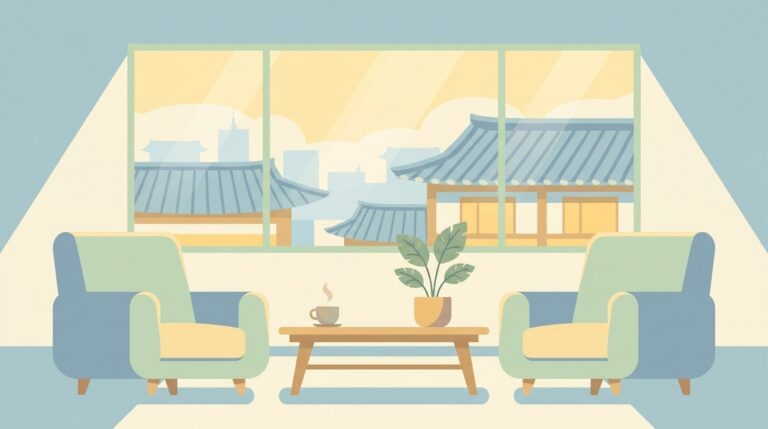
Setting: A sunlit, minimalist psychiatry and counseling clinic in Gangnam, Seoul. Soft acoustic piano plays in the waiting area, and a warm mug of barley tea sits beside intake tablets.
Characters: You (an expat experiencing burnout and broken sleep) & Dr. Han (an empathetic psychiatrist in her late 30s wearing a beige cardigan over her white coat).
- Dr. Han: 어서 오세요. 오늘 처음 오셨죠? 어떤 점이 가장 힘드셔서 오셨나요? (Eoseo oseyo. Oneul cheoeum osyeotjyo? Eotteon jeomi gajang himdeusyeoseo osyeotnayo? — Come in. Today is your first visit, right? What has been the hardest thing bringing you in today?)
🎭 (Dr. Han gestures warmly toward the armchair and offers a calm smile.) - You: 네, 초진이에요. 요즘 마음이 너무 지쳐서 상담을 받고 싶어서 왔어요. (Ne, chojinieyo. Yojeum maeumi neomu jichyeoseo sangdameul batgo sipeoseo wasseoyo. — Yes, it’s my first visit. Lately my mind has been so exhausted that I wanted to get counseling.)
🎭 (You sit down, resting your hands lightly on your lap, and take a slow breath.) - Dr. Han: 그러셨군요. 용기 내서 잘 오셨어요. 구체적으로 수면이나 식사 패턴에 변화가 있나요? (Geureosyeotgunyo. Yonggi naeseo jal osyeosseoyo. Guchejeogeuro sumyeonina siksa paeteone byeonhwaga innayo? — I see. You showed real courage coming in. Specifically, have there been changes in your sleep or eating patterns?)
🎭 (She nods gently, giving you unhurried silence before jotting a brief note.) - You: 네, 밤에 잠을 통 못 자서 일상생활이 힘들어요. (Ne, bame jameul tong mot jaseo ilssangsaenghwari himdeureoyo. — Yes, because I can’t sleep at all at night, daily life is really tough.)
🎭 (You glance down briefly, rubbing the back of your neck.) - Dr. Han: 잠드는 게 어려우신가요, 아니면 자다가 자꾸 깨시는 편인가요? (Jamdeuneun ge eoryeousingayo, animyeon jadaga jakku kkaesineun pyeoningayo? — Is it hard to fall asleep, or do you tend to keep waking up during the night?)
🎭 (She leans forward slightly, listening closely.) - You: 잠은 드는데, 새벽에 자주 깨고 자고 일어나도 개운하지가 않아요. (Jameun deuneunde, saebyeoge jaju kkaego jago ireonado gaeunhajiga anayo. — I fall asleep, but I wake up often before dawn and don’t feel refreshed when I get up.)
🎭 (You meet her eyes again, gesturing softly to explain the restless feeling.) - Dr. Han: 몸이 계속 긴장 상태라 깊은 잠을 못 주무시는 거예요. 검사 결과 보면서 치료 방향을 같이 정해 볼까요? (Momi gyesok ginjang sangtaera gipeun jameul mot jumusineun geoyeyo. Geomsa gyeolgwa bomyeonseo chiryo banghyangeul gachi jeonghae bolkkayo? — Your body stays in constant tension, so you can’t reach deep sleep. Shall we review your stress test results and decide on a treatment plan together?)
🎭 (She angles her monitor toward you so you can view the autonomic stress chart.) - You: 네, 선생님. 약물 치료 외에 심리 상담도 같이 병행할 수 있을까요? (Ne, seonsaengnim. Yangmul chiryo oee simni sangdamdo gachi byeonghaenghal su isseulkkayo? — Yes, doctor. Besides medication, could I also combine psychological counseling alongside it?)
🎭 (Your shoulders relax noticeably as you feel heard and supported.)
🔀 Interactive Branching Point
Suppose at Turn 7 you feel hesitant about starting medication right away. Which response works best?
* Option A: “약은 좀 부담스러운데, 상담이나 수면 위생 치료부터 먼저 해 볼 수 있을까요?” (Yageun jom budamseureounde, sangdamina sumyeon wisaeng chiryobuteo meonjeo hae bol su isseulkkayo? — Medication feels a bit heavy for me; could we start with counseling or sleep hygiene therapy first?)
* Feedback (Best!): Using 부담스럽다 (feels burdensome/heavy) politely communicates your hesitation without rejecting medical expertise, opening a collaborative dialogue.
* Option B: “저 약 절대 안 먹어요. 그냥 말만 들어 주세요.” (Jeo yak jeoldae an meogeoyo. Geunyang malman deureo juseyo. — I definitely won’t take medicine. Just listen to me talk.)
* Feedback (Bad!): Sounds abrupt and dismissive. A psychiatrist evaluates medical options; shutting down the conversation flatly can create unnecessary tension.
* Option C: “약 먹으면 중독되는 거 아니에요? 무서워요.” (Yak meogeumyeon jungdokdoeneun geo anieyo? Museowoyo. — Won’t I get addicted if I take medicine? I’m scared.)
* Feedback (Risk!): Sharing your fear is valid, but phrasing it like an accusation (~거 아니에요?) can sound defensive. Instead, try asking calmly: “혹시 의존성이나 부작용이 걱정되는데 설명해 주실 수 있나요?” (I’m worried about dependency or side effects—could you explain them?)
Phase 6: 10-Second Emotion Shadowing Drill
Practice saying these aloud, pausing briefly at every / to match natural Korean rhythm:
- [🥺 Vulnerable yet brave] 요즘 / 마음이 너무 지쳐서 / 전문가의 도움을 / 받고 싶어요. (Yojeum / maeumi neomu jichyeoseo / jeonmungaui doumeul / batgo sipeoyo. — Lately, my mind is so worn out that I want to receive professional help.)
- [😮💨 Relieved and honest] 사실 / 혼자 버티는 게 / 생각보다 / 많이 힘들었어요. (Sasil / honja beotineun ge / saenggakboda / mani himdeureosseoyo. — Honestly, holding out on my own was much harder than I expected.)
- [😌 Hopeful and grounded] 오늘부터 / 제 마음을 / 조금씩 돌보려고요. (Oneulbuteo / je maeumeul / jogeumssik dolboryeogoyo. — Starting today, I’m going to care for my mind little by little.)
Phase 7: K-Culture Mini Dictionary
- 정신건강의학과 (Jeongsin-geongang-uihakgwa) | Department of Mental Health / Psychiatry | Replaced the older term 정신과 to reduce stigma. Neighborhood clinics (
의원) welcome walk-ins or direct bookings with no referral needed. - 초진 / 재진 (Chojin / Jaejin) | First-time visit / Follow-up visit | Essential on clinic apps and reception forms.
초진visits usually run 20–40 minutes and include stress questionnaires. - 번아웃 (Beonaut) | Burnout | Everywhere in Korean office life, cafés, and variety shows. Coworkers regularly sigh, “나 번아웃 왔어” (Burnout hit me) when overwork drains their spark.
- 심리상담센터 (Simni-sangdam-senteo) | Psychological Counseling Center | Unlike psychiatry clinics, counselors here do not prescribe medication (
약 처방), so sessions are out-of-pocket—but you get full 50-minute talk therapy.
Phase 8: Survival Kit for Travelers & Residents
Top 3 Survival Phrases
- 오늘 초진 예약 가능한가요? (Oneul chojin yeyak ganeunghangayo? — Can I book a first-time consultation today?)
- Pro Tip: Most Seoul psychiatry clinics run strictly on reservations (
예약제) because first visits take longer. Call ahead or book online first!
- Pro Tip: Most Seoul psychiatry clinics run strictly on reservations (
- 외국인등록증(여권)으로 접수할 수 있나요? (Oegugindeungnokjeung / Yeogwoneuro jeopsuhal su innayo? — Can I register with my ARC or passport?)
- Pro Tip: Always carry physical photo ID. South Korea requires ID verification at every clinic to prevent insurance fraud.
- 처방전은 어디서 약으로 바꾸나요? (Cheobangjeoneun eodiseo yageuro bakkunayo? — Where do I fill this prescription?)
- Pro Tip: Any pharmacy (
약국— yakguk) with a green or white약sign can fill your prescription—usually right on the clinic building’s ground floor.
- Pro Tip: Any pharmacy (
Editor’s Travel Note
Before heading out, Download the Naver Map App for Accurate Clinic Hours and search 정신건강의학과 (Psychiatry) or 심리상담 (Counseling). Naver Map clearly lists lunch breaks (점심시간, usually 1:00 PM–2:00 PM) when clinic doors lock! Need an English-speaking specialist? Browse the Seoul Global Center Medical Directory or call the 129 Health & Welfare Helpline for guidance. With Korean National Health Insurance (국민건강보험), a standard first-time clinic visit usually costs only 10,000–30,000 KRW.
Phase 9: One Step Deeper
For generations, the Korean proverb 참는 게 미덕이다 (chamneun ge mideogida — enduring silently is a virtue) shaped workplace loyalty and family harmony, making people hesitate to speak up when overwhelmed. Yet over the past decade, younger Koreans have embraced a kinder truth: 마음도 감기에 걸린다 (maeumdo gamgie geollinda — the mind catches a cold too). Reaching out early when stress disrupts your sleep isn’t weakness; it is practical wisdom and quiet courage. Looking after your heart lets you show up more warmly for both yourself and the people around you.
💬 Your Turn: How is the conversation around mental health changing in your home country compared to Korea? Drop a comment below with your perspective or one Korean expression you want to remember!
Phase 10: FAQ & Common Mistakes
Q: Will visiting a psychiatry clinic in Korea show up on background checks for my visa or job?
A: No. Under South Korea’s strict Medical Service Act (의료법), your psychiatric and counseling records are confidential. Employers, schools, and immigration offices cannot access them without your explicit legal consent.
Q: What is the difference between a 정신건강의학과 and a 심리상담센터?
A: A 정신건강의학과 (psychiatry clinic) is staffed by medical doctors who can diagnose conditions, run stress tests, and prescribe medication—and visits are covered by Korean National Health Insurance. A 심리상담센터 (counseling center) focuses purely on 50-minute talk therapy without medication and is generally paid out-of-pocket.
Q: Do I need a referral letter to visit a psychiatry clinic in Seoul?
A: Not for local clinics (의원 — uiwon)! You only need a referral letter (진료의뢰서) if you choose a large tertiary university hospital (대학병원).
🚨 Common Mistakes TOP 3
- Mistake: Saying “제 머리가 아파요” (My head hurts) when you actually mean emotional exhaustion.
- Correct Action: Use
마음이 힘들어요(My mind/heart is struggling) or정신적으로 지쳤어요(I’m mentally exhausted) so the receptionist doesn’t send you to neurology for a headache!
- Correct Action: Use
- Mistake: Arriving during lunch hour (1:00 PM–2:00 PM) expecting walk-in intake.
- Correct Action: Check
점심시간on Naver Map beforehand, and try to arrive at least 30 minutes before closing.
- Correct Action: Check
- Mistake: Calling the doctor or counselor
당신(dangsin).- Correct Action: Always address both doctors and counselors politely as
선생님(seonsaengnim)!
- Correct Action: Always address both doctors and counselors politely as
Phase 11: Action Mission
- 🥉 Bronze: Read the three Phase 6 sentences aloud twice—once gently to yourself, and once facing a mirror to practice calm pacing.
- 🥈 Silver: Pick your favorite term from the Phase 7 Mini Dictionary and share it on Instagram Stories or X with
#DailyHangulplus one healthy way you unwind. - 🥇 Gold: Practice describing your sleep or stress habits in Korean with a tutor or language partner using
통 못 자다and개운하지가 않다! - 🎮 K-Culture Mission: Watch a scene from Daily Dose of Sunshine (정신병동에도 아침이 와요) or My Liberation Notes and catch words like
마음(maeum),용기(yonggi — courage), or괜찮아요(gwaenchanayo). Pay attention to the comforting pauses before characters speak.
Phase 12: Interactive Quiz Challenge
1. Situation Judgment: You arrive at a clinic reception desk in Seoul for your very first appointment and want to politely ask how the process works. Which option is most natural at a B2 level?
* A) 여기 처음인데 어떻게 해요?
* B) 초진인데 어떤 절차로 진행되나요?
* C) 수면 장애 약 빨리 주세요.
Check Answer & Feedback
Answer: B! 초진인데 어떤 절차로 진행되나요? uses precise medical vocabulary (초진, 절차) with natural B2 linking grammar. Option A sounds overly flustered, and Option C demands medication before an evaluation—always avoid skipping the consultation!
2. Fill in the Blank: “잠은 드는데, 자고 일어나도 ________ 않아요.” (I fall asleep, yet even after waking up, I don’t feel refreshed.)
* A) 시원하지가
* B) 개운하지가
* C) 건강하지가
Check Answer & Feedback
Answer: B! 개운하지가 (from 개운하다) uniquely describes that crisp, restored feeling after restful sleep, a warm soup, or a shower. 시원하다 fits cool breezes or physical relief, not sleep quality.
3. True or False Cultural Quiz: “If you visit a local Korean psychiatry clinic (정신건강의학과 의원) using National Health Insurance, your company receives an automatic notification.”
Check Answer & Feedback
Answer: False! Medical privacy is strictly protected by Korean law. Neither your employer nor immigration is notified of your clinic visits or prescriptions.
🎬 Watch Our Daily Videos! (Daily Hangul Official Instagram)
Review the expressions you learned in this article with our fun daily short videos! Check out native pronunciation and real-life nuances in action.
- Instagram @dailyhangul_en







