

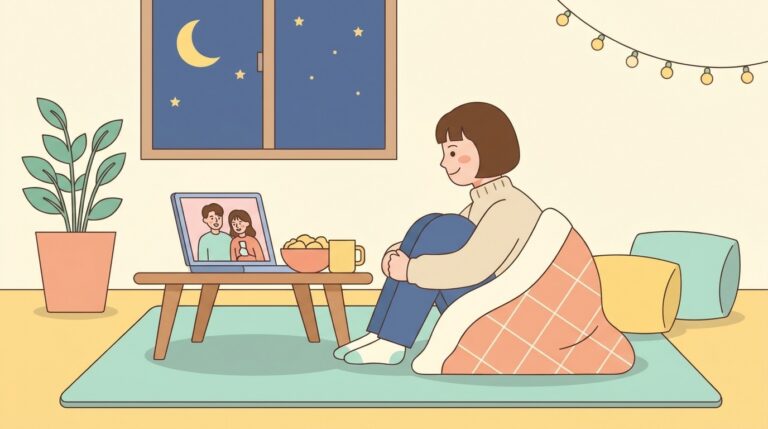
Ever stayed up way past your bedtime, grinning at your screen until your cheeks actually ached? This quick guide gives you the exact Korean expressions local fans use to rave about K-drama chemistry across every genre.
Phase 1: Why “The Drama Is Good” Isn’t Enough
안녕하세요! 매일한글 에디터입니다. (Annyeonghaseyo! Hello, this is your Daily Hangul Editor!) It is 2 AM, your snacks are gone, and you just finished episode 8 of a romantic comedy like Queen of Tears or Lovely Runner. Your cheeks literally hurt from smiling so much! You want to text your Korean friend about the leads’ amazing chemistry, but saying “The drama is good” feels way too boring. Based on real feedback from over 300 A2 learners who struggled to express their fangirl or fanboy excitement, I made this guide just for you. Today, you will learn fun, natural Korean expressions to talk about K-drama genres and heart-fluttering chemistry like a true bestie!
Phase 2: Top 3 Key Expressions Deep Dive
1. 케미가 미쳤어요 (Kemiga michyeosseoyo)
- Pronunciation: Ke-mi-ga mi-chyeo-sseo-yo (Sounds like: “Kay-me-gah me-chuh-suh-yo”)
- Meaning: Literal: “The chemistry is crazy” vs. Real Nuance: “Their chemistry is insanely good!”
- K-Culture Moment: Picture the grumpy male lead in a rom-com secretly holding an umbrella over the female lead in the rain while their eyes lock.
- Editor’s Insight: In English, “crazy” can feel negative, and traditionally
미치다means to lose your mind. In modern K-Culture, however, calling something미쳤어요is the ultimate compliment for jaw-dropping acting, visuals, or chemistry!- Situation Spectrum: Casual (
케미 미쳤다!) ✅ | Semi-formal (케미가 미쳤어요) ✅ | Formal (with a boss or elder) 🚫- 🤔 Think About It: In English, fans say “I ship them” or “sparks are flying.” Koreans borrow the English word “chemistry,” chop it into
케미 (kemi), and pair it with dramatic verbs. Does your native language also mix short loanwords with emotional slang when talking about movies?2. 광대가 내려오지 않아요 (Gwangdaega naeryeo-oji anayo)
- Pronunciation: Gwang-dae-ga nae-ryeo-o-ji a-na-yo (Sounds like: “Gwahng-deh-gah neh-ryuh-oh-jee ah-nah-yo”)
- Meaning: Literal: “My cheekbones will not come down” vs. Real Nuance: “I cannot stop grinning from ear to ear!”
- K-Culture Moment: Watching a sweet historical drama (
사극) scene where the cold prince finally breaks into a warm smile only for the heroine.- Editor’s Insight: Notice how Korean paints a physical picture of joy! When you beam with happiness, your cheekbones (
광대) push upward. Saying they refuse to come down is a super cute, vivid way to confess how whipped you are for a drama couple.- Situation Spectrum: Casual (
광대 안 내려와) ✅ | Semi-formal (광대가 내려오지 않아요) ✅ | Friendly workplace chat ⚠️ | Formal presentation 🚫- 🤔 Think About It: How does your culture describe an unstoppable smile? Seeing how Korean connects happiness to a specific facial bone (
광대) shows how visually expressive everyday Korean can be!3. 호흡이 잘 맞아요 (Hoheubi jal majayo)
- Pronunciation: Ho-heu-bi jal ma-ja-yo (Sounds like: “Ho-huh-bee jahl mah-jah-yo”)
- Meaning: Literal: “Their breathing matches well” vs. Real Nuance: “They have fantastic synergy / teamwork!”
- K-Culture Moment: Perfect for intense thrillers (
스릴러) like Signal or action scenes where two detectives read each other’s minds without speaking.- Editor’s Insight: While
케미is mostly about fun or romantic sparks,호흡 (breathing)respects serious acting skill and partnership. Bonus: you can also use it to compliment your classmates or coworkers!- Situation Spectrum: Casual (
호흡 잘 맞아) ✅ | Semi-formal (호흡이 잘 맞아요) ✅ | Formal (호흡이 아주 잘 맞습니다) ✅- 🤔 Think About It: Why “breathing”? In Korean tradition, performing arts, music, and teamwork all depend on breathing in the same rhythm. When two actors share one breath, their scene feels effortless.
Phase 3: Textbook Korean vs. Real Korean
Situation 1: Raving about the main couple in a rom-com (로코)
- 📖 Textbook Korean:
이 드라마의 남자 주인공과 여자 주인공이 잘 어울립니다. (I deuramaui namja juingonggwa yeoja juingongi jal eoullimnida.)— “The male lead and female lead of this drama suit each other well.” - 🗣️ Real Korean:
남주 여주 케미가 장난 아니에요! (Namju yeoju kemiga jangnan anieyo!)— “The male and female leads’ chemistry is no joke!” - 💡 Why is it different? Real Koreans love speedy shortcuts!
남자 주인공 (male lead)shrinks to남주 (namju), and여자 주인공 (female lead)becomes여주 (yeoju). Pairing them with장난 아니에요(literally “it’s not a joke”) gives you an instant, energetic A2 reaction.
Situation 2: Reacting to an iconic heart-fluttering scene (명장면)
- 📖 Textbook Korean:
그 장면을 보고 기분이 매우 좋았습니다. (Geu jangmyeoneul bogo gibuni maeu joasseumnida.)— “I felt very good after watching that scene.” - 🗣️ Real Korean:
그 장면 보고 심쿵했어요! (Geu jangmyeon bogo simkunghaesseoyo!)— “My heart went thump-thump watching that scene!” - 💡 Why is it different?
심쿵 (simkung)blends심장 (heart)with쿵 (the thump sound). Instead of a stiff “I felt good,” native speakers use sound-based words so their friend can practically hear their heart pounding.
Phase 4: K-Culture Deep Dive & Non-Verbal Manners
4-1. Nunchi (눈치) & Gestures
Words are only half the fun! When Koreans say 광대가 내려오지 않아요, they often gently cup both cheeks with their hands (almost like cradling a flower) or press two fingers lightly under their cheekbones while giggling. If a scene was super 심쿵, lightly tapping your chest over your heart shows your friend just how breathless the moment made you. Keep your tone bright and bouncy—saying these phrases with a straight face feels sarcastic!
4-2. Culture Code Analysis: K-Drama Genres & “Cheekbone Ascension”
K-dramas are masters of slow-burn tension. In a rom-com (로코), fans live for bickering-to-lovers moments. In a historical drama (사극), forbidden glances across palace courtyards steal the show. Even in a thriller (스릴러), fans secretly cheer for partner chemistry amidst the mystery! Korean internet culture even coined 광대 승천 (gwangdae seungcheon — cheekbones ascending to heaven) to describe that blissed-out grin you get during a drama’s iconic ending scene (엔딩 맛집).
Phase 5: Real-Life Roleplay Scenario
Setting & Character: It is a rainy Saturday afternoon in a cozy Hongdae café in Seoul. The air smells like sweet cinnamon waffles and freshly ground espresso. You are sitting across from Minji (민지), your bubbly 25-year-old Korean best friend who watches five dramas a week and always knows the hottest recommendations.
- Minji:
요즘 무슨 드라마 봐요? (Yojeum museun deurama bwayo?)— “What drama are you watching these days?” 🎭 stirs her iced Americano excitedly - You:
로코 드라마 보고 있어요! 정말 재미있어요. (Roko deurama bogo isseoyo! Jeongmal jaemiisseoyo.)— “I’m watching a rom-com drama! It’s really fun.” 🎭 leans forward with sparkling eyes - Minji:
오, 진짜요? 주인공들 어때요? (O, jinjayo? Juingongdeul eottaeyo?)— “Oh, really? How are the leads?” 🎭 rests her chin on her hand, curious - You:
남주 여주 케미가 미쳤어요! (Namju yeoju kemiga michyeosseoyo!)— “The male and female leads’ chemistry is crazy good!” 🎭 gives two enthusiastic thumbs up - Minji:
맞아요! 저도 보면서 광대가 내려오지 않았어요. (Majayo! Jeodo bomyeonseo gwangdaega naeryeo-oji anasseoyo.)— “Right! I couldn’t stop grinning while watching it too.” 🎭 cups both cheeks and giggles - You:
특히 비 오는 명장면에서 심쿵했어요. (Teukhi bi oneun myeongjangmyeoneseo simkunghaesseoyo.)— “Especially in that iconic rain scene, my heart fluttered!” 🎭 lightly taps chest over heart - Minji:
아, 그 장면! 배우들 호흡이 정말 잘 맞죠? (A, geu jangmyeon! Baeudeul hoheubi jeongmal jal matjyo?)— “Ah, that scene! The actors’ synergy matches really well, right?” 🎭 nods strongly in agreement - You:
네! 다음에는 스릴러 추천해 주세요. (Ne! Daeumeneun seurilleo chucheonhae juseyo.)— “Yes! Next time, please recommend a thriller.” 🎭 takes a sip of latte, ready for more
🔀 Interactive Branching Point
Minji leans in and asks: 혹시 사극도 좋아해요? (Hoksi sageukdo joahaeyo?) — “By any chance, do you like historical dramas too?” How do you answer?
- Option A:
네! 사극에서도 케미 좋은 커플 추천해 주세요. (Ne! Sageugeseodo kemi joeun keopeul chucheonhae juseyo.)— “Yes! Please recommend a couple with good chemistry in a historical drama too.”- Feedback (Best!): Smooth, polite, and natural! You used
케미seamlessly and invited Minji to share her favorite historical romance.
- Feedback (Best!): Smooth, polite, and natural! You used
- Option B:
아니요, 사극의 배우들이 미쳤어요. (Aniyo, sageugui baeudeuri michyeosseoyo.)— “No, the actors in historical dramas are crazy.”- Feedback (Bad!): Oops! Without saying “chemistry” or “acting,” pairing “No” with
미쳤어요sounds like you are calling the actors literally insane!
- Feedback (Bad!): Oops! Without saying “chemistry” or “acting,” pairing “No” with
- Option C:
글쎄요, 스릴러가 더 좋아요. 광대가 안 내려와요. (Geulsseyo, seurilleoga deo joayo. Gwangdaega an naeryeowayo.)— “Well, I like thrillers better. My cheekbones won’t come down.”- Feedback (Risk!): Minji might laugh and tease you! Unless you mean a cute detective couple, saying you grin nonstop at dark thrillers sounds a tiny bit quirky.
Phase 6: 10-Second Emotion Shadowing Drill
Read these out loud, pausing briefly at each / and matching the emotion tag!
[🤩 Super excited & high energy]남주 여주 / 케미가 / 미쳤어요!(Namju yeoju / kemiga / michyeosseoyo!) — “The male and female leads’ chemistry is insane!”[🥰 Smiling wide & dreamy]보는 내내 / 광대가 / 내려오지 않아요.(Boneun naenae / gwangdaega / naeryeo-oji anayo.) — “I couldn’t stop grinning the whole time watching.”[😳 Shyly blushing & fluttering]어제 그 명장면 보고 / 완전 / 심쿵했어요!(Eoje geu myeongjangmyeon bogo / wanjeon / simkunghaesseoyo!) — “Watching that iconic scene yesterday, my heart totally fluttered!”[🧐 Respectful & impressed]두 배우가 / 호흡이 정말 / 잘 맞아요.(Du baeuga / hoheubi jeongmal / jal majayo.) — “The two actors have really great synergy.”
Phase 7: K-Culture Mini Dictionary
- 로코 (roko) | Romantic Comedy | Short for
로맨틱 코미디. The #1 genre for sweet케미and happy grins. - 사극 (sageuk) | Historical Drama | Dramas set in Joseon or ancient Korea featuring gorgeous
한복 (hanbok)fashion and epic love stories. - 스릴러 (seurilleo) | Thriller | Mystery and suspense dramas where intense
호흡(teamwork) keeps you guessing until the end. - 명장면 (myeongjangmyeon) | Iconic / Famous Scene | Literally “masterpiece scene.” Every K-drama fan has a favorite
명장면they rewatch ten times!
Phase 8: Traveler’s Survival Kit
Top 3 Survival Phrases (For Drama Tours & Pop-Up Cafés)
이거 드라마 촬영지예요? (Igeo deurama chwaryeongjiyeyo?)— “Is this a drama filming location?”- Pro Tip: Ask this at scenic parks or vintage cafés in Seoul—proud owners love sharing which stars filmed there!
여기 포토존이 어디예요? (Yeogi potojoni eodiyeyo?)— “Where is the photo zone here?”- Pro Tip: K-drama pop-up stores always set up a
포토존so you can recreate your favorite명장면.
- Pro Tip: K-drama pop-up stores always set up a
사진 좀 찍어 주실 수 있어요? (Sajin jom jjigeo jusil su isseoyo?)— “Could you please take a picture for me?”- Pro Tip: Koreans are famously great photographers and will happily snap multiple angles for you!
Editor’s Travel Note
Planning to visit iconic K-drama filming spots across Seoul? Before you board your flight, Download the Naver Map App for Accurate Korean Navigation because Google Maps does not provide reliable walking routes in South Korea. You should also Install the Kakao T App for Easy Taxi Rides when heading to hilly drama neighborhoods late at night. Finally, pick up a T-money card at any convenience store (CU or GS25)—you can tap it for subways, buses, and even late-night drama snacks!
Phase 9: One Step Deeper
In Korean culture, joy is rarely meant to be kept quietly to yourself—it blooms through 공감 (empathy) and 정 (warm connection). That is why Korean fans flock to café tables and group chats the second an episode ends, trading phrases like 광대가 내려오지 않아요 and 심쿵. By describing the physical lift of a smile, the Korean language invites your friends to literally feel that happiness alongside you. When you learn these expressions, you aren’t just memorizing A2 vocabulary—you are stepping right into Korea’s lively, big-hearted fan community.
💬 Your Turn: Which K-drama couple gave you the biggest “cheekbones won’t come down” grin, and what genre was the show? Share your favorite 명장면 in the comments below!
Phase 10: FAQ & Common Mistakes
Q: Can I use 케미 (kemi) for non-romantic friendships in thrillers or action dramas?
A: Yes, definitely! While 케미 is famous in rom-coms, Koreans also say 브로맨스 케미 (bromance chemistry) or 워맨스 케미 (womance chemistry) for awesome detective duos and loyal best friends.
Q: Is it okay to say 미쳤어요 (michyeosseoyo) to my Korean teacher or boss?
A: Be careful! Among close friends, 케미가 미쳤어요 is a fun, trendy compliment. With elders, teachers, or at the office, it sounds too slangy—use 케미가 정말 좋아요 (The chemistry is really good) instead.
Q: What is the difference between 남주/여주 and 주인공?
A: 주인공 (juingong) simply means “main character” in general. 남주 (namju) means “male lead” and 여주 (yeoju) means “female lead,” making your K-drama chat sound much more natural!
🚨 Common Mistakes Warning Board
- Mistake: Saying
케미스트리가 좋아요using the full English word “chemistry.”- Correct Action: Always shorten it to
케미! Saying the full word sounds awkward in casual drama talk.
- Correct Action: Always shorten it to
- Mistake: Translating “I couldn’t stop smiling” literally as
웃음을 멈출 수 없어요.- Correct Action: While grammatically fine, it sounds stiff—or even a bit spooky! Use
광대가 내려오지 않아요for adorable K-drama happiness.
- Correct Action: While grammatically fine, it sounds stiff—or even a bit spooky! Use
- Mistake: Calling every normal scene a
명장면.- Correct Action: Use
이 장면 (this scene)for regular moments, and save명장면for the truly unforgettable, heart-stopping scenes!
- Correct Action: Use
Phase 11: Action Mission & Engagement
- 🥉 Bronze (Solo Practice): Pull up your favorite K-drama poster on Netflix or Viki and say
남주 여주 케미가 미쳤어요! (Namju yeoju kemiga michyeosseoyo!)out loud three times with a huge smile. - 🥈 Silver (SNS Share): Post a comment on a K-drama clip on TikTok or Instagram using
#광대가내려오지않아요or#케미맛집! - 🥇 Gold (Real-Life Use): Message a Korean friend or language partner today—ask for a
로코or스릴러recommendation and tell them which scene gave you심쿵!
🎮 K-Culture Mission: Search YouTube for a K-drama “Behind the Scenes” (메이킹 필름) video of your favorite couple. Scroll through the Korean comments and see how fast you can spot fans typing 케미, 광대, or 호흡!
Phase 12: Interactive Quiz Challenge
Test what you learned! Pick your answers first, then open the toggle below.
1. Situational Judgment: You are watching an intense mystery thriller with your Korean friend, and the two rival detectives finally team up with flawless timing. What is the best thing to say?
* A) 두 배우 호흡이 정말 잘 맞아요! (Du baeu hoheubi jeongmal jal majayo!)
* B) 두 배우가 정말 미쳤어요! (Du baeuga jeongmal michyeosseoyo!)
* C) 너무 심쿵해서 광대가 아파요. (Neomu simkunghaeseo gwangdaega apayo.)
2. Fill in the Blank: 이 로코 드라마는 ____ 여주 케미가 장난 아니에요! (I roko deuramaneun ____ yeoju kemiga jangnan anieyo!) — “In this rom-com drama, the male lead and female lead’s chemistry is no joke!”
3. True or False (Culture Quiz): In Korea, saying 광대가 내려오지 않아요 means your face hurts and you need to visit a doctor.
Click to Reveal Answers & Explanations!
- 1. Answer: A (
두 배우 호흡이 정말 잘 맞아요!) —호흡highlights amazing teamwork and acting synergy in thrillers! (B sounds like you’re calling the actors crazy without saying케미, and C is better for cute romance rather than detective teamwork.) - 2. Answer:
남주(namju) —남주(male lead) +여주(female lead) is the ultimate K-drama fan combo! - 3. Answer: False! — No doctor needed! It is a playful Korean idiom meaning you cannot stop grinning because a scene is so sweet or joyful.
🎬 Watch Our Daily Videos! (Daily Hangul Official Instagram)
Review the expressions you learned in this article with our fun daily short videos! Check out native pronunciation and real-life nuances in action.
- Instagram @dailyhangul_en







