

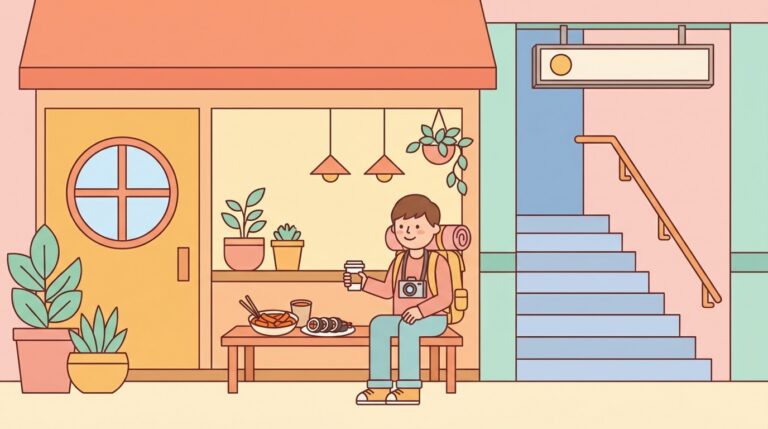
Phase 1: Why Do Korean Numbers Suddenly Feel Like a Secret Code?
안녕하세요! 매일한글 에디터입니다. (Hello! I’m your Daily Hangul editor.) Picture this: you are in Seoul, excited to catch the airport bus at Gate 11 or meet your friend at 12:15 PM for spicy tteokbokki. Suddenly, the staff calls out “Sib-il!” and you freeze. Wait—was that 11 or 10? You are not alone! Hundreds of our beginner students tell us that Sino-Korean numbers above 10 feel like a secret code at first. That is why we built this friendly, real-world guide based on real learner struggles. Once you master 11, 12, and 15, reading K-Pop concert dates, subway exits, and cafe wait times becomes effortless. Ready to turn number panic into Seoul confidence? Let’s jump in!
Phase 2: Top 3 Essential Expressions Deep Dive
Good news! Sino-Korean numbers work just like LEGO blocks. You already know 십 (sip / 10), 일 (il / 1), 이 (i / 2), and 오 (o / 5). Put 십 (10) first, and snap the small number right after it. Let’s look at the three numbers you will hear everywhere in Korea!
1. Eleven (십일)
- Pronunciation:
Sib-il— Sounds like saying “see Bill” quickly in one breath (NOT “ship-eel”!). When십 (sip)meets일 (il), theㅂ (b/p)slides smoothly onto the next syllable.- Meaning: Literally “ten-one” = 11. Used for dates (November, the 11th), bus numbers, subway exits, prices, and minutes.
- K-Culture Moment: On November 11 (
십일월 십일일 / Sib-il-wol sib-il-il), convenience stores in Korea turn into giant displays of chocolate-dipped biscuit sticks for Pepero Day, and K-Pop idols post cute 11/11 selfies with fans!- Editor’s Insight: Beginners often pause between
십and일, which makes Koreans hear two separate words. Glue them together as si-bil and you will sound instantly natural!- Situation Spectrum: Casual ✅ | Semi-formal ✅ | Formal ✅ (Numbers themselves are neutral; just add polite endings like
-이에요 (-ieyo)when speaking to strangers!)- 🤔 Think About It: In English, 11 is “eleven”—a completely different word from “ten” and “one.” In Korean, it is literally “10 + 1.” Doesn’t that logical math make your brain smile?
2. Twelve (십이)
- Pronunciation:
Sib-i— Sounds like “see bee“! Again, let thatㅂ (b)glide softly into이 (i).- Meaning: Literally “ten-two” = 12. Essential for December (
십이월 / Sib-i-wol), Gate 12, or 12 minutes.- K-Culture Moment: In K-Dramas, December (
십이월 / Sib-i-wol) is the ultimate romantic season—snow falling outside a warm coffee shop, fairy lights in Myeongdong, and dramatic year-end award shows.- Editor’s Insight: Watch out!
십이 (Sib-i / 12)sounds super close to십일 (Sib-il / 11)if you swallow the finalㄹ (l)sound on 11. For 12, keep your ending clean and open like “bee”!- Situation Spectrum: Casual ✅ | Semi-formal ✅ | Formal ✅
- 🤔 Think About It: Korea has a famous traditional 12-animal zodiac cycle (
십이지신 / Sib-i-jisin). Have you ever wondered why the number 12 feels so magical for time and seasons across both East and West?3. Fifteen (십오)
- Pronunciation:
Sib-o— Sounds like “see bow” (like a ribbon bow) or “C-bo“!- Meaning: Literally “ten-five” = 15. Your daily best friend for cafe wait times (
십오 분 / 15 minutes) and bus/subway numbers.- K-Culture Moment: Picture a bustling Korean BBQ restaurant in a drama where the host yells, “Just 15 minutes!” (
십오 분만요! / Sib-o bun-manyo!) while sizzling pork belly perfumes the whole street.- Editor’s Insight: In real life, you will rarely say
십오alone—you will almost always pair it with분 (bun / minutes)or번 (beon / number). Think of십오 분 (sib-o bun)as one single rhythm chunk!- Situation Spectrum: Casual ✅ | Semi-formal ✅ | Formal ✅
- 🤔 Think About It: In Korea’s fast-paced ppalli-ppalli (hurry-hurry) culture, 15 minutes feels like a mini eternity for delivery, yet totally normal for a trendy bakery line. How long is a “short wait” in your home country?
Phase 3: Textbook Korean vs. Real Korean
Textbooks teach polite, complete sentences—which are great for tests! But when you step into a real Seoul cafe or hang out with Korean friends, here is what actually leaves people’s mouths.
Situation 1: Asking or hearing a 15-minute wait time
- 📖 Textbook Korean:
십오 분 동안 기다려야 합니다. (Sib-o bun dongan gidaryeoya hamnida. — You must wait for 15 minutes.) - 🗣️ Real Korean:
십오 분쯤 걸려요. (Sib-o bun-jjeum geollyeoyo. — It takes about 15 minutes.) - 💡 Why the difference? Textbooks sound like a formal announcement on a train. Adding
-쯤 (-jjeum / about)softens the sentence and matches how kind Korean staff naturally estimate time without sounding bossy.
Situation 2: Talking about November 11th
- 📖 Textbook Korean:
오늘은 십일월 십일일입니다. (Oneureun sib-il-wol sib-il-il-imnida. — Today is November 11th.) - 🗣️ Real Korean:
오늘 십일월 십일일이에요! (Oneul sib-il-wol sib-il-il-ieyo! — Today is November 11th!) - 💡 Why the difference? In daily chats, Koreans almost always drop the subject marker
-은 (-eun)on “today” and switch from stiff-입니다 (-imnida)to friendly-이에요 (-ieyo). It feels warm and excited!
Phase 4: K-Culture Deep Dive & Non-Verbal Manners
4-1. Nunchi (눈치) & Gestures
When Koreans count or confirm numbers like 11, 12, or 15 in a loud restaurant or busy bus stop, body language saves the day! If you want to show 11 or 12 with your fingers, Koreans usually flash all 10 fingers open, close them briefly, and then pop up 1 or 2 fingers right away. And here is a golden nunchi (social awareness) tip: if you are asking a staff member, “Is that Gate 11?” (십일번이에요? / Sib-il-beon-ieyo?), never point at the sign or a person with a single index finger—use a gentle open palm facing upward toward the sign. It instantly reads as polite and considerate!
4-2. Cultural Code Analysis: Why 11, 12, and 15 Rule Everyday Korea
- K-Food & K-Pop on 11/11: In Korea,
십일월 십일일 (11/11)is massive! Friends, coworkers, and students swap thin chocolate-covered biscuit sticks because the sticks look just like the number11(1111). Even K-Pop fans buy special boxes for their favorite idols! - The 15-Minute Seoul Rhythm: Because Korea’s subway and food delivery systems are famously fast,
십오 분 (sib-o bun / 15 minutes)is the unofficial unit of patience. Whether it is a 15-minute wait for viral salt bread in Seongsu-dong or 15 minutes until your chicken arrives, hearing십오 분usually means “totally worth it!”
Phase 5: Real-Life Roleplay Scenario
Setting: It is a cozy, rain-splattered afternoon at a viral dessert cafe in Hongdae (홍대). Neon signs glow outside, and lo-fi K-indie music fills the room. You are ordering a popular soufflé pancake while waiting for your friend.
NPC: Mina (미나), a friendly barista wearing a denim apron covered in cute cat pins.
Dialogue:
* Mina: 어서 오세요! 주문하시겠어요? (Eoseo oseyo! Jumunhasigesseoyo? — Welcome! Would you like to order?) 🎭 Mina smiles warmly and taps the glowing register screen.
* You: 네! 팬케이크 하나 주세요. (Ne! Paenkeikeu hana juseyo. — Yes! One pancake, please.) 🎭 You smile and point gently at the menu photo.
* Mina: 팬케이크는 십오 분쯤 걸려요. 괜찮으세요? (Paenkeikeu-neun sib-o bun-jjeum geollyeoyo. Gwaenchaneuseyo? — The pancake takes about 15 minutes. Is that okay?) 🎭 Mina tilts her head politely to check if you are in a rush.
* You: 네, 괜찮아요! 제 번호가 몇 번이에요? (Ne, gwaenchanayo! Je beonhoga myeot beon-ieyo? — Yes, it’s okay! What is my number?) 🎭 You look curiously at the receipt printer.
* Mina: 손님은 십이번이에요! (Sonnim-eun sib-i-beon-ieyo! — You are number 12!) 🎭 Mina hands you a small paper receipt and circles “12” with a pink pen.
* You: 아, 십이번! 감사합니다. (A, sib-i-beon! Gamsahamnida. — Ah, number 12! Thank you.) 🎭 You nod happily and tuck the receipt safely in your hand.
* Mina: 십일번 손님, 커피 나왔습니다! (Sib-il-beon sonnim, keopi nawasseumnida! — Customer number 11, your coffee is ready!) 🎭 Mina places a tray on the pickup counter and calls out clearly.
* You: (속으로) 휴, 다행이다! 나는 십이번이야! (Sogeuro: Hyu, dahaeng-ida! Naneun sib-i-beon-iya! — Thinking to yourself: Phew, thank goodness! I’m number 12!) 🎭 You chuckle quietly and grab a cozy seat by the window.
🔀 Interactive Branching Point
Uh-oh! Suddenly, Mina calls out: "십이번 손님, 팬케이크 나왔습니다!" (Sib-i-beon sonnim, paenkeikeu nawasseumnida! — Customer 12, your pancake is ready!) How do you respond as you walk up?
- Option A:
"네, 저예요! 감사합니다!" (Ne, jeoyeyo! Gamsahamnida! — Yes, that's me! Thank you!) - Option B:
"아니요, 저는 십오 번이에요." (Aniyo, jeoneun sib-o beon-ieyo. — No, I am number 15.) - Option C: Walk up silently without making eye contact and grab the tray.
Feedback:
* Option A (Best!): Gold-star Korean manners! Saying 저예요 (it's me) plus 감사합니다 (thank you) makes the barista’s day and confirms you heard 십이번 (12) clearly.
* Option B (Risk): Wait—check your receipt! If you accidentally mix up 십이 (12) and 십오 (15), someone else might get your fluffy pancake! Always keep the receipt handy to double-check.
* Option C (Bad): In Korea, confirming out loud—even a quick 네! (Ne! / Yes!)—helps staff know the right customer got the order so nobody accidentally takes the wrong food.
Phase 6: 10-Second Emotion Shadowing Drill
Read these out loud! Pause briefly at each / and match the emotion tag—your ears and tongue will lock the sounds in fast!
[😊 Happy and relieved]
네, / 제 번호는 / 십이번이에요! (Ne, / je beonho-neun / sib-i-beon-ieyo! — Yes, my number is 12!)[😮 Slightly surprised]
와, / 십오 분이나 / 걸려요? (Wa, / sib-o bun-ina / geollyeoyo? — Whoa, it takes 15 minutes?)[🥳 Excited for a special date]
오늘은 / 십일월 / 십일일이에요! (Oneureun / sib-il-wol / sib-il-il-ieyo! — Today is November 11th!)
Phase 7: K-Culture Mini Dictionary
- 십일월 (Sib-il-wol) | November | Used constantly in autumn for K-Pop winter pre-orders, Pepero Day (
11/11), and the big Korean college entrance exam (수능). - 십이월 (Sib-i-wol) | December | The month of
연말 (yeonmal / year-end)parties, holiday markets in Seoul, and major drama/music award ceremonies. - 십오 분 (Sib-o bun) | 15 minutes | Your go-to phrase on Korean food delivery apps, restaurant waitlists, and transit navigation.
- 번 (Beon) | Number (counter) | Attach this right after
십일,십이, or십오for subway exits (십일번 출구), bus routes (십이번 버스), and order tickets!
Phase 8: Traveler’s Survival Kit
Top 3 Survival Expressions
- 십일번 출구 어디예요? (Sib-il-beon chulgu eodiyeyo?) — “Where is Exit 11?”
- Pro Tip: Big Seoul stations like Gangnam or Hongik Univ. have 10+ exits! Always snap a photo of your exit number.
- 십오 분 걸려요. (Sib-o bun geollyeoyo.) — “It takes 15 minutes.”
- Pro Tip: Great to recognize when taxi drivers or cafe staff tell you how long something will take.
- 십이번 테이블이에요. (Sib-i-beon teibeul-ieyo.) — “It’s table 12.”
- Pro Tip: Many Korean restaurants have numbers on the corner of each table—check yours before ordering at the counter!
Editor’s Travel Note
Google Maps does not give full walking directions in South Korea, so before your flight, download the Naver Map app for Korean subway exits and bus numbers and switch its language to English! Also, grab a T-money transit card at any convenience store (CU, GS25, or 7-Eleven) right at the airport so you can tap in and out of 십일번 (Exit 11) or Bus 십오번 (15) without fumbling for cash.
Phase 9: One Step Deeper
You might wonder: “Why does Korean even have two number systems?” Think of it like two different outfits in your closet! Korea uses Native Korean numbers (하나, 둘, 셋 / hana, dul, set) for cozy, personal things like age, hours on the clock, and counting cups of coffee. Meanwhile, Sino-Korean numbers (일, 이, 삼 / il, i, sam and 십일, 십이, 십오) handle crisp, big-picture life—dates, money, minutes, and bus routes. Separating the two keeps daily communication super clear once you get the rhythm, and numbers like 11/11 even turn ordinary calendar days into warm moments of sharing snacks with friends (정 / jeong).
💬 Your Turn: Which number trips you up more right now—십일 (11), 십이 (12), or 십오 (15)? Drop a comment below with your favorite way to practice Korean numbers!
Phase 10: FAQ & Myth Busting
Q: Why does 십일 (11) sound like 시빌 (si-bil) instead of 십-일 (sip-il)?
A: In Korean, when a syllable ends in a consonant like ㅂ (b/p) and the next syllable starts with a silent ㅇ, the final consonant hops over to lead the next syllable! So 십 + 일 flows together smoothly as 시빌 (si-bil). The same thing happens with 십이 (si-bi) and 십오 (si-bo).
Q: Can I use 십일, 십이, and 십오 to tell the hour, like “11 o’clock” or “12 o’clock”?
A: Great question! No—hours on the clock use Native Korean numbers (열한 시 for 11:00, 열두 시 for 12:00). Save Sino-Korean 십일, 십이, and 십오 for minutes (like :11, :12, :15), dates, prices, and bus/exit numbers!
Q: How do I say 11, 12, and 15 in Korean money, like 15,000 won?
A: For 15 won (십오 원), you just add 원 (won), though most prices in Korea are in thousands (만 원 / man won = 10,000 won). Once you know 십오 (15), reading 15분 (15 minutes) or 15일 (the 15th) uses the exact same 십오!
🚨 Common Mistakes Warning Board
- Mistake: Saying
십오 시 (sib-o si)for 3:00 PM or 15:00 in casual speech.- Correct Action: Use
오후 세 시 (ohu se si / 3 PM)for hours, and save십오for십오 분 (15 minutes)!
- Correct Action: Use
- Mistake: Stopping hard between
십and일(ship... il), which confuses listeners.- Correct Action: Blend them into one smooth word: si-bil, si-bi, si-bo!
- Mistake: Mixing up
십이 (12 / si-bi)and이십 (20 / i-sip).- Correct Action: Remember the golden rule:
십 (10)first = teens (십이= 10+2 = 12).이 (2)first = twenties (이십= 2×10 = 20)!
- Correct Action: Remember the golden rule:
Phase 11: Action Mission & Engagement
- 🥉 Bronze Mission (Solo Practice): Look at your phone clock right now and say the minutes out loud using Korean whenever it hits
:11,:12, or:15(십일 분,십이 분,십오 분)! - 🥈 Silver Mission (Share It): Write today’s date or your favorite month (
십일월or십이월) in Hangul on a sticky note or Instagram Story and tag a study buddy! - 🥇 Gold Mission (Real-World Use): Next time you visit a Korean restaurant or bakery, read your waiting ticket number or timer in Korean out loud before the staff calls it!
- 🎮 K-Culture Mission: Put on your favorite K-Drama or Korean vlog for 10 minutes with Korean subtitles on—every time you spot
11,12, or15, pause and whisper십일,십이, or십오like an undercover Seoul local!
Phase 12: Interactive Quiz Challenge
Test your new Seoul number superpowers! Try answering before opening the spoiler toggles.
1. Situational Judgment: You are at Incheon Airport and the staff says, "십오 번 게이트로 가세요! (Sib-o beon geiteu-ro gaseyo!)" Which gate do you walk to?
* A) Gate 11
* B) Gate 12
* C) Gate 15
Check Answer & Feedback (Quiz 1)
Answer: C) Gate 15!
* Why? 십 (10) + 오 (5) = 15 (십오 / sib-o)!
* If you picked A: Close! Gate 11 is 십일 번 (sib-il beon). Listen for that l sound at the end!
* If you picked B: Almost! Gate 12 is 십이 번 (sib-i beon), ending in a bright “ee” sound.
2. Fill in the Blank: Your favorite K-Pop group’s winter concert is in December! How do you complete the sentence? "콘서트는 ______ 월에 있어요!" (Konseoteu-neun ______ wol-e isseoyo! — The concert is in December!)
* A) 십일 (sib-il)
* B) 십이 (sib-i)
* C) 십오 (sib-o)
Check Answer & Explanation (Quiz 2)
Answer: B) 십이 (sib-i)!
* December is the 12th month, so in Korean it is 십이월 (Sib-i-wol)! Remember: 십일월 is November (Month 11).
3. True or False Cultural Quiz: True or False — On 십일월 십일일 (November 11th), Koreans traditionally exchange heart-shaped chocolates only for Valentine’s Day.
Check Answer & Cultural Tip (Quiz 3)
Answer: False!
* On 십일월 십일일 (11/11), Koreans celebrate Pepero Day, exchanging tall, thin chocolate-dipped biscuit sticks because their shape looks just like the number 11 (1111)! Friends, classmates, and coworkers all share them for fun.
🎬 Watch Our Daily Videos! (Daily Hangul Official Instagram)
Review the expressions you learned in this article with our fun daily short videos! Check out native pronunciation and real-life nuances in action.
- Instagram @dailyhangul_en






