

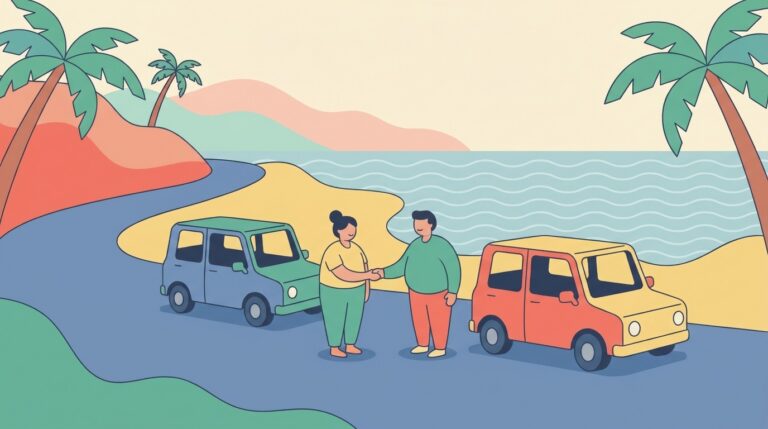
Phase 1: Empathy — From K-Drama Road Trip to Real-Life Fender-Bender
안녕하세요! 매일한글 에디터입니다. (Annyeonghaseyo! Maeil Hangul Editeo-imnida.) Picture your dream K-Drama road trip along Jeju’s emerald coast—breezy pop music playing, iced Americano in the cupholder. Suddenly, while backing into a tight café spot, you hear a dreaded thud. A minor scratch! Your heart races, and the other driver steps out looking tense. Don’t panic! Based on real feedback from travelers who navigated Korean fender-benders, this B1 guide gives you the exact phrases to exchange insurance claim numbers calmly and wrap everything up smoothly without turning your trip into a stress fest.
Phase 2: Deep Dive into 3 Core Expressions
1. 보험 접수 번호 좀 주시겠어요? (boheom jeopsu beonho jom jusigesseoyo?)
- Pronunciation: boheom jeopsu beonho jom jusigesseoyo? (Think: “bo-hum jup-soo bun-ho jom joo-shee-geh-ssuh-yo” — say hum with a relaxed ‘uh’ like in cup, and soften the ending like a gentle question.)
- Meaning: Literally “Could you please give me the insurance reception number?” In real life, it means “Could I get your insurance claim number?”
- K-Culture Moment: In Korean slice-of-life dramas or YouTube travel vlogs, when two drivers finish taking photos of a minor bumper tap, one pulls out their phone and asks this exact phrase to speed up the paperwork.
- Editor’s Insight: Adding 좀 (jom, a little/please) softens a direct request into a polite, cooperative inquiry. Without 좀 (jom), it can sound like a demand during an already tense moment!
- Situation Spectrum: Casual 🚫 (Too stiff for close friends, though strangers use polite form) | Semi-formal ✅ (Perfect with the other driver) | Formal ✅ (Great for insurance agents or rental staff)
- 🤔 Think About It: In English, people often say “Can I get your insurance info?” focusing on the document or card. In Korea, drivers focus on the 접수 번호 (jeopsu beonho, claim registration number) generated right away via phone or app. How does focusing on a shared digital number change the pace of resolving a conflict?
2. 제 보험 접수 번호는 문자로 보내드릴게요. (je boheom jeopsu beonhoneun munjaro bonaedeurilgeyo.)
- Pronunciation: je boheom jeopsu beonhoneun munjaro bonaedeurilgeyo. (Think: “jeh bo-hum jup-soo bun-ho-neun moon-ja-ro bo-nae-deu-reel-geh-yo” — let deu sound like a quick, light ‘duh’ without rounding your lips.)
- Meaning: Literally “As for my insurance claim number, I will send it to you by text message.” Practically, it means “I’ll text you my claim number right away.”
- K-Culture Moment: Just like characters in modern K-Dramas instantly swap KakaoTalks or texts after a café encounter, Korean drivers rarely write on paper at an accident scene—everything moves via SMS.
- Editor’s Insight: The ending -(으)ㄹ게요 (-(eu)lgeyo) shows a promise to the listener, while 드리다 (deurida, to give humbly) elevates the other driver, signaling “I’m taking responsibility smoothly.”
- Situation Spectrum: Casual 🚫 | Semi-formal ✅ (Ideal, respectful, and reassuring) | Formal ⚠️ (In very formal settings, use 보내드리겠습니다 / bonaedeurigetseumnida)
- 🤔 Think About It: Korean uses humble verbs like 드리다 (deurida) even with strangers after a minor accident. Why do you think showing linguistic humility right away helps both parties stay calm?
3. 원만하게 잘 처리해 주셔서 감사합니다. (wonmanhage jal cheorihae jusyeoseo gamsahamnida.)
- Pronunciation: wonmanhage jal cheorihae jusyeoseo gamsahamnida. (Think: “wun-man-ha-geh jal chuh-ree-hae joo-syuh-suh gam-sa-ham-nee-da” — notice how ㅂ+ㄴ blends smoothly into an ‘m’ sound in ham-nee-da.)
- Meaning: Literally “Thank you for handling it well in a smooth/round way.” Real nuance: “Thank you for settling this so amicably with me.”
- K-Culture Moment: You’ll hear this phrase at the end of heartfelt reconciliation scenes in Korean dramas—or in real life when two drivers shake hands or bow slightly after agreeing to let insurance handle the rest.
- Editor’s Insight: 원만하다 (wonmanhada) literally comes from the idea of something being round with no sharp edges. Using it shows maturity and appreciation that the other person didn’t make the situation harsh or confrontational.
- Situation Spectrum: Casual 🚫 | Semi-formal ✅ (Warm and classy closing) | Formal ✅ (Great for business or official wraps)
- 🤔 Think About It: English uses “smoothly” or “amicably,” while Korean connects peaceful resolution to being “round” (원만하다 / wonmanhada). What shape or metaphor does your native language use for peaceful agreements?
Phase 3: Textbook Korean vs. Real Korean
Situation 1: Wrapping up by swapping numbers
- 📖 Textbook Korean: 사고가 났으니 서로의 연락처와 보험 정보를 교환합시다. (sagoga nasseuni seoroui yeollakcheowa boheom jeongboreul gyohwanhapsida.) — “Since an accident occurred, let us exchange each other’s contact and insurance information.”
- 🗣️ Real Korean: 연락처랑 보험 접수 번호 서로 주고받고 마무리하죠. (yeollakcheorang boheom jeopsu beonho seoro jugobatgo mamurihajyo.) — “Let’s swap phone numbers and claim numbers and wrap it up.”
- 💡 Why the difference? Textbook -(으)ㅂ시다 (-(eu)psida) can sound stiff or bossy to a stranger. Natives prefer native Korean verb pairs like 주고받다 (jugobatda, give and receive) and 마무리하다 (mamurihada, wrap up) with -죠 (-jyo) to create a cooperative vibe.
Situation 2: Letting the other driver know dispatch is coming
- 📖 Textbook Korean: 보험사 직원이 현장에 곧 도착할 예정입니다. (boheomsa jigwoni hyeonjange got dochakhal yejeongimnida.) — “An insurance company employee is scheduled to arrive at the scene soon.”
- 🗣️ Real Korean: 보험사 출동 기사님 금방 오신대요. (boheomsa chuldong gisanim geumbang osindaeyo.) — “They said the insurance dispatch agent will be right here.”
- 💡 Why the difference? Calling the roadside agent 기사님 (gisanim, driver/technician + honorific) shows everyday Korean warmth, and using -ㄴ대요 (-ndaeyo, indirect quotation) naturally relays what the call center just told you.
Phase 4: K-Culture Deep Dive & Non-Verbal Manners
4-1. Nunchi (눈치) & Gestures at the Scene
In Korea, how you act in the first 10 seconds often determines whether a minor scrape stays friendly or gets tense. Step out of your rental car calmly, offer a 15-to-30-degree polite bow, and check on the other person’s safety before inspecting the bumper. Keep your tone steady and avoid crossing your arms or pointing fingers. When showing your phone screen with your insurance claim text, hold your phone with both hands (or support one wrist with the other hand) as a small sign of respect. Soft, steady eye contact paired with a gentle nod tells the other driver you have good nunchi and are fully cooperating.
4-2. Cultural Code: K-Travel & Korea’s “Blackbox” (Dashcam) Culture
In K-Dramas, minor car accidents often trigger dramatic shouting matches—and yes, sometimes drivers in real life get startled! However, in modern K-Travel reality, almost every rental car and private vehicle in Korea has a high-definition 블랙박스 (beullaekbakseu, dashcam) recording front and back 24/7. Because video evidence settles fault objectively later, Koreans rarely argue about who was right or wrong on the street. Instead, the cultural focus is on 빠르고 원만한 처리 (ppareugo wonmanhan cheori, fast and smooth processing): take photos, call your rental/insurance hotline, exchange claim numbers via text, and clear the road quickly so traffic flows smoothly.
Phase 5: Real-Life Roleplay Scenario
- Setting: A breezy afternoon in a bustling café parking lot in Aewol, Jeju Island. You lightly brushed the rear corner of a parked SUV while pulling out.
- NPC: Min-jun (민준), a friendly 40-something Korean dad on a family trip who was just loading iced lattes into his trunk.
Turn 1 — You:
저기요, 정말 죄송합니다. 다치신 곳은 없으신가요? (Jeogiyo, jeongmal joesonghamnida. Dachisin goseun eopseusingayo?)
“Excuse me, I’m truly sorry. Are you hurt anywhere?”
🎭 Gently bow slightly and look directly at Min-jun with genuine concern.
Turn 2 — Min-jun:
아이고, 놀랐네요. 몸은 괜찮은데 차 뒤쪽이 좀 긁혔어요. (Aigo, nollanneyo. Momeun gwaenchaneunde cha dwijjogi jom geulkhyeosseoyo.)
“Oh my, that startled me. I’m fine physically, though the back of the car got scratched a bit.”
🎭 Min-jun sighs in relief that no one is hurt, then crouches to inspect the bumper.
Turn 3 — You:
렌터카 회사랑 보험사에 바로 연락했어요. 곧 출동하실 거예요. (Renteoka hoesarang boheomsae baro yeollakhaesseoyo. Got chuldonghasil geoyeyo.)
“I contacted the rental car company and insurance right away. They’ll dispatch someone soon.”
🎭 Hold your smartphone slightly forward to show you’ve already made the call.
Turn 4 — Min-jun:
네, 알겠습니다. 그럼 제 보험 접수 번호 먼저 문자로 보내드릴게요. (Ne, algetseumnida. Geureom je boheom jeopsu beonho meonjeo munjaro bonaedeurilgeyo.)
“Okay, got it. Then I’ll text you my insurance claim number first.”
🎭 Min-jun taps on his phone and asks for your Korean phone number.
Turn 5 — You:
감사합니다. 제 보험 접수 번호랑 연락처도 같이 보내드릴까요? (Gamsahamnida. Je boheom jeopsu beonhorang yeollakcheodo gachi bonaedeurilkkayo?)
“Thank you. Should I send you my insurance claim number and contact info together too?”
🎭 Smile politely and type his number carefully so there are no typos.
Turn 6 — Min-jun:
네, 문자로 주시면 확인하고 보험사 통해서 처리하면 될 것 같아요. (Ne, munjaro jusimyeon hwaginhago boheomsa tonghaeseo cheorihamyeon doel geot gatayo.)
“Yes, if you text it to me, I’ll check it and we can just handle it through the insurance companies.”
🎭 He receives your text, flashes a reassuring thumbs-up, and nods.
Turn 7 — You:
현장 사진도 찍어 두었는데, 혹시 더 필요한 게 있을까요? (Hyeonjang sajindo jjigeo dueonneunde, hoksi deo piryohan ge isseulkkayo?)
“I also took photos of the scene—by any chance, is there anything else needed?”
🎭 Gesture briefly toward the parked cars and check if the dispatch agent needs anything else.
Turn 8 — Min-jun:
아니요, 이 정도면 충분해요. 서로 원만하게 잘 처리해서 다행이네요. 조심히 가세요! (Aniyo, i jeongdomyeon chungbunhaeyo. Seoro wonmanhage jal cheorihaeseo dahaengineyo. Josimhi gaseyo!)
“No, this is plenty. I’m glad we handled it smoothly together. Drive safely!”
🎭 He gives a warm wave as you both head back to your cars.
🔀 Interactive Branching Point: What do you say if Min-jun looks worried about rental car delays?
- A) 괜찮아요, 신경 쓰지 마세요! 그냥 가셔도 돼요. (Gwaenchanayo, singyeong sseuji maseyo! Geunyang gasyeodo dwaeyo.) — “It’s fine, don’t worry! You can just go.”
- B) 걱정 마세요, 제 렌터카 보험으로 다 처리될 거예요. 접수 번호 확인되셨죠? (Geokjeong maseyo, je renteoka boheomeuro da cheoridoel geoyeyo. Jeopsu beonho hwagindoesyeotjyo?) — “Don’t worry, it’ll all be handled by my rental insurance. You confirmed the claim number, right?”
- C) 저도 여행 중이라 바빠서 그런데, 현금으로 조금 드리고 끝낼까요? (Jeodo yeohaeng jungira bappaseo geureonde, hyeongeumeuro jogeum deurigo kkeutnaelkkayo?) — “I’m also busy traveling, so should I just give you a little cash and end it?”
Feedback:
* Choice A (Risk ⚠️): Leaving without exchanging verified insurance claim numbers or photos can violate your rental car contract and expose you to full liability later!
* Choice B (Best ✅): Calm, reassuring, and double-checks that the claim number went through. Total B1 pro move!
* Choice C (Bad 🚫): Offering cash on the spot with a rental car often violates rental agreements and can make the other driver suspicious—always go through official insurance.
Phase 6: 10-Second Emotional Shadowing Drill
Read aloud using the / marks for natural pauses and channel the emotion in brackets!
[😌 Calm and reassuring]
보험사에 / 바로 연락했어요. / 곧 출동하실 거예요.
(boheomsae / baro yeollakhaesseoyo. / got chuldonghasil geoyeyo.)
“I called the insurance right away. / They’ll dispatch someone soon.”-
[🙏 Polite and cooperative]
제 보험 접수 번호는 / 문자로 / 보내드릴게요.
(je boheom jeopsu beonhoneun / munjaro / bonaedeurilgeyo.)
“My insurance claim number / I’ll send you / by text message.” -
[😊 Relieved and friendly]
원만하게 / 잘 처리해 주셔서 / 감사합니다!
(wonmanhage / jal cheorihae jusyeoseo / gamsahamnida!)
“Smoothly / for handling it well / thank you!”
Phase 7: K-Culture Mini Dictionary
- 접수 번호 (jeopsu beonho) | Claim / Registration Number | Used not only for car insurance claims, but also for customer service tickets, parcel inquiries, and hospital registration in Korea.
- 현장 출동 (hyeonjang chuldong) | On-Site Dispatch | Refers to emergency roadside or insurance agents arriving physically at your location. You’ll also see it on 119 emergency or delivery updates.
- 블랙박스 (beullaekbakseu) | Dashcam (lit. Black Box) | Essential Korean Konglish! Almost every car in Korea has one, and drivers routinely mention “블랙박스 확인해 볼게요” (I’ll check the dashcam).
- 면책금 (myeonchaekgeum) | Insurance Deductible / Excess Fee | Crucial when renting a car in Korea! Depending on your rental coverage (일반자차 vs 완전자차), you may or may not pay a deductible after a minor scratch.
Phase 8: Survival Kit for Travelers
Top 3 Survival Phrases
- 여기 위치가 어디인지 잘 모르겠어요. (Yeogi wichiga eodiinji jal moreugesseoyo.) — “I’m not sure what my exact location is here.” Pro Tip: Send a screenshot of your map pin to the rental agent!
- 저는 외국인이라 한국어가 서툴러요. (Jeoneun oeguginira Hangugeoga seotulleoyo.) — “I’m a foreigner, so my Korean isn’t fluent yet.” Pro Tip: Saying this early triggers patience and slower, clearer speech—or English support.
- 사진 찍고 연락처 교환할까요? (Sajin jjikgo yeollakcheo gyohwanhalkkayo?) — “Shall we take photos and exchange contact info?” Pro Tip: Take wide shots showing lanes/lines plus close-ups of both license plates.
Editor’s Travel Note
Before you even turn the ignition in Korea, install key navigation and translation tools using our Naver Map App Download and English Setup Guide and save your rental agency’s 24/7 English accident hotline in your phone favorites. Always carry a Korean-capable SIM or eSIM with a local 010 phone number—receiving an SMS 접수 번호 (jeopsu beonho) is much easier with a local number! Also, keep your International Driving Permit (IDP) and passport handy in the glovebox, as dispatch agents will briefly verify them.
Phase 9: One Step Deeper
In Korean society, resolving a minor conflict quickly without raising voices reflects the cultural value of 상생 (sangsaeng, mutual harmony) and saving chemyeon (체면, face). Even when a small accident happens between total strangers, polite language acts like social cushion—it lowers everyone’s stress hormones so both drivers can get back to their day safely. Rather than treating the other driver as an opponent, Korean honorifics frame the situation as two people teaming up to solve a shared inconvenience.
💬 Your Turn: In your home country, what is the first thing drivers usually say or do after a tiny parking-lot bump? Drop a comment below and tell us how it compares to Korea!
Phase 10: FAQ & Myth-Busting
Q: Do I have to call the police (112) for a tiny rental car scratch?
A: Usually, if no one is injured and both drivers agree to settle through insurance, calling your rental car company and insurance dispatch is enough. However, if there is an injury, a dispute over fault, or someone tries to leave without sharing info, call 112 immediately.
Q: What if I don’t have a Korean 010 phone number to receive the claim text?
A: Ask the other driver or insurance agent if they can send the claim number via KakaoTalk or show the SMS screen so you can take a photo of the 접수 번호 (jeopsu beonho) directly.
Q: Should I ever drive away first and call the rental company later at my hotel?
A: Never! Always notify your rental agency before leaving the scene (unless moving slightly to a safe shoulder for safety). Leaving without reporting can void your insurance coverage.
🚨 Common Mistakes Warning Board
- Mistake 1: Saying “미안해요” (Mianhaeyo) to an older stranger.
- Correct Action: Use 죄송합니다 (Joesonghamnida) or 죄송해요 (Joesonghaeyo). 미안해요 (Mianhaeyo) is too casual for strangers and can feel disrespectful.
- Mistake 2: Verbally admitting 100% legal fault (“다 제 잘못이에요” / Da je jalmosieyo) on the spot.
- Correct Action: Express polite empathy about the shock (놀라셨죠? / Nollasyeotjyo?) and focus on calling insurance so professionals determine fault fairly.
- Mistake 3: Forgetting to ask for the claim number before parting ways.
- Correct Action: Confirm you received 보험 접수 번호 (boheom jeopsu beonho) and the other driver’s phone number before getting back into your car.
Phase 11: Action Mission & Engagement
- 🥉 Bronze Mission (Solo Practice): Stand in front of a mirror and read the 3 shadowing lines from Phase 6 aloud twice without looking at the Romanization!
- 🥈 Silver Mission (Share & Save): Save the Top 3 Survival Phrases in your phone’s notes app and share this guide with your Korea travel buddy on Instagram or WhatsApp.
- 🥇 Gold Mission (Real-World Use): Next time you book a rental car in Korea, practice asking the staff at the counter what the 보험 접수 (boheom jeopsu) procedure is in Korean!
🎮 K-Culture Mission: Watch a Jeju travel vlog or a modern K-Drama driving scene this week and listen for words like 블랙박스 (beullaekbakseu), 보험 (boheom), or 연락처 (yeollakcheo). Notice the polite hand gestures they use when swapping phone numbers!
Phase 12: Interactive Quiz Challenge
Quiz 1 (Situation Judgment): The other driver texted you their insurance claim number, and everything is settled smoothly. Which closing sounds most natural and respectful?
1) 잘 가요! (Jal gayo!)
2) 원만하게 잘 처리해 주셔서 감사합니다. (Wonmanhage jal cheorihae jusyeoseo gamsahamnida.)
3) 돈은 얼마나 낼까요? (Doneun eolmana naelkkayo?)
👉 Click to reveal Quiz 1 Answer & Feedback
Correct Answer: 2) 원만하게 잘 처리해 주셔서 감사합니다.
Feedback: Option 1 (잘 가요) is too casual for a stranger, and Option 3 brings up cash unnecessarily when insurance is already handling it. Option 2 leaves a warm, mature impression!
Quiz 2 (Fill in the Blank): Complete the phrase to ask for the other driver’s insurance claim number politely:
“보험 ______ ______ 좀 주시겠어요?” (Boheom ______ ______ jom jusigesseoyo?)
👉 Click to reveal Quiz 2 Answer & Explanation
Correct Answer: 접수 번호 (jeopsu beonho)
Explanation: Full sentence: 보험 접수 번호 좀 주시겠어요? (Boheom jeopsu beonho jom jusigesseoyo? — Could I get your insurance claim number?)
Quiz 3 (True / False Culture Quiz): In Korea, because almost all cars have a 블랙박스 (dashcam), drivers usually prefer resolving minor bumps through official claim numbers rather than arguing on the street.
👉 Click to reveal Quiz 3 Answer & Explanation
Correct Answer: True!
Explanation: Dashcam footage determines exact fault afterward, so staying calm, taking photos, and exchanging claim numbers is the fastest cultural norm in Korea.
🎬 Watch Our Daily Videos! (Daily Hangul Official Instagram)
Review the expressions you learned in this article with our fun daily short videos! Check out native pronunciation and real-life nuances in action.
- Instagram @dailyhangul_en







