

Phase 1: The Move-Out Day Cliffhanger
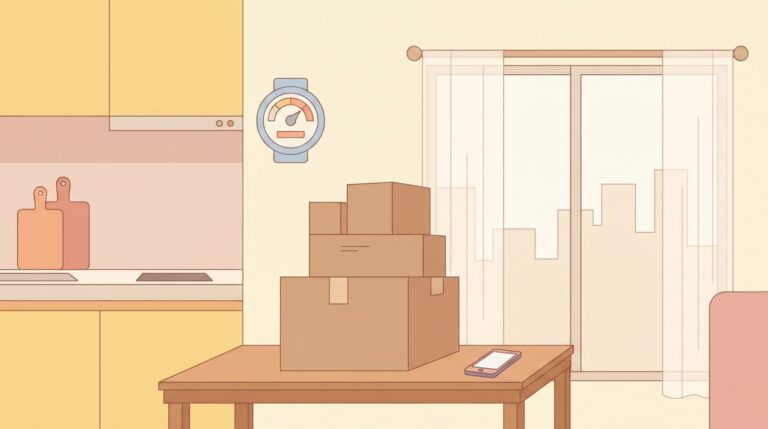
Hello! This is the Daily Hangul Editor. (안녕하세요! 매일한글 에디터입니다.) Imagine a classic K-Drama move-out scene: boxes taped up, bubble wrap everywhere, and you standing in your empty officetel holding your breath. You want your huge security deposit back today, right? Yet one final hurdle stands between you and freedom: calling the management office to settle maintenance, water, and electricity fees up to today! Many of our B1 learners tell us they freeze during this phone call because Korean utility bills normally arrive a month later. Don’t worry—we built this practical guide from real expat feedback so you can settle every won smoothly and leave on great terms!
Phase 2: Deep Dive Into 3 Must-Know Expressions
1. 오늘까지 중간 정산하고 싶은데요 (Oneulkkaji junggan jeongsanhago sipeundeyo)
- Pronunciation: Oneulkkaji junggan jeongsanhago sipeundeyo (Sounds like: Oh-neul-gga-jee joong-gahn jung-sahn-ha-go shee-peun-de-yo — remember, the
eoin jeong sounds like the “u” in “cup,” not “o” in “go”!)- Meaning: Literally “I want to do an intermediate settlement up to today.” In real life, it means “I’d like to calculate and pay my prorated utility and maintenance fees through today so I can check out cleanly.”
- K-Culture Moment: Think of those realistic slice-of-life K-Dramas like Because This Is My First Life, where characters obsess over every won of rent and deposit. Whenever someone moves out of an officetel, this is the exact opening line they use on the phone with the building office.
- Editor’s Insight: Notice the magic B1 ending -는데요 (-neundeyo)! Instead of a blunt “해주세요 (Please do it),” ending with -는데요 softly explains your situation and invites the staff member to guide you through the next step. Korean office staff love this polite cushion!
- Situation Spectrum: Casual 🚫 / Semi-formal ⚠️ / Formal ✅
- 🤔 Think About It: In your home country, do you settle final utility bills with your building’s management office on move-out day, or do you just cancel an account online weeks later? Why do you think Korea ties this moment directly to returning your housing deposit?
2. 계량기 수치 불러드릴게요 (Gyeryanggi suchi bulleodeurilgeyo)
- Pronunciation: Gyeryanggi suchi bulleodeurilgeyo (Sounds like: Gyeh-ryang-gee soo-chee bool-leo-deu-reel-geh-yo — smooth out the “ry” lightly like a quick Spanish “r”!)
- Meaning: Literally “I will call out the meter numbers for you.” Real nuance: “I’m standing right in front of the water/electricity meters—let me read the current numbers so you can calculate today’s exact usage.”
- K-Culture Moment: In Korean reality shows about living alone like I Live Alone (나 혼자 산다), celebrities moving to a new apartment often snap quick photos of hallways and utility panels before handing over keys. Reading the 계량기 (meter) aloud on the phone is the ultimate pro-tenant move.
- Editor’s Insight: Using -아/어 드릴게요 (-a/eo deurilgeyo, I’ll do this for you) instead of simply “말할게요 (I’ll say it)” shows active cooperation. Even if the manager sounds busy, this phrase immediately puts them in a helpful mood.
- Situation Spectrum: Casual 🚫 / Semi-formal ⚠️ / Formal ✅
- 🤔 Think About It: Korean has special humble verbs like 드리다 (deurida) to show you’re doing an action for someone’s benefit. How does your native language soften a logistical phone call with a stranger?
3. 정산 내역서 문자로 주실 수 있나요? (Jeongsan naeyeokseo munjaro jusil su innayo?)
- Pronunciation: Jeongsan naeyeokseo munjaro jusil su innayo? (Sounds like: Jung-sahn neh-yeok-seo moon-jah-ro joo-sheel soo een-nah-yo? — keep your voice rising gently at the end!)
- Meaning: Literally “Can you give me the settlement statement by text?” Real nuance: “Could you text me the itemized breakdown (and bank account number) so I have proof of payment for my landlord?”
- K-Culture Moment: Just like characters in K-Dramas screenshot every bank transfer on KakaoTalk to prove they paid, getting a 정산 내역서 (settlement breakdown) via SMS or KakaoTalk is your golden ticket to getting your 보증금 (bojeunggeum, security deposit) wired back without drama.
- Editor’s Insight: Compare 주실 수 있어요? (Can you give it?) with 주실 수 있나요? (Would you be able to give it?). At B1 level, using -나요? (-nayo?) feels noticeably softer and more considerate—less like a demand, more like a polite check!
- Situation Spectrum: Casual 🚫 / Semi-formal ⚠️ / Formal ✅
- 🤔 Think About It: Why is written proof via text message so crucial in Korean housing culture, even when the conversation on the phone felt friendly?
Phase 3: Textbook Korean vs. Real Korean
Situation 1: Asking how much your electricity and water bills are up to today
- 📖 Textbook Korean: 오늘까지의 수도와 전기 요금이 얼마입니까? (Oneulkkajiui sudowa jeongi yogeumi eolmaimnikka? — How much are the water and electricity fees up to today?)
- 🗣️ Real Korean: 오늘 기준으로 수도랑 전기세 얼마나 나왔나요? (Oneul gijuneuro sudorang jeongise eolmana nawannayo? — Based on today, how much came out for water and electricity?)
- 💡 Why the difference? Textbooks love formal nouns like 요금 (yogeum) and stiff -입니까?, which make you sound like a news anchor! In daily life, Koreans say 전기세 (jeongise) and 수도세 (sudose), and use 나오다 (naoda, to come out) for bills—just like bills “coming out” of a machine.
Situation 2: Confirming you paid so you can wrap up with the landlord
- 📖 Textbook Korean: 요금을 지불했으니 보증금을 돌려주시기 바랍니다. (Yogeumeul jibulhaesseuni bojeunggeumeul dollyeojusigi baramnida. — Since I paid the fee, please return my deposit.)
- 🗣️ Real Korean: 방금 이체했는데, 확인되시면 집주인분께 말씀드려도 될까요? (Banggeum ichehaenneunde, hwagindoesimyeon jipjuinbunkke malsseumdeuryeodo doelkkayo? — I just transferred it; once confirmed, may I let the landlord know?)
- 💡 Why the difference? Directly saying “give me my deposit” sounds confrontational. In Korea, the management office handles bills while the landlord (집주인분) holds the deposit. Asking the office to confirm receipt (확인되시면) politely connects the two steps without stepping on anyone’s toes!
Phase 4: K-Culture Deep Dive & Non-Verbal Manners
4-1. Nunchi (눈치) & Phone Etiquette
Even though a move-out settlement happens over the phone, 눈치 (nunchi, social awareness) matters hugely:
* Timing is everything: Avoid calling right at 12:00 PM–1:00 PM (lunch hour, 점심시간) or after 5:30 PM. Aim for 10:00 AM–11:30 AM when the office staff are at their desks.
* Prepare before dialing: Have your room number (호수), move-out date, and fresh photos of your electricity, water, and gas meters (계량기 사진) open on your phone. Nothing builds trust faster than having exact numbers ready!
* Vocal posture: Smile slightly while speaking on the phone—yes, Koreans can hear a friendly tone! Use steady, polite endings (-요 or -습니다) and pause briefly after -는데요 so the staff member can type your room number into their computer.
4-2. Cultural Code Analysis: The Housing Deposit Ecosystem
If you’ve watched K-Dramas like My Liberation Notes or Doona!, you know moving out in Korea isn’t just tossing keys on a counter. Because Korean rentals use large deposits (보증금 or 전세), landlords wait until the management office confirms zero unpaid management fees (관리비) and property restoration (원상복구) before wiring that money back. Remember: 관리비 (maintenance fee) in an officetel often covers building cleaning, elevator upkeep, water, and sometimes heating, while 도시가스 (city gas) might require a separate call to the gas company! Knowing who handles what instantly signals that you understand Korean daily life.
Phase 5: Real-Life Roleplay Scenario
- Setting: Move-out morning, 10:30 AM. Your studio officetel near Hongdae is spotless, boxes are in the elevator lobby, and sunlight hits the empty floor. You dial the 관리실 (Management Office).
- NPC: 김 과장님 (Manager Kim) — A brisk, veteran officetel manager with two phones ringing at once, secretly soft-hearted toward polite foreigners who come prepared.
8-Turn Dialogue
- Manager Kim: 여보세요, 행복 오피스텔 관리실입니다. (Yeoboseyo, Haengbok Opiseutel gwallisiribnida.) — Hello, Happiness Officetel Management Office. (🎭 Picks up on the second ring, typing rapidly on a keyboard)
- You: 안녕하세요, 502호인데요. 오늘 퇴실이라 관리비 중간 정산하고 싶은데요. (Annyeonghaseyo, obegihondeyo. Oneul toesirira gwallibi junggan jeongsanhago sipeundeyo.) — Hello, this is Room 502. I’m moving out today, so I’d like to do an interim settlement of the maintenance fees. (🎭 Stands near the front door holding a notepad and phone)
- Manager Kim: 아, 502호요? 잠깐만요… 오늘까지 전기랑 수도 계량기 수치 확인하셨어요? (A, obegihoyo? Jamkkanmanyo… Oneulkkaji jeongirang sudo gyeryanggi suchi hwaginhashyeosseoyo?) — Ah, Room 502? Just a second… Did you check the electricity and water meter numbers up to today? (🎭 Pauses typing and flips open a ledger)
- You: 네! 지금 계량기 앞에 있어요. 수치 불러드릴게요. (Ne! Jigeum gyeryanggi ape isseoyo. Suchi bulleodeurilgeyo.) — Yes! I’m in front of the meters right now. I’ll read the numbers to you. (🎭 Squints slightly at the meter numbers in the hallway)
- Manager Kim: 좋아요, 말씀하세요. (Joayo, malsseumhaseyo.) — Great, go ahead. (🎭 Picks up a ballpoint pen, ready to jot it down)
- You: 전기는 1452, 수도는 328이에요. 총 얼마 나왔나요? (Jeongineun ilsa-oi, sudoneun samipal-ieyo. Chong eolma nawannayo?) — Electricity is 1452, and water is 328. How much is the total? (🎭 Points a finger at each digit to avoid misreading)
- Manager Kim: 계산해 보니 오늘까지 총 43,500원이에요. 계좌번호 문자로 보내드릴게요. (Gyesanhae boni oneulkkaji chong saman-samcheon-obaegwonieyo. Gyejwabeonho munjaro bonaedeurilgeyo.) — Calculating it, the total up to today is 43,500 won. I’ll text you the bank account number. (🎭 Taps a calculator briskly and nods in approval)
- You: 감사합니다! 정산 내역서도 문자로 주실 수 있나요? 입금하고 바로 전화드릴게요. (Gamsahamnida! Jeongsan naeyeokseodo munjaro jusil su innayo? Ipgeumhago baro jeonhwadeurilgeyo.) — Thank you! Could you also text me the settlement breakdown? I’ll transfer it and call you right back. (🎭 Smiles relieved, ready to open the banking app)
🔀 Interactive Branching Point
Manager Kim texts you the bill (43,500원), and you send the bank transfer immediately. Now the landlord asks: “Did you settle with the management office?” What do you text Manager Kim next?
* Option A: “방금 43,500원 입금했습니다! 확인되시면 영수증이나 정산 완료 문자 하나만 부탁드려도 될까요?” (I just transferred 43,500 won! Once confirmed, could I ask for a receipt or a quick settlement-complete text?)
* Feedback (Best ✅): Clear, polite, and super smart! Having that confirmation text lets you forward instant proof to your landlord so your deposit arrives faster.
* Option B: “돈 보냈어요. 집주인한테 빨리 전화해서 보증금 주라고 하세요.” (I sent the money. Call the landlord quickly and tell them to give my deposit.)
* Feedback (Bad ❌): Way too bossy! Management offices aren’t your personal assistants, and commanding them (하라고 하세요) damages goodwill.
* Option C: You say nothing and assume Manager Kim will tell the landlord automatically.
* Feedback (Risk ⚠️): Risky! On busy move-out days, managers juggle dozens of rooms. Politely confirming receipt saves hours of waiting.
Phase 6: 10-Second Emotion Shadowing Drill
Read aloud in 10 seconds, pausing briefly at every / and matching the emotion!
- [😊 Polite and upbeat] 안녕하세요, / 502호인데요. / 오늘 퇴실이라 / 중간 정산하고 싶은데요. (Annyeonghaseyo, / obegihondeyo. / Oneul toesirira / junggan jeongsanhago sipeundeyo.) — Hello, it’s Room 502. Since I’m moving out today, I’d like to do an interim settlement.
- [🤔 Careful and helpful] 지금 / 계량기 앞에 있어요. / 수치 / 불러드릴게요. (Jigeum / gyeryanggi ape isseoyo. / Suchi / bulleodeurilgeyo.) — I’m in front of the meter right now. I’ll read you the numbers.
- [😌 Relieved and grateful] 방금 입금했어요! / 정산 내역서도 / 문자로 주실 수 있나요? (Banggeum ipgeumhaesseoyo! / Jeongsan naeyeokseodo / munjaro jusil su innayo?) — I just deposited it! Could you text me the settlement breakdown too?
Phase 7: K-Culture Mini Dictionary
- 중간 정산 (junggan jeongsan) | Interim / Prorated Settlement | Used whenever you settle shared or monthly bills mid-cycle before moving out, leaving a job, or splitting group travel expenses.
- 관리비 (gwallibi) | Building Maintenance Fee | Monthly fee in apartments/officetels covering security, cleaning, elevators, and often common water or heating.
- 계량기 (gyeryanggi) | Utility Meter | The box measuring electricity, water, or gas usage; always photograph yours on both move-in day and move-out day!
- 원상복구 (wonsangbokgu) | Property Restoration | Returning your rented studio to its original move-in condition (removing wall hooks, cleaning, fixing damage) to avoid deposit deductions.
Phase 8: Survival Kit for Expats & Long-Term Travelers
Top 3 Survival Phrases
- 관리실 번호가 뭐예요? (Gwallisil beonhoga mwoyeyo?) — What is the management office’s phone number? Pro Tip: Check inside the elevator notice board or near your intercom—it’s almost always posted there!
- 도시가스도 따로 정산해야 하나요? (Dosigaseudo ttaro jeongsanhaeya hanayo?) — Do I need to settle city gas separately? Pro Tip: In most officetels, gas is separate from
관리비and needs a reservation 1–2 days early. - 계좌이체로 보내드리면 되나요? (Gyejwaichero bonaedeurimyeon doenayo?) — Should I send it via bank transfer? Pro Tip: Almost all move-out settlements are paid by instant transfer, not cash or card.
Editor’s Travel Note
Before move-out day, make sure your Korean banking app works smoothly or keep emergency cash ready to deposit at a nearby bank ATM—you can easily locate the closest branch by checking Naver Map for nearby bank branches and ATMs. Also, if your building bills electricity individually instead of through the management office, review the KEPCO (Korea Electric Power Corporation) official customer service portal or dial 123 (Korean/English support available) for an instant final meter settlement. Lastly, snap clear photos of your clean room and every 계량기 next to your smartphone clock before locking the door!
Phase 9: One Step Deeper
In Korea, high-density apartment and officetel living thrives on a fascinating balance between warm 정 (jeong, human connection) and razor-sharp accountability. Because millions of won in 보증금 (housing deposits) change hands between individuals every day, clear rituals like 중간 정산 (interim settlement) and 원상복구 (restoration) act as social glue. They prevent awkward arguments between neighbors, managers, and landlords by making everything transparent down to the last won. When you take the initiative to read your meter and politely ask for a text confirmation, you aren’t being “picky”—you’re speaking the exact cultural language of mutual respect.
💬 Your Turn: Have you ever moved out of an apartment in Korea (or another country) and run into a surprising utility bill story? Share your experience in the comments!
Phase 10: FAQ & Myth-Busting
Q: Why can’t I just wait until next month’s bill arrives to pay my final utilities?
A: Because Korean landlords normally withhold part or all of your deposit—or take a pre-estimated fee—until the management office confirms your account is settled to zero. Doing an interim settlement (중간 정산) on move-out day clears your balance immediately.
Q: Is city gas (도시가스) included when I call the officetel management office?
A: Usually no! While water and sometimes electricity appear in your 관리비, city gas is often managed by a regional gas company (like Seoul City Gas) that sends a technician to close the valve and settle the bill separately.
Q: What if I don’t know where my water or electricity meter (계량기) is located?
A: Ask the management office politely: “계량기가 어디에 있는지 알려주실 수 있나요?” (Gyeryanggiga eodie inneunji allyeojusil su innayo? — Could you tell me where the meter is?). In most officetels, meters are inside a small hallway cabinet right next to your front door labeled 수도/전기 (Water/Electricity).
🚨 Common Mistakes Warning Board
- Mistake 1: Saying “집세 정산할게요” (I’ll settle the house rent) when you mean utilities. -> Correct Action: Use 관리비 (gwallibi) or 공과금 (gonggwageum, public utility charges) so the manager knows you mean maintenance and utilities, not monthly rent (월세).
- Mistake 2: Reading only the red decimal digits on a water meter! -> Correct Action: Read only the black whole-number digits from left to right, and always text a photo of the meter if you feel unsure.
- Mistake 3: Leaving before getting any written confirmation of payment. -> Correct Action: Politely request a 정산 내역서 (settlement breakdown) or confirmation message by SMS before handing back your keycard.
Phase 11: Action Mission & Engagement
- 🥉 Bronze Mission (Solo Practice): Stand in front of your mirror (or hallway meter!) and read the 3 sentences from Phase 6 aloud twice without looking at the Romanization.
- 🥈 Silver Mission (Share & Save): Save this checklist in your phone notes and share one new phrase (like 중간 정산) on social media or with a friend living in Korea.
- 🥇 Gold Mission (Real-Life Action): Next time you receive your monthly 관리비 bill, look closely for the words 전기 (electricity), 수도 (water), and 계량기, or practice reading your meter digits in Korean numbers!
- 🎮 K-Culture Mission: Watch a move-in or move-out vlog on Korean YouTube (search
자취방 퇴실 브이로그) and listen for how creators talk about 보증금, 원상복구, and 관리비.
Phase 12: Interactive Quiz Challenge
Test your move-out Korean skills before checking the answers below!
- Situation Judgment: You call the management office on move-out day. Which opening sounds the most natural and polite at a B1 level?
- A) 야, 관리비 빨리 계산해 줘.
- B) 오늘 퇴실이라 관리비 중간 정산하고 싶은데요.
- C) 관리비를 주시기 바랍니다.
- Fill in the Blank: “지금 계량기 앞에 있어요. 수치 ______.” (I’m in front of the meter right now. I’ll read the numbers for you.)
- True or False: In Korea, calling the officetel management office automatically settles your monthly rent, electricity, water, and city gas all at once.
Click to reveal answers & explanations
- Answer: B!
- Explanation: -는데요 makes your request soft and cooperative. Option A is rude casual speech (
야,해 줘), and Option C sounds stiff like a written legal notice.
- Explanation: -는데요 makes your request soft and cooperative. Option A is rude casual speech (
- Answer: 불러드릴게요 (bulleodeurilgeyo)
- Explanation: 부르다 (to call out) + -아/어 드리다 (humble “for you”) + -ㄹ게요 (I will) creates the natural phone-call phrase “I’ll read them out to you.”
- Answer: False!
- Explanation: The management office settles 관리비 (often including water and building fees, and sometimes electricity), while 도시가스 (city gas) is usually settled separately with the regional gas company, and rent/deposits are handled with your landlord.
🎬 Watch Our Daily Videos! (Daily Hangul Official Instagram)
Review the expressions you learned in this article with our fun daily short videos! Check out native pronunciation and real-life nuances in action.
- Instagram @dailyhangul_en







