

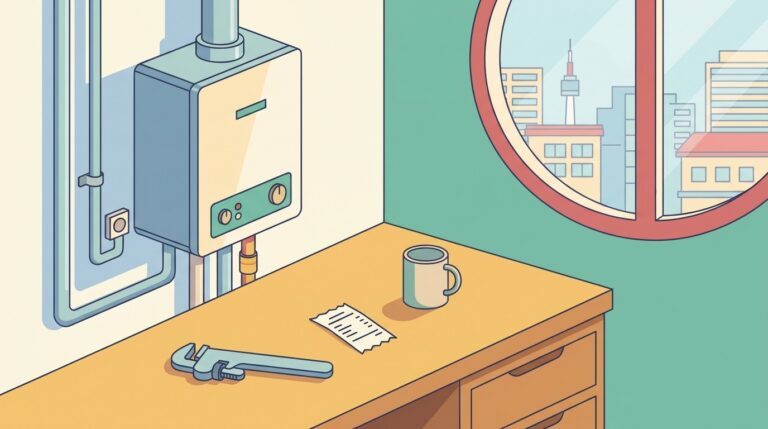
Phase 1: Your Winter Survival Story Begins
안녕하세요! 매일한글 에디터입니다. (Annyeonghaseyo! Hello, I’m your Daily Hangul Editor!) Imagine it is a freezing January night in Seoul, straight out of a slice-of-life K-Drama. Suddenly, your boiler stops working, or water starts leaking under the sink! In a panic, you call a technician, pay upfront, and carefully save the receipt and repair invoice. Now comes the hardest part: asking your Korean landlord for the money back without sounding rude or awkward. Many B1 learners tell us they freeze up when mixing money and polite Korean. Today, based on real expat feedback, we will master the exact phrases to get reimbursed smoothly and keep great vibes with your landlord!
Phase 2: 3 Essential Expressions Deep Dive
1. 영수증이랑 수리 내역서를 잘 챙겨 두었어요 (Yeongsujeung-irang suri naeyeokseo-reul jal chaenggyeo dueosseoyo)
- Pronunciation: [Yeong-su-jeung-i-rang su-ri nae-yeok-seo-reul jal chaeng-gyeo du-eo-sseo-yo] (Tip: “Chaeng” sounds like “chang” in “change” with a soft “eh”, and “du-eo” flows smoothly like “doo-uh”.)
- Meaning: Literal: “I packed/took care of the receipt and repair details in advance.” | Real Nuance: “I made sure to keep the receipt and repair invoice safely for you.”
- K-Culture Moment: Think of K-Dramas like Because This Is My First Life where tenants carefully document every household expense. Showing that you saved the paperwork proves you are a responsible, trustworthy tenant.
- Editor’s Insight: The B1 grammar pattern
-아/어 두다 (-a/eo duda)is pure magic here! It implies you did an action in advance expecting a future step—namely, showing proof to your landlord. Using내역서 (naeyeokseo, itemized invoice)alongside영수증 (yeongsujeung, receipt)shows high credibility.- Situation Spectrum: Casual 🚫 (Too stiff; drop 요 and say 챙겨 뒀어) | Semi-formal ✅ (Perfect for texting or speaking to your landlord) | Formal ⚠️ (Use 챙겨 두었습니다 for formal emails to a property agency)
- 🤔 Think About It: In English, you might simply say “I kept the receipt.” Why do you think Korean adds
-아/어 두다to emphasize preparation for the other person? How does showing preparation change the tone when talking about money?2. 수리 비용을 정산받고 싶어요 (Suri biyong-eul jeongsanbatgo sipeoyo)
- Pronunciation: [Su-ri bi-yong-eul jeong-san-bat-go si-peo-yo] (Tip: “Jeong” rhymes with “young” with a “j” sound, and “bat-go” sounds like “baht-koh” without a strong burst on the t.)
- Meaning: Literal: “I want to receive settlement for the repair cost.” | Real Nuance: “I would like to get reimbursed for the repair expenses.”
- K-Culture Moment: In Korean workplace dramas like Misaeng or Agency, employees use
정산하다 (jeongsanhada)when submitting receipts for business trips. It carries a clean, transparent, and professional vibe.- Editor’s Insight: Many learners mistakenly say
환불 (hwanbul, refund)! However,환불is only for returning an item you bought to a store. When someone is paying you back for a cost you covered on their behalf,정산받다 (jeongsanbatda)is the exact, natural B1 term!- Situation Spectrum: Casual ⚠️ (With friends splitting bills, say 정산하자 instead) | Semi-formal ✅ (Clear and polite with landlords or roommates) | Formal ✅ (Great for 부동산 real estate agents or building managers)
- 🤔 Think About It: English uses “reimburse” or “pay back,” while Korean uses “settle accounts” (정산). Does framing it as “settling an account” make money conversations feel less personal or more respectful in your opinion?
3. 계좌로 입금해 주시겠어요? (Gyejwa-ro ipgeumhae jusigesseoyo?)
- Pronunciation: [Gye-jwa-ro ip-geum-hae ju-si-ge-sseo-yo?] (Tip: “Gye” sounds like “gyeh”, “jwa” is one quick syllable like “jwah”, and “ip-geum” sounds like “eep-geum” where the p softly closes your lips.)
- Meaning: Literal: “Would you please deposit into the account?” | Real Nuance: “Could you transfer the money to my bank account?”
- K-Culture Moment: In Korea, almost no one pays rent or repair reimbursements in cash or paper checks. You will constantly see characters in K-Dramas pulling out their phones for an instant bank transfer (
계좌이체, gyejwa-iche).- Editor’s Insight: Pairing
입금하다 (ipgeumhada, to deposit)with-아/어 주시겠어요? (-a/eo jusigesseoyo?, Could you please...?)softens a financial request. Adding시간 되실 때 (sigan doesil ttae, when you have time)right before it makes you sound super considerate!- Situation Spectrum: Casual 🚫 (Say 입금해 줘 to close friends) | Semi-formal ✅ (Polite and standard for landlords) | Formal ✅ (Respectful enough for any customer or business partner)
- 🤔 Think About It: In your home culture, is it normal to share your bank account number casually over text to get paid back, or does it feel overly private?
Phase 3: Textbook Korean vs. Real Korean
Situation 1: Asking for the reimbursement politely
- 📖 교과서 한국어: 수리비를 돌려주시기 바랍니다. (Suribi-reul dollyeojusigi baramnida.) — “I hope you return the repair fee.”
- 🗣️ 진짜 한국어: 사장님, 아까 말씀드린 수리비 입금 부탁드릴게요! (Sajangnim, akka malsseumdeurin suribi ipgeum butakdeurilgeyo!) — “Landlord, please go ahead and transfer the repair fee I mentioned earlier!”
- 💡 왜 다를까? Textbook phrases using
~시기 바랍니다sound like a stern legal notice! In real life, Korean tenants soften the request by saying부탁드릴게요 (butakdeurilgeyo, I'll leave it in your kind hands)and addressing the landlord warmly as사장님 (sajangnim)or집주인님 (jipjuinnim).
Situation 2: Sending the receipt photo on KakaoTalk
- 📖 교과서 한국어: 여기에 영수증 사진이 있습니다. (Yeogi-e yeongsujeung sajin-i itseumnida.) — “Here is the photo of the receipt.”
- 🗣️ 진짜 한국어: 영수증이랑 내역서 사진 찍어서 보내드려요~ (Yeongsujeung-irang naeyeokseo sajin jjigeoseo bonaedeuryeoyo~) — “I’m taking a photo of the receipt and invoice and sending them to you~”
- 💡 왜 다를까? Simply stating “Here is a photo” feels abrupt. Explaining your action (
사진 찍어서 보내드려요) using the humble verb드리다 (deurida, to give to a superior)and ending with a friendly tilde (~) builds instant rapport over text.
Phase 4: K-Culture Deep Dive & Non-Verbal Manners
4-1. 눈치 (Nunchi) & Digital Etiquette
When getting reimbursed in Korea, 90% of the interaction happens on KakaoTalk! Good Nunchi (social awareness) means you don’t just send a blurry photo and a bank account number out of nowhere. First, take a bright, flat photo where the total amount, date, and repair shop name on the 수리 내역서 (suri naeyeokseo) are crystal clear. Second, send a brief greeting first (안녕하세요, OO호 세입자입니다 / Annyeonghaseyo, OO-ho seipja-imnida / Hello, this is the tenant in unit OO). If you happen to hand over paper receipts in person, always hold them with both hands and give a slight 15-degree nod (목례, mongnye). Never drop a receipt on a table with one hand!
4-2. Culture Code: Korean Housing & The Power of ‘Jeong’
In K-Dramas like My Mister or Reply 1988, landlords and tenants often share side dishes (반찬, banchan) or look out for each other. Even in modern Seoul officetels, communicating before you call a repairman is crucial! Landlords often have a “go-to” technician (아는 기사님, aneun gisanim) who gives them a discount. If you tell them beforehand, getting reimbursed afterward becomes effortless because trust is already built.
Phase 5: Real-Life Roleplay Scenario
Setting: A chilly Saturday morning in your cozy Hongdae studio. You are texting and then briefly calling your landlord, Ms. Kim (김 여사님), a friendly 50-something woman who runs a small cafe downstairs and always appreciates organized tenants.
- 나 (You): 🎭 Taking a deep breath while holding the paper receipt and itemized repair invoice. 안녕하세요, 집주인님! 어제 보일러 수리 잘 마쳤어요. (Annyeonghaseyo, jipjuinnim! Eoje boilleo suri jal machyeosseoyo.) — “Hello, landlord! The boiler repair went smoothly yesterday.”
- 집주인 (Ms. Kim): 🎭 Speaking warmly while wiping a coffee counter. 아유, 추운데 고생 많았어요! 기사님이 뭐라고 하시던가요? (Ayu, chuunde gosaeng manasseoyo! Gisanim-i mworago hasideongayo?) — “Oh my, you went through a lot in the cold! What did the technician say?”
- 나 (You): 배수관이 막혀서 물이 역류했대요. 수리비 8만 원 제가 먼저 냈어요. (Baesugwan-i makhyeoseo mul-i yeongnyuhaetdaeyo. Suribi palman won jega meonjeo naesseoyo.) — “He said the drain was clogged so water backed up. I paid the 80,000 won repair fee upfront.”
- 집주인 (Ms. Kim): 아이고, 큰일 날 뻔했네요. 비용이 꽤 나왔구나. (Aigo, keunil nal ppeonhaenneyo. Biyong-i kkwae nawatguna.) — “Oh dear, that could have been serious. It cost quite a bit.”
- 나 (You): 🎭 Smiling politely and checking your phone screen. 네, 그래서 영수증이랑 수리 내역서를 잘 챙겨 두었어요! (Ne, geuraeseo yeongsujeung-irang suri naeyeokseo-reul jal chaenggyeo dueosseoyo!) — “Yes, so I made sure to keep the receipt and repair invoice safely!”
- 집주인 (Ms. Kim): 어머, 꼼꼼하기도 해라! 카톡으로 사진 좀 보내 줄래요? (Eomeo, kkomkkomhagido haera! Katok-euro sajin jom bonae jullaeyo?) — “Oh my, how thorough of you! Could you send me a photo on KakaoTalk?”
- 나 (You): 지금 바로 보내드릴게요! 확인하시고 수리 비용 정산해 주시면 감사하겠습니다. (Jigeum baro bonaedeurilgeyo! Hwaginhashigo suri biyong jeongsanhae jusimyeon gamsahagetseumnida.) — “I will send it right now! I’d appreciate it if you could check it and reimburse the repair cost.”
- 집주인 (Ms. Kim): 🎭 Nodding happily. 알겠어요. 확인하고 바로 계좌로 입금해 줄게요! (Algesseoyo. Hwaginhago baro gyejwa-ro ipgeumhae julgeyo!) — “Got it. I’ll check it and transfer it to your account right away!”
🔀 Interactive Branching Point: Ms. Kim asks for your bank details!
Right after hanging up, she texts: “혹시 계좌번호가 어떻게 되나요? (Hoksi gyejwabeonho-ga eotteoke doenayo? / What is your account number?)” How do you reply?
- Option A: “신한은행 110-XXX-XXXXXX입니다! 시간 되실 때 입금 부탁드립니다~ 감사합니다!” (Shinhan Bank 110-XXX-XXXXXX! Please deposit it when you have time~ Thank you!)
- Feedback (🏆 BEST): Clear, polite, and warm! Writing the bank name + account number in a single line makes it super easy for her to copy-paste in her banking app.
- Option B: “110-XXX-XXXXXX. 빨리 보내주세요.” (110-XXX-XXXXXX. Send it quickly.)
- Feedback (🚫 BAD): Missing the bank name AND adding “빨리 (quickly)” sounds rude and demanding! This will instantly ruin your relationship with your landlord.
- Option C: “제가 통장 사본은 없고, 현금으로 주실 수 있나요?” (I don’t have a bankbook copy, can you give me cash?)
- Feedback (⚠️ RISK): Asking for cash is inconvenient for most Korean landlords, who prefer digital records (
계좌이체) for tax deductions on building maintenance.
- Feedback (⚠️ RISK): Asking for cash is inconvenient for most Korean landlords, who prefer digital records (
Phase 6: 10-Second Emotion Shadowing Drill
Read these lines out loud, pausing briefly at the / marks and matching the emotion tags!
- [😊 Warm & Responsible] 영수증이랑 / 수리 내역서를 / 잘 챙겨 두었어요! (Yeongsujeung-irang / suri naeyeokseo-reul / jal chaenggyeo dueosseoyo!)
- [🥺 Polite & Careful] 수리 비용을 / 정산받고 싶은데 / 괜찮으실까요? (Suri biyong-eul / jeongsanbatgo sipeunde / gwaenchaneusilkkayo?)
- [😌 Grateful & Smooth] 확인해 보시고 / 계좌로 입금해 주시면 / 감사하겠습니다! (Hwaginhae bosigo / gyejwa-ro ipgeumhae jusimyeon / gamsahagetseumnida!)
Phase 7: K-Culture Mini Dictionary
- 집주인 (Jipjuin) | Landlord / Property Owner | Used universally in everyday speech. In formal contracts, you will see
임대인 (Imdaein)instead. - 수리 내역서 (Suri naeyeokseo) | Itemized Repair Invoice | Crucial for proving what was fixed (e.g., boiler parts vs. labor cost) so the landlord can claim building expense taxes.
- 계좌이체 (Gyejwa-iche) | Bank Account Transfer | The lifeblood of Korean daily payments—used for rent, splitting fried chicken, and getting repair reimbursements.
- 세입자 / 임차인 (Seipja / Imchain) | Tenant / Renter |
세입자is commonly used in news and daily conversation, while임차인is the legal term on your lease.
Phase 8: Survival Kit for Expats & Travelers
Top 3 Survival Phrases
- 현금영수증 해 주세요 (Hyeongeum-yeongsujeung hae juseyo) — “Please issue a cash receipt.” Pro Tip: Always ask for this if you pay a repairman in cash so you have official proof for your landlord!
- 원래 노후돼서 고장 난 거예요 (Wollae nohudwaeseo gojang nan geoyeyo) — “It broke because it was already old/worn out.” Pro Tip: Under Korean housing law, landlords pay for structural/aging issues (boilers, leaks, pipes), while tenants only pay if they broke something through carelessness.
- 사진으로 먼저 보내드릴게요 (Sajin-euro meonjeo bonaedeurilgeyo) — “I’ll send you a photo first.” Pro Tip: Snap a photo of the leak or broken boiler before the repair starts so there is zero dispute later.
Editor’s Living Note
Before calling any technician, message your landlord using [Download KakaoTalk for Seamless Landlord Communication] so you have a timestamped record of their approval. Need to find a nearby plumber or hardware store (철물점, cheolmuljeom) in an emergency? Use [Download Naver Map to Locate Local Repair Shops] and search “보일러 수리” or “누수 탐지”. Also, keep your Korean bank account number saved in a memo app, because Korean landlords almost always reimburse via instant bank transfer rather than deducting it from next month’s rent (월세 차감, wolse chagam) unless you specifically agree to do so!
Phase 9: One Step Deeper
In Korea, talking directly about money—especially asking an older person or landlord to pay you back—can feel delicate because of the cultural emphasis on harmony (화합) and hierarchy (예의). By using softeners like -아/어 두다 (showing conscientious preparation) and 정산 (settlement) instead of blunt demands, you signal that you respect the relationship just as much as the paperwork. Mastering these small linguistic cushions transforms an awkward financial chore into a moment of mutual trust.
💬 Your Turn: Have you ever had to ask a landlord or roommate for money back in another language? What was the funniest or most stressful part? Share your story in the comments!
Phase 10: FAQ & Myth-Busting
Q: Can I use “환불 (hwanbul)” when asking my landlord for repair money?
A: No! 환불 (hwanbul) means getting a refund from a store where you purchased a product or service. Since your landlord didn’t sell you the repair, you should use 정산받다 (jeongsanbatda, to be reimbursed/settled) or 돌려받다 (dollyeobatda, to get paid back).
Q: Is a credit card text alert enough, or do I need both a receipt and an invoice?
A: A simple card alert only shows the total amount and store name. Korean landlords often ask for a 수리 내역서 (suri naeyeokseo, itemized invoice) to verify what parts were replaced and to file for property maintenance tax deductions, so always ask the technician for both!
Q: Should I automatically subtract the repair cost from next month’s rent?
A: Never deduct it without asking first! Always send the receipt and ask 이번 달 월세에서 뺄까요, 아니면 입금해 주실 건가요? (Ibeon dal wolse-eseo ppaelkkayo, animyeon ipgeumhae jusil geongayo? / Should I deduct it from this month's rent, or will you transfer it?).
🚨 Common Mistakes Alert
- Mistake: Fixing a major leak without telling the landlord first, then surprising them with a huge bill. | Correct Action: Send a photo/video of the issue immediately (
물이 새서 사진 보내드려요) and get their green light first! - Mistake: Throwing away the paper receipt after taking a blurry photo. | Correct Action: Keep the physical paper (
영수증 챙겨 두기) in a folder until the money actually lands in your bank account. - Mistake: Saying “돈 주세요 (Don juseyo / Give me money).” | Correct Action: Always specify the cost politely: “수리 비용 정산 부탁드립니다 (Suri biyong jeongsan butakdeurimnida).”
Phase 11: Action Mission & Engagement
- 🥉 Bronze Mission (Solo Practice): Stand in front of a mirror and read the 3 Phase 6 shadowing sentences out loud 3 times with natural pauses and warm facial expressions.
- 🥈 Silver Mission (Community Share): Screenshot your favorite B1 expression from Phase 2 and share it on Instagram or with a study buddy, explaining why
정산beats환불! - 🥇 Gold Mission (Real-World Use): Next time you split a bill or get reimbursed by a Korean friend, text them
영수증 챙겨 뒀어요! 정산 부탁드려요~instead of just sending a bank number.
🎮 K-Culture Mission: Watch an episode of a Korean living-alone reality show like I Live Alone (나 혼자 산다) or a slice-of-life K-Drama, and try to spot how characters communicate with repair technicians or landlords!
Phase 12: Interactive Quiz Challenge
Test your B1 Korean housing survival skills! Try answering before opening the toggles.
Quiz 1 (Situation Judgment): You paid 50,000 won to fix a clogged kitchen drain after your landlord agreed. What is the BEST message to send on KakaoTalk?
A) 사장님, 아까 수리비 5만 원 환불해 주세요.
B) 사장님, 영수증이랑 수리 내역서 잘 챙겨 두었어요! 확인하시고 정산 부탁드립니다.
C) 돈 보내주세요. 5만 원입니다.
Click to reveal Quiz 1 Answer & Feedback
Correct Answer: B!
Why? Option A misuses 환불 (store refund), and Option C is far too blunt and rude. Option B uses 챙겨 두었어요 and 정산 부탁드립니다, hitting the exact polite B1 sweet spot!
Quiz 2 (Fill in the Blank): Complete the polite request to receive the money via bank transfer:
“확인하시고 제 ( ____ )로 입금해 주시겠어요?”
(Hint: It means “bank account” and starts with ㄱㅈ!)
Click to reveal Quiz 2 Answer & Explanation
Correct Answer: 계좌 (gyejwa)
Full sentence: 확인하시고 제 계좌로 입금해 주시겠어요? (Could you check it and deposit it into my bank account?)
Quiz 3 (True/False Cultural Quiz): In Korea, tenants are always responsible for paying for broken boilers and internal pipe leaks, even if the building is old.
Click to reveal Quiz 3 Answer & Explanation
Correct Answer: False!
Under Korean housing practice, structural, aging, and major facility issues (like boilers, water leaks, and clogged main pipes) are the landlord’s responsibility—just make sure to notify them first and save your 영수증 and 수리 내역서!
🎬 Watch Our Daily Videos! (Daily Hangul Official Instagram)
Review the expressions you learned in this article with our fun daily short videos! Check out native pronunciation and real-life nuances in action.
- Instagram @dailyhangul_en







