

Aesthetics of Pure Native Korean Poetic Vocabulary: Reviving Rare Native Words for Wind, Light, Mind, and Time
Phase 1: Empathy (Immersion Opening)
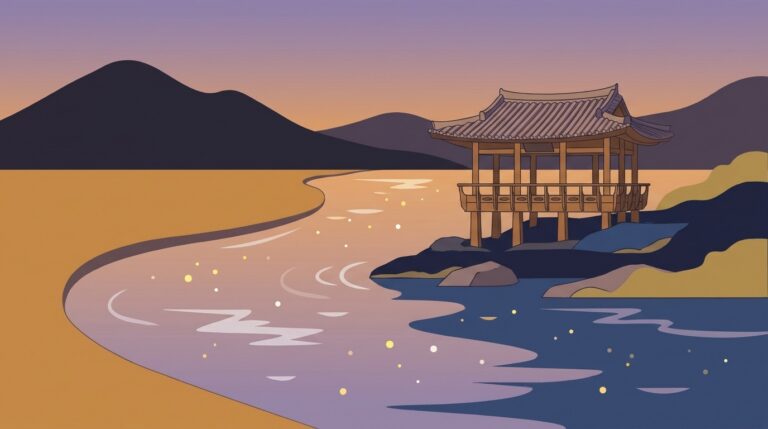
안녕하세요! 매일한글 에디터입니다. Have you ever stood along the Han River at golden hour, watching the water dance in amber light, only to feel that the standard academic word ‘반사광’ (bansoagwang / reflection of light) leaves your poetic soul completely dry? In contemporary Korean literary circles and lyricism, an author rarely relies on sterile Sino-Korean terms when capturing twilight. Instead, they evoke ‘윤슬’ (yunseul)—the fleeting, diamond-bright ripples skimming across gentle waters. When reading acclaimed novels or deep indie lyrics, C2-level learners frequently hit an invisible plateau: you know thousands of complex Hanja idioms, yet the ancestral, native Korean words—the tobagimal (토박이말)—remain an elusive mystery. Reviving these endangered native expressions is not merely an antiquarian exercise; it is an act of restoring the linguistic ecology of Korean. Based on years of coaching bilingual writers, this masterclass shows you how to wield pure Korean words to give your prose emotional resonance.
Phase 2: Deep Dive into 3 Core Pure Korean Expressions
1. 윤슬 (Yunseul)
- Pronunciation: [Yun-seul] (Pronounce “yun” like spoon with a soft “y”, followed by a gentle, whispered “seul” akin to sullen).
- Meaning: Literal translation: “Rippling water sheen.” Actual nuance: The delicate, shimmering mosaic of sunlight or moonlight breaking over undulating water; a visual metaphor for fleeting, fragile serenity.
- K-Culture Moment: Revered in K-indie lyrics (such as songs by Lucid Fall and AKMU) and contemplative K-dramas when the protagonist seeks emotional solace along the shores of Gangneung or Jeju Island.
- Editor’s Insight: Unlike the technical Sino-Korean term ‘반사광’ (reflection), ‘윤슬’ carries breath, movement, and a quiet sense of impermanence. When you use this word, native speakers instantly recognize that you perceive the world through a literary lens.
- Situation Spectrum: Casual ⚠️ | Semi-formal ✅ | Formal/Literary ✅
- 🤔 Think About It: Why does your native language often require several modifying adjectives to describe shimmering water, while pure Korean encapsulates the physical motion, the light, and the contemplative mood in a single two-syllable noun?
2. 시나브로 (Sinabeuro)
- Pronunciation: [Si-na-beu-ro] (Smooth and melodic, like “she-nah-boo-roh” without harsh plosive stops).
- Meaning: Literal translation: “In imperceptible increments.” Actual nuance: A gradual, gentle transformation that occurs so stealthily that neither the observer nor the subject notices the exact moment of change.
- K-Culture Moment: Frequently found in poetic dialogue and novelistic voiceovers when two characters realize their distant companionship has matured into unbreakable romantic devotion without any single dramatic turning point.
- Editor’s Insight: Do not confuse this with ‘조금씩’ (little by little) or ‘서서히’ (slowly). ‘시나브로’ emphasizes the unconscious nature of time slipping away or feelings shifting under the surface.
- Situation Spectrum: Casual ⚠️ | Semi-formal ✅ | Formal/Literary ✅
- 🤔 Think About It: In modern fast-paced societies dominated by instant gratification, how does a word celebrating subtle, imperceptible metamorphosis alter how you narrate your personal growth?
3. 하늬바람 (Hanui-baram)
- Pronunciation: [Ha-nui-ba-ram] (Flowing “Hah-nwee-bah-rahm”, evoking the breath of an autumn gale).
- Meaning: Literal translation: “Westerly wind.” Actual nuance: The dry, crystal-clear westerly breeze that sweeps down in late summer and autumn, washing away suffocating humidity and signaling harvest and emotional renewal.
- K-Culture Moment: Highlighted in historical dramas (사극) and contemporary nature travel essays describing the clearing of skies above the ridges of Jirisan.
- Editor’s Insight: Korean has dozens of specific names for winds depending on direction and season (e.g., 마파람 for south wind, 샛바람 for east wind). ‘하늬바람’ is the farmer’s and poet’s favorite, symbolizing welcome relief and cool clarity after hardship.
- Situation Spectrum: Casual ⚠️ | Semi-formal ✅ | Formal/Literary ✅
- 🤔 Think About It: What environmental conditions shaped your mother tongue’s weather lexicon, and how does naming winds by their tactile personality deepen human connection to ecology?
Phase 3: Textbook Korean vs. Real Korean
Situation 1: Describing the subtle evolution of an intimate friendship in an essay
- 📖 교과서 한국어 (Textbook Korean): 시간이 지나면서 우리 관계는 서서히 변했습니다. (Sigani jinamyeonseo uri gwangyeneun seoseohi byeonhaessseumnida. / As time passed, our relationship changed gradually.)
- 🗣️ 진짜 한국어 (Real C2 Korean): 계절이 바뀌듯 우리 사이의 거리감도 시나브로 옅어졌습니다. (Gyejeori bakkwideut uri saiui georigamdo sinabeuro yeoteojyeossseumnida. / Like changing seasons, the distance between us faded away sinabeuro—quietly and imperceptibly.)
- 💡 왜 다를까?: While ‘서서히’ merely reports the mechanical speed of change, ‘시나브로’ evokes the tactile texture of time, turning flat autobiography into poignant prose.
Situation 2: Capturing a contemplative twilight gaze over the sea
- 📖 교과서 한국어 (Textbook Korean): 바다에 햇빛이 반사되어 아주 아름답게 반짝거립니다. (Bada-e haetbichi bansadoeeo aju areumdapge banjjakgeorimnida. / Sunlight reflects on the ocean and sparkles very beautifully.)
- 🗣️ 진짜 한국어 (Real C2 Korean): 잔잔한 물결 위로 부서지는 주홍빛 윤슬을 물끄러미 바라보았어요. (Janjanhan mulgyeol wiro buseojineun juhongbit yunseureul mulkkeoreomi baraboasseoyo. / I gazed blankly at the amber yunseul shattering across the tranquil waves.)
- 💡 왜 다를까?: Advanced Korean native writers avoid generic adverbs like ‘아주’ or ‘반짝반짝’. Pairing the evocative noun ‘윤슬’ with dynamic sensory verbs like ‘부서지다’ (to shatter/break into light) elevates your expression to native literary mastery.
Phase 4: K-Culture Deep Dive & Non-verbal Etiquette
4-1. 눈치 (Nunchi) & Gestures in Literary Settings
When participating in a Seoul literary salon, poetry workshop, or independent bookstore book club (독서모임) in neighborhoods like Seochon or Yeonhui-dong, using archaic or poetic pure Korean requires sophisticated nunchi. Flaunting pure native words pedantically can sound theatrical or snobbish (jalnan-cheok). Instead, adopt a reflective posture: lower your vocal pitch, pause briefly before the word as if weighing its physical sensation, and slightly incline your head. Let the word settle like a dropped pebble in water rather than delivering it as a linguistic showcase.
4-2. Cultural Code: The Renaissance of Linguistic Ecology
In recent years, modern urban Korean society has been overwhelmed by truncated internet acronyms (줄임말) and indiscriminately imported Konglish loanwords. In response, contemporary Korean authors, lyricists, and young calligraphers are leading a cultural counter-movement: excavating forgotten sun-urimal (순우리말). Preserving these words is viewed as preserving Korean’s sensory ecosystem. When you integrate ‘윤슬’ or ‘하늬바람’ into your prose, you are aligning with a sophisticated cultural ethos that champions linguistic conservation.
Phase 5: Real-World Roleplay Scenario
Setting: A tranquil indie bookstore and poetry salon in Buam-dong, Seoul. Rain has just cleared, and golden sunlight pours through the glass.
Character: Ji-won (지원), an insightful literary editor and essayist reviewing your draft manuscript.
- 지원 (Ji-won): 이번 원고의 서두 묘사가 참 담백하고 단정하네요. 그런데 이 장면에서 강물의 빛을 조금 더 감각적으로 살릴 수는 없을까요? (Ibeon wongo-ui seodu myosaga cham dambaekhago danjeonghaneyo. Geureonde i jangmyeon-eseo gangmurui bicheul jogeum deo gamgakjeogeuro sallil suneun eopseulkkayo?)
🎭 Looking over your manuscript thoughtfully with pencil in hand. - 학습자 (Learner): 단순한 수면 반사광보다는, 잔물결 위에 흩어지는 ‘윤슬’이라는 고유어를 넣으면 어떨까 고민 중이었어요. (Dansunhan sumyeon bansagwangbodaneun, janmulgyeol wie heuteojineun ‘yunseul’-iraneun goyu-eoreul neoeumyeon eotteolkka gomin jung-ieosseoyo.)
🎭 Speaking softly, tapping the manuscript margin with quiet confidence. - 지원 (Ji-won): 윤슬이라니! 탁월한 선택이에요. 그 단어 하나로 건조했던 산문이 단숨에 시적인 숨을 쉬기 시작하네요. (Yunseurani! Tagwolhan seontaegieyo. Geu daneo hanaro geonjohaetdeon sanmuni dansume sijeogin sumeul swigi sijakhaneyo.)
🎭 Her eyes widening with genuine delight and nodding slowly. - 학습자 (Learner): 고마워요 지원 씨. 두 주인공의 감정도 서서히가 아니라 ‘시나브로’ 스며들었다고 다듬어 봤습니다. (Gomawoyo Jiwon ssi. Du ju-ingong-ui gamjeongdo seoseohiga anira ‘sinabeuro’ seomyeodeureotdago dadeumeo bwasseumnida.)
🎭 Turning the page to reveal the revised prose passage. - 지원 (Ji-won): ‘시나브로 스며들다’… 소리마저 참 은은하군요. 한자어보다 우리말이 주는 감정의 결이 훨씬 촘촘해요. (Sinabeuro seomyeodeulda… Sorimajeo cham euneunhagon-yo. Hanja-eoboda urimari juneun gamjeong-ui gyeori hwolssin chomchomhaeyo.)
🎭 Underlining your phrasing with admiration. - 학습자 (Learner): 창밖으로 부는 이 서늘한 가을바람도 마치 소설 속 ‘하늬바람’처럼 느껴지네요. (Changbakkeuro buneun i seoneulhan gaeulbaramdo machi soseol sok ‘hanuibaram’-cheoreom neukkyeojineyo.)
🎭 Looking toward the Bukhansan ridgeline visible beyond the window. - 지원 (Ji-won): 맞아요. 우리 옛말을 되살려 쓰는 건, 우리가 잊고 지낸 자연의 감각을 복원하는 일이니까요. (Majayo. Uri yennmareul doesallyeo sseuneun geon, uriga itgo jinaen jayeon-ui gamgageul bogwonhaneun irinikkayo.)
🎭 Closing the manuscript folder gently and smiling warmly. - 학습자 (Learner): 토박이말의 숨결을 현대적 문장 속에 온전히 녹여내도록 끝까지 매만져 볼게요. (Tobagimarui sumgyeoreul hyeondaejeok munjang soge onjeonhi nogyeonaedorok kkeutkkaji maemanjyeo bolgeyo.)
🎭 Offering a respectful, appreciative slight bow.
🔀 Interactive Decision Branch
What would you say next to conclude your editorial review with Ji-won?
- Option A: “토박이말 사전을 모조리 외워서 다음 챕터의 모든 명사를 고유어로 바꿔버리겠습니다!” (I will memorize the archaic native dictionary and replace every single noun in the next chapter with native words!)
- Option B: “언어의 생태적 균형을 고려해서, 현대적 문맥 속에 자연스럽게 어우러지도록 고유어의 비중을 섬세하게 조율해 볼게요.” (Considering linguistic balance, I’ll delicately calibrate the ratio of native words so they blend naturally into modern context.)
- Option C: “고유어가 한자어보다 우월하니까 앞으로 한자어는 일절 쓰지 않는 게 좋겠죠?” (Since native words are superior to Sino-Korean, wouldn’t it be best to eliminate all Sino-Korean entirely?)
Decision Feedback:
* Option A (Risk): Overloading prose with obscure archaic terms creates impenetrable, artificial purple prose. Native literature values organic texture over vocabulary exhibitionism.
* Option B (Best Choice): Demonstrates C2 sociolinguistic maturity. True mastery lies in weaving rare pure words seamlessly beside standard grammar without jarring the reader.
* Option C (Bad): Linguistically flawed. Sino-Korean provides structural, abstract, and philosophical architecture, while native Korean supplies sensory and emotional vitality. They are symbiotic partners, not rivals.
Phase 6: 10-Second Emotion Shadowing Drill
Practice speaking these high-level poetic sentences with natural cadence, breath breaks (/), and focused emotional coloration.
[🌿 고요하고 사색에 잠기듯 / Contemplative & Serene]
황혼녘 강물에 / 주홍빛 윤슬이 / 아스라하게 부서집니다.
(Hwanghonnyeok gangmure / juhongbit yunseuri / aseurahage buseojimnida.)
At twilight / the amber yunseul / shatters faintly over the river.-
[⏳ 감탄하며 조용히 깨닫듯 / Quiet Realization & Wonder]
모르는 사이에 / 우리 마음의 틈이 / 시나브로 메워졌더군요.
(Moreuneun sa-ie / uri ma-eumui teumi / sinabeuro meweojyeotdeogun-yo.)
Before we realized / the rift between our hearts / had sinabeuro healed itself. -
[🍃 청량하고 가슴 벅차게 / Crisp, Refreshing & Exhilarated]
불어오는 하늬바람 끝에 / 묵은 번뇌가 / 씻은 듯 흩날립니다.
(Bureo-oneun hanuibaram kkeute / mugeun beonnoega / ssiseun deut heunnallimnida.)
In the wake of the westerly hanui-baram / my lingering troubles / scatter as if cleansed away.
Phase 7: K-Culture Mini Dictionary
- 너울가지 (Neoulgaji) | Warm, gregarious social grace
Describes someone whose warm, outgoing personality effortlessly embraces others, much like broad tree branches sheltering people beneath their canopy. Essential in character descriptions in modern essays. - 여우비 (Yeo-u-bi) | Sunshower
A sunshower falling abruptly while sunshine remains ablaze. Rooted in folklore about a fox spirit weeping as she weds, widely used in evocative song lyrics and cinematic screenplays. - 비나리 (Binari) | Blessing incantation / earnest prayer
Historically a shamanic chant wishing prosperity; today it is used poetically to express a profound, heartfelt invocation for someone’s well-being or creative endeavors. - 꼬리별 (Kkoribyeol) | Comet (Pure native term for 혜성)
Literally “tail star.” Evokes celestial wonder and nostalgic romanticism in contemporary creative non-fiction and verse.
Phase 8: Traveler’s Survival Kit (For Literary & Cultural Explorers)
Top 3 Survival Expressions for Indie Bookstores & Cultural Salons
- 이 문장에 쓰인 고유어의 어원을 여쭤봐도 될까요?
(I munjang-e ssein goyu-eoui eowoneul yeojjwobwado doelkkayo?)
“May I inquire about the etymology of the native word used in this sentence?”
Pro Tip: Guarantees instant respect from independent bookstore curators in Seoul. - 토박이말이 수록된 현대 시집이나 산문집을 추천받고 싶습니다.
(Tobagimari surokdoen hyeondae sijibina sanmunjibeul chucheonbatgo sipseumnida.)
“I would love a recommendation for modern poetry or essay collections featuring native Korean words.” - 문장의 결이 참 따뜻하고 곱네요.
(Munjang-ui gyeori cham ttatteuthago gomneyo.)
“The texture and grain of your sentences are truly warm and exquisite.”
Editor’s Travel Note
When venturing to literary enclaves such as Seochon, Hyehwa, or Paju Book City, avoid relying on international map providers that lack localized boutique data. Check verified indie bookstore walking routes via 네이버 지도 앱 다운로드. When browsing titles at major flagships, use the 교보문고 시/에세이 도서 검색 서비스 to examine author interviews and curated glossaries before attending reading sessions.
Phase 9: “한 발 더 깊이” (Philosophical Insight)
The Korean language possesses a dual physiological system: Sino-Korean words act as its structural skeleton—providing rigid scaffolding for legal statutes, philosophical categorization, and scholarly discourse—while pure native Korean words (goyu-eo) function as the warm flesh, the skin’s flush, and the sensory breathing of the mother tongue. When speakers abandon rare native words in favor of rapid loanwords, the language suffers sensory atrophy. Reviving words like yunseul and sinabeuro is not stubborn linguistic purism; it is active stewardship of our cognitive biodiversity, ensuring that the subtle shades of wind, water, and yearning remain articulate.
💬 Your Turn: Which untranslatable native Korean word resonates most deeply with your emotional world? How does your native language describe the sunlight shimmering on water? Share your reflections below!
Phase 10: FAQ & Common Mistakes
Q: Isn’t using rare pure native words (순우리말) considered archaic or obsolete in modern Seoul?
A: Not at all. While inserting them into dry corporate email reports might feel incongruous, they are celebrated in contemporary literary essays, song lyrics, branding, and thoughtful personal conversations. Using them thoughtfully demonstrates supreme stylistic refinement.
Q: How can I distinguish between a genuine pure Korean word and a Sino-Korean term?
A: Pure Korean words cannot be written with Chinese characters (Hanja) and typically feature soft vowel harmony and liquid consonants (like ㄴ, ㄹ, ㅁ). If each syllable maps directly to an ideogram representing an abstract root, it is Sino-Korean.
Q: Can I use words like ‘시나브로’ in formal academic writing (논문)?
A: In formal empirical research papers, concise Sino-Korean adverbs like ‘점진적으로’ (gradually) or ‘단계적으로’ (step-by-step) are preferred. Reserve ‘시나브로’ for creative essays, opinion columns, literary criticism, and creative prose.
🚨 Common Mistakes Warning Board
- Mistake: Using ‘윤슬’ to describe artificial glitter, disco lights, or city neon.
Correct Action: ‘윤슬’ specifically belongs to the natural optical union of light with liquid ripple surfaces (rivers, lakes, oceans). - Mistake: Confusing ‘시나브로’ (gradual/unnoticed) with ‘어느덧’ (realizing time has already passed suddenly).
Correct Action: ‘시나브로’ narrates the continuous imperceptible process; ‘어느덧’ marks the sudden realization of the finished result. - Mistake: Over-stuffing everyday casual speech with poetic pure terms (e.g., saying “오늘 하늬바람이 부니 편의점에 가자”).
Correct Action: Let pure words emerge naturally when discussing emotional landscapes, literature, scenery, or philosophical states.
Phase 11: Action Missions
- 🥉 Bronze Mission (Solo Shadowing): Record yourself reading the Phase 6 Shadowing Drill three times. Focus on softening your terminal vowels on yunseul and sinabeuro.
- 🥈 Silver Mission (Community Journaling): Write a three-sentence reflective journal entry on your social media describing your week, incorporating either ‘시나브로’ or ‘윤슬’. Tag
#DailyHangul #순우리말. - 🥇 Gold Mission (Real-World Dialogue): In your next conversation with a native Korean conversation partner or language tutor, replace ‘물이 반짝거려요’ with ‘윤슬이 참 곱네요’ and observe their reaction.
- 🎮 K-Culture Mission: Listen to IU’s album A Flower Bookmark (꽃갈피) or AKMU’s lyrical ballads, transcribe two sentences that use native Korean sensory imagery, and dissect their emotional nuances.
Phase 12: Interactive Quiz Challenge
Question 1: Context Appropriateness
You are writing a personal essay about how you slowly regained your peace of mind after moving to a quiet coastal town. Which sentence displays the highest stylistic finesse?
- A) 도시의 소음이 점진적으로 데시벨을 낮추었습니다.
- B) 바닷바람 속에서 마음의 불안이 시나브로 잦아들었습니다.
- C) 나의 스트레스는 아주 천천히 다운되었습니다.
Question 2: Fill in the Blank
노을빛이 바다 위에 곱게 닿아 일렁이는 주홍빛 ( )을 바라보며 말없이 걸었다.
(Hint: Pure Korean word for rippling light on water)
Question 3: Cultural True or False
Statement: Pure native Korean words (순우리말) are inferior in formal status to Sino-Korean words, and modern Korean writers actively avoid them to sound more intellectual. (True / False)
Click here to reveal answers and explanations
- Answer 1: B — ‘시나브로 잦아들었습니다’ (subsided imperceptibly) perfectly evokes the psychological healing process with literary beauty. Option A is clinical and mechanical, while Option C contains unnatural Konglish.
- Answer 2: 윤슬 (Yunseul) — Represents the glistening light patterns dancing on waves under the setting sun.
- Answer 3: False — While Sino-Korean historically dominated bureaucratic and academic realms, modern Korean authors and cultural luminaries revere pure native words as the emotional and aesthetic pinnacle of the language.
🎬 Watch Our Daily Videos! (Daily Hangul Official Instagram)
Review the expressions you learned in this article with our fun daily short videos! Check out native pronunciation and real-life nuances in action.
- Instagram @dailyhangul_en







