

Phase 1: 공감 (Story-Immersive Opening)
안녕하세요! 매일한글 에디터입니다.
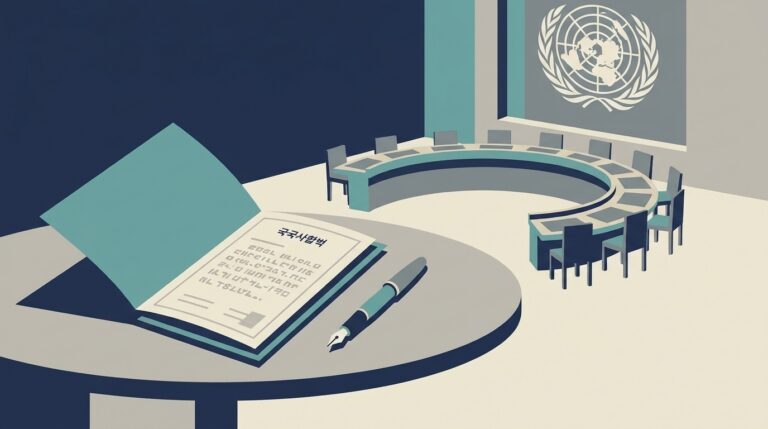
Imagine this scene straight out of a high-stakes K-drama thriller like Designated Survivor: 60 Days: It is 3:00 AM at the United Nations Headquarters in New York. You are seated at the horseshoe consultation table representing your delegation alongside seasoned Korean diplomats. A geopolitical flashpoint has erupted, and the Security Council is racing against the clock to draft an emergency resolution. You have drafted what you believe is an eloquent clause demanding an immediate ceasefire, but when the Chief Negotiator glances at your draft, his expression hardens. Instead of framing your opening clause with a flowing participial connective, you ended it with a decisive operative verb—accidentally turning a historical principle into an unenforceable operative mandate.
In multilateral diplomacy, particularly within the UN General Assembly and Security Council, word choices carry binding legal consequences and real-world geopolitical weight. Korean diplomatic drafting strictly separates the 전문 (Jeonmun – Preamble), which recalls foundational principles through rhythmic participial connectives ending in -하며 (-hamyeo), from the 주문 (Jumun – Operative Clauses), which mandate concrete international action using unyielding declarative verbs ending in -한다 (-handa). Confusing these two registers does not just result in a grammatical hiccup; it can stall negotiations and undermine sovereign credibility. Drawing on a decade of guiding foreign service officers and advanced C2 scholars through the intricacies of Korean diplomatic text, this masterclass demystifies the architectural syntax of UN resolutions, transforming your diplomatic Korean from mechanically textbook to commanding and razor-sharp.
Phase 2: 핵심 표현 3선 심층 분석
1. 상기하며 (Sang-gihamyeo)
- Pronunciation: [Sang-gi-ha-myeo] (Intuitive sound analogy: Think of the steady, flowing hum of sahng-gee-hah-myuh, cascading smoothly without a full stop).
- Meaning: Literally “recalling” or “remembering”; pragmatically functions as the universal diplomatic participial formula to invoke past resolutions, treaties, or UN Charter principles without enacting new obligations.
- K-Culture Moment: Seen frequently in diplomatic historical dramas when emissaries appeal to longstanding treaties: “조약의 기본 정신을 상기하며 협상에 임해야 합니다” (Joyag-ui gibon jeongsin-eul sang-gihamyeo hyeopsang-e imhaeya hamnida – Recalling the fundamental spirit of the treaty, we must engage in negotiations).
- Editor’s Insight: Preamble clauses set the moral and legal landscape. In Korean diplomatic grammar, this participle connects consecutive thoughts into one continuous legal sentence leading into the operative paragraphs. Never close this with a period or formal final verb.
- Situation Spectrum: Casual: 🚫 | Semi-formal: ⚠️ | Formal: ✅
- 🤔 Think About It: Why does international diplomacy prefer fluid participial phrases over abrupt sentences when citing historical treaties?
2. 결정한다 (Gyeoljeonghanda)
- Pronunciation: [Gyeol-jeong-han-da] (Intuitive sound analogy: Pronounce gyuhl-jung-hahn-dah with a firm downward cadence, like a wooden gavel striking the podium).
- Meaning: Literally “decides”; pragmatically functions as an operative clause verb that carries binding institutional authority, most notably under Chapter VII of the UN Charter.
- K-Culture Moment: In high-level boardroom thrillers or political dramas, the chairperson delivers final executive orders using this plain formal register to establish unquestioned authority.
- Editor’s Insight: Learners often default to the polite conversational ending 결정합니다 (Gyeoljeonghamnida). However, in formal legal and treaty drafting, statutory decrees and multilateral resolutions strictly demand the plain assertive form (해라체 / Haerache), projecting objective, sovereign authority rather than personal politeness.
- Situation Spectrum: Casual: 🚫 | Semi-formal: 🚫 | Formal: ✅
- 🤔 Think About It: How does stripping honorific politeness in legal Korean enhance impartiality and binding force?
3. 의장 성명을 채택하기로 합의하였다 (Uijang seongmyeong-eul chaetaekhagiro hab-uihayeotda)
- Pronunciation: [Ui-jang seong-myeong-eul chae-taek-ha-gi-ro ha-bui-ha-yeot-da] (Intuitive sound analogy: Smooth and balanced, where hab-ui lands with the cadence of mutual handshake).
- Meaning: “Agreed to adopt a Presidential Statement.”
- K-Culture Moment: The climactic press briefing outside the UN Security Council chamber where the Rotating Council President announces an all-member consensus statement to the international media.
- Editor’s Insight: A Presidential Statement (PRST) carries distinct legal status compared to a formal resolution. Using 합의하였다 (hab-uihayeotda) highlights the critical prerequisite of multilateral consensus without formal member voting.
- Situation Spectrum: Casual: 🚫 | Semi-formal: ⚠️ | Formal: ✅
- 🤔 Think About It: What does the preference for consensus over majority votes reveal about Korean conflict-resolution values?
Phase 3: 교과서 한국어 vs 진짜 한국어
Scenario 1: Referencing the UN Charter in a Preamble Paragraph
- 📖 교과서 한국어: 유엔 헌장의 원칙을 우리가 기억하고 있습니다. (U-en heonjang-ui wonchig-eul uri-ga gieokhago itseumnida – We remember the principles of the UN Charter.)
- 🗣️ 진짜 한국어: 유엔 헌장의 목적과 원칙을 재확인하며, (U-en heonjang-ui mokjeok-gwa wonchig-eul jaehwaginhamyeo, – Reaffirming the purposes and principles of the Charter of the United Nations,)
- 💡 왜 다를까?: Textbook Korean relies on subjective first-person pronouns (우리) and colloquial verbs (기억하다). In diplomatic drafting, texts avoid first-person pronouns altogether, framing the background through participial gerunds (재확인하며 – reaffirming).
Scenario 2: Drafting an Urgent Ceasefire Operative Clause
- 📖 교과서 한국어: 모든 싸움을 즉시 멈추어야 합니다. (Modeun ssaum-eul jeuksi meomchueoya hamnida – You must stop all fighting immediately.)
- 🗣️ 진짜 한국어: 일체의 적대 행위를 즉각 중단할 것을 강력히 촉구한다. (Ilche-ui jeokdae haeng-wireul jeukgak jungdanhal geos-eul gangryeokhi chokguhanda. – Strongly urges the immediate cessation of all hostilities.)
- 💡 왜 다를까?: Colloquial imperatives (~해야 합니다) sound like conversational scolding. High-level diplomatic text utilizes Sino-Korean vocabulary (적대 행위, 즉각 중단) coupled with the performative declarative verb (촉구한다 – strongly urges/calls upon).
Phase 4: K-Culture 딥다이브 & 비언어적 매너
4-1. Diplomatic Nunchi (눈치) & Non-Verbal Decorum
In the multilateral chamber, physical gestures are as scrutinized as the text itself. When presenting a sensitive resolution draft:
* The Protocol Pitch: Deliver your oral statement in a steady, lower-register baritone. Raising your pitch or increasing your tempo during contentious negotiations signals defensive anxiety.
* Micro-Nodding (묵례 – Mungnye): When acknowledging interventions from other delegates, avoid wide, animated hand gestures. Instead, employ a dignified micro-nod with direct eye contact to acknowledge receipt of their proposed textual amendments.
* Gavel Etiquette: When serving as Council President, never rest your hand casually on the gavel. It remains untouched on its base until the explicit vocal formula “이견이 없으므로 채택되었음을 선포합니다” (Hearing no objection, it is so decided) is uttered, followed by a singular, measured strike.
4-2. Cultural Code Analysis: The Balance of Power in Korean Dramas
In critically acclaimed political productions such as tvN’s Designated Survivor: 60 Days (60일, 지정생존자) and SBS’s Queenmaker, Korean multilateral negotiations are depicted as delicate high-wire acts between domestic sovereignty and multilateral compliance. Korea’s modern diplomatic posture is often characterized as a “글로벌 중추국가” (Geulrobeol jungchugukga – Global Pivotal State). Notice how scriptwriters craft dialogue between foreign ministers: they never say an outright “no” at the negotiating table. Instead, they evoke procedural preambles: “원칙적인 입장을 견지하며…” (Maintaining our principled stance…). Understanding this allows you to see that preambular hedging is an intentional geopolitical bridge designed to preserve diplomatic harmony.
Phase 5: 실전 롤플레이 시나리오
Setting: A dimly lit negotiation room at UN Headquarters in New York. Late-night informals on a draft resolution addressing maritime cybersecurity.
Characters:
* 대사 한민우 (Ambassador Han Min-woo): Chief Negotiator of the ROK Mission; seasoned, precise, unflappable.
* 학습자 (You): First Secretary and Legal Drafter representing your national delegation.
- 턴 1 (한민우): 🎭 서류를 검토하며 안경을 벗는다. “서기관님, 이번 결의안 문안 수정 작업은 어떻게 진행되고 있습니까?” (Seogigannim, ibeon gyeor-uian munan sujeong jageob-eun eotteoke jinhaengdoego isseumnikka? – “First Secretary, how is the revision work on the draft resolution progressing?”)
- 턴 2 (You): 🎭 수정된 문안 문서를 공손히 건네며 “전문과 주문의 균형을 맞추어 문안을 보완했습니다.” (Jeonmun-gwa jumun-ui gyunhyeong-eul matchueo munan-eul bowanhaetseumnida. – “I have revised the text, balancing the preambular and operative paragraphs.”)
- 턴 3 (한민우): 🎭 펜으로 전문 첫 문장을 가리키며 “여기 전문 문안이 다소 단정적인 어조로 끝났군요. 국제법적 관행을 상기시키는 표현이 필요합니다.” (Yeogi jeonmun munan-i daso danjeongjeogin eojoro kkeutnatgunyo. Gukjebopjeok gwanhaeng-eul sang-gisikineun pyohyeon-i piryohamnida. – “Here, the preambular paragraph ends rather abruptly. We need an expression recalling international customary practice.”)
- 턴 4 (You): 🎭 필기구를 들고 메모하며 “‘국제해양법협약의 원칙을 상기하며’로 수정하는 것은 어떻겠습니까?” (‘Gukjehaeyangbophyeobyag-ui wonchig-eul sang-gihamyeo’ro sujeonghaneun geos-eun eotteokkesseumnikka? – “How about amending it to ‘Recalling the principles of the UN Convention on the Law of the Sea’?”)
- 턴 5 (한민우): 🎭 고개를 끄덕이며 엷은 미소를 짓는다. “좋습니다. 그렇다면 제3항의 핵심 조치 문구는 어떻게 처리하시겠습니까?” (Jotseumnida. Geureotdamyeon je-samhang-ui haeksim jochi mungu-neun eotteoke cheorihasigesseumnikka? – “Good. In that case, how do you propose to handle the core action mandate in operative paragraph 3?”)
- 턴 6 (You): 🎭 단호하고 절제된 목소리로 “‘모든 당사국이 악의적 사이버 활동을 중단할 것을 강력히 촉구한다’로 명시했습니다.” (‘Modeun dangsaguk-i ag-uijeok saibeo hwaldong-eul jungdanhal geos-eul gangryeokhi chokguhanda’ro myeongsyihaetseumnida. – “I explicitly drafted it as: ‘Strongly urges all parties to cease malicious cyber activities.'”)
- 턴 7 (한민우): 🎭 결의안 전문을 다시 한번 훑어본 후 펜을 내려놓는다. “완벽합니다. 전문의 연결과 주문의 구속력이 완벽한 균형을 이루었습니다.” (Wanbyeokhamnida. Jeonmun-ui yeon-gyeol-gwa jumun-ui gusongnyeog-i wanbyeokhan gyunhyeong-eul irueotseumnida. – “Flawless. The connective flow of the preamble and the binding weight of the operative clause are in immaculate balance.”)
- 턴 8 (You): 🎭 목례를 하며 “감사합니다. 안보리 컨센서스 도출을 위해 즉각 각국 대표부에 회람하겠습니다.” (Gamsahamnida. Anbori keonsenseoseu dochur-eul wihae jeukgak gakguk daepyobue hoeramhagetseumnida. – “Thank you. I will circulate it immediately to delegations to build Council consensus.”)
🔀 인터랙티브 분기점 (Decision Point)
At Turn 6, if a dissenting delegation objects that your operative phrase “강력히 촉구한다 (Strongly urges)” is too confrontational, how do you respond to maintain consensus without gutting the resolution?
- 선택지 A (Diplomatic Compromise): “당사국들의 자발적 협력을 환영하며 관련 조치를 검토할 것을 요청한다” (‘Requests all parties to review relevant measures while welcoming voluntary cooperation’).
Feedback: [BEST] Exquisitely de-escalates tension using classic diplomatic hedging (요청한다 – requests) without abandoning the clause. - 선택지 B (Rigid Confrontation): “원안을 수정할 수 없으며 즉각 표결에 부쳐야 합니다” (‘We cannot revise the original draft and must proceed to a vote immediately’).
Feedback: [RISK] Forces a procedural showdown that risks a veto (거부권 행사) or permanent stall in negotiations. - 선택지 C (Grammatical Collapse): “그렇다면 중단해 주시면 감사하겠습니다” (‘Then we would appreciate it if you stopped’).
Feedback: [BAD] Uses informal colloquial pleading, destroying the legal authority of the operative clause.
Phase 6: 10초 감정 섀도잉 드릴
Master the rhythmic cadence of the rostrum with these timed delivery drills. Slashes (/) indicate breath pauses.
[🏛️ 장엄하고 원칙을 상기시키며]
“국제 평화와 / 안보 유지에 관한 / 유엔 헌장의 원칙을 재확인하며,”
(Gukje pyeonghwawa / anbo yujie gwanhan / u-en heonjang-ui wonchig-eul jaehwaginhamyeo,)
(Reaffirming the principles of the Charter of the United Nations / concerning the maintenance of international peace and security,)-
[⚖️ 결연하고 타협 없는 무게감으로]
“일체의 도발 행위를 즉각 규탄하며, / 추가 조치를 단호히 취할 것을 / 결정한다.”
(Ilche-ui dobal haeng-wireul jeukgak gyutanhamyeo, / chuga jochireul danhohi chwihal geos-eul / gyeoljeonghanda.)
(Condemning forthright all acts of provocation, / decides to take / resolute further measures.) -
[🌐 정중하고 총의(Consensus)를 이끌어내며]
“모든 회원국이 / 대화와 타협의 정신으로 / 본 결의안을 채택해 줄 것을 / 촉구합니다.”
(Modeun hoewonguk-i / daehwawa tahyeob-ui jeongsin-euro / bon gyeor-uian-eul chaetaekhae jul geos-eul / chokguhamnida.)
(Urges all Member States / in the spirit of dialogue and compromise / to adopt this resolution.)
Phase 7: K-Culture 미니 사전
- 전문 (Jeonmun – 前文) | Preamble
The prefatory paragraphs of a legal treaty or multilateral resolution that set forth the background, motives, and referenced principles. In Korean drafting, every preamble paragraph ends with a participial connective (-하며). - 주문 (Jumun – 主文) | Operative Clauses / Main Enactment
The numbered paragraphs embodying the substantive decision, mandate, or legal action of the adopting body. Each operative clause ends in the formal plain declarative form (-한다). - 의장 성명 (Uijang Seongmyeong – 議長 聲明) | Presidential Statement (PRST)
A formal statement issued by the President of the UN Security Council reflecting Council consensus. Less binding than a Chapter VII resolution, but politically potent. - 총의 채택 (Chong-ui Chaetaek – 總意 採擇) | Adoption by Consensus
The procedural practice of adopting a draft resolution without taking a recorded vote, symbolizing full diplomatic agreement among participating nations.
Phase 8: 여행자를 위한 생존 키트 (Diplomatic Edition)
Diplomatic Roster Survival Expressions TOP 3:
- 표결을 요청합니다. (Pyogyeor-eul yocheonghamnida.)
Meaning: “I request a roll-call vote.”
Pro Tip: Used when consensus fails and an official roll-call count is required by procedural rules. - 이견이 없으므로 가결되었음을 선포합니다. (Igyeon-i eopseumeuro gagyeoldoeeosseumeul seonpohamnida.)
Meaning: “Hearing no objection, I declare it adopted.”
Pro Tip: The sacred gavel-formula spoken by the Committee Chair to seal consensus. - 수정안을 제출하고자 합니다. (Sujeong-an-eul jechulhagoja hamnida.)
Meaning: “I wish to introduce an amendment.”
Editor’s Diplomatic Travel Note:
When visiting Seoul for international conferences, bilateral forums, or visiting the Ministry of Foreign Affairs (MOFA) in Gwanghwamun, reference official ROK legislative language effortlessly by using the 국가법령정보센터 앱 다운로드 for authoritative statutory glossaries. To navigate between government complexes in Jongno and Seoul Station reliably, rely on the 네이버 지도 앱 다운로드 instead of overseas navigation tools.
Phase 9: “한 발 더 깊이” (생각 질문)
In classical East Asian jurisprudence and contemporary Korean administrative syntax, the architecture of a document mirrors social cosmology. The 전문 (Preamble) serves as an invocation of relational context, mutual history, and shared ethical duty before any concrete command is issued. By chaining sentences through participial suspensions (-하며), the drafter avoids abrasive individual assertions, prioritizing communal harmony. Only when that harmony is recognized does the 주문 (Operative Clause) arrive with unambiguous clarity (-한다).
💬 Your Turn: How does your native language structure legal or multilateral texts? Does it also separate contextual background clauses from operative verbs, or does it merge them into a single compound syntax? Share your thoughts below!
Phase 10: FAQ & 오해 방지 (FAQ Schema)
Q: Why can’t I end preambular clauses with “~합니다” or “~했습니다”?
A: In UN drafting conventions, a resolution is grammatically structured as a single extended sentence whose grammatical subject is the adopting organ (e.g., “The Security Council, … Reaffirming [Preamble], … Decides [Operative]”). Ending preambular paragraphs with finished declarative verbs like ~합니다 grammatically severs the preamble from the operative core, invalidating the statutory document structure.
Q: What is the semantic difference between “촉구한다 (Chokguhanda)” and “요청한다 (Yocheonghanda)”?
A: 촉구한다 (Urges/Demands) carries severe normative pressure, used in crises to compel compliance without room for excuses. 요청한다 (Requests) is a more diplomatic, respectful formulation that encourages voluntary cooperation from member states or international agencies.
Q: When is an 의장 성명 (Presidential Statement) used instead of an 정식 결의안 (Formal Resolution)?
A: A Presidential Statement is typically pursued when a formal resolution faces a potential veto by a Permanent Member, but the Council still wishes to deliver a unified, unequivocal collective consensus message on an evolving crisis.
🚨 Common Mistakes Warning Board:
- Mistake 1: Using conversational honorifics (중단해 주시기 바랍니다) inside operative clauses.
Correct Action: Use statutory declarative endings: 중단할 것을 촉구한다. - Mistake 2: Mixing participial forms (-하며) in numbered operative clauses.
Correct Action: Reserve -하며 strictly for preambular paragraphs; operative clauses must conclude decisively with -한다 or -명시한다. - Mistake 3: Omitting the procedural link between the enacting body and the action.
Correct Action: Ensure the subject (유엔 안보리는) governs the whole sequence culminating in the final operative verb.
Phase 11: 액션 미션 & 참여 유도
- Bronze Level: Read the 3 emotion shadowing drills aloud twice, focusing on making the pause at each slash (
/) clean and natural. - Silver Level: Draft your own two-sentence diplomatic resolution fragment in Korean: one preambular clause ending in -상기하며, and one operative clause ending in -결정한다.
- Gold Level: Post your draft in the comments or on your language journey feed, tagging
#DailyHangulDiplomacyfor personal feedback from our editorial team! - 🎮 K-Culture Mission: Watch Episode 1 of Designated Survivor: 60 Days or a press briefing by the Korean Ministry of Foreign Affairs (MOFA), and spot at least two instances of preambular phrasing (~에 유념하여 / ~을 상기하며).
Phase 12: 인터랙티브 퀴즈 챌린지
1. [상황 판단] You are drafting the Preamble of an emergency Security Council text regarding environmental protection. Which sentence ending is grammatically and diplomatically correct?
(A) 국제환경협약의 의무를 성실히 이행해야 합니다.
(B) 국제환경협약의 중요성을 깊이 인식하며,
(C) 국제환경협약의 성과를 우리 모두 축하합니다.
2. [빈칸 채우기] Fill in the appropriate operative verb ending:
“안전보장이사회는 모든 분쟁 당사자가 대화에 즉각 복귀할 것을 강력히 ________ (urges/chokgu-).”
3. [True / False] In official Korean UN resolutions, operative clauses should end with polite conversational endings like “~결정합니다” to show respect to sovereign nations. (T / F)
Click here to check the answers and explanations!
- Answer: (B)
Explanation: Preambular paragraphs must end in participial connectives (~인식하며 – recognizing / conscious of), never completed declarative sentences or polite imperatives. -
Answer: 촉구한다 (Chokguhanda)
Explanation: Operative paragraphs require the authoritative plain formal register (~ㄴ다/는다). -
Answer: False
Explanation: Statutory multilateral resolutions strictly use the objective plain formal register (해라체 – e.g., 결정한다), reflecting legal objectivity and institutional force rather than conversational honorific politeness.
🎬 Watch Our Daily Videos! (Daily Hangul Official Instagram)
Review the expressions you learned in this article with our fun daily short videos! Check out native pronunciation and real-life nuances in action.
- Instagram @dailyhangul_en







