

Phase 1: 공감 (Empathy Story Opening)
안녕하세요! 매일한글 에디터입니다.
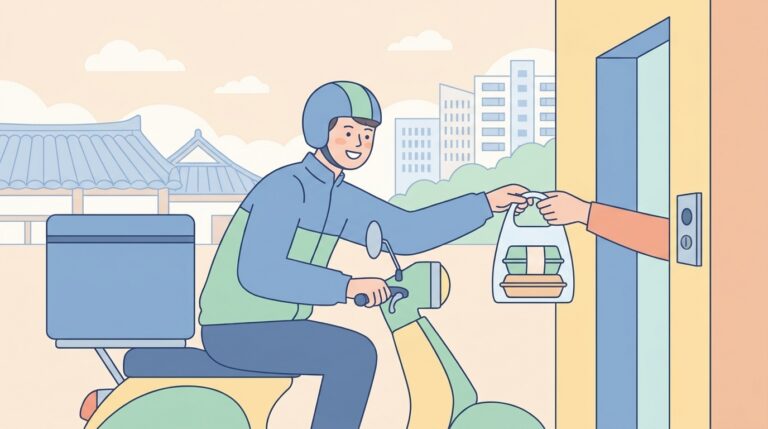
Picture this: It is 9:00 PM on a chilly Friday in Seoul. You just kicked off your shoes after walking over fifteen thousand steps through the bustling alleys of Hongdae. Your stomach is rumbling, and you decide to treat yourself to the quintessential Korean weekend ritual: ordering crispy Korean fried chicken through a delivery app. You carefully track the little motorcycle icon on your screen, and twenty-five minutes later, the doorbell chimes.
You rush to the door with pure excitement, tear open the plastic bag, ready to binge-watch your favorite K-Drama… only to freeze. Instead of sweet-garlic chicken and cheese balls, you are staring at an order of fiery chicken feet (닭발) meant for someone else! Or perhaps your main dish arrived, but the dipping sauces and drink are nowhere to be found.
Panic sets in. How do I handle this without sounding confrontational? What if they think I am complaining rudely? You gather your courage, contact customer service, and to your surprise, the restaurant immediately promises to fix it. Just fifteen minutes later, the delivery rider is back outside your door with a fresh, steaming bag.
Now comes the crucial moment: what do you actually say? A stiff, robotic “감사합니다” feels cold after someone just sped through neighborhood traffic for you, while staying silent feels awkward. Based on real classroom scenarios and feedback from international residents living in Korea, this guide gives you the exact conversational tools you need at the A2 level. You will learn how to express genuine, polite gratitude, ease the tension, and say, “빠르게 다시 보내주셔서 정말 감사합니다 (Thank you so much for sending the replacement so quickly!)” like a considerate local.
Phase 2: 핵심 표현 3선 심층 분석 (Top 3 Core Expressions)
1. 빠르게 다시 보내주셔서 정말 감사합니다 (한글)
- Pronunciation: Ppa-reu-ge da-si bo-nae-ju-syeo-seo jeong-mal gam-sa-ham-ni-da (Sound analogy: Think of the crisp ‘P’ in pasta, dasi like the musical notes Do-Re, and gamsahamnida with a gentle, humble cadence).
- Meaning: Literal: “Because you sent it again quickly, I am truly thankful.” vs. Real Nuance: “Thank you so much for bringing the replacement to me so fast!”
- K-Culture Moment: You often see this in slice-of-life dramas like Hospital Playlist—an overworked doctor receives a rushed replacement meal between emergency surgeries, offering a quick, heartfelt bow to the courier.
- Editor’s Insight: Notice the grammar chain: 빠르게 (ppareuge, adverb: quickly) + 다시 (dasi, adverb: again) + 보내주다 (bonaejuda, to send for someone) + -어서/아서 (connector showing cause). By thanking them because they were fast, you acknowledge their extra hustle directly.
- Situation Spectrum:
- Casual (🚫 – Do not use with riders or elders)
- Semi-formal (⚠️ – 빠르게 다시 보내주셔서 정말 감사해요)
- Formal (✅ – 빠르게 다시 보내주셔서 정말 감사합니다)
- 🤔 Think About It: In English-speaking countries, we often focus on the mistake itself (“Thanks for sorting that out”). In Korea, why is immediate verbal praise centered on the delivery person’s speed and effort?
2. 번거롭게 해드려서 죄송해요 (한글)
- Pronunciation: Beon-geo-rop-ge hae-deu-ryeo-seo joe-song-hae-yo (Sound analogy: Beon rhymes with sun, rop rhymes with rope, and joe sounds like chway).
- Meaning: Literal: “Because I caused you cumbersome trouble, I am sorry.” vs. Real Nuance: “I am so sorry to put you through the extra hassle!”
- K-Culture Moment: In modern Korean society, even when the restaurant made the packing error, polite customers often utter this phrase to the delivery rider who had to ride back and climb the stairs twice.
- Editor’s Insight: The root 번거롭다 (beongeoropda) means to be cumbersome or bothersome. Pairing it with the humble auxiliary verb 해드리다 (haedeurida, to do for someone) shows exceptional empathy toward service workers.
- Situation Spectrum:
- Casual (🚫)
- Semi-formal (✅ – 번거롭게 해드려서 죄송해요)
- Formal (✅ – 번거롭게 해드려서 죄송합니다)
- 🤔 Think About It: Does your culture apologize to someone providing a service when the mistake was not your fault? How does this phrase instantly dissolve tension at the front door?
3. 맛있게 잘 먹겠습니다 (한글)
- Pronunciation: Ma-sit-ge jal meok-get-seum-ni-da (Sound analogy: Masit sounds like ma-seat, jal like jahl, and meok like muck).
- Meaning: Literal: “I will eat deliciously and well.” vs. Real Nuance: “Thank you for the food, I will really enjoy it!”
- K-Culture Moment: The quintessential mealtime phrase seen in every K-Food YouTube mukbang and drama. Saying this right as you take the replacement food reassures the sender that their trouble was entirely worth it.
- Editor’s Insight: Never end an interaction at the door with an awkward silence! While “맛있게 드세요” is what the restaurant says to you, replying with 맛있게 잘 먹겠습니다 turns a transactional delivery into a warm communal exchange.
- Situation Spectrum:
- Casual (⚠️ – 맛있게 잘 먹을게, friends only)
- Semi-formal (✅ – 맛있게 잘 먹을게요!)
- Formal (✅ – 맛있게 잘 먹겠습니다)
- 🤔 Think About It: Why do you think Korean phrases around food are deeply intertwined with expressing gratitude and manners to strangers?
Phase 3: 교과서 한국어 vs 진짜 한국어 (Textbook vs. Real-Life Korean)
Situation 1: Expressing thanks for the redelivery at the door
- 📖 교과서 한국어: 재배송 처리를 신속하게 진행해 주셔서 감사드립니다. (Jaebaesong cheorireul sinsokhage jinhaenghae jusyeoseo gamsadeurimnida.)
- 🗣️ 진짜 한국어: 빠르게 다시 갖다주셔서 정말 감사해요! (Ppareuge dasi gatdajusyeoseo jeongmal gamsahaeyo!)
- 💡 왜 다를까? Textbook sentences sound like formal written corporate emails between legal teams. In real spoken Korean, replacing stiff Sino-Korean nouns with native verbs like 갖다주다 (gatdajuda, to bring over) makes you sound warm, approachable, and natural.
Situation 2: Asking if there are extra delivery charges for the redelivery
- 📖 교과서 한국어: 추가적인 배달 요금이 발생하는지 문의드립니다. (Chugajeogin baedal yogeumi balsaenghaneunji mun-uideurimnida.)
- 🗣️ 진짜 한국어: 제가 뭐 더 결제해야 할 건 없죠? (Jega mwo deo gyeoljehae-ya hal geon eopjyo?)
- 💡 왜 다를까? Instead of asking a high-level academic question about fee policies, native speakers use the soft ending -죠? to double-check naturally and politely without sounding confrontational.
Phase 4: K-Culture 딥다이브 & 비언어적 매너 (Culture Deep Dive & Non-verbal Etiquette)
4-1. 눈치 (Nunchi) & Front-Door Gestures
- The Two-Handed Handover: When receiving the replacement plastic bag, always hold it with both hands, or support your right wrist/forearm lightly with your left hand. Grabbing food with one hand while holding your smartphone with the other can look dismissive.
- The 15-Degree Polite Bow: Lower your head and shoulders about 15 degrees while saying your thank-you phrase.
- The Door-Closing Rhythm: In Korea, closing the door the exact millisecond the bag touches your fingers can feel like you are slamming the door in their face. Hold the door open until the rider turns around toward the elevator, give one final small nod, and close it softly.
4-2. Cultural Code Analysis: The “Ppalli-Ppalli” Delivery Reality
South Korea operates arguably the most sophisticated delivery ecosystem on the planet. Couriers (기사님 / 라이더님) navigate tight alleyways and steep stairwells under strict platform algorithms. When an order is mixed up, it is almost always caused by kitchen rush-hour chaos rather than the driver. Recognizing this through phrases like 빠르게 다시 보내주셔서 정말 감사합니다 provides genuine emotional relief to riders facing immense time pressure.
Furthermore, small mom-and-pop restaurants (자영업자) live and die by their 5-star ratings. Acknowledging their rapid corrective response by leaving a kind note in your delivery app review (“대처가 정말 빠르고 친절하셨어요!”) is the highest form of modern Korean consumer courtesy.
Phase 5: 실전 롤플레이 시나리오 (Real-Life Roleplay Scenario)
- Setting: Your studio apartment hallway in Mapo-gu, Seoul. Rain is pouring outside.
- Characters:
- You (An international resident studying Korean).
- Min-woo (민우, a polite local chicken shop owner/courier who rushed back on his scooter to bring the missing seasoned chicken).
- 민우: [똑똑똑 / 벨을 누르며] 계세요? 아까 치킨 배달했던 기사입니다! (Gyeseyo? Akka chikin baedalhaetdeon gisaimnida! – Anyone home? I am the rider who delivered the chicken earlier!)
🎭 헬멧에 빗방울이 맺힌 채 숨을 살짝 헐떡이며 서 있다. - 나: [문을 조심스럽게 열며] 아, 기사님! 어서 오세요. (A, gisanim! Eoseo oseyo. – Ah, Rider-nim! Welcome.)
🎭 반가운 표정으로 문을 열고 눈을 맞춘다. - 민우: 주방에서 주문 번호가 헷갈렸나 봐요. 정말 죄송합니다! 따끈한 걸로 새로 튀겨왔습니다. (Jubang-eseo jumun beonhoga hetgallyeonna bwayo. Jeongmal joesonghamnida! Ttakkeunhan geollo saero twigyeowasseumnida. – The kitchen mixed up the ticket numbers. I am truly sorry! I fried it fresh so it is hot.)
🎭 양손으로 따뜻한 봉투를 앞으로 건넨다. - 나: 빠르게 다시 보내주셔서 정말 감사합니다! (Ppareuge dasi bonaejusyeoseo jeongmal gamsahamnida! – Thank you so much for sending the replacement so quickly!)
🎭 두 손으로 공손하게 봉투를 받는다. - 나: 비도 많이 오는데 번거롭게 해드려서 죄송해요. (Bido mani oneunde beongeoropge haedeuryeoseo joesonghaeyo. – It is raining heavily too, so sorry to put you through extra trouble.)
🎭 살짝 고개를 숙이며 진심 어린 미소를 짓는다. - 민우: 아이고, 아니에요! 저희 가게 실수인데요 뭘요. 죄송해서 큰 콜라 하나 더 넣어드렸어요! (Aigo, anieyo! Jeohui gage silsu-inde-yo mwol-yo. Joesonghaeseo keun kolla hana deo neoheodeuryeosseoyo! – Oh no, not at all! It was completely our mistake. I put in a large cola for free as an apology!)
🎭 손사래를 치며 밝게 웃는다. - 나: 우와, 콜라까지… 정말 맛있게 잘 먹겠습니다! 빗길 조심히 가세요. (Uwa, kollakkaji… Jeongmal masitge jal meokgetseumnida! Bitgil josimhi gaseyo. – Wow, even a cola… I will eat it with pleasure! Ride safely in the rain.)
🎭 15도 각도로 허리를 숙여 깍듯하게 인사한다. - 민우: 네, 맛있게 드시고 좋은 밤 보내세요! (Ne, masitge deusigo joeun bam bonaeseyo! – Yes, enjoy the meal and have a great night!)
🎭 가볍게 목례하고 엘리베이터 버튼을 누른다.
🔀 인터랙티브 분기점 (Interactive Decision Point)
When the delivery rider hands you the replacement item and repeatedly apologizes at your door, what should you say?
- Option A: “빨리 갖다 줘서 고마워. 다음엔 조심해.” (Ppal-li gatda jwo-seo gomawo. Daeumen josimhae.)
- Feedback (Risk): This uses informal speech (반말) and sounds bossy/condescending (“Thanks for bringing it fast, be careful next time”). A courier will feel hurt and disrespected.
- Option B: “빠르게 다시 보내주셔서 정말 감사합니다! 맛있게 잘 먹을게요.” (Ppareuge dasi bonaejusyeoseo jeongmal gamsahamnida! Masitge jal meogeulgeyo.)
- Feedback (Best): Perfect polite speech (존댓말)! It praises their rapid response and wraps up the encounter with warm culinary appreciation.
- Option C: “사장님한테 환불해달라고 하려다 참았어요.” (Sajangnimhante hwanbulhaedallago haryeoda chamasseoyo.)
- Feedback (Bad): Expressing passive-aggressive frustration to the rider who braved traffic to rectify the situation ruins the mood completely.
Phase 6: 10초 감정 섀도잉 드릴 (10-Second Shadowing Drill)
Practice speaking with real emotional cadence. Pause at each slash /:
[🥺 진심으로 감사하고 미안한 마음을 담아]
“빠르게 다시 / 보내주셔서 / 정말 감사합니다!”
(Ppareuge dasi / bonaejusyeoseo / jeongmal gamsahamnida!)
Editor’s tip: Keep your voice pitch soft and steady, letting your tone reflect relief rather than stress.-
[🌧️ 상대방의 노고를 배려하는 따뜻한 톤으로]
“날씨도 안 좋은데 / 번거롭게 해드려서 / 죄송해요.”
(Nalssido an joeunde / beongeoropge haedeuryeoseo / joesonghaeyo.)
Editor’s tip: Slightly raise the pitch on joeunde to highlight the bad weather condition, then lower softly on joesonghaeyo. -
[😊 환한 미소와 함께 활기차게]
“서비스까지 주시고… / 맛있게 / 잘 먹겠습니다!”
(Seobiseukkaji jusigo… / masitge / jal meokgetseumnida!)
Editor’s tip: Give a bright, upbeat stress to masitge with an appreciative smile.
Phase 7: K-Culture 미니 사전 (Mini Vocabulary Bank)
- 오배달 (O-baedal) | Wrong delivery / Delivery mix-up.
Usage: Combines ‘오’ (誤, error) and ‘배달’ (delivery). Use it with customer support chats: “오배달이 와서 문의드립니다 (I am messaging because of a wrong delivery).” - 재배송 (Jae-baesong) | Redelivery / Replacement dispatch.
Usage: Combines ‘재’ (再, again) and ‘배송’ (dispatch). Ideal when asking the merchant: “누락된 음식 재배송 가능한가요? (Can the missing food be redelivered?)” - 라이더님 / 기사님 (Rider-nim / Gisa-nim) | Respectful term for delivery drivers.
Usage: Always attach the honorific suffix -님 (-nim). It is standard etiquette in South Korea to address couriers as 기사님 or 라이더님. - 안심번호 (Ansim-beonho) | Virtual privacy phone number.
Usage: The temporary virtual number generated by apps like Baemin and Coupang Eats to protect your real mobile number from being exposed on printed receipts.
Phase 8: 여행자를 위한 생존 키트 (Traveler’s Survival Kit)
서바이벌 표현 TOP 3 (Survival Phrases)
- “주문한 음식이랑 다른 게 왔어요.” (Jumunhan eumsigirang dareun ge wasseoyo. – Something different from what I ordered arrived.)
Pro Tip: Take a clear photo of the wrong item and the printed receipt stuck on the box immediately before sending this message. - “빠르게 다시 보내주셔서 감사해요.” (Ppareuge dasi bonaejusyeoseo gamsahaeyo. – Thank you for sending the replacement so quickly.)
Pro Tip: Say this with a slight head bow as you exchange the bags. - “문 앞에 두고 벨 눌러주세요.” (Mun ape dugo bel nulleojuseyo. – Please leave it in front of the door and ring the bell.)
Pro Tip: Copy and paste this directly into the app’s ‘Rider Request’ (라이더 요청사항) field for contactless drop-off.
Editor’s Travel Note
When staying in Korea, you can order food smoothly by getting the 배달의민족 앱 다운로드 or 쿠팡이츠 앱 다운로드. For foreign credit cards and an English interface, Coupang Eats is currently the most foreigner-friendly platform. If staying in an apartment or officetel, make sure to write your entrance code in the request field: “공동현관 비번: #1234# (Front building entrance passcode: #1234#)”.
Phase 9: “한 발 더 깊이” (Cultural Essay)
In Korea’s hyper-connected high-rises, delivery culture is held together by an unwritten social contract of mutual respect and Jeong (정). While modern platforms emphasize lightning-fast logistics, errors inevitably happen during stormy nights or peak dinner hours. When you welcome back a breathless courier with a warm, understanding smile instead of cold frustration, you bridge the gap between customer and worker. A simple phrase like “빠르게 다시 보내주셔서 정말 감사합니다” reminds everyone that behind every app notification is a real human braving the roads for your meal.
💬 Your Turn: Have you ever experienced a food delivery mix-up while traveling or back home? How did you handle it? Leave a comment below and share your story!
Phase 10: FAQ & 흔한 실수 방지 (FAQ & Common Mistakes)
Q: What should I do if the food bag belongs to a completely different apartment number?
A: Do not unpack or eat the food! Take a picture of the receipt showing the wrong unit number and message the app support chat immediately. State: “다른 집 음식이 오배달되었어요 (Another household’s food was wrongly delivered here).” The rider will return shortly to pick it up and reroute it.
Q: Is it customary to tip delivery drivers in Korea when they make a redelivery?
A: No! Cash tipping is not part of Korean culture. Trying to push 5,000 won cash into the courier’s hand may actually make them feel flustered or uncomfortable. Instead, giving them a cold canned beverage or a snack with a polite bow is considered the gold standard of kindness.
Q: Is it better to call the restaurant or use the in-app chat when a dish is missing?
A: If you are at an A2 Korean level, using the 1-on-1 customer center chat (실시간 상담) inside the app is far easier. You can upload photos of the items you received, reference your order number effortlessly, and avoid the anxiety of fast-paced phone calls.
🚨 흔한 실수 (Common Mistakes) 경고판
- Mistake: Using casual panmal like “빨리 와줘서 고마워 (Thanks for coming quick)” with middle-aged drivers.
Correct Action: Always maintain polite honorifics: “빠르게 다시 보내주셔서 정말 감사합니다.” - Mistake: Throwing away the printed receipt paper taped to the delivery container.
Correct Action: Keep the receipt intact! The store code and order time printed on it are required by customer service to process your replacement. - Mistake: Leaving an angry 1-star review before giving the restaurant a chance to fix the mistake.
Correct Action: Most Korean merchants will replace missing food within 15–20 minutes and throw in complimentary items (서비스). Contact them first!
Phase 11: 액션 미션 & 참여 유도 (Action Missions)
- Bronze Mission (Solo): Look into your mirror and practice the line: “빠르게 다시 보내주셔서 정말 감사합니다!” with a 15-degree bow three times.
- Silver Mission (Social): Leave a comment below with your favorite Korean late-night snack (야식) and write one sentence thanking your imaginary delivery driver in Korean.
- Gold Mission (Real Life): The next time you receive food delivery in Korea or at a local Korean eatery, skip the generic goodbye and say: “맛있게 잘 먹겠습니다! (Masitge jal meokgetseumnida!)”
- 🎮 K-Culture Mission: Watch a food delivery scene in a K-Drama (like Weightlifting Fairy Kim Bok-joo or Let’s Eat) and see if you can spot the rider handing over the bag with two hands!
Phase 12: 인터랙티브 퀴즈 챌린지 (Interactive Quiz Challenge)
Test your knowledge with these three practical questions!
Q1. (Situation Judgment) The delivery rider knocks on your door 15 minutes after you reported missing fries, handing you a fresh hot bag with profuse apologies. What is the most culturally appropriate and polite phrase to say?
– (A) 왜 이제야 오셨어요? (Why did you only come now?)
– (B) 빠르게 다시 보내주셔서 정말 감사합니다! (Thank you so much for sending the replacement so quickly!)
– (C) 다음부터는 신경 좀 쓰세요. (Pay better attention from next time.)
Q2. (Fill-in-the-blank) Complete the phrase that shows empathy for the extra hassle caused:
“날씨도 궂은데 ________ 해드려서 죄송해요.”
– (A) 조용하게 (joyonghage – quietly)
– (B) 번거롭게 (beongeoropge – troublesomely / hassle)
– (C) 복잡하게 (bokjaphage – complicatedly)
Q3. (True or False) In South Korea, when a delivery driver rushes back to fix a missing order, you are expected to give a 15% cash tip at the door.
– True / False
👉 Click to reveal answers & explanations!
- Q1 Answer: (B)
Explanation: Option B expresses warm, polite gratitude (존댓말) acknowledging their swift effort. Options A and C are harsh and damage the social harmony. - Q2 Answer: (B) 번거롭게
Explanation: “번거롭게 해드려서 죄송해요” is the set formula for apologizing when someone has to perform extra steps or trouble on your behalf. - Q3 Answer: False
Explanation: Cash tipping does not exist in Korea. Sincere polite phrases like “빠르게 다시 보내주셔서 감사합니다” and a warm smile are the true local currency!
🎬 Watch Our Daily Videos! (Daily Hangul Official Instagram)
Review the expressions you learned in this article with our fun daily short videos! Check out native pronunciation and real-life nuances in action.
- Instagram @dailyhangul_en







