

Phase 1: Empathy & Immersion
안녕하세요! 매일한글 에디터입니다. (Hello! This is your Daily Hangul editor.)
Picture this classic K-Drama scene: An arrogant department head accidentally deletes the entire quarterly budget deck. Instead of taking ownership, he slams his desk, glares at his conscientious junior specialist, and roars: “김 대리, 자네가 파일 백업을 똑바로 확인 안 해서 이런 사달이 난 거 아니야!” (Manager Kim, isn’t this mess because you didn’t check the backups properly?!) You watch the screen in absolute disbelief as the wrongdoer violently shifts the blame onto the innocent victim.
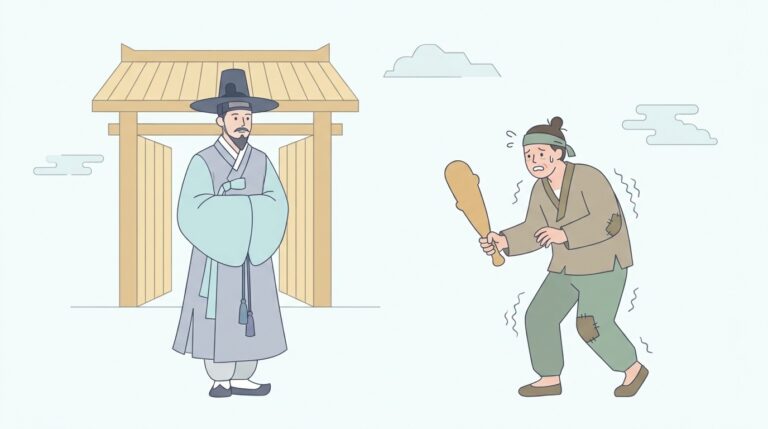
As advanced C1 learners, you’ve likely encountered this exact emotional climax in Korean series or real-world office banter, yet reaching for basic textbook expressions like “왜 화를 내요?” (Why are you angry?) feels utterly hollow. It lacks the intellectual sting and moral weight needed to call out sheer, unapologetic gaslighting. When an offender brazenly brandishes the metaphorical stick against the victim, Koreans turn to one potent four-character idiom (사자성어): 적반하장 (賊反荷杖).
Today, drawing from a decade of coaching high-level expats and media translators, we will deconstruct how to wield this idiom with absolute cultural fluency, dissecting subtle social hierarchies, voice tones, and body language so you can articulate moral paradoxes just like a discerning Seoul native.
Phase 2: Core Expressions Deep Dive
1. 적반하장 (賊反荷杖)
- Pronunciation: [Jeok-ban-ha-jang] (Sounds like: Chuck-bahn-hah-jahng with a firm, sharp cadence on ha and jang)
- Meaning: Literal: “The thief unexpectedly carries/wields the cudgel.” Nuance: Complete moral inversion where the guilty party becomes aggressively defensive, blaming and attacking the victim.
- K-Culture Moment: Ubiquitous in revenge and workplace dramas (like The Glory or Reborn Rich) when a villain caught red-handed threatens the whistle-blower with a lawsuit.
- Editor’s Insight: At the C1 level, you will rarely hear this word stranded alone. It is almost always paired with the set phrase: “적반하장도 유분수지 (Jeokbanhajang-do yubunsuji)”, meaning “Even for brazen shamelessness, there ought to be limits!” 유분수 implies having boundaries or reasonable standards.
- Situation Spectrum: Casual ⚠️ | Semi-formal ✅ | Formal ✅ (Frequently cited in editorial journalism, legal opening statements, and debate panels).
- 🤔 Think About It: Why does Korean culture use the metaphor of a thief picking up the victim’s defensive stick (cudgel) rather than just calling the person a “liar”? How does this physical visual emphasize power dynamic shifts?
2. 내로남불 (Naeronambul)
- Pronunciation: [Nae-ro-nam-bul] (Sounds like: Neh-ro-nahm-bool)
- Meaning: Literal abbreviation: “내가 하면 로맨스, 남이 하면 불륜” (If I do it, it’s romance; if someone else does it, it’s an extramarital affair). Nuance: Flagrant hypocrisy and double standards.
- K-Culture Moment: A sensational headline staple in Korean political talk shows and web variety shows (문명특급, 피식대학) when a public figure criticizes an action they committed themselves.
- Editor’s Insight: While not an ancient Hanja idiom, this modern pseudo-idiom holds equal weight in contemporary rhetoric. Use 적반하장 when they actively attack you after their blunder; use 내로남불 when they excuse their own flaw while penalizing yours.
- Situation Spectrum: Casual ✅ | Semi-formal ✅ | Formal ⚠️ (Heavily used in political discourse, but formal white papers prefer 이중 잣대 – double standard).
- 🤔 Think About It: Compare this to the Western proverb “The pot calling the kettle black.” Does 내로남불 capture the emotional self-justification better?
3. 후안무치 (厚顔無恥)
- Pronunciation: [Hu-an-mu-chi] (Sounds like: Hoo-ahn-moo-chee)
- Meaning: Literal: “Thick face, no shame.” Nuance: Absolute brazenness, utter lack of conscience, having a metaphorical face so thick that moral guilt cannot penetrate it.
- K-Culture Moment: Spoken by high-ranking prosecutors or noble elders in historical sageuk dramas when addressing corrupt officials who show zero remorse.
- Editor’s Insight: 후안무치 describes the inner psychological trait (shamelessness), whereas 적반하장 describes the outward retaliatory action (attacking the innocent). Combining them (“후안무치한 태도로 적반하장의 극치를 보인다”) creates impeccable C1-level prose.
- Situation Spectrum: Casual 🚫 | Semi-formal ⚠️ | Formal ✅ (High-end journalism, academic critique, legal argumentation).
- 🤔 Think About It: How does the physical motif of “face thickness” (체면/염치) relate to social accountability in East Asian collectivism?
Phase 3: Textbook Korean vs. Real Korean
Situation 1: Calling out someone who ran a red light, hit your parked scooter, and stepped out shouting at you
- 📖 교과서 한국어 (Textbook):
당신이 잘못했는데 왜 저한테 화를 냅니까? 사과하세요.
(Dangsin-i jalmot-haenneunde wae jeohante hwareul naemniga? Sagwahaseyo.)
“It was your mistake, so why are you getting angry at me? Please apologize.” - 🗣️ 진짜 한국어 (Real Native):
아니, 그쪽이 신호 위반해 놓고 지금 누구한테 큰소리예요? 적반하장도 유분수지!
(Ani, geujjogi sinho wibanhae noko jigeum nugu-hante keun-soriyeyo? Jeokbanhajang-do yubunsuji!)
“Excuse me, you’re the one who ran the red light, and now you’re yelling at me? Audacity has its limits!” - 💡 왜 다를까?: Native Korean confrontations immediately deploy discourse markers like 아니 (Ani) to flag absurdity and 그쪽 (geujjok) to establish a cold, assertive boundary, followed by the idiomatic punch of 유분수지.
Situation 2: A team member skipped their deadline, forcing you to pull an all-nighter, but blames you for a tiny formatting error
- 📖 교과서 한국어 (Textbook):
본인이 늦게 제출한 것을 반성하지 않고 저를 비판하는 것은 모순입니다.
(Bonin-i neutge jechulhan geoseul banseonghaji anko jeoreul bipanhaneun geoseun mosun-imnida.)
“It is contradictory to criticize me without reflecting on your own late submission.” - 🗣️ 진짜 한국어 (Real Native):
본인 마감 펑크 낸 건 쏙 빼놓고 이제 와서 적반하장으로 나오시면 정말 곤란하죠.
(Bonin magam peongkeu naen geon ssok ppaenoko ije waseo jeokbanhajang-euro naosimyeon jeongmal gollanhajyo.)
“Gliding right past how you ditched your own deadline, you’re now turning around to play the victim and attack me? That is completely unacceptable.” - 💡 왜 다를까?: The phrase “적반하장으로 나오다” (to come out acting like the cudgel-bearing thief) is the natural phrasal verb form used in professional friction.
Phase 4: K-Culture Deep Dive & Non-Verbal Manners
4-1. 눈치 (Nunchi) & The Anatomy of Confrontation
Calling out 적반하장 requires calculating power dynamics and non-verbal cues. If you smile or bow your head while saying it, your objection evaporates.
* The Disbelieving Smirk (헛웃음 – Heot-useum): Before uttering 적반하장, Koreans often release a quiet, dry puff of air through the nose while tilting the chin slightly upward. This signals: “I am not intimidated; I find your defensive attack morally absurd.”
* Eye Line & Hand Gestures: Never point a single index finger—in Korean culture, this escalates conflict into raw disrespect. Instead, hold an open palm facing slightly inward or rest both hands firmly at your sides, maintaining steady, unblinking eye contact.
4-2. Cultural Code: The Sacred Concept of 염치 (Yeomchi)
Korean society functions on social awareness and mutual shame (염치). A person who violates social norms is expected to demonstrate contrition (반성). When someone violates 염치 and instead counter-attacks, they breach the fundamental implicit social contract. This is why 적반하장 evokes deep indignation: it is not just an error in logic; it is a brazen refusal to participate in the ethical community.
Phase 5: Real-World Roleplay Scenario
- Background: Creative Agency in Gangnam. An urgent brand pitch proposal failed to upload because Senior Manager Choi forgot to approve the server credentials. In the debrief room, Choi tries to blame Project Lead Lisa (C1 learner) in front of the team.
-
최 부장 (Choi Bu-jang): [책상을 탁 치며 / Bangs desk lightly]
이사 씨, 어제 파일 승인 요청을 미리미리 상기시켰어야지! 자네 커뮤니케이션 미숙 때문에 클라이언트 놓칠 뻔했잖아!
(Lisa-ssi, eoje pail seung-in yocheong-eul miri-miri sang-gisikyeosseoyaji! Jane keomyunikeisyeon misuk ttaemune keullaieonteu nochil ppeonhaetjanha!)
“Lisa, you should have reminded me repeatedly about the credential request yesterday! We almost lost the client because of your poor communication!” -
리사 (Lisa): [🎭 헛웃음을 짓고 고개를 반듯하게 들며 / Smirks dryly, lifting chin evenly]
부장님, 그 말씀은 좀 당황스럽네요.
(Bujangnim, geu malsseumeun jom danghwangseureopneyo.)
“Manager Choi, that statement catches me quite off guard.” -
최 부장 (Choi Bu-jang): [눈을 치뜨며 / Eyes narrowing]
뭐? 당황스러워? 지금 내 탓을 하겠다는 건가?
(Mwo? Danghwangseureowo? Jigeum nae taseul hagetdaneun geonga?)
“What? Off guard? Are you pinning the blame on me right now?” -
리사 (Lisa): [차분하고 단호한 어조로 / Calm and resolute tone]
어제 승인 요청 메일을 오전 10시와 오후 4시에 두 번이나 보냈고, 메신저로도 확인 부탁드렸습니다.
(Eoje seung-in yocheong meireul ojeon yeol-si-wa ohu ne-sie du beon-ina bonaetgo, mesinjeo-rodeu hwag-in butakdeolyeossseumnida.)
“I sent authorization emails twice yesterday, at 10 AM and 4 PM, and followed up via direct messenger.” -
최 부장 (Choi Bu-jang): [얼굴이 붉어지며 목소리를 높인다 / Face reddening, raising voice]
바쁘면 못 볼 수도 있지! 유선으로 직접 보고했어야지, 일 머리가 그렇게 없나!
(Bappeumyeon mot bol sudo itji! Yuseon-euro jikjeop bogo-haesseoyaji, il meoriga geureoke eomna!)
“When I’m busy I might miss it! You should have called my desk directly! Where is your common sense?” -
리사 (Lisa): [한 박자 쉬며 정면을 응시한다 / Pauses for one beat, maintaining direct gaze]
부장님, 확인을 놓치신 건 부장님이신데, 적반하장으로 제 업무 역량을 문제 삼으시는 건 납득하기 어렵습니다.
(Bujangnim, hwag-ineul notchisin geon bujangnim-isinde, jeokbanhajang-euro je eommu yeongryang-eul munje sam-eusineun geon napdeukhagi eoryeopseumnida.)
“Manager Choi, you were the one who missed the verification. Turning this into an attack on my professional competence is completely unconvincing—and frankly, a classic case of shifting the blame.” -
최 부장 (Choi Bu-jang): [말문이 막혀 헛기침을 한다 / At a loss for words, coughs dryly]
흠… 크흠, 거… 말을 꼭 그렇게 해야겠어?
(Heum… keu-heum, geo… mareul kkok geureoke haeyagesseo?)
“Ahem… well… did you really have to phrase it so harshly?” -
리사 (Lisa): [정중하게 고개를 끄덕인다 / Nods politely]
앞으로는 사안의 본질에 집중해서 시스템을 개선했으면 합니다.
(Apeuroneun saan-ui bonjire jipjunghaesoe siseutemeul gaeseonhaesseumyeon hamnida.)
“Going forward, I hope we can focus on the core issue and improve our verification system.”
🔀 Interactive Choice Point for Lisa’s Climax Response:
- Option A: “부장님 진짜 너무하시네요! 왜 저한테 화풀이하세요?” (Emotional breakdown)
- Feedback (Bad): Discredits your professionalism. Emotional appeals allow aggressive superiors to reframe you as “hyper-sensitive.”
- Option B: “부장님, 적반하장도 유분수지, 지금 제정신이세요?” (Direct aggressive insult)
- Feedback (Risk): Highly cathartic in K-Dramas, but disastrous in corporate reality. Insulting a superior’s sanity (제정신) triggers HR disciplinary councils.
- Option C: “확인을 놓치신 건 부장님이신데, 적반하장으로 제 업무 역량을 문제 삼으시는 건 납득하기 어렵습니다.” (C1 Sophisticated Deconstruction)
- Feedback (Best): Unflinching, factual, articulates the idiom with absolute composure, depriving the gaslighter of psychological leverage.
Phase 6: 10-Second Emotion Shadowing Drill
Read aloud, keeping the pace strictly anchored to the slashes (/) and emotional cues:
[😤 어이없고 기가 차서 / Dumbfounded and exasperated]
“아니, / 그쪽이 잘못해 놓고 / 지금 적반하장으로 / 누구한테 소리를 질러요?”
(Ani, / geujjogi jalmothae noko / jigeum jeokbanhajang-euro / nugu-hante sorireul jilleoyo?)-
[🧊 얼음장처럼 차갑고 단호하게 / Ice-cold and resolute]
“잘못을 인정하기는커녕 / 적반하장으로 나오시니 / 더는 대화가 불가능하겠네요.”
(Jalmoseul injeong-hagininkeonyeong / jeokbanhajang-euro naosini / deoneun daehwaga bulganeunghagenneyo.) -
[⚖️ 차분하게 정곡을 찌르며 / Calmly hitting the nail on the head]
“적반하장도 / 유분수라는 말이 / 바로 이럴 때 쓰는 거군요.”
(Jeokbanhajang-do / yubunsuraneun mari / baro ireol ttae sseuneun geogunyo.)
Phase 7: K-Culture Mini Dictionary
- 염치 (Yeom-chi) | Sense of shame / Moral decency
- Applied when critiquing people who take endless favors or dodge blame: “염치가 있어야 사람이지” (Having a sense of decency is what makes one human).
- 어불성설 (Eo-bul-seong-seol) | Illogical / Utterly nonsensical
- Frequently paired with 적반하장: “그 논리는 어불성설이자 적반하장입니다” (That logic is both absurd and brazenly defensive).
- 가스라이팅 (Gaseu-ra-i-ting) | Gaslighting
- The modern Korean loanword companion to 적반하장. When older managers shift blame onto newcomers, youth communities instantly diagnose it as workplace gaslighting.
- 오리발 내밀다 (Ori-bal nae-milda) | Feigning ignorance / Playing dumb
- Idiom: “To stick out a duck’s foot (pretending it is not a chicken’s foot).” Refers to denying an obvious offense right before turning around into 적반하장.
Phase 8: Traveler & Expat Survival Kit
-
Top 3 De-escalation Phrases:
- “제 과실이 아닌데 이렇게 말씀하시면 곤란합니다.” (Je gwasiri aninde ireoke malsseumhasimyeon gollanhamnida. / “It is not my fault, so speaking to me like this is inappropriate.”)
- “블랙박스 영상 확인하고 법대로 하시죠.” (Beullaekbakseu yeongsang hwaginhago beopdaero hasijo. / “Let’s check the dashcam footage and handle this strictly by the law.”)
- “경찰 부를 테니 거기서 그대로 기다리세요.” (Gyeongchal bureul teni geogiseo geudaero gidariseyo. / “I am calling the police, so remain right where you are.”)
- Editor’s Travel & Expat Note:
If you find yourself in a fender bender or rental car dispute in Jeju or Seoul, never get into a shouting match. Launch your smart navigation service immediately using 네이버 지도 앱 다운로드 to log exact GPS markers, and record the audio discreetly using your smartphone. In Korea, two-party conversation recording where you are an active participant is legally permissible and shuts down 적반하장 tactics instantly.
Phase 9: One Step Deeper (Reflection)
In hierarchical cultures, saving face (체면 – Chemyeon) can sometimes mutate into a toxic defense mechanism. When an individual in authority makes an unforgivable blunder, public acknowledgment feels like total existential annihilation. Tragically, the psychological instinct is to attack downward—wielding the cudgel of rank against the vulnerable to salvage shattered pride. Understanding 적반하장 at a C1 level isn’t just about vocabulary; it is about recognizing the delicate boundary where pride curdles into cowardice.
💬 Your Turn: Have you ever witnessed or experienced someone flipping the script and blaming you when they were clearly at fault? How would you articulate that situation using 적반하장 in Korean? Share your story in the comments below!
Phase 10: FAQ & Common Mistakes
Q: Can I use ‘적반하장’ directly to my company CEO during a dispute?
A: Absolutely not. While grammatically correct, 적반하장 is an explicit moral accusation. Addressing an executive or client with this term constitutes a formal declaration of hostility. Reserve it for peer disputes, mediation, or when you are prepared to sever ties.
Q: What is the difference between ‘내로남불’ and ‘적반하장’?
A: 내로남불 points out hypocrisy (I excuse myself, but judge you). 적반하장 specifically involves a guilty wrongdoer aggressively counter-attacking the victim whom they just wronged.
Q: Is ‘적반하장도 유분수지’ considered slang?
A: No. It is an idiomatic proverb configuration rooted in classic Korean literature and recognized in standard dictionaries. It sounds sophisticated, mature, and cuttingly articulate.
🚨 Common Mistakes Warning Board:
- Mistake 1: Saying “그 사람은 적반하장이에요” (X).
- Correct Action: Say “그 사람의 태도는 적반하장이에요” (His attitude is jeokbanhajang) or “적반하장으로 나오고 있어요” (He is acting in a jeokbanhajang manner). The idiom describes an act or stance, not a noun labeling a human identity.
- Mistake 2: Confusing it with 자승자박 (Jaseungjabak – caught in one’s own trap).
- Correct Action: Remember that 적반하장 must involve an outward attack on someone else.
- Mistake 3: Smiling while uttering the phrase.
- Correct Action: If you say it cheerily, native speakers will assume you don’t grasp its gravity. Keep facial expressions composed and austere.
Phase 11: Action Missions & Engagement
- 🥉 Bronze Mission (Solo Shadowing):
Record your voice saying: “잘못은 본인이 해놓고 적반하장도 유분수지!” (Focus on stressing 유-분-수-지 with controlled indignation). Listen back to check if you sound convincing. - 🥈 Silver Mission (Social Media Spotting):
Go to YouTube or X (Twitter), search the keyword #적반하장, and find one recent news clip or entertainment debate. Note down the specific action that triggered the comment. - 🥇 Gold Mission (Real-life Execution):
Write a 3-sentence micro-essay on a K-Drama episode you recently watched where a villain exhibited 적반하장, posting it on your study blog or community forum.
🎮 K-Culture Mission: Watch Episode 1 or 2 of any classic Korean legal or revenge drama (Vincenzo, Hyena, or Lawless Lawyer). Identify the exact moment a corrupt CEO turns against a witness—and see if the subtitle translates their reaction as 적반하장!
Phase 12: Interactive Quiz Challenge
Q1. Situational Judgment:
Min-su borrowed your laptop, spilled iced Americano on the keyboard, and then snapped: “왜 노트북을 커피숍 테이블 구석에 둬서 쏟게 만들어?” Which idiomatic retort is most culturally and grammatically flawless?
1. 정말 자업자득이네요!
2. 적반하장도 유분수지, 커피 쏟은 사람이 누구인데 그래요?
3. 동문서답하지 말고 커피나 닦으세요.
🔍 Click to reveal the Answer & Explanation
Correct Answer: 2
Explanation: Min-su ruined your laptop and is now blaming your placement of it—an archetypal case of the thief wielding the cudgel. “적반하장도 유분수지” hits with flawless precision. (1 means “reaping what one sows”; 3 means “giving an irrelevant answer”).
Q2. Fill-in-the-Blank:
“사과는커녕 오히려 피해자에게 소리를 지르며 [____]으로 나오는 가해자의 모습에 방청객들은 분노했다.”
1. 결초보은 (Gyeolchoboeun)
2. 적반하장 (Jeokbanhajang)
3. 동고동락 (Donggodongrak)
🔍 Click to reveal the Answer & Explanation
Correct Answer: 2
Explanation: The context highlights a wrongdoer yelling at the victim instead of apologizing. The idiom is 적반하장 (賊反荷杖).
Q3. True or False Culture Check:
True or False: Calling a superior’s statement “적반하장” during an annual executive evaluation is considered polite feedback if backed by statistical data.
🔍 Click to reveal the Answer & Explanation
Correct Answer: False
Explanation: 적반하장 explicitly characterizes the other party as an immoral wrongdoer attacking an innocent person. Using it toward a corporate superior will severely rupture professional hierarchy, regardless of data.
🎬 Watch Our Daily Videos! (Daily Hangul Official Instagram)
Review the expressions you learned in this article with our fun daily short videos! Check out native pronunciation and real-life nuances in action.
- Instagram @dailyhangul_en







