

Phase 1: 공감 (Empathy Opening)
안녕하세요! 매일한글 에디터입니다.
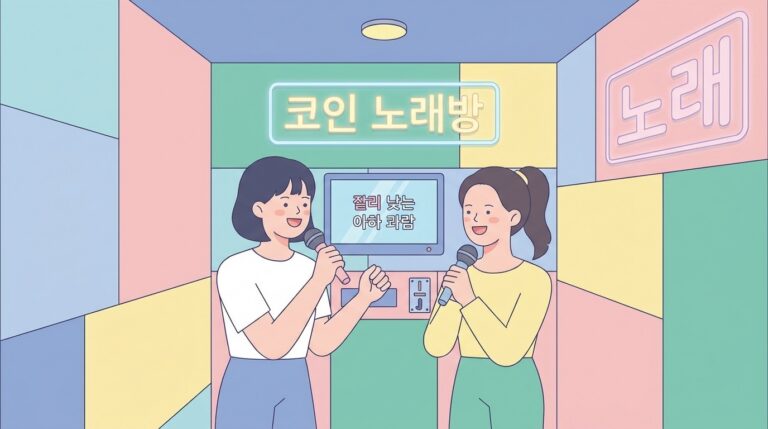
Imagine this: You are hanging out with your Korean friend at a lively coin karaoke in Hongdae. Your friend steps up to the mic, picks an energetic K-pop track, and suddenly delivers vocals so breathtaking that your jaw literally drops. In that electric moment, you want to shout words of pure hype and admiration. But your mind frantically flips through traditional textbook pages, and the only phrase that pops out is: “참 잘했습니다” (Cham jalhaesseumnida – You did well).
Suddenly, the vibrant room feels like a formal 3rd-grade classroom, and your friend giggles politely!
We have all been there. Standard language textbooks teach polite, clinical evaluations, not the fiery, joyful slang that real Koreans use when someone completely blows their mind. That is where viral hype expressions come in. Based on real feedback from hundreds of our beginner learners, mastering natural positive exclamations like 폼 미쳤다! (Pom michyeotda!) instantly melts social awkwardness, builds spontaneous friendships, and makes you sound like a genuine insider. Ready to become the ultimate hype person in Korean? Let’s dive right in!
Phase 2: 핵심 표현 3선 심층 분석 (3 Core Hype Slang Deep Dive)
1. 폼 미쳤다! (Pom michyeotda!)
- Pronunciation: [Pom mi-chyeot-da] (Think of the English word “form” ending with “palm”, followed by “me-chut-dah”)
- Meaning: Literal: “Your form is insane!” | Real Nuance: “You are performing at God-tier level!” or “You’re killing it right now!”
- K-Culture Moment: Originally born in online sports communities to praise athletes displaying incredible physical form, this phrase exploded across Korean variety shows, YouTube reaction videos, and K-Pop dance challenges whenever someone does something ridiculously impressive.
- Editor’s Insight: The word 폼 (pom) comes from the English word form (as in sports technique). Pairing it with 미쳤다 (michyeotda – crazy/insane) transforms it into the highest form of modern praise for someone’s peak performance.
- Situation Spectrum: Casual: ✅ | Semi-formal: ⚠️ (Only with friendly coworkers) | Formal: 🚫 (Never use with professors or senior bosses)
- 🤔 Think About It: In English, we often say “You’re on fire!” or “Peak performance!” Why do you think modern Koreans prefer borrowing the English word “form” combined with “crazy” to express extreme joy?
2. 대박! (Daebak!)
- Pronunciation: [Dae-bak] (Sounds like “day-bahk”)
- Meaning: Literal: “Huge jackpot” | Real Nuance: “Awesome!”, “Unbelievable!”, or “Jackpot!”
- K-Culture Moment: Featured in virtually every K-Drama in history! From finding 10,000 KRW in an old winter coat to seeing your bias appear on stage, 대박 is Korea’s undisputed universal exclamation of pleasant shock.
- Editor’s Insight: Even at Level A1, this is your trusty pocket knife. Elongate the vowel (대~박!) when you want to show deep awe, or say it shortly (대박!) when you are quickly agreeing with good news.
- Situation Spectrum: Casual: ✅ | Semi-formal: ⚠️ | Formal: 🚫
- 🤔 Think About It: Unlike formal praise which requires grammar conjugation, single-word exclamations like 대박 bypass honorific hierarchies among friends. Does your mother tongue have a universal word like this?
3. 찢었다! (Jjiteotda!)
- Pronunciation: [Jji-teot-da] (Start with a sharp, crisp “Jji” like in “jeep”, followed by “tut-dah”)
- Meaning: Literal: “[You] tore it!” | Real Nuance: “You tore up the stage!” or “You ate and left no crumbs!”
- K-Culture Moment: Commonly shouted by dance mentors and judges on popular performance survival shows like Street Woman Fighter whenever a crew completely dominates the dance floor.
- Editor’s Insight: Just like the English slang “You ripped that solo!”, 찢었다 implies that someone performed with so much passion and explosive power that they symbolically shredded the venue.
- Situation Spectrum: Casual: ✅ | Semi-formal: ⚠️ | Formal: 🚫
- 🤔 Think About It: Praise in Korean pop culture often relies on destructive metaphors (like “tearing” or “insane”) to represent extreme creative energy. How does your culture verbally describe peak artistic performance?
Phase 3: 교과서 한국어 vs 진짜 한국어 (Textbook vs. Real Korean)
Situation 1: Praising a friend’s singing or dance skills
- 📖 교과서 한국어: 참 잘하셨습니다. (Cham jalhasyeotseumnida. / You did very well.)
- 🗣️ 진짜 한국어: 와, 오늘 폼 미쳤다! 진짜 찢었어! (Wa, oneul pom michyeotda! Jinjja jjiteosseo! / Woah, your form is insane today! You totally ripped it!)
- 💡 왜 다를까?: Textbook phrasing sounds like a strict teacher grading an elementary school recital. Real native friends match each other’s emotional highs with hyperbolic praise that builds instant camaraderie.
Situation 2: Reacting to incredible Korean street food with a pal
- 📖 교과서 한국어: 음식이 매우 훌륭합니다. (Eumsigi maeu hullyunghamnida. / The food is very excellent.)
- 🗣️ 진짜 한국어: 와, 이 떡볶이 맛 미쳤다! 대박! (Wa, i tteokbokki mat michyeotda! Daebak! / Woah, the taste of this tteokbokki is crazy good! Awesome!)
- 💡 왜 다를까?: Dining in Korea is a collective, sensory celebration (jeong). Using clinical adjectives creates emotional distance, whereas shouting 맛 미쳤다! shares the visceral joy of delicious food.
Phase 4: K-Culture 딥다이브 & 비언어적 매너 (K-Culture Deep Dive)
4-1. 눈치 (Nunchi) & Gestures
When delivering hype slang like 폼 미쳤다!, your body language does 50% of the talking:
* The Double Clap & Open Mouth: When your friend finishes doing something amazing, clap rapidly two or three times, drop your jaw slightly as if you cannot believe your eyes, and look right into their eyes.
* The Head Shake of Disbelief: Shake your head side-to-side with a wide smile while saying 미쳤다. In Korean non-verbal cues, “disbelief” equals the ultimate compliment!
* Nunchi Check: Never say 폼 미쳤다 with a deadpan face or crossed arms; otherwise, your friend might think you are being sarcastic.
4-2. 문화 코드 분석 (Pop Culture Code)
Why is hype culture so loud in modern Korea? In a high-pressure society dominated by intense study hours and long work shifts, shared recreational spaces like karaoke rooms (noraebang), PC cafes, and weekend sports clubs become emotional escape valves. When Koreans gather for fun, they cultivate an atmosphere known as 텐션 (tensyeon – tension/hype energy). Hyping each other up with viral slang isn’t just vanity—it is an active social etiquette that ensures everyone in the room feels energized and celebrated!
Phase 5: 실전 롤플레이 시나리오 (Real-World Roleplay Scenario)
Setting: A vibrant neon-lit Coin Noraebang (코인노래방) in Hongdae on a Friday evening.
Characters: You and your Korean classmate Minho (민호), who just finished rapping an impossibly fast verse of a BTS song.
- Turn 1 (Minho): 하아… 숨차다! 나 어땠어? (Haa… sumchada! Na eottaesseo? / Huff… out of breath! How was I?)
🎭 Panting heavily while wiping sweat from his forehead with a grin. - Turn 2 (You): 민호야, 오늘 진짜 폼 미쳤다! (Minhoya, oneul jinjja pom michyeotda! / Minho, your form is truly insane today!)
🎭 Dropping your jaw and giving two big thumbs up. - Turn 3 (Minho): 진짜? 실수 많이 했는데! (Jinjja? Silsu mani haenneunde! / Really? But I made so many mistakes!)
🎭 Blushing and playfully scratching the back of his neck. - Turn 4 (You): 아니야, 마지막 하이라이트 완전히 찢었어! (Aniya, majimak hairraiteu wanjeonhi jjiteosseo! / No way, you totally ripped the final highlight!)
🎭 Clapping excitedly to pump him up. - Turn 5 (Minho): 대박, 너 칭찬 덕분에 기분 최고다! (Daebak, neo chingchan deokbune gibun choegoda! / Awesome, thanks to your praise I feel on top of the world!)
🎭 Handing the second microphone to you with sparkling eyes. - Turn 6 (You): 이제 내 차례네? 나도 열심히 불러볼게! (Ije nae charyene? Nado yeolsimhi bulleobolge! / My turn now? I will sing my heart out too!)
🎭 Taking the mic with a confident smile. - Turn 7 (Minho): 좋아! 오늘 우리 텐션 레전드다! (Joa! Oneul uri tensyeon rejeondeda! / Nice! Our energy tonight is legendary!)
🎭 Pressing the start button on the remote control. - Turn 8 (You): 가보자고! (Gabojago! / Let’s get it!)
🎭 Striking a rockstar pose as the intro music starts.
🔀 인터랙티브 분기점 (Interactive Choice)
Minho just finished his epic rap song. What will you say to hype him up?
- Choice A: “선생님, 참 잘하셨습니다!” (Seonsaengnim, cham jalhasyeotseumnida!)
- Choice B: “와, 민호야 오늘 폼 미쳤다! 찢었다!” (Wa, Minhoya oneul pom michyeotda! Jjiteosseo!)
- Choice C: “음, 괜찮았지만 음정이 조금 틀렸어.” (Eum, gwaenchannatjiman eumjeongi jogeum teullyeosseo.)
Feedback on your choice:
- Choice A (Bad): You just called your 22-year-old friend “Teacher” (선생님) and used formal classroom praise! Minho freezes, wondering if he is being graded.
- Choice B (Best!): Form is insane! You tore it up! Perfect pronunciation, hyper-natural slang, and immediate friendship bonding. Minho’s confidence skyrockets!
- Choice C (Risk): Providing blunt technical criticism at karaoke instantly drains the room’s 텐션 (energy). Karaoke in Korea is about hype, not vocal auditions!
Phase 6: 10초 감정 섀도잉 드릴 (10-Second Emotional Shadowing Drill)
Practice out loud! Pay attention to the rhythm pauses marked by / and channel the emotional cues:
[😲 Genuine disbelief & awe]
와… / 오늘 / 폼 미쳤다!
(Wa… / oneul / pom michyeotda!)
“Woah… / today / your form is insane!”-
[🔥 Pumped up & ecstatic]
진짜 / 무대 / 찢었다! / 대박!
(Jinjja / mudae / jjiteotda! / Daebak!)
“Seriously / the stage / you tore it up! / Awesome!” -
[🚀 Confident & ready to party]
오늘 / 우리 텐션 / 레전드야!
(Oneul / uri tensyeon / rejeondeuya!)
“Today / our hype energy / is legendary!”
Phase 7: K-Culture 미니 사전 (Mini Dictionary)
- 폼 (Pom) | Form / Athletic condition | Borrowed from the English “form”, it describes a person’s peak condition, stylish visual, or peak performance in any activity.
- 찢다 (Jjitda) | To tear / To crush it | Literally means to rip paper or fabric. Colloquially means delivering a breathtaking performance that “rips” the stage.
- 레전드 (Rejeondeu) | Legend / Iconic | Used as an adjective or noun to describe a moment, photo, or performance that will go down in personal history.
- 텐션 (Tensyeon) | Vibe energy / Hype level | Unlike the negative English word “tension”, Koreans use it positively to mean lively mood, adrenaline, and party enthusiasm.
Phase 8: 여행자를 위한 생존 키트 (Traveler’s Survival Kit)
Top 3 Survival Expressions for Travelers
- 대박! 맛있어요! (Daebak! Masisseoyo!)
- Meaning: “Awesome! It’s delicious!”
- Pro Tip: Say this with a bright smile to market vendors in Gwangjang Market. You might receive bonus food (서비스 – service)!
- 사진 폼 미쳤다! (Sajin pom michyeotda!)
- Meaning: “This photo’s form is insane! (The photo looks incredible!)”
- Pro Tip: When a local takes a great photo of you in front of Gyeongbokgung Palace, say this to make their day.
- 가보자고! (Gabojago!)
- Meaning: “Let’s get it! / Let’s go!”
- Pro Tip: Say this right before boarding an adventure ride at Lotte World with your travel buddies.
Editor’s Travel Note
- Navigation Guide: Google Maps often lags with walking directions in Korea due to national map security regulations. Be sure to download the Naver Map navigation app before your flight for pin-point transit and cafe navigation.
- Hype Tip: Download Korea’s top music streaming app MelOn or check the domestic YouTube trending music charts to keep up with the latest viral songs your Korean peers are humming!
Phase 9: “한 발 더 깊이” (Cultural Reflection Essay)
Korean culture places immense value on 흥 (Heung)—an innate communal joy, rhythm, and passion that turns ordinary gatherings into explosive celebrations. While Western praise often focuses on individual autonomy (“You worked hard on yourself”), Korean hype slang focuses on shared sensory wonder (“Your form is driving us crazy!”). By using vivid, slightly exaggerated words like 미쳤다 (crazy) and 찢었다 (tore it), speakers tear down polite barriers and invite each other into a shared bubble of euphoric energy.
💬 Your Turn: When was the last time you saw something that made you want to shout “폼 미쳤다!”? Was it a concert, a movie, or a friend’s cooking? Tell me in the comments below!
Phase 10: FAQ & 오해 방지 (FAQ Schema & Mistake Warning)
Q: Can I say “폼 미쳤다!” to my Korean university professor or elderly host parent?
A: No! While it is a high compliment, it contains the slang root 미치다 (to be crazy). Using casual slang with elders or authority figures violates basic honorific etiquette (존댓말). Keep this expression strictly for peers, classmates, and close friends.
Q: What is the difference between “대박” and “폼 미쳤다”?
A: 대박 is a general exclamation for good luck, shocking news, or awesome surprises (“Woah, jackpot!”). 폼 미쳤다 is specific praise focused directly on a person’s exceptional skill, performance, or styling.
Q: Can I use “폼 미쳤다” to praise food or clothes?
A: Yes! Young Koreans often say “오늘 날씨 폼 미쳤다” (The weather’s form is insane today) or “이 카페 디저트 폼 미쳤다” (This cafe’s dessert form is crazy good). It has evolved beyond sports into an all-purpose badge of excellence.
🚨 흔한 실수 (Common Mistakes Warning Board)
- ❌ Mistake 1: Saying “선생님 폼 미쳤어요!” to your boss during a formal presentation.
- 👉 Correct Action: Use formal praise: “정말 훌륭하십니다!” (Jeongmal hullyunghasimnida – You are truly outstanding).
- ❌ Mistake 2: Pronouncing “폼” with an English “F” sound (Fawm).
- 👉 Correct Action: Pronounce it with a soft Korean “P/B” sound (Pom), like the English word “palm”.
- ❌ Mistake 3: Saying 찢었다 when someone makes a sad or serious mistake.
- 👉 Correct Action: Only use 찢었다 for victorious, hype moments!
Phase 11: 액션 미션 & 참여 유도 (Action Missions)
- 🥉 Bronze Mission (Solo Practice): Stand in front of your mirror. Drop your jaw, flash double thumbs-up, and say “폼 미쳤다!” three times with peak energy!
- 🥈 Silver Mission (Social Sharing): Watch your favorite K-pop music video or dance practice. Leave a comment in Korean: “와… 이번 춤 폼 미쳤다! 진짜 찢었다!”
- 🥇 Gold Mission (Real Life): The next time your Korean friend, language partner, or classmate does something cool, hype them up with “폼 미쳤다!” and watch their face light up!
- 🎮 K-Culture Mission: Watch an episode of a Korean variety show (like Running Man or Workman) and listen for when the cast members yell 폼 미쳤다 or 대박.
Phase 12: 인터랙티브 퀴즈 챌린지 (Interactive Quiz Challenge)
Test what you have learned today! Click each dropdown to check your answers.
Quiz 1. Situation Check: Which reaction is most natural when your best friend nails a difficult K-pop choreo?
- A) 성적이 우수합니다. (Your grades are superior.)
- B) 와, 폼 미쳤다! 완전 찢었어! (Woah, your form is insane! You completely ripped it!)
- C) 식사 맛있게 하세요. (Have a nice meal.)
Answer: B
Explanation: Option B is the ultimate casual praise used by native speakers. Option A sounds like a school report card, and Option C is a dining greeting!
Quiz 2. Fill in the Blank: “오늘 우리 노래방 _____ 레전드다!” (Our energy vibe at karaoke today is legendary!)
- A) 텐션 (Tensyeon)
- B) 스트레스 (Seuteureseu)
- C) 숙제 (Sukje)
Answer: A (텐션)
Explanation: 텐션 (tension/energy) is paired with 레전드 (legend) to describe unmatched positive party energy!
Quiz 3. True or False: You should greet your partner’s grandparents by saying “할머니 폼 미쳤다!”
- True
- False
Answer: False
Explanation: 폼 미쳤다 is informal modern slang! Using it with grandparents or elders would be considered impolite. Use formal honorific expressions with elders instead!
🎬 Watch Our Daily Videos! (Daily Hangul Official Instagram)
Review the expressions you learned in this article with our fun daily short videos! Check out native pronunciation and real-life nuances in action.
- Instagram @dailyhangul_en







