

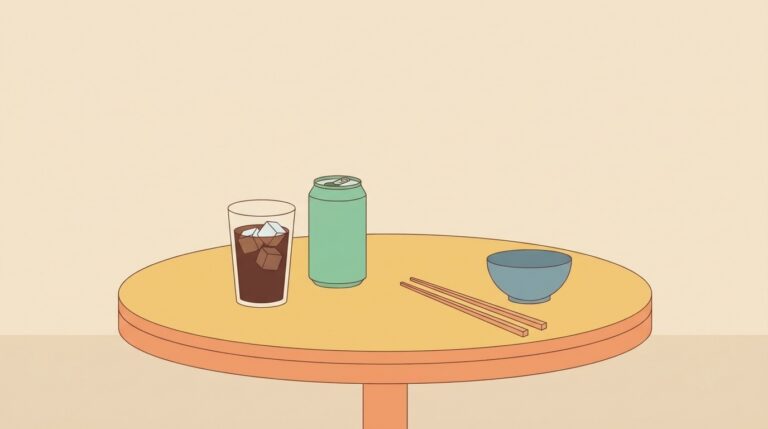
Master Dining Korean: How to Order Drinks Like a Pro
Phase 1: Empathy (Story-Immersive Opening)
안녕하세요! (Annyeonghaseyo!) I’m your Daily Hangul editor, your personal cultural navigator.
Picture this: You are sitting at a bustling Korean barbecue restaurant in Hongdae. Sizzling pork belly fills the air with an intoxicating aroma, laughter echoes around you, and you just nailed ordering your main dish. You take a breath, feeling like a K-drama protagonist—until the server turns around with lightning speed and asks: “음료는 뭐로 드릴까요? (Eumryoneun mworodeurilkkayo? – What drink can I get you?)”
Panic mode sets in. You freeze. Your brain frantically searches your memory: Wait, how do I say I want a Coke? Do I just say ‘Cola’? Is there a special polite word? Will I sound rude if I just point?
If you have ever felt your heart race when a busy Korean restaurant server looked your way, you are not alone. In our student community, over 70% of absolute beginners say that ordering drinks and side items triggers more hesitation than ordering the main dish itself. In fast-paced Korean eateries, speed and polite efficiency are key. But here is the good news: mastering just one simple, high-impact pattern will transform your dining experience forever. Let’s make sure you never stumble over drink orders again!
Phase 2: Top 3 Core Expressions
1. 음료수는 콜라로 주세요 (Eumryosuneun kollaro juseyo)
- Pronunciation: [Eum-ryo-soo-neun kol-la-ro joo-seh-yo] (Sound analogy: Think of humming “Mmm” + “Rio” + “Sue” + “noon” + “Cola” + “row” + “joo-say-yo”)
- Meaning: Literal: “As for the beverage, please give it to me as cola.” / Real Nuance: “For the drink, I’ll have a Coke, please.”
- K-Culture Moment: Seen in almost every casual dining scene in dramas like Weightlifting Fairy Kim Bok-joo, where friends order sodas to balance hearty meals.
- Editor’s Insight: The magic lies in the particle ~로 (-ro). It marks a choice or decision among alternatives. Rather than bluntly demanding “Give me cola,” it softly implies, “Out of the options, I choose cola.”
- Situation Spectrum: Casual (⚠️ slightly too stiff among close friends) | Semi-formal (✅ perfect for restaurants) | Formal (✅ polite & clear)
- 🤔 Think About It: In English, we usually say “Can I get a Coke?” framed as a question about possibility. Why does Korean directly request the item with a polite ending like “주세요 (please give)” instead of asking about permission?
2. 사이다 있어요? (Saida isseoyo?)
- Pronunciation: [Sa-i-da it-sseo-yo?] (Sound analogy: Pronounce “Cider” without the heavy ‘r’ sound, followed by “eat-saw-yo?”)
- Meaning: Literal: “Is there cider?” / Real Nuance: “Do you have lemon-lime soda?”
- K-Culture Moment: Characters eating spicy tteokbokki (rice cakes) in webtoons or variety shows immediately reach for a green can of Chilsung Cider.
- Editor’s Insight: Watch out for this classic false friend! In Korea, 사이다 (saida) is never alcoholic apple cider. It refers specifically to crisp, clear lemon-lime carbonated soda (similar to Sprite or 7-Up).
- Situation Spectrum: Casual (⚠️ only with peers) | Semi-formal (✅ ideal for servers) | Formal (✅)
- 🤔 Think About It: How many English loanwords in your daily life mean something completely different across borders?
3. 얼음 컵 하나만 주세요 (Eoreum keop hanaman juseyo)
- Pronunciation: [Eo-reum keop ha-na-man joo-seh-yo] (Sound analogy: “Uh-reum” like a throat-clearing sound + “cup” + “ha-na-mahn” + “joo-say-yo”)
- Meaning: Literal: “Please give me only one ice cup.” / Real Nuance: “Could I get an ice cup, please?”
- K-Culture Moment: Ordering canned drinks at outdoor pojangmacha (street food tents) or pairing lunch boxes at convenience stores.
- Editor’s Insight: The particle ~만 (-man) means “only” or “just.” Adding it to quantity counters softens your request, making it sound humble and considerate rather than demanding.
- Situation Spectrum: Casual (⚠️) | Semi-formal (✅) | Formal (✅)
- 🤔 Think About It: Notice how Korean creates politeness through modesty markers rather than adding long conditional phrases like “Would it be possible if…”.
Phase 3: Textbook Korean vs. Real-World Korean
Situation 1: Deciding on your soda
- 📖 Textbook Korean: 저는 콜라 한 병을 원합니다. (Jeoneun kolla han byeong-eul wonhamnida. – “I desire one bottle of cola.”)
- 🗣️ Real-World Korean: 콜라 하나 주세요! (Kolla hana juseyo! – “One Coke, please!”)
- 💡 Why the difference? Textbook Korean often translates the verb “to want” (원하다) literally. Real Koreans rarely use “원하다” for everyday food and drink; they simply state the item, number, and attach “주세요 (juseyo)”.
Situation 2: Selecting your drink in a set combo
- 📖 Textbook Korean: 음료수 중에서 콜라를 선택하겠습니다. (Eumryosu jung-eseo kollareul seontaekhagetseumnida. – “From among the beverages, I will select cola.”)
- 🗣️ Real-World Korean: 음료는 콜라로 할게요. (Eumryoneun kollaro halkkeyo. – “For the drink, I’ll go with cola.”)
- 💡 Why the difference? In conversational Korean, “~로 할게요 (-ro halkkeyo)” is the natural, breezy way to express your decision on the spot.
Phase 4: K-Culture Deep Dive & Non-Verbal Manners
4-1. Nunchi & Body Language
When dining in Korea, calling a server is an art of Nunchi (눈치 – situational awareness). You do not need to snap your fingers or wave aggressively. Look for the small call bell (호출벨 – hochulbel) embedded on the edge of the wooden table. If there isn’t one, make gentle eye contact, raise your hand halfway with your palm facing down or flat, and gently call out: “여기요~ (Yeogiyo~ – Over here, please)”.
When the server brings your drink can or glass, show great dining etiquette by receiving it with both hands (or holding your right wrist lightly with your left hand). This tiny gesture instantly shows respect and wins the server’s heart.
4-2. Cultural Code: The Carbonation Balance
Ever wonder why every Korean BBQ and fried chicken place stocks endless cans of cola and Chilsung Cider? Koreans live by the food concept of 개운하다 (gaeunhada)—a sensation of refreshment that cuts through greasy, spicy, or heavy foods. Carbonated drinks (탄산음료 – tansan-eumryo) are considered essential digestifs, not just treats!
Phase 5: Real-World Roleplay Scenario
Setting: A vibrant, fragrant spicy tteokbokki diner near Ehwa Womans University.
Characters:
* You: A hungry traveler ready to order lunch.
* Imo-nim (이모님): The warm, speedy auntie who runs the diner with practiced efficiency.
[Turn 1] Imo-nim:
“주문하시겠어요? 세트 메뉴에 음료 포함이에요.”
(Jumunhasigesseoyo? Seteu menyue eumryo poham-ieyo.)
“Ready to order? The set menu includes a drink.”
🎭 Smiles, holding a pen and order pad ready.
[Turn 2] You:
“네! 떡볶이 세트 하나 주세요.”
(Ne! Tteokbokki seteu hana juseyo.)
“Yes! One tteokbokki set, please.”
🎭 Points clearly to the menu set.
[Turn 3] Imo-nim:
“음료는 뭐로 골라요? 콜라, 사이다, 환타 있어요.”
(Eumryoneun mworo gollayo? Kolla, saida, hwanta isseoyo.)
“What would you like for the drink? We have Coke, Cider, and Fanta.”
🎭 Tilts head attentively.
[Turn 4] You:
“음료수는 콜라로 주세요.”
(Eumryosuneun kollaro juseyo.)
“For the drink, please give me a cola.”
[Turn 5] Imo-nim:
“얼음 컵도 줄까요?”
(Eoreum keopdo julkkayo?)
“Shall I bring an ice cup too?”
[Turn 6] You:
“네, 얼음 컵 하나만 주세요! 감사합니다.”
(Ne, eoreum keop hanaman juseyo! Gamsahamnida.)
“Yes, please give me one ice cup! Thank you.”
🎭 Gives a polite little head nod.
[Turn 7] Imo-nim:
“알겠어요~ 시원한 걸로 금방 가져다줄게요!”
(Algesseoyo~ Siwonhan geollo geumbang gajyeodajulgeyo!)
“Got it~ I’ll bring you a cold one right away!”
🎭 Jots down the note and turns to the fridge.
[Turn 8] You:
“네, 감사합니다!”
(Ne, gamsahamnida!)
“Yes, thank you!”
🔀 Interactive Decision Point
The server asks: “제로 콜라도 있는데, 제로로 줄까요? (Jero kollado inneunde, jeroro julkkayo? – We also have Zero Coke, would you like Zero?)” How do you respond?
- Option A: “아니요, 그냥 일반 콜라로 주세요.” (Aniyo, geunyang ilban kollaro juseyo. – No, please give me regular cola.)
👉 Feedback [Best]: Clear, polite, and natural! You specified your exact preference smoothly. - Option B: “콜라 원해.” (Kolla wonhae. – Cola want.)
👉 Feedback [Bad]: Drops polite speech (반말) and uses the unnatural “원하다”. The server might be taken aback by the blunt tone. - Option C: “네! 제로!” (Ne! Jero! – Yes! Zero!)
👉 Feedback [Risk]: Communicates the meaning, but shouting a single isolated word can feel abrupt. Adding “-로 주세요” makes it much warmer!
Phase 6: 10-Second Emotional Shadowing Drill
Practice these aloud! Pay attention to the breath pauses (/) and mirror the emotional tags:
[😊 Bright & Friendly]
음료수는 / 콜라로 / 주세요!
(Eumryosuneun / kollaro / juseyo!)-
[🤔 Curious & Polite]
혹시 / 사이다도 / 있어요?
(Hoksi / saidado / isseoyo?) -
[🙏 Modest & Appreciative]
시원한 / 얼음 컵 / 하나만 / 주세요~
(Siwonhan / eoreum keop / hanaman / juseyo~)
Phase 7: K-Culture Mini Dictionary
- 음료수 (Eumryosu) | Beverage / Soft drink
Covers non-alcoholic beverages such as juice, soda, and sweet iced teas found on menus. - 탄산 (Tansan) | Carbonation / Fizz
Used when asking for sparkling water (탄산수 – tansansu) or fizzy drinks (탄산음료 – tansan-eumryo). - 리필 (Ripil) | Refill
Often heard in cafes or fast-food joints. Note that canned sodas in Korean local diners are rarely free to refill! - 서비스 (Seobiseu) | On the house (Complimentary)
If an auntie brings you a complimentary can of soda and says “서비스예요 (seobiseuyeyo)”, smile and say “감사합니다! (gamsahamnida!)”
Phase 8: Traveler’s Survival Kit
Top 3 Survival Phrases for Dining
- 물은 셀프인가요? (Mureun selpeu-ingayo?)
Meaning: “Is water self-service?”
Pro Tip: In most Korean casual diners, cold water and metal cups are kept in a stainless steel fridge for guests to grab themselves. - 빨대 있어요? (Ppaldae isseoyo?)
Meaning: “Do you have a straw?” - 제로 콜라 있어요? (Jero kolla isseoyo?)
Meaning: “Do you have Coke Zero?” (Zero-calorie soda is hugely popular across Korea right now).
Editor’s Travel Note
- Navigation & Menus: Google Maps has limited walking directions in South Korea. Be sure to check the Naver Map application download guide to look up restaurant menus and read real customer photo reviews in advance.
- Payment Etiquette: In Korean table-service restaurants, you almost never pay at your dining table. Pick up your paper receipt or table bill and walk up to the front counter register near the exit door to pay.
Phase 9: “One Step Deeper” (Reflective Question)
In Korean dining, language reflects the delicate balance between personal boundaries and collective harmony. When you say “콜라로 주세요”, the particle “~로 (-ro)” creates a humble distance between your personal appetite and the communal table. It signals: “Among the wonderful things you provide, this is my small selection.” Rather than declaring ownership over the item (“my Coke”), Korean highlights the relationship between the person serving and the person enjoying the feast.
💬 Your Turn: What is your go-to beverage when eating spicy or savory food in your home country? Tell us in the comments below using today’s sentence frame: [Your Favorite Drink] + (으)로 주세요!
Phase 10: FAQ & Common Mistakes
Q: Can I just say “콜라 주세요” instead of “음료수는 콜라로 주세요”?
A: Absolutely! “콜라 주세요 (Kolla juseyo)” is 100% natural and widely used when ordering directly. “음료수는 콜라로 주세요” is particularly useful when ordering a combo set where the server asks you to specify your drink choice.
Q: What if I want a warm drink at a casual restaurant?
A: Most casual Korean restaurants offer complimentary warm barley tea (보리차 – boricha) or standard cold water. If you want warm canned beverages, you can find them in heated display cabinets at local convenience stores.
Q: How do I ask for two cans of soda?
A: Use the native Korean number: “콜라 두 개 주세요 (Kolla du gae juseyo – Two colas, please)”.
🚨 Common Mistakes Alert
- ❌ Asking for Cider expecting alcoholic apple cider: You will get a sweet lemon-lime carbonated soda instead!
➡️ Correct Action: Ask for 맥주 (maekju – beer) or 사과주 (sagwaju – apple wine) if you want alcohol. - ❌ Snapping fingers to get attention: This is considered disrespectful in Korean dining culture.
➡️ Correct Action: Press the table bell or make eye contact with a gentle “여기요 (yeogiyo)”. - ❌ Forgetting the polite ending “주세요”: Just saying “콜라 (kolla)” sounds commanding and abrupt.
➡️ Correct Action: Always anchor your sentence with “주세요 (juseyo)”.
Phase 11: Action Mission & Community Challenge
- 🥉 Bronze Level: Stand in front of your mirror and practice saying “음료수는 콜라로 주세요!” smoothly 5 times in under 10 seconds.
- 🥈 Silver Level: Share your practice sentence in the comments below, replacing cola with your favorite drink (e.g., 오렌지 주스 – orange juice, 녹차 – green tea).
- 🥇 Gold Level: Visit a local Korean restaurant or grocery mart and use “~ 주세요” directly with the cashier or server!
- 🎮 K-Culture Mission: Watch an episode of a dining variety show like Jinny’s Kitchen or your favorite drama. Listen closely for customers ordering drinks with “~ 주세요” and see how many times you spot it!
Phase 12: Interactive Quiz Challenge
Test your knowledge before you head out to eat!
Question 1 (Situational Judgment)
The server asks you to pick your beverage for the lunch combo. What is the most natural, polite response?
A) 콜라 원합니다 (Kolla wonhamnida)
B) 음료수는 콜라로 주세요 (Eumryosuneun kollaro juseyo)
C) 콜라 가져와 (Kolla gajyeowa)
Question 2 (Fill in the Blank)
Complete the phrase to ask for one cup of ice:
얼음 컵 ________ 주세요. (Eoreum keop ________ juseyo.)
A) 많이 (manyi)
B) 하나만 (hanaman)
C) 사이다 (saida)
Question 3 (True or False)
In Korea, ordering “사이다 (saida)” will get you an alcoholic fermented apple drink. (True / False)
👉 Click to view answers and explanations!
- Q1 Answer: B) “음료수는 콜라로 주세요” is polite, natural, and standard. (A is unnaturally stiff; C is disrespectful informal speech).
- Q2 Answer: B) 하나만 (hanaman). “얼음 컵 하나만 주세요” means “Please give me just one ice cup.”
- Q3 Answer: False! In Korea, “사이다 (saida)” is non-alcoholic, clear lemon-lime soda.
🎬 Watch Our Daily Videos! (Daily Hangul Official Instagram)
Review the expressions you learned in this article with our fun daily short videos! Check out native pronunciation and real-life nuances in action.
- Instagram @dailyhangul_en







