

Nailing Your First Korean Graduate Seminar: How to Deconstruct Literature Like a Pro
Phase 1: Empathy & The Seminar Room Reality Check
안녕하세요! 매일한글 에디터입니다. (Annyeonghaseyo! It is your Daily Hangul editor.)
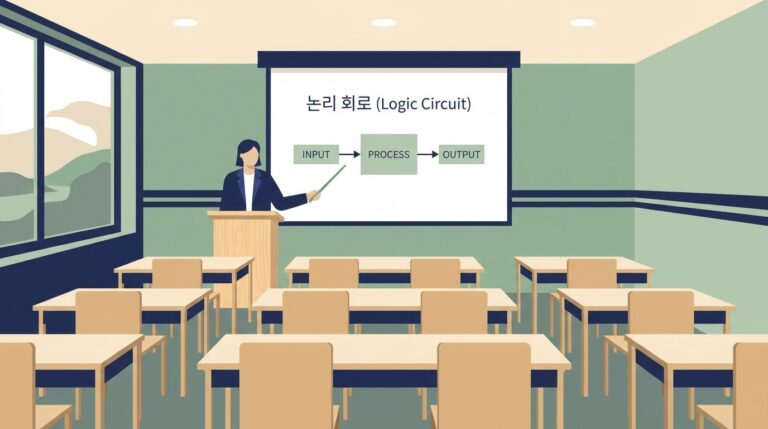
Imagine this: You are sitting in an atmospheric, mahogany-paneled seminar room at a university in Sinchon, Seoul. Your professor—a legend in your field who looks like the intimidating advisor from your favorite K-Drama Law School—takes a slow sip of iced Americano and turns their gaze to you. Everyone opens their laptops. It is your turn to present the weekly seminar paper (발제문, baljemun). You spent all night reading a complex paper, and your slides are loaded with data. But when you open your mouth, you freeze. How do you articulate that you tracked the author’s logic from their initial question all the way through their methodology and conclusion without sounding like a robotic translation tool?
Presenting academic literature in Korean is not just about translating terms; it is about conveying intellectual authority and scholarly rhythm. Many international researchers tell us: “I understand the paper perfectly in my head, but in Korean, I sound like an undergrad reading bullet points.” Today, we will fix that. Based on real feedback from graduate students across Seoul’s top universities, this guide will give you the exact phrasing, cultural cadence, and presentation etiquette needed to showcase high-level critical thinking.
Phase 2: Key Expressions Breakdown
Here are three foundational B2 expressions that will instantly elevate your seminar critique from basic summarizing to sharp intellectual analysis.
1. 논리적 흐름을 짚어보다 (Nonrijeok heureumeul jipeoboda)
- Pronunciation: [Non-ri-jeok heu-reu-meul ji-peo-bo-da] (Imagine saying ‘logical rhythm’ while gently tapping your finger on a podium: ‘non-ree-juck’ with a soft rolling ‘r’ in ‘heureum’)
- Meaning: Literally “to trace/point out the logical flow”; idiomatically “to dissect and analyze the line of reasoning.”
- K-Culture Moment: Seen in debate-heavy dramas like Stranger (비밀의 숲), where prosecutors meticulously trace how an opponent connects evidence to motive.
- Editor’s Insight: The verb 짚다 (jipta) implies pinpointing key milestones with precision. In academic Korean, saying you 짚었다 (jipeotda) signals that you did not just skim the surface—you mapped the structural skeleton of the paper.
- Situation Spectrum: Casual 🚫 | Semi-formal ⚠️ | Formal ✅
- 🤔 Think About It: In English, we often say “I followed the argument.” Korean uses 짚어보다 (to touch upon and inspect). Why do you think Korean scholarly discourse favors tactile, step-by-step verbs like 짚다?
2. 문제의식에서 출발하여 (Munje-uiseigeseo chulbalhayeo)
- Pronunciation: [Mun-je-ui-sik-e-seo chool-bal-ha-yeo] (Sounds like ‘moon-jeh’ followed by ‘wee-seek’ + ‘chul-bahl-ha-yeo’)
- Meaning: Literally “departing from the critical awareness/problem consciousness”; practically “originating from the primary research question/issue identification.”
- K-Culture Moment: Often heard on serious intellectual talk shows like JTBC’s Differential Class (차이나는 클라스) when guest scholars explain why a breakthrough study began.
- Editor’s Insight: 문제의식 (munjeuiseik) is a prized term in Korean academia. It is deeper than a simple question; it denotes a critical dissatisfaction with existing explanations that pushed the author to investigate.
- Situation Spectrum: Casual 🚫 | Semi-formal ⚠️ | Formal ✅
- 🤔 Think About It: Does your native academic culture emphasize the ‘emotional urge’ behind a question, or just the neutral hypothesis?
3. 방법론과 실증 데이터를 통해 (Bangbeopnongwa siljeung deiteoreul tonghae)
- Pronunciation: [Bang-beom-non-gwa sil-jeung de-i-teo-reul tong-hae] (Note the nasal assimilation: 방법론 sounds like ‘bang-beom-non’)
- Meaning: Literally “through the methodology and empirical data.”
- K-Culture Moment: The hallmark phrase of researchers in science documentaries or academic symposiums defending peer-reviewed evidence.
- Editor’s Insight: 실증 (siljeung) means empirical or verified by proof. Pairing 방법론 (methodology) with 실증 데이터 (empirical data) demonstrates that you are evaluating whether the author’s claims are rigorously supported.
- Situation Spectrum: Casual 🚫 | Semi-formal ⚠️ | Formal ✅
- 🤔 Think About It: How does qualifying data as ‘empirical’ (실증) shift the tone in high-stakes discussions compared to just saying ‘data’ (자료)?
Phase 3: Textbook Korean vs. Real Korean
Let us bridge the gap between stiff dictionary translations and the polished rhetoric actual Korean scholars use.
Situation A: Explaining the author’s research steps
- 📖 교과서 한국어 (Textbook): 저자는 질문을 하고 데이터를 모아서 결론을 냈습니다. (Jeojaneun jilmuneul hago deiteoreul moaseo gyeolloneul naessseumnida. / The author asked a question, gathered data, and made a conclusion.)
- 🗣️ 진짜 한국어 (Real Academic Korean): 저자가 특정 문제의식에서 출발하여, 실증 분석을 거쳐 결론에 도달하는 논리적 흐름을 짚어보았습니다. (Jeojaga teukjeong munjeuiseigeseo chulbalhayeo, siljeung bunseogeul geocheo gyeollone dodalhaneun nonrijeok heureumeul jipeoboasseumnida.)
- 💡 왜 다를까?: In graduate seminars, basic sequential connectors like ~하고 and ~모아서 sound overly colloquial. Using nominalized verbal phrases like 분석을 거쳐 (going through analysis) and 결론에 도달하다 (arrive at a conclusion) creates an objective, academic tone.
Situation B: Highlighting methodological limitations
- 📖 교과서 한국어 (Textbook): 이 방법은 데이터가 부족해서 틀릴 수도 있습니다. (I bangbeobeun deiteoga bujokhaeseo teullil sudo isseumnida. / This method could be wrong because data is lacking.)
- 🗣️ 진짜 한국어 (Real Academic Korean): 본 연구의 방법론적 접근은 표본의 한계로 인해 일반화에 다소 무리가 있어 보입니다. (Bon yeonguui bangbeopnonjeok jeopgeuneun pyobonui hangyero inhae ilbanhwa-e daso muriga isseo boimnida.)
- 💡 왜 다를까?: Direct criticism like 틀리다 (to be wrong) is considered abrasive in Korean academic culture. Scholars use mitigated critique such as 다소 무리가 있다 (it is somewhat overreaching) combined with precise terms like 일반화의 한계 (limitations of generalization).
Phase 4: K-Culture Deep Dive & Non-Verbal Manners
4-1. 눈치 (Nunchi) & Seminar Body Language
In a Korean seminar room, how you deliver your critique matters just as much as what you say:
* The Scribe Posture: Keep a notebook open and pen in hand even when you are presenting with slides. When professors comment on your literature critique, lean forward slightly and immediately write it down. Nodding (고개 끄덕임) demonstrates your academic humility and active listening.
* The Two-Handed Pointer: If using a laser pointer, keep your other hand lightly placed under your elbow or chest. Avoid aggressively stabbing the pointer dot on the screen when pointing out flaws in an author’s methodology; use smooth, circling motions.
* Softening Eye Contact: When delivering a critical remark about prior literature, soften your tone and make eye contact with the entire room, not just the professor. This frames your critique as a collaborative inquiry rather than an arrogant takedown.
4-2. The Culture Code: Academic Hierarchy & “겸양의 미덕” (The Virtue of Modesty)
Korean academic culture balances sharp intellectual rigor with Confucian modesty. Even when an author’s methodology has glaring mistakes, presenting it as “The author was completely mistaken” creates friction. Instead, frame it as: 저자의 시도는 고무적이나, 데이터의 한계상 후속 연구가 필요합니다 (Jeojaui sidoneun gomujeogina, deiteoui hangyesang husok yeonguga piryohamnida / “While the author’s attempt is inspiring, follow-up research is necessary due to data limitations”). Critiquing prior research is viewed as building a brick in a collective wall, not destroying the foundation someone else laid.
Phase 5: Real-World Roleplay Scenario
- Setting: Room 402, Humanities Hall. Graduate seminar on Cultural Sociology.
- Characters:
- Alex (알렉스): International graduate student presenting the literature review.
- Prof. Park (박 교수님): Meticulous, renowned advisor with high standards.
[Turn 1] Prof. Park: 알렉스 원생, 이번 논문 발제 준비 많이 했지요? 논문의 핵심 논의를 어떻게 파악했는지 먼저 설명해 보시죠. (Alex, you prepared a lot for this seminar presentation, right? Please explain first how you grasped the core arguments of the paper.)
[Turn 2] Alex: 네, 교수님. 🎭 [Politely straightening up, clicking to the conceptual slide] 이번 발표에서는 저자가 어떤 문제의식에서 출발하여 결론에 도달했는지 논리적 흐름을 짚었습니다. (Ne, gyosunim. Ibeon balpyo-eseoneun jeojaga eotteon munjeuiseigeseo chulbalhayeo gyeollone dodalhaenneunji nonrijeok heureumeul jipeossseumnida. / Yes, Professor. In this presentation, I traced the logical flow from the author’s initial research question through to their conclusion.)
[Turn 3] Prof. Park: 흐름을 짚었다라… 그렇다면 저자의 가설과 실제 데이터 간의 연결고리는 타당하다고 보나요? (Traced the flow… Then, do you think the link between the author’s hypothesis and the actual empirical data is valid?)
[Turn 4] Alex: 🎭 [Looking down at notes, then making confident eye contact] 저자는 질적 인터뷰 데이터를 통해 주장을 뒷받침하고 있으나, 방법론적으로 표본의 대표성에는 다소 아쉬움이 남습니다. (Jeojaneun jiljeok inteobyu deiteoreul tonghae jujangeul dwitbatchimhago isseuna, bangbeopnonjeogeuro pyobonui daepyoseong-eneun daso aswiumeum-i namsseumnida. / The author supports their claims through qualitative interview data; however, methodologically, there are some lingering regrets regarding sample representativeness.)
[Turn 5] Prof. Park: 🎭 [Nodding slowly, taking notes] 흥미롭군요. 선행 연구들과 비교했을 때 이 논문의 학술적 기여도는 어디에 있다고 보나요? (Interesting. Compared to prior literature, where do you find this paper’s academic contribution?)
[Turn 6] Alex: 기존 연구들이 거시적 담론에 머물렀던 반면, 본 연구는 미시적 행위자의 목소리를 실증적으로 조명했다는 점에서 의의를 찾을 수 있습니다. (Gijon yeongudeuri geosijeok damrone meomulleotdeon banmyeon, bon yeonguneun misijeok haengwijaui moksorireul siljeungjeogeuro jomyeonghaetdaneun jeomeseo uiuireul chajeul su isseumnida. / While prior studies remained in macro-level discourses, this study finds significance in empirically shedding light on the voices of micro-level actors.)
[Turn 7] Prof. Park: 🎭 [Smiling subtly] 문제의식과 방법론의 긴장 관계를 아주 정밀하게 짚어냈네요. 발제문 논리 전개가 훌륭합니다. (You pointed out the tension between the research question and the methodology very precisely. Your presentation’s logical progression is excellent.)
[Turn 8] Alex: 🎭 [Bowing head slightly] 감사합니다, 교수님. 지적해 주신 부분은 토론 시간에 더 보완하여 말씀드리겠습니다. (Gamsahamnida, gyosunim. Jijeokhae jusin babuneun toron sigane deo bowanhayeo malsseumdeurigessseumnida. / Thank you, Professor. I will expand upon the points you noted during our discussion time.)
🔀 Interactive Decision Point
Suppose Prof. Park asks you: “Does the conclusion logically follow from the quantitative model used?”
* Option A: “아뇨, 데이터 분석이 완전히 틀려서 결론이 말이 안 됩니다.” (No, the data analysis is completely wrong so the conclusion makes no sense.)
* Option B: “모형 설계 자체는 타당하나, 독립변수 설정 과정에서 논리적 비약이 일부 관찰됩니다.” (The model design itself is valid; however, some logical leaps are observed in the process of defining independent variables.)
* Option C: “잘 모르겠지만 교수님 생각은 어떠신가요?” (I am not sure, what do you think, Professor?)
- Analysis:
- Option A [Bad]: Too blunt and aggressive. It lacks scholarly nuance and damages interpersonal harmony in the seminar.
- Option B [Best]: Balanced and academic. Acknowledging the validity first before pointing out logical leaps (논리적 비약) displays master-level critical analysis.
- Option C [Risk]: Defers immediately without demonstrating your own intellectual engagement, making you appear unprepared.
Phase 6: 10-Second Emotion Shadowing Drill
Master the rhythmic cadence of scholarly presentation. Observe the pauses (/) and emotional tone anchors.
- [🧐 차분하고 자신감 있게 – Calm and Confident]
저자가 어떤 문제의식에서 / 출발하여 / 어떤 방법론과 데이터를 통해 / 결론에 도달했는지 / 논리적 흐름을 짚어보았습니다.
(Jeojaga eotteon munjeuiseigeseo / chulbalhayeo / eotteon bangbeopnongwa deiteoreul tonghae / gyeollone dodalhaenneunji / nonrijeok heureumeul jipeoboasseumnida.) -
[🔍 학술적 호기심과 분석적 태도로 – Inquiring and Analytical]
가설 검증 과정에서 / 변수 간의 인과관계가 / 충분히 입증되었는지 / 면밀히 검토할 필요가 있습니다.
(Gaseol geomjeung gwajeongeseo / byeonsu ganui ingwagwangyega / chungbunhi ipjeungdoeeonneunji / myeonmilhi geomtohal piryoga isseumnida.) -
[🤝 겸손하지만 당당하게 – Humble yet Assertive]
선행 연구의 한계를 / 명확히 규명함으로써 / 본 연구만의 독창적인 시각을 / 제시하고자 했습니다.
(Seonhaeng yeonguui hangyereul / myeonghwakhi gyumyeonghameurosseo / bon yeongumanui dokchangjeogin sigageul / jesihagoja haessseumnida.)
Phase 7: K-Culture Mini Dictionary
- 발제문 (Baljemun) | Seminar presentation summary text
The core 2-to-5-page document every presenter must write and distribute before a graduate seminar, summarizing the paper’s thesis and providing critique questions. - 논리적 비약 (Nonrijeok biyak) | Logical leap / Non sequitur
Frequently used in academic seminars to describe when a researcher draws a conclusion without sufficient evidence or intermediate logical steps. - 시사점 (Sisajeom) | Implications / Takeaways
Crucial section at the end of every Korean paper and presentation. It highlights what practical or theoretical impact the study offers society or the field. - 선행 연구 (Seonhaeng yeongu) | Prior literature / Previous studies
The foundation of any research project. Critically examining prior research (선행 연구 검토) is the primary requirement of a literature review.
Phase 8: Scholar’s Survival Kit
Top 3 Academic Survival Expressions
- 논점의 타당성을 재검토해야 합니다.
(Nonjeomui tadangseongeul jaegeomtohaeya hamnida.)
Pro Tip: Use this to diplomatically argue that a paper’s premise requires reconsideration. - 이 연구의 학술적 의의는 다음과 같습니다.
(I yeonguui haksujeok uiuineun da-eumgwa gateumnida.)
Pro Tip: The single best transition phrase when pivoting from paper summary to critical value. - 교수님의 코멘트에 전적으로 동의하며, 보완하겠습니다.
(Gyosunimui komenteue jeonjeogeuro dong-uihamyeo, bowanhagessseumnida.)
Pro Tip: The ultimate polite response when receiving rigorous feedback from your advisor.
Editor’s Campus Life Note
When presenting at Korean universities, tech and software quirks can ruin your flow. Korean professors almost universally prefer using Hancom Hangul files (.hwp/.hwpx) or PDF formats rather than MS Word (.docx). Ensure you review your layout by checking documents via the 네이버 웨일 브라우저 웹 한글 뷰어 (Naver Whale Browser Web HWP Viewer). When traveling between university archives and departmental libraries, install the official 네이버 지도 앱 다운로드 (Naver Map App Download) to locate designated campus seminar rooms and research centers without getting lost.
Phase 9: Stepping Deeper: The Philosophy of Academic Critique
In Western seminar cultures, intellectual debate often models an adversarial trial: scholars defend their claims vigorously against direct, sharp attacks. In Korean academic circles, however, seminar critiques operate more like an archaeological excavation. Prior researchers are viewed as respected predecessors who cleared the path. When identifying flaws, you are expected to respect the path they built while carefully excavating the next stone. Language choices like 짚어보다 (to trace softly) and 한계를 규명하다 (to clarify boundaries) reflect this harmony between critical scrutiny and communal intellectual respect.
💬 Your Turn: In your home academic culture, is critique delivered directly or with diplomatic buffering? Leave a comment below sharing how you point out an author’s logical flaw in your native tongue!
Phase 10: FAQ & Avoiding Misunderstandings
Q: Can I use conversational phrases like 저자의 말이 맞아요 (The author is right) in a seminar presentation?
A: It is better to avoid it. In a formal seminar, conversational words like 말 (speech/talk) should be replaced with 학술적 주장 (academic claim), 논지 (argument), or 견해 (perspective). Use “저자의 주장은 타당합니다” (The author’s argument is valid) instead.
Q: How do I disagree with an author’s thesis without sounding disrespectful?
A: Sandwich your critique. Begin by recognizing their contribution: “저자의 참신한 시각에도 불구하고…” (Despite the author’s novel perspective…), then introduce the flaw using moderate verbs: “…일부 방법론적 한계가 존재합니다” (…some methodological limitations exist).
Q: What is the difference between 연구 질문 (Research Question) and 문제의식 (Problem Consciousness)?
A: A 연구 질문 (yeongu jilmun) is the literal question you set out to answer (e.g., “Does X cause Y?”). 문제의식 (munjeuiseik) is the broader intellectual restlessness or critical conviction that existing theories fail to explain a phenomenon, driving the formulation of the question.
🚨 Common Mistakes Warning Board
- Mistake 1: Translating “I followed the argument” as 저자의 논리를 따랐습니다.
Correction: In Korean, 따르다 means obedience or physically following behind. Say 저자의 논리적 흐름을 짚어보았습니다 (I traced the logical flow). - Mistake 2: Calling a journal article an ‘에세이’ (essay) or ‘글’ (writing).
Correction: Always refer to published scholarship as 논문 (nonmun / thesis or research paper) or 학술 연구 (academic study). - Mistake 3: Ending seminar turns with ~했어요 or ~같아요.
Correction: Graduate presentations require formal honorific endings (하십시오체 / 해라체 in written text). End oral turns with ~했습니다, ~도달했습니다, or ~판단됩니다.
Phase 11: Action Missions
- 🥉 Bronze Mission (Solo Practice): Read any short English abstract of a paper in your major. Translate its core progression into Korean out loud using: “저자는 [A]라는 문제의식에서 출발하여 [B]를 통해 [C]라는 결론에 도달했습니다.”
- 🥈 Silver Mission (Community Sharing): Write a 2-sentence summary of your favorite book or film’s plot using the phrase “논리적 흐름을 짚어보다” and post it in the comment section below.
- 🥇 Gold Mission (Real-world Challenge): In your upcoming university seminar, lab meeting, or study group, deliver your slide transition using: “다음으로 저자의 방법론과 실증 데이터의 논리적 흐름을 짚어보겠습니다.”
- 🎮 K-Culture Mission: Watch an episode of an investigative documentary like Unanswered Questions (그것이 알고 싶다) and listen for the presenter using the phrase “논리적 흐름을 짚어보겠습니다” when analyzing evidence.
Phase 12: Interactive Quiz Challenge
1. Contextual Application Quiz
Which sentence is the most natural, polished way to critique an author’s methodology during a Korean master’s seminar?
* A) 데이터가 별로라서 저자 생각이 틀렸어요.
* B) 표본 수집 방식에서 논리적 비약이 일부 발견되며, 보완이 필요하다고 사료됩니다.
* C) 저자가 연구 질문을 잘못 골라서 데이터가 다 망가졌습니다.
🔍 Click to reveal answer and commentary
Correct Answer: B
Analysis: Option B uses standard B2-C1 academic phrasing (논리적 비약, 사료됩니다, 보완이 필요하다). Options A and C use blunt, colloquial terms (별로다, 틀렸다, 망가졌다) that violate academic decorum.
2. Fill-in-the-Blank Quiz
Complete the standard academic presentation frame:
저자가 어떤 [ ? ]에서 출발하여 어떤 방법론과 데이터를 통해 결론에 도달했는지 논리적 흐름을 짚었습니다.
🔍 Click to reveal answer and commentary
Correct Answer: 문제의식 (Munjeuiseik – Critical problem awareness)
Analysis: While “질문” (question) is grammatically acceptable, academic literature reviews standardly pair “출발하여” with “문제의식” to convey depth of scholarly motivation.
3. Cultural True / False Quiz
Statement: When presenting a literature review in a Korean seminar, directly stating that a leading scholar’s theory is “completely useless” is considered standard, honest academic debate.
🔍 Click to reveal answer and commentary
Correct Answer: False
Analysis: Korean scholarly etiquette values constructive moderation. Critiques must acknowledge the original contribution before contextualizing limitations using measured, respectful language.
🎬 Watch Our Daily Videos! (Daily Hangul Official Instagram)
Review the expressions you learned in this article with our fun daily short videos! Check out native pronunciation and real-life nuances in action.
- Instagram @dailyhangul_en







