

Phase 1: Empathy & Story
안녕하세요! 매일한글 에디터입니다. (Hello! I’m your Daily Hangul editor.)
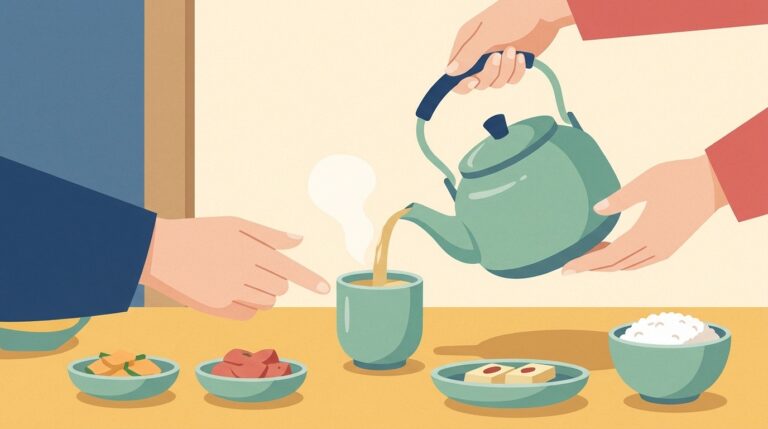
Picture this: You are sitting at a lively K-BBQ restaurant in Seoul with your Korean boss, elder colleagues, or host family. The grill is sizzling with delicious samgyeopsal, laughter fills the air, and suddenly, someone reaches across the table to pour you a drink. You reach out your glass with one hand—and suddenly, the room feels just a tiny bit tense. You notice your Korean friend holding their cup with both hands, slightly bowing their head. In K-dramas, you might have seen characters clutch their elbow or chest whenever a drink is poured. Why all the formality for a simple sip of water or soju?
In Korea, sharing a drink is not just about quenching thirst; it is a heartfelt dance of respect, hierarchy, and bonding. Many of our beginner students tell us they feel anxious about making a cultural blunder at the dinner table. If you’ve ever wondered where to put your hands or what to say when an elder offers you a beverage, take a deep breath. Today, we will transform your dinner table anxiety into effortless social confidence with simple A1 phrases and the golden rule: two hands, zero awkwardness.
Phase 2: 3 Key Expressions
1. 제가 따라 드릴게요. (Jega ttara deurilgeyo.)
- Pronunciation: [Je-ga tta-ra deu-ril-ge-yo] (Sounds like: Je-ga + tara as in guitar + deu-reel-gay-yo)
- Meaning: “I will pour for you” / “Allow me to pour your drink.”
- K-Culture Moment: In workplace K-dramas like Misaeng or King the Land, you’ll see thoughtful junior team members quickly pick up the bottle with both hands to fill their supervisor’s glass while saying this line.
- Editor’s Insight: We use the honorific verb ‘드리다’ (deurida, to give/serve) instead of ‘주다’ (juda). This shows instant polite respect to anyone older or higher in status.
- Situation Spectrum: Casual: 🚫 | Semi-formal: ✅ | Formal: ✅
- 🤔 Think About It: In many Western cultures, pouring your own drink signifies independence. Why do you think Korean society values serving others over serving yourself?
2. 감사합니다, 잘 마시겠습니다. (Gamsahamnida, jal masigesseumnida.)
- Pronunciation: [Gam-sa-ham-ni-da, jal ma-si-get-seum-ni-da] (Sounds like: Gahm-sah-hahm-nee-dah, jahl mah-she-get-soom-nee-dah)
- Meaning: “Thank you, I will drink well.”
- K-Culture Moment: Said right after an elder finishes filling your glass, just before you take your first polite sip.
- Editor’s Insight: Even if you are drinking soda, water, or barley tea, saying this shows immense appreciation for the elder’s hospitality.
- Situation Spectrum: Casual: ⚠️ | Semi-formal: ✅ | Formal: ✅
- 🤔 Think About It: In English, people usually say “Thank you” or “Cheers.” What does declaring “I will drink well” tell us about how Koreans treat shared meals?
3. 한 잔 더 드릴까요? (Han jan deo deurilkkayo?)
- Pronunciation: [Han jan deo deu-ril-kka-yo?] (Sounds like: Hahn jahn duh deu-reel-kkah-yoh?)
- Meaning: “Shall I pour you one more glass?” / “May I get you another cup?”
- K-Culture Moment: During cozy dining scenes in Hospital Playlist, attentive friends gently check each other’s cups before offering another round.
- Editor’s Insight: Remember the cardinal rule: never pour into a full glass. Wait until their cup is nearly empty before asking this question!
- Situation Spectrum: Casual: ⚠️ | Semi-formal: ✅ | Formal: ✅
- 🤔 Think About It: How does paying attention to an empty glass reflect attentiveness rather than intrusion in Korean dining?
Phase 3: Textbook Korean vs Real Korean
Situation 1: Offering water or a beverage to someone older
- 📖 교과서 한국어: 물을 마시겠습니까? (Mureul masigesseumnikka? – “Will you drink water?”)
- 🗣️ 진짜 한국어: 물 드릴까요? (Mul deurilkkayo? – “Shall I get you some water?”)
- 💡 왜 다를까?: Textbook expressions ending in ‘-겠습니까?’ can sound overly robotic or military-like. In real life, native speakers use the gentle, caring ending ‘-ㄹ까요?’ paired with the humble honorific ‘드리다’.
Situation 2: Receiving a drink offer gracefully
- 📖 교과서 한국어: 네, 그것을 주십시오. (Ne, geugeoseul jusipsio. – “Yes, please give that to me.”)
- 🗣️ 진짜 한국어: 네, 감사합니다! (Ne, gamsahamnida! – “Yes, thank you!”)
- 💡 왜 다를까?: Formal imperative commands like ‘주십시오’ can sound stiff and unnatural at a friendly dinner table. A warm smile, two hands holding the glass, and a bright ‘감사합니다’ convey total fluency and respect.
Phase 4: K-Culture Deep Dive & Non-Verbal Manners
4-1. 눈치 (Nunchi) & Gestures
- The Two-Handed Pour: Always grasp the bottle firmly with your right hand. Place your left hand gently under your right wrist, on your forearm, or softly over your heart. Never pour with only your left hand, as single-handed left pours are traditionally associated with solemn ancestral memorial rituals (제사, Jesa).
- The Two-Handed Cup Hold: When an elder pours for you, lift your cup off the table slightly. Cradle the cup with your right hand and support the bottom or side with your left fingertips. Keep your posture slightly bowed.
- The 45-Degree Turn: When taking a sip in front of someone older, gently turn your head and torso 45 degrees away from them, and cover your mouth and glass discreetly with your free hand. Staring directly into an elder’s eyes while gulping is considered rude!
4-2. Cultural Code Analysis
In Korean culture, the dining table is an extension of community life. Sharing food and drinks cultivates 정 (Jeong)—an unspoken emotional bond of affection, warmth, and mutual care. In hit dramas like Business Proposal or Itaewon Class, business deals are struck and deep friendships are forged over team dinners (회식, Hoesik). Serving an elder with two hands signals: “I recognize your life experience, and I honor our shared bond.”
Phase 5: Real-World Roleplay Scenario
Setting: You are dining at a famous Korean barbecue restaurant in Mapo with Manager Kim (김 부장님), a respected senior mentor from your project.
Characters:
* Manager Kim: A warm, generous Korean manager in his 50s.
* You: An enthusiastic beginner learner visiting Seoul for the first time.
- Manager Kim: 오늘 프로젝트 끝내느라 고생 많았어요. 시원하게 사이다 한 잔 해요! (Oneul peurojekteu kkeunnaeneura gosaeng manasseoyo. Siwonhage saida han jan haeyo!)
🎭 Reaches for the cider bottle to pour for you.
“You worked hard wrapping up the project today. Let’s have a refreshing glass of cider!” -
You: 아, 감사합니다! (A, gamsahamnida!)
🎭 Lifting your glass with both hands and slightly bowing your head.
“Ah, thank you!” -
Manager Kim: 자, 듬뿍 따릅니다. 많이 마셔요. (Ja, deumpuk ttareumnida. Mani masyeoyo.)
🎭 Pouring the sparkling soda into your cup with a big smile.
“Here you go, pouring plenty. Drink lots!” -
You: 감사합니다, 잘 마시겠습니다! (Gamsahamnida, jal masigesseumnida!)
🎭 Turning your head slightly to the left side and taking a polite sip while shielding your cup.
“Thank you, I will drink well!” -
Manager Kim: 하하, 고기 맛있게 익었으니 많이 먹어요. (Haha, gogi masitge igeosseuni mani meogeoyo.)
🎭 Places a freshly grilled piece of beef onto your side dish plate.
“Haha, the meat is cooked nicely, so eat lots.” -
You: 부장님, 제가 따라 드릴게요. (Bujangnim, jega ttara deurilgeyo.)
🎭 Picking up the cider bottle with your right hand and supporting your right wrist with your left hand.
“Manager Kim, allow me to pour for you.” -
Manager Kim: 오, 고마워요! 두 손으로 아주 예의 바르게 따르네요! (O, gomawoyo! Du soneuro aju ye-ui bareuge ttareuneyo!)
🎭 Holds his cup with two hands, looking impressed by your etiquette.
“Oh, thank you! You pour so politely with two hands!” -
You: 맛있게 드세요! (Masitge deuseyo!)
🎭 Smiling brightly after filling his glass about 80% full.
“Please enjoy!”
🔀 Interactive Branch Point:
Manager Kim finishes his cup and places it down empty on the table. What do you do?
* Choice A: Pick up the bottle with your right hand, place your left fingers under your right wrist, and ask: 한 잔 더 드릴까요? (Han jan deo deurilkkayo?)
* Feedback [Best]: 100 points! You demonstrated sharp social tact (Nunchi) and pristine physical etiquette. Manager Kim will brag about your manners to everyone!
* Choice B: Grab the bottle with one hand from across the table and pour it quickly without saying anything.
* Feedback [Bad]: Ouch! Single-handed pouring can feel careless or indifferent to elders. Always remember to involve both hands.
* Choice C: Look at the empty glass and wait quietly for him to pour his own drink.
* Feedback [Risk]: Not offensive since you are a foreign guest, but Koreans rarely pour their own drinks (자작). By staying quiet, you miss a golden chance to show warmth!
Phase 6: 10-Second Emotion Shadowing Drill
Practice these lines aloud with the emotional cues and pauses (/):
[😊 공손하고 조심스럽게 / Polite and gentle]
제가 / 따라 드릴게요.
(Je-ga / tta-ra deu-ril-ge-yo.)-
[😋 활기차고 감사한 마음으로 / Cheerful and grateful]
감사합니다, / 잘 마시겠습니다!
(Gam-sa-ham-ni-da, / jal ma-si-get-seum-ni-da!) -
[👀 센스 있게 눈치 보며 / Attentive and caring]
한 잔 더 / 드릴까요?
(Han jan deo / deu-ril-kka-yo?)
Phase 7: K-Culture Mini Dictionary
- 두 손 (Du son) | Noun: Two hands
The foundational physical gesture of respect in Korea. Used when pouring drinks, receiving cups, or handing over payment cards at stores. - 짠 (Jjan) | Exclamation: Cheers!
The sound of clinking glasses. When toasting with an elder, make sure the rim of your glass clinks slightly lower than theirs. - 눈치 (Nunchi) | Noun: Social intuition / Tact
The ability to read the vibe and anticipate others’ needs—such as noticing an elder’s empty glass before they have to ask. - 회식 (Hoesik) | Noun: Company dinner
A traditional after-work meal where colleagues eat, drink, and bond. It is the premier arena for practicing dining etiquette.
Phase 8: Traveler’s Survival Kit
Top 3 Survival Phrases
물 좀 더 주세요.(Mul jom deo juseyo.) – “Please give me some more water.”
Pro Tip: At casual Korean eateries where self-service isn’t marked, say this politely to the restaurant owner (이모님, Imonim).짠!(Jjan!) – “Cheers!”
Pro Tip: Keep it friendly, and remember to lower your glass rim below your host’s glass as a subtle sign of deference.잘 먹었습니다.(Jal meogeotseumnida.) – “I ate well / Thank you for the meal.”
Pro Tip: Always say this to your host or the restaurant staff when standing up from the table.
Editor’s Travel Note
When discovering authentic local restaurants in Seoul, Google Maps can sometimes be inaccurate. Make sure to download the Naver Map app download for Korean travel to find top-rated dining spots and navigate transit smoothly. Also, keep your rechargeable transit card (T-money) handy for the subway ride home!
Phase 9: One Step Deeper (Reflective Thought)
In our hyper-individualized modern world, holding a bottle with two hands might feel unnecessary at first glance. However, in Korean culture, using two hands physically compels you to pause, stop looking at your smartphone, and direct your complete bodily presence toward another human being. It communicates a timeless message: “In this shared second, my attention belongs entirely to you.”
💬 Your Turn: In your home country or family tradition, how do you show respect when sharing a meal with elders or teachers? Do you serve yourselves or serve each other? Share your thoughts in the comments below!
Phase 10: FAQ & Common Mistakes
Q: What should I do if I don’t drink alcohol? Will elders be offended?
A: Not at all! It is completely acceptable to decline alcohol. Simply say politely: 죄송하지만 술을 못 마셔요 (Joesonghajiman sureul mot masyeoyo – “I am sorry, but I cannot drink alcohol”). You can then follow up with: 음료수로 받아도 될까요? (Eumryosuro badado doelkkayo? – “May I receive soda/water instead?”). What matters is the shared gesture of holding the cup with two hands, not the alcohol content!
Q: What if I am left-handed? Must I use my right hand?
A: Historically, single-handed left use was frowned upon, but modern Koreans understand left-handedness. As long as you involve both hands—for example, holding the bottle with your left hand while supporting your wrist or elbow with your right hand—it is considered completely respectful.
Q: Can I pour my own drink if my cup is empty?
A: Try to avoid pouring your own drink (known as 자작, jajak). In Korean dining culture, pouring for yourself can make your dining partners feel like they failed to take care of you! Instead, pour for someone else first; they will almost certainly notice your gesture and return the favor.
🚨 Common Mistakes (흔한 실수)
- Mistake: Pouring with one hand while the other hand rests casually in your pocket.
Correct Action: Bring both hands into the action! Support your wrist or place your hand over your chest. - Mistake: Clinking your glass higher than the elder’s glass during a toast.
Correct Action: Lower your cup rim so it touches just beneath the elder’s cup rim. - Mistake: Drinking head-on while maintaining intense eye contact.
Correct Action: Turn your head slightly to the side, shield your glass with your free hand, and take your sip discreetly.
Phase 11: Action Mission & Engagement
- 🥉 Bronze Mission (Solo Drill): Grab a water bottle and glass at home. Stand before a mirror and practice holding the bottle with your right hand and wrist supported, saying aloud:
제가 따라 드릴게요.(Jega ttara deurilgeyo.) - 🥈 Silver Mission (Social Share): Snap a quick photo or short story of your two-handed pouring gesture and share it with the tag #DailyHangulManners to inspire other learners!
- 🥇 Gold Mission (Real Life): The next time you visit a Korean restaurant or eat with a Korean acquaintance, offer to pour their water or tea using both hands and say:
한 잔 더 드릴까요?(Han jan deo deurilkkayo?). - 🎮 K-Culture Mission: Watch an episode of any slice-of-life K-drama (like Reply 1988 or My Mister). Spot at least two scenes where someone uses two hands at the dining table!
Phase 12: Interactive Quiz Challenge
Test your new table manner superpowers!
Question 1: Scenario Judgment
You are at dinner with your Korean partner’s parents. The father reaches to pour you some barley tea. What is the most polite reaction?
A) Keep your cup flat on the table and say nothing.
B) Lift your cup with both hands, bow your head slightly, and say 감사합니다! (Gamsahamnida!).
C) Wave your hand and take the bottle to pour it yourself.
Question 2: Fill-in-the-Blank
Complete the polite offer:
“제가 _____ 드릴게요.” (I will pour for you.)
A) 먹어 (meogeo)
B) 따라 (ttara)
C) 가 (ga)
Question 3: True or False
When toasting with an elder, it is polite to clink your glass rim higher than theirs. (True / False)
👉 Click here for answers and explanations!
- Question 1 Answer: B
Explanation: Lifting the cup with both hands while offering a respectful thank you is the quintessential Korean dining courtesy. - Question 2 Answer: B (따라 / ttara)
Explanation: ‘따라’ comes from the verb ‘따르다’ (ttareuda, to pour). ‘제가 따라 드릴게요’ means ‘I will pour for you.’ - Question 3 Answer: False
Explanation: Always aim to clink your glass rim slightly lower than the elder’s rim to show deference and humility!
🎬 Watch Our Daily Videos! (Daily Hangul Official Instagram)
Review the expressions you learned in this article with our fun daily short videos! Check out native pronunciation and real-life nuances in action.
- Instagram @dailyhangul_en







