

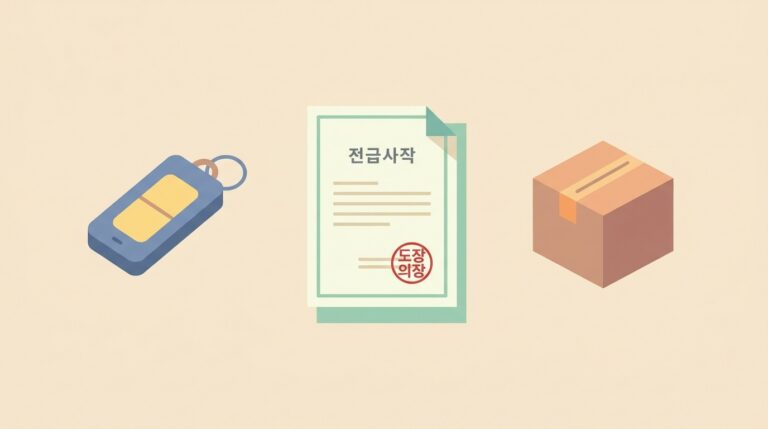
Never Move Out Before Doing This: Protect Your Korean Housing Deposit with Leasehold Registration
Phase 1: 공감 (Story-Immersive Opening)
안녕하세요! 매일한글 에디터입니다.
Imagine this scenario: Your two-year lease in a charming Seoul officetel has finally ended. You’ve packed your last cardboard box, your new apartment is waiting across town, and the moving truck is idling downstairs. But when you text your landlord about returning your 50,000,000 KRW deposit (보증금), you get the dreaded reply: “I don’t have the cash right now. Just move out first, and I’ll send it as soon as the next tenant moves in.”
If you’re like many foreigners living in Korea, your instinctive reaction might be: “Well, I signed a contract, and I have to move to my new place today anyway. I’ll just change my address (전출/전입신고) and wait for the transfer.”
STOP! Do not hand over those keys, and do NOT change your registered address.
In the world of Korean real estate, stepping out of that door and changing your resident registration before receiving your deposit is equivalent to throwing away your financial shield. In Korean housing law, your entire leverage—known as your Opposing Power (대항력) and Priority Repayment Right (우선변제권)—evaporates the very second your official address leaves that property. If your landlord goes bankrupt or the house enters a court auction (경매), you will drop to the back of the creditor line and may never see your money again.
As someone who has guided dozens of international professionals and graduate students through the maze of Korean tenancy disputes, I wrote this practical survival guide to give you the exact legal steps, conversational scripts, and cultural instincts you need to keep your money safe.
Phase 2: 핵심 표현 3선 심층 분석 (Core Expressions Deep Dive)
1. 임차권등기명령 신청해야 해요 (Imchagwon deunggi myeongnyeong sincheonghaeya haeyo)
- Pronunciation: Im-cha-gwon deung-gi myeong-nyeong sin-cheong-hae-ya hae-yo (Sounds like: Eem-chah-gwon doong-gee myung-nyung sheen-chong-hae-yah hae-yo)
- Meaning: Literal: “I must apply for a Leasehold Registration Order.” / Practical: “I am legally securing my claim on this property with the court before I vacate.”
- K-Culture Moment: This is the ultimate “climax line” in legal K-dramas when a tenant fights back against an elusive landlord trying to exploit young renters.
- Editor’s Insight: The 임차권등기명령 (Leasehold Registration Order) is your legal superpower. Once registered on the property’s public deed (등기부등본), you can move out and register your new address without losing your priority claim.
- Situation Spectrum:
- Casual: 🚫 (Too formal/legal for close friends)
- Semi-formal: ⚠️ (Use when discussing serious issues with your landlord: “임차권등기명령 신청할게요.”)
- Formal: ✅ (Standard in court, bank, or real estate office)
- 🤔 Think About It: In many Western countries, security deposits are held in third-party escrow accounts. Why do you think Korea’s system places the burden of public registration directly onto the tenant?
2. 보증금 돌려받기 전까지 전출하면 안 돼요 (Bojeunggeum dollyeobatgi jeonkkaji jeonchulhamyeon an dwaeyo)
- Pronunciation: Bo-jeung-geum dol-lyeo-bat-gi jeon-kka-ji jeon-chul-ha-myeon an dwae-yo (Sounds like: Boh-joong-goom dohl-lyuh-baht-gee jun-kkah-jee jun-chool-hah-myun ahn dway-yo)
- Meaning: Literal: “You must not transfer out before getting your deposit back.” / Practical: “Keep your legal address pinned to this apartment at all costs!”
- K-Culture Moment: Heard frequently from concerned Korean colleagues or real estate YouTubers warning young renters against landlord sweet-talk.
- Editor’s Insight: Notice the word 전출 (Jeonchul), which means moving your registered residential address out of an administrative district. Even if you sleep in a new apartment, your legal residency paperwork must stay put until the money hits your bank account.
- Situation Spectrum:
- Casual: ✅ (“너 보증금 받기 전까지 절대 전출하면 안 돼!”)
- Semi-formal: ✅ (“보증금 반환 전까지는 전출하시면 위험해요.”)
- Formal: ✅ (“임차보증금 반환 완료 시점까지 주민등록 전출을 보류하십시오.”)
- 🤔 Think About It: How does the Korean requirement of tying civil rights to an administrative resident registration (주민등록) differ from residency tracking in your home country?
3. 대항력이랑 우선변제권 날아가요 (Daehangnyeogirang useonbyeonjegwon naragayo)
- Pronunciation: Dae-hang-nyeog-i-rang u-seon-byeon-je-gwon na-ra-ga-yo (Sounds like: Day-hahng-nyu-gee-rahng oo-sun-byun-jay-gwon nah-rah-gah-yoh)
- Meaning: Literal: “Your opposing power and priority repayment right will fly away.” / Practical: “You will lose all your legal leverage and collateral ranking!”
- K-Culture Moment: The vivid verb 날아가다 (to fly away) is used constantly in Korean financial contexts to describe investments, savings, or deposits vanishing overnight.
- Editor’s Insight: 대항력 (Opposing Power) allows you to insist on living in the house against third parties (even new buyers), while 우선변제권 (Priority Repayment Right) guarantees you get paid first from auction proceeds. Both hinge on two anchors: physical possession of the house (점유) and resident registration (전입신고).
- Situation Spectrum:
- Casual: ✅ (“이사 그냥 나가면 우선변제권 다 날아가!”)
- Semi-formal: ✅ (“주소 옮기시면 대항력이랑 우선변제권 날아갑니다.”)
- Formal: ⚠️ (In official legal briefs, use 상실됩니다 [will be lost] instead of 날아갑니다).
- 🤔 Think About It: Notice the emotional weight of using physical metaphors like “flying away” (날아가다) for legal rights in spoken Korean.
Phase 3: 교과서 한국어 vs 진짜 한국어 (Textbook vs. Real-Life Korean)
Situation 1: Telling your landlord you will not leave until the money arrives
- 📖 교과서 한국어 (Textbook):
- 보증금을 반환받지 못하여 주소 이전을 보류하겠습니다. (Bojeunggeumeul banhwanbatji mothayeo juso ijeoneul boryuhagesseumnida. – Since I have not received the deposit return, I will withhold relocating my address.)
- 🗣️ 진짜 한국어 (Real-World):
- 보증금 입금 확인되기 전에는 짐도 주소도 못 빼요. (Bojeunggeum ipgeum hwagindoegi jeoneneun jimdo jusodo mot ppaeyo. – Until the deposit transfer is verified, I cannot move my luggage or my address.)
- 💡 왜 다를까? (Cultural Insight):
- Textbook Korean uses heavy Sino-Korean vocabulary (반환, 보류, 이전). In real negotiations, Koreans state concrete physical realities: 짐도 못 빼고, 주소도 못 뺍니다 (I can’t move luggage or address), asserting firm boundaries.
Situation 2: Warning a friend who plans to pack up and leave
- 📖 교과서 한국어 (Textbook):
- 임차권등기가 완료된 후에 퇴거 절차를 밟으셔야 합니다. (Imchagwondeunggiga wanryodoen hue toegweo jeolchareul balbeusyeoya hamnida. – You must undergo vacating procedures after leasehold registration is completed.)
- 🗣️ 진짜 한국어 (Real-World):
- 등기부등본에 임차권 딱 찍힌 거 눈으로 보고 방 빼! (Deunggibudeungbone imchagwon ttak jjikhin geo nuneuro bogo bang ppae! – Only clear out your room after you see the leasehold right stamped right on the registry with your own eyes!)
- 💡 왜 다를까? (Cultural Insight):
- Natives use sensory expressions like 딱 찍히다 (firmly stamped/registered) and 방을 빼다 (vacate the room) to emphasize that paperwork must be visually verified before physical surrender.
Phase 4: K-Culture 딥다이브 & 비언어적 매너 (Deep Dive & Body Language)
4-1. 눈치 (Nunchi) & Tactical Body Language: Guarding Possession (점유)
- Physical Possession is Law: Under the Korean Housing Lease Protection Act, your rights require 점유 (Jeomyu – physical occupation). If you surrender your digital door lock passcode or clear every item out, the landlord can argue you voluntarily vacated!
- Tactical Tip: If you must start sleeping at your new place, leave a few non-essential personal items (a clothes rack, luggage, or toiletries) inside the old room. Do NOT change the digital passcode or give it to the landlord until the money lands.
- Negotiation Demeanor: When landlords say, “We’ve known each other for two years, don’t you trust me?” do not look down or show hesitation. Maintain steady, polite eye contact, nod slowly, and reply with calm resolve: “법적인 절차라서 어쩔 수 없습니다” (This is legal procedure, so my hands are tied). Frame your firm stance not as personal mistrust, but as standard procedural protocol.
4-2. Cultural Code Analysis: The Jeonse Trap
In Korea, the 전세 (Jeonse) system relies on continuous real estate market liquidity. Landlords often use incoming deposits from new tenants to refund departing ones. When property prices dip or transactions freeze, this chain breaks, leading to widespread deposit disputes. Understanding that this is a structural systemic issue—not just your landlord being individually malicious—will help you detach emotionally and take swift legal action through the court registry without feeling guilty.
Phase 5: 실전 롤플레이 시나리오 (Real-World Roleplay Scenario)
- Setting: Inside the leasing office of an officetel in Mapo-gu, Seoul. Tenant Minho is speaking with the property manager and landlord Mr. Park, who is stalling the deposit return.
- Minho: 🎭 [Politely seated, holding a notebook] 사장님, 오늘 계약 만료일인데 보증금 7천만 원 입금이 아직 안 됐어요. (Sajangnim, oneul gyeyak manlyo-irinde bojeunggeum chilcheonman won ipgeumi ajik an dwaesseoyo. – Mr. Park, today is the lease expiry date, but the 70 million won deposit hasn’t been transferred yet.)
- Mr. Park: 🎭 [Sighs deeply, waving his hand apologetically] 아이고, 미안해요 민호 씨. 요즘 다음 세입자가 안 구해져서 그래. 다음 달 말까지만 기다려 줘요. (Aigo, mianhaeyo Minho ssi. Yojeum daeum se-ipjaga an guhaejeoseo geurae. Daeum dal malkkajiman gidaryeo jwoyo. – Oh dear, I’m sorry Minho. We haven’t found the next tenant yet due to the slow market. Please wait until the end of next month.)
- Minho: 🎭 [Firm, unswayed by the emotional appeal] 저도 오늘 새집 잔금을 치러야 해서 곤란합니다. 오늘 반환이 안 되면 법적 절차를 진행할 수밖에 없어요. (Jeodo oneul saejip jangeumeul chireoya haeseo gonranhamnida. Oneul banhwani an doemyeon beopjeok jeolchareul jinhaenghal subakke eopseoyo. – I also have to pay the balance for my new home today, so this puts me in a tough spot. If it is not returned today, I have no choice but to initiate legal procedures.)
- Mr. Park: 🎭 [Frowning with irritation] 법적 절차라니 섭섭하게! 일단 새집으로 이사 가고 전입신고 먼저 해요. 돈 생기면 바로 쏴줄 테니까. (Beopjeok jeolcharani seopseophage! Ildan saejibeuro isa gago jeonipsingo meonjeo haeyo. Don saenggimyeon baro sswajul tenikka. – Legal procedures? That hurts my feelings! Just move to your new house first and register your new address. I’ll shoot you the money as soon as I have it.)
- Minho: 🎭 [Clear and decisive] 보증금 돌려받기 전에 전출하면 제 대항력이랑 우선변제권이 날아가잖아요. (Bojeunggeum dollyeobatgi jeone jeonchulhamyeon je daehangnyeogirang useonbyeonjegwoni naragajanayo. – If I move my address before receiving the deposit, I lose my opposing power and priority repayment rights.)
- Mr. Park: 🎭 [Defensive] 날아가긴 뭐가 날아가요! 내가 사기꾼인 줄 알아요? (Naragagin mwoga naragayo! Naega sagikkunin jul arayo? – Lose what? Do you think I’m a scammer?)
- Minho: 🎭 [Calmly pulling out a printout of the housing registry] 신뢰의 문제가 아닙니다. 오늘 입금이 안 되면 내일 바로 관할 법원에 임차권등기명령 신청하겠습니다. (Sinroee munjega animnida. Oneul ipgeumi an doemyeon naeil baro gwanhal beobwone imchagwondeunggimyeongnyeong sincheonghagesseumnida. – It is not a matter of trust. If it isn’t deposited today, I will file for a Leasehold Registration Order at the competent court tomorrow.)
- Mr. Park: 🎭 [Speechless, realizing Minho knows his legal rights] …아, 잠깐만요. 은행 대출이라도 알아볼 테니 오늘 오후까지 시간 좀 줘요. (…Ah, jamkkanmanyo. Eunhaeng daechurirado arabol teni oneul ohukkaji sigan jom jwoyo. – …Ah, hold on. Let me look into getting a bank loan, just give me until this afternoon.)
🔀 인터랙티브 분기점 (Interactive Decision Point)
If Mr. Park insists that you give him the digital door lock passcode before you leave, what do you do?
* Option A: Give him the passcode since you feel uncomfortable arguing. (❌ BAD: Surrendering the passcode forfeits physical possession [점유], weakening your legal defense if contested.)
* Option B: Refuse to give the code and refuse to hand over keys until the leasehold registration is legally confirmed on the public deed. (✅ BEST: You preserve both physical possession and civil leverage until court registration is complete.)
* Option C: Pack up everything, move your resident registration to the new apartment today, and sue him later. (⚠️ RISK: If the property is auctioned, you lose your priority creditor rank and risk forfeiting your entire deposit.)
Phase 6: 10초 감정 섀도잉 드릴 (10-Second Emotion Shadowing Drill)
Master these three lines with the exact emotional intonation native speakers use during tenancy conflicts:
[😤 단호하고 차분하게 / Firm and calm]- 보증금 입금 확인되기 전까지는 / 짐도 주소도 못 뺍니다.
- Bojeunggeum ipgeum hwagindoegi jeonkkajineun / jimdo jusodo mot ppaemnida.
- (Pause at “/” and lower your tone firmly at the end).
[🚨 다급하고 명확하게 / Urgent and clear]- 주소 그냥 빼시면 안 돼요! / 대항력이랑 우선변제권 다 날아가요!
- Juso geunyang ppaesimyeon an dwaeyo! / Daehangnyeogirang useonbyeonjegwon da naragayo!
- (Stress “그냥” and “다 날아가요” with high warning energy).
[🛡️ 결의에 찬 어조로 / Resolute and official]- 내일 바로 / 법원에 임차권등기명령 신청 접수하겠습니다.
- Naeil baro / beobwone imchagwondeunggimyeongnyeong sincheong jeopsuhagesseumnida.
- (Deliver with an unwavering, professional cadence).
Phase 7: K-Culture 미니 사전 (Core Legal Vocabulary)
- 대항력 (Daehangnyeok – Opposing Power):
- The legal power granted to a tenant who has completed physical move-in (인도) and address registration (전입신고). It lets you assert your lease against any party, including auction buyers.
- 우선변제권 (Useonbyeonjegwon – Priority Repayment Right):
- The right to receive payment from the proceeds of a court auction ahead of junior creditors. Acquired by combining Opposing Power with a 확정일자 (Fixed Date stamp) on your lease.
- 임차권등기명령 (Imchagwon deunggi myeongnyeong – Leasehold Registration Order):
- A court order allowing an unpaid tenant to record their leasehold right directly onto the building’s public land registry (등기부등본). Once stamped, you can move out and change addresses while keeping your priority rights intact.
- 배당요구 (Baedang yogu – Demand for Dividend / Distribution Claim):
- The formal filing in an auction court asserting that you, as an unpaid creditor or tenant, demand your share of the auction sale proceeds before the court distribution deadline.
Phase 8: 여행자 & 거주자를 위한 생존 키트 (Survival Kit)
Survival Expressions TOP 3
- 확정일자 어디서 받아요? (Hwakjeong-ilja eodiseo badayo? – Where do I get my Fixed Date stamp?)
- Pro Tip: Get this immediately at the local Community Service Center (주민센터) the moment you sign your lease contract!
- 등기부등본 열람해 볼 수 있을까요? (Deunggibudeungbon yeolramhae bol su isseulkkayo? – Could I inspect the certified copy of the property register?)
- Pro Tip: Always inspect the real estate registry on the day you sign, the day you move in, and the day you move out.
- 보증금 반환 확약서 써 주세요. (Bojeunggeum banhwan hwagyakseo sseo juseyo. – Please sign a written commitment stating the exact date of deposit return.)
- Pro Tip: Having the landlord commit to a hard refund date in writing strengthens your case during court disputes.
Editor’s Living Note
If you find yourself in an unreturned deposit dispute, do not panic. Download and bookmark the official 대한민국 법원 전자소송 (Supreme Court Electronic Litigation System) where you can file an 임차권등기명령 online without paying millions in legal fees. For urgent foreign resident legal assistance, contact the Seoul Global Center or dial 132 for the Korea Legal Aid Corporation (대한법률구조공단).
Phase 9: “한 발 더 깊이” (Deep Cultural Reflection)
In Western real estate, transactions are strictly transactional, relying on institutional escrow. In Korea, housing contracts have historically been grounded in personal credit (신용) and communal trust within the neighborhood. However, rapid urban growth and volatile property markets have strained this trust, leading to disputes that can devastate unsuspecting foreign residents.
Asserting your legal rights by saying “임차권등기명령 신청하겠습니다” is not being aggressive or disrespectful. It is adapting to the contemporary reality of Korean society where legal precision protects both parties.
💬 Your Turn: Have you or a friend ever experienced housing disputes or deposit delays while living abroad? How does deposit protection work in your home country? Share your stories in the comments below!
Phase 10: FAQ & 오해 방지 (FAQ Schema)
Q: Can I apply for a Leasehold Registration Order (임차권등기명령) before my lease contract officially ends?
A: No. You can only file for this order after your contract has officially expired and the landlord has failed to return your deposit. However, you must notify your landlord that you do not intend to renew (계약 해지 통보) at least 2 to 6 months before the expiry date via recorded phone call, text, or content-certified mail (내용증명).
Q: Can I move out immediately after submitting the application at the court?
A: Absolutely not! Submitting the paperwork is not enough. You must wait until the court reviews your petition, issues the order, and the registry office physically notes the leasehold right on the certified real estate register (등기부등본). This usually takes 1 to 2 weeks. Moving before it appears on the register will void your protection.
Q: Who pays the costs for filing the Leasehold Registration Order?
A: By law, the tenant can claim all expenses incurred during the leasehold registration order process—including court fees, revenue stamps, and even registration taxes—directly from the landlord who failed to return the deposit.
🚨 흔한 실수 (Common Mistakes) 경고판
- Mistake 1: Handing over the door passcode and moving to a new apartment because the landlord “promised” payment next week.
- Correct Action: Keep possession of the room and keep your address registered until the money enters your bank account or the leasehold right is registered.
- Mistake 2: Assuming that having a signed contract alone protects you in a court auction.
- Correct Action: A contract alone does nothing against creditors. You must hold Opposing Power (점유 + 전입신고) plus a Fixed Date (확정일자).
- Mistake 3: Not verifying the property registry (등기부등본) before moving out.
- Correct Action: Always pull a fresh registry record from the court website to check for recent mortgage foreclosures (근저당권) or auction seizures (가압류).
Phase 11: 액션 미션 & 참여 유도 (Action Missions)
- 🥉 Bronze Mission (Solo Practice): Read the Phase 6 Shadowing lines aloud 5 times until you can pronounce “임차권등기명령” smoothly in under 3 seconds.
- 🥈 Silver Mission (Community Share): Check your current lease contract. Confirm whether you have a 확정일자 (Fixed Date stamp) stamped on it, and share a photo of where you keep your emergency legal documents in our Daily Hangul study group.
- 🥇 Gold Mission (Real-Life Application): Search your current Korean apartment on the Internet Supreme Court Registry portal (인터넷등기소) and pull up your building’s current deed to inspect its creditor status.
- 🎮 K-Culture Mission: Watch an episode of a real estate or law-themed drama (like Law School or Because This Is My First Life) and spot whenever characters discuss security deposits (보증금) or moving out (방 빼다)!
Phase 12: 인터랙티브 퀴즈 챌린지 (Interactive Quiz Challenge)
Question 1: Situation Judgment
Sarah’s lease ended yesterday. Her landlord says he has no cash and asks her to vacate today so he can renovate the apartment for a new tenant. Sarah has already paid the down payment on her new place. What should she do?
* A) Pack her bags, change her address immediately, and wait for the landlord’s transfer.
* B) Give the keys to the landlord, leave her furniture, and move to her new apartment.
* C) Maintain physical possession, keep her registered address, and apply for a Leasehold Registration Order (임차권등기명령).
Question 2: Fill-in-the-Blank
To maintain “Opposing Power” (대항력) in Korea, a tenant must maintain both physical possession (____) and resident registration (____).
Question 3: True / False
“Once you submit your application for a Leasehold Registration Order at the district court, you can legally change your registered address on the very same day.” (True / False)
👉 Click here to reveal the answers and explanations!
- Answer 1: C (Sarah must protect her Opposing Power and Priority Repayment Right. Changing her address or surrendering the keys before leasehold registration is completed will strip her of legal protections).
- Answer 2: 점유 (Jeomyu – physical possession) / 전입신고 (Jeonipsingo – address registration).
- Answer 3: False (You must wait until the court decision is officially recorded on the public deed [등기부등본], which takes around 1–2 weeks, before you change your address).
🎬 Watch Our Daily Videos! (Daily Hangul Official Instagram)
Review the expressions you learned in this article with our fun daily short videos! Check out native pronunciation and real-life nuances in action.
- Instagram @dailyhangul_en







