

Master the Korean ㅂ (b/p) Sound: Why 바지 (Baji) Confuses Every Beginner
Phase 1: Empathy & Storytelling Opening
안녕하세요! 매일한글 에디터입니다. (Hello! It’s your Daily Hangul editor.)
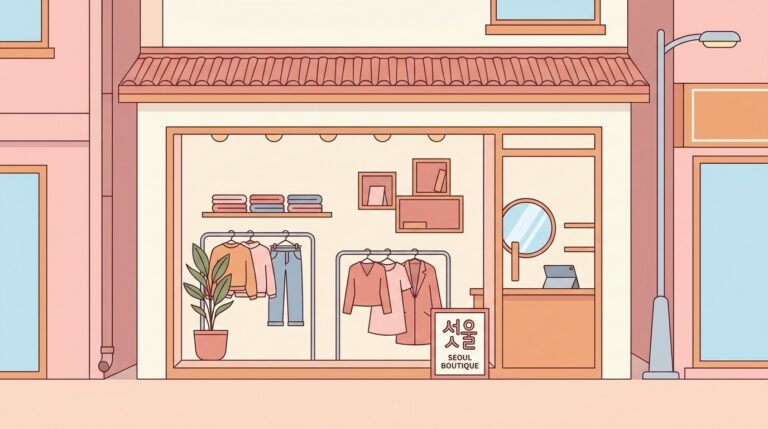
Picture this: You are walking down the vibrant streets of Hongdae in Seoul. Indie synth-pop drifts from open shop doors, stylish college students pass by rocking flawless wide-leg streetwear, and you spot the ultimate pair of relaxed trousers hanging outside a boutique. Your heart races. You spent the previous evening practicing basic Korean on your flight. You clear your throat, approach the shop owner, point at the rack, and say: “Paji?” Or was it “Baji”?
The shopkeeper blinks for a split second before smiling kindly. But inside, your brain goes into full reboot mode: “Wait, is ㅂ a ‘B’ or a ‘P’? Why did my language app say it was ‘B’, but my favorite K-Pop idol sounds like they are saying ‘P’?”
If you have ever felt trapped in the phonological Bermuda Triangle between the English ‘B’ and ‘P’, take a deep breath. Over the past decade coaching hundreds of global learners, I have watched almost everyone hit this exact same wall. Korean sounds do not map cleanly onto English letters. In this guide, we are going to unlock the secret mechanics behind the consonant ㅂ using one of Korea’s most stylish everyday words: 바지 (baji – pants). By the end of this read, you won’t just pronounce it like a Seoul local; you’ll know how to shop, try clothes on, and navigate boutique etiquette with zero awkwardness!
Phase 2: Core Expressions Breakdown
1. 바지 (Baji)
- Pronunciation: [baji] (Think of a soft ‘b’ as in ‘basket’, not an explosive ‘b’ as in ‘boy’)
- Meaning: Literal: Pants / Real Nuance: Any pair of trousers, slacks, or jeans
- K-Culture Moment: You’ll hear idol dance choreographers shout, “Look at how the lines of the 바지 flow during this turn!” in K-Pop practice studio videos.
- Editor’s Insight: English ‘B’ requires vocal cord vibration before your lips open. Korean ‘ㅂ’ at the start of a word is voiceless and soft—your lips gently pop open without pushing heavy air!
- Situation Spectrum: Casual: ✅ | Semi-formal: ✅ | Formal: ✅
- 🤔 Think About It: In English, “pat” and “bat” are two completely distinct words based on voicing. Why do you think Korean classifies sounds by breath tension rather than vocal cord buzzing?
2. 이거 얼마예요? (Igeo eolmayeyo?)
- Pronunciation: [ee-guh eol-mah-ye-yo] (Rhymes roughly with “e-girl call my day-o” said smoothly)
- Meaning: Literal: How much is this? / Real Nuance: “Excuse me, could you let me know the price of this item?”
- K-Culture Moment: Seen constantly in K-Vlogs when travelers visit Dongdaemun night market stalls or bustling underground fashion malls.
- Editor’s Insight: Pair this phrase with an open palm gesture toward the garment rather than a single pointing index finger to instantly elevate your politeness.
- Situation Spectrum: Casual: ⚠️ (drop the ‘yo’ only with close friends) | Semi-formal: ✅ | Formal: ✅
- 🤔 Think About It: Korean sentences frequently drop the subject (like “for me” or “to you”) because context is shared socially. How does that compare to your native language?
3. 입어봐도 돼요? (Ibeobwado dwaeyo?)
- Pronunciation: [ee-beo-bwa-do dwae-yo] (Soft transition: ee-buh-bwah-doh dway-yoh)
- Meaning: Literal: Even if I try putting it on, is it okay? / Real Nuance: “May I try this on in the fitting room?”
- K-Culture Moment: Classic K-Drama shopping montage where the protagonist emerges from the dressing room while dramatic music plays.
- Editor’s Insight: Notice the middle ㅂ in 입어! Here, between vowels, ㅂ naturally softens into a warm English ‘B’ sound. Always ask this before trying on items in Korean boutiques!
- Situation Spectrum: Casual: ⚠️ | Semi-formal: ✅ | Formal: ✅
- 🤔 Think About It: Why does Korean grammar formulate polite requests around asking permission (“is it permissible if…”) rather than direct statements like “I want to try this”?
Phase 3: Textbook Korean vs. Real Korean
Situation 1: Expressing interest in buying a pair of pants
- 📖 교과서 한국어 (Textbook): 바지를 사고 싶습니다. (Baji-reul sago sipseumnida.) — “I desire to purchase trousers.”
- 🗣️ 진짜 한국어 (Real Life): 이 바지 있어요? (I baji isseoyo?) — “Do you have these pants?”
- 💡 왜 다를까? (Why the difference?): In real Korean stores, stating your internal desires formally sounds like a robot reading a script. Native speakers casually confirm item availability or size first.
Situation 2: Asking for the total price at checkout
- 📖 교과서 한국어 (Textbook): 가격이 얼마입니까? (Gagyeog-i eolmaimnikka?) — “What is the monetary price?”
- 🗣️ 진짜 한국어 (Real Life): 이거 얼마예요? (Igeo eolmayeyo?) — “How much is this one?”
- 💡 왜 다를까? (Why the difference?): The “-ㅂ/습니까” ending is reserved for military, TV broadcasting, or ultra-formal corporate settings. Using “-요” (-yo) provides the perfect blend of friendly warmth and social respect.
Phase 4: K-Culture Deep Dive & Non-Verbal Manners
4-1. 눈치 (Nunchi) & The Dressing Room Ritual
When shopping in Korean boutiques in areas like Seongsu or Hongdae, your body language speaks before your Hangul does:
* The Shoe Border: Look at the fitting room floor. If there is a raised wooden step or a fabric mat outside the curtain, take your shoes off before stepping inside. Walking onto a dressing room floor with street shoes is considered a cultural faux pas.
* The Two-Hand Handshake for Objects: When taking pants from a store employee or handing your credit card over, always hold the item with both hands, or support your right wrist lightly with your left hand. This physical micro-habit instantly shows respect.
4-2. Culture Code: The “핏 (Fit)” Obsession in Korean Fashion
Koreans rarely talk about clothes just being “pretty.” The magic word is 핏 (Pit – Fit). Whether it is an oversized wide-fit trouser (와이드 팬츠) or straight-cut denim, the way fabric drapes around shoes is celebrated in modern street culture. When you test your 바지 (baji) in front of the full-length mirror, nodding and murmuring “핏이 예쁘다” (Pisi yeppeuda – The silhouette looks gorgeous) will make any shop curator smile with pride.
Phase 5: Real-World Roleplay Scenario
Setting: A minimalist indie boutique in Yeonnam-dong. Racks of muted tone apparel line raw concrete walls. The store manager, Minho, adjusts an oversized blazer on a mannequin.
- Turn 1 (Minho): 어서 오세요! 편하게 보세요. (Eoseo oseyo! Pyeonhage boseyo.)
Translation: Welcome! Please feel free to look around.
🎭 Action: Welcomes you with a warm 15-degree bow and friendly eye contact. - Turn 2 (Learner): 안녕하세요! 저기… 이 바지 있어요? (Annyeonghaseyo! Jeogi… i baji isseoyo?)
Translation: Hello! Excuse me… do you have these pants?
🎭 Action: Points with an open hand toward a pair of relaxed black trousers. - Turn 3 (Minho): 네! 요즘 제일 잘나가는 바지예요. 사이즈 몇 찾으세요? (Ne! Yojeum jeil jalnaganeun bajiyeyo. Saijeu myeot chajeuseyo?)
Translation: Yes! Those are our most popular pants these days. What size are you looking for?
🎭 Action: Gently takes the hanger off the rack and presents the item. - Turn 4 (Learner): 미디엄(M) 사이즈요. 입어봐도 돼요? (Midieom saijeuyo. Ibeobwado dwaeyo?)
Translation: Medium size, please. May I try it on?
🎭 Action: Tilts head slightly, gesturing politely toward the dressing room. - Turn 5 (Minho): 그럼요! 피팅룸 저쪽이에요. 신발 벗고 들어가시면 돼요. (Geureomyo! Pitingrum jeojjok-ieyo. Sinbal beotgo deureogasimyeon dwaeyo.)
Translation: Of course! The fitting room is that way. You can take off your shoes and step inside.
🎭 Action: Draws the linen curtain open and points toward the interior floor mat. - Turn 6 (Learner): 와, 핏이 진짜 예뻐요! 이거 얼마예요? (Wa, pisi jinjja yeppeoyo! Igeo eolmayeyo?)
Translation: Wow, the fit is really pretty! How much is this?
🎭 Action: Steps out, checking the mirror while smiling in satisfaction. - Turn 7 (Minho): 마음에 드셔서 다행이네요! 삼만 팔천 원이에요. (Maeume deusyeoseo dahaeng-ineyoyo! Sam-man pal-cheon won-ieyo.)
Translation: I’m glad you like them! It is 38,000 won.
🎭 Action: Walks over to the counter and taps the POS terminal. - Turn 8 (Learner): 카드로 할게요. 감사합니다! (Kadeuro halgeyo. Gamsahamnida!)
Translation: I’ll pay by credit card. Thank you!
🎭 Action: Hands the card over using both hands with a gentle nod.
🔀 Interactive Decision Point
When Minho tells you the price at checkout, how do you hand over your credit card?
* Choice A: Hold the card with both hands, bow your head slightly, and say “감사합니다” (Gamsahamnida).
* Choice B: Fling the card onto the counter with one hand while typing on your smartphone.
* Choice C: Say “너무 비싸요! 깎아주세요!” (Too expensive! Cut the price!) loudly in a fixed-price boutique.
Feedback Check:
* Selection A [BEST]: Perfect Korean etiquette! Handing payment with two hands conveys instant humility and gratitude.
* Selection B [BAD]: Tossing cards is considered deeply dismissive and rude in Korea. Always hand it directly or place it gently.
* Selection C [RISK]: Haggling in modern urban designer boutiques or standard retail stores is considered awkward and inappropriate.
Phase 6: 10-Second Emotional Shadowing Drill
Read these out loud! Focus on the rhythm slashes (/) and embody the bracketed emotion:
[😊 설레고 조심스럽게 / Hesitant & Excited]
저기요, / 이 바지 / 입어봐도 돼요?
(Jeogiyo, / i baji / ibeobwado dwaeyo?)-
[✨ 거울 보며 찐 감탄 / Genuine Amazement at the Mirror]
와! / 핏이 / 진짜 예뻐요!
(Wa! / pisi / jinjja yeppeoyo!) -
[🤝 매너 있고 산뜻하게 / Polite & Crisp]
이걸로 / 할게요. / 계산해 주세요!
(Igeollo / halgeyo. / Gyesanhae juseyo!)
Phase 7: K-Culture Mini Dictionary
- 바지 (Baji) | Pants / Trousers
The root noun for lower-body clothing. You’ll see it combined in words like 청바지 (cheongbaji – blue jeans) and 반바지 (banbaji – shorts, literally ‘half-pants’). - 핏 (Pit) | Fit / Silhouette
Borrowed from English “fit”, this is used across Korean social media fashion posts: “오늘 바지 핏 대박!” (Today’s pants fit is insane!). - 피팅룸 (Piting-rum) | Fitting Room
The phonetic Hangul for dressing room. Look for signs near the back of clothing stores with this exact label. - 세일 (Se-il) | Sale / Discount
The universal traveler word. When you see big red signs saying “세일 중” (Sale in progress) in underground subway stations, get ready for bargains!
Phase 8: Traveler’s Survival Kit
Survival Expressions TOP 3
- 1. 다른 사이즈 있어요? (Dareun sa-i-jeu isseoyo?)
Do you have a different size?
Pro Tip: Use this when the medium on the rack feels a bit snug. - 2. 거울 어디 있어요? (Geoul eodi isseoyo?)
Where is the mirror?
Pro Tip: Great for tiny shops where mirrors are hidden behind garment pillars. - 3. 영수증은 버려주세요. (Yeongsujeung-eun beoryeojuseyo.)
Please discard the receipt.
Pro Tip: Korean shop clerks will routinely ask if you want paper receipts. Saying this saves paper!
Editor’s Travel Note
When hunting for unique fashion spots in Seoul, ditch standard Western navigation tools. Download the Naver Map navigation application to locate indie shops in tricky alleyways across Seongsu and Yeonnam. Also, remember that while credit cards are accepted in 99% of retail boutiques, keeping small 10,000 KRW bills on hand in massive underground shopping centers (like Goto Mall at Express Bus Terminal) can sometimes snag you an extra 10% cash discount!
Phase 9: “One Step Deeper” (Cultural Reflection)
In English-speaking retail environments, friendliness is often expressed through casual familiarity: “Hey, how’s it going, man?” In Korea, warmth is built on the foundation of 존중 (Jonjung – Mutual Respect). Adding honorifics like -요 (-yo) and using physical manners like the two-handed exchange aren’t cold barriers; they are social cushions designed to ensure that both the customer and the hard-working worker feel valued and protected within the community.
💬 Your Turn: When you listen to K-Pop or watch K-Dramas, did the consonant ㅂ sound more like an English ‘B’ or ‘P’ to you? Drop your thoughts and experiences in the comments below!
Phase 10: FAQ & Common Mistakes
Q: Why does ㅂ sound like ‘P’ at the beginning of 바지, but like ‘B’ in the middle of 입어봐요?
A: In Korean phonology, ㅂ is an unvoiced, unaspirated bilabial stop when it starts a word. Because English speakers expect vocal cords to vibrate for ‘B’, an unvocalized starting sound hits our ears as an English ‘P’. However, when ㅂ sits between two vowels (like in ‘이 바지’ or ‘입어’), the vocal cords are already vibrating, naturally turning it into a soft English ‘B’ sound!
Q: Can I use the word 바지 for both men’s and women’s clothing?
A: Yes, absolutely! 바지 (baji) is a gender-neutral term covering all pants, from unisex sweatpants to bespoke trousers.
Q: Is it okay to bargain for clothes everywhere in Seoul?
A: No. Haggling is only customary in traditional wholesale markets (such as Namdaemun or parts of Dongdaemun Wholesale). If you are in shopping malls, department stores, or street boutiques with clear price tags, prices are completely fixed.
🚨 Common Mistakes Warning Board
- Mistake 1: Exploding the initial ㅂ with a heavy puff of air (“PAJI!”).
Correct Action: Hold a slip of paper 2 inches from your lips. Saying 바지 correctly should barely move the paper. If the paper flies violently, you are pronouncing the aspirated letter ㅍ (P) instead of ㅂ! - Mistake 2: Walking into fitting rooms with muddy street sneakers.
Correct Action: Always pause at the curtain threshold. If there is a floor step or slipper tray, slip out of your shoes first. - Mistake 3: Handing credit cards over with one hand tossed carelessly.
Correct Action: Present your card gently using both hands or resting your left fingertips on your right forearm.
Phase 11: Action Missions & Community
- 🥉 Bronze Mission (Solo Practice): Stand in front of your mirror with a tissue held loosely before your lips. Pronounce 바지 (baji) 5 times while ensuring the tissue stays still!
- 🥈 Silver Mission (Social Share): Snap a quick photo of your favorite pair of trousers at home, post it to your Instagram story, and caption it: “오늘의 바지 (Today’s pants) #DailyHangul”.
- 🥇 Gold Mission (Real-Life Test): Next time you visit a Korean store, restaurant, or practice with a native tutor, use “이거 얼마예요?” with proper two-handed gestures!
- 🎮 K-Culture Mission: Watch the dance practice video of your favorite K-Pop group. Pay attention to what kind of 바지 (baji) they are wearing—is it 와이드 바지 (wide pants) or 트레이닝 바지 (sweatpants)?
Phase 12: Interactive Quiz Challenge
1. Situation Judgment: You found a gorgeous pair of jeans in an Ewha boutique and want to know if you can try them on. What should you say?
* A) 바지 먹어요? (Baji meogeoyo?)
* B) 입어봐도 돼요? (Ibeobwado dwaeyo?)
* C) 피팅룸 가세요. (Pitingrum gaseyo.)
2. Fill in the Blank:
“Excuse me, how much are these pants?” -> “이 __ 얼마예요?”
Hint: The word for pants starts with ㅂ!
3. True or False:
In Korean, the consonant ㅂ produces an explosive puff of breath just like the English letter “P” in “Peter”. (True / False)
👉 Click here to reveal the answers and explanations!
- Answer: B) 입어봐도 돼요? (Ibeobwado dwaeyo?)
Explanation: Option A means “Do you eat pants?” and Option C rudely commands the shopkeeper to go to the fitting room! - Answer: 바지 (Baji)
Explanation: Combine ㅂ + ㅏ = 바, ㅈ + ㅣ = 지! - Answer: False
Explanation: ㅂ is an unaspirated consonant. Pushing out a strong burst of air turns it into the letter ㅍ (P)! Keep your lips relaxed and breath gentle.
🎬 Watch Our Daily Videos! (Daily Hangul Official Instagram)
Review the expressions you learned in this article with our fun daily short videos! Check out native pronunciation and real-life nuances in action.
- Instagram @dailyhangul_en







