

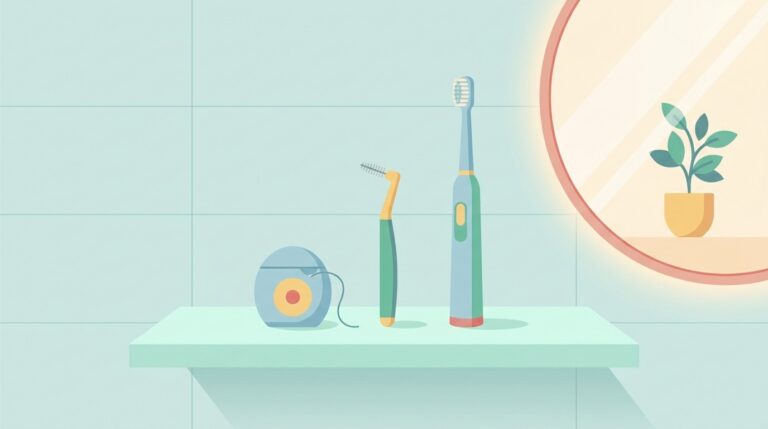
Master Korean Dental Care: Floss, Brushes, and Gum Health
Phase 1: 공감 (Story Immersion Opening)
안녕하세요! 매일한글 에디터입니다. (Hello! I’m your Daily Hangul editor.)
Have you ever walked into an office or university restroom in Seoul around 12:40 PM? If you have, you were probably greeted by an astonishing sight: ten people lined up side by side in business attire, vigorously brushing their teeth while casually scrolling through their phones! In Korea, keeping your teeth clean right after meals is almost a shared civic duty. From pre-schoolers to CEO boardroom members, everyone carries an aesthetic little toothbrush kit (chiyak-chitsol sete).
However, things get intimidating when you actually have to sit in a dentist’s chair in Korea. You’re lying back under intense overhead lights, the dental hygienist is holding a tiny metal mirror, and suddenly you hear medical words buzzing around your head. When your gums feel sore and the hygienist asks about your flossing habits, freezing up is completely natural. Many of our A2 learners tell us, “I knew how to say my tooth hurts, but I had no idea how to explain that my gums bleed when I brush, or understand when they recommended interdental brushes!”
Don’t worry. This guide is crafted directly from real clinical situations and student experiences. By the end of this lesson, you will be able to express your gum concerns, discuss daily dental tools like dental floss (chisil) and interdental brushes (chiganchitsol), and navigate your next Korean dental checkup with effortless confidence!
Phase 2: 핵심 표현 3선 심층 분석 (Top 3 Core Expressions)
1. 양치질할 때 치간칫솔과 치실을 같이 쓰면 잇몸 건강에 좋아요.
- Pronunciation: Yangchijilhal ttae chiganchitsolgwa chisireul gachi sseumyeon inmom geongange joayo.
(Sound Metaphor: Start with ‘Yang-chi’ like a brisk snap, ‘chigan-chitsol’ sounds like ‘chic-an-chit-soul’, and ‘in-mom’ rhymes with ‘tin mom’.) - Meaning: “When you brush your teeth, using interdental brushes and dental floss together is good for gum health.” (Literal: Tooth-brushing time-at, interdental-brush and dental-floss together if-use, gum health-to is-good.)
- K-Culture Moment: You’ll hear this exact caring phrase from friendly dental hygienists in Seoul or during Korean morning health talk shows (Achim Madang), where medical doctors emphasize preventive self-care.
- Editor’s Insight: The connector ~을/를 같이 쓰면 (~eul/reul gachi sseumyeon) means “if you use them together.” Koreans prize preventative health (yebang), and healthcare pros love reinforcing good daily habits with this encouraging tone.
- Situation Spectrum: Casual: ⚠️ | Semi-formal: ✅ | Formal: ✅
- 🤔 Think About It: In many Western countries, dentists ask direct diagnostic questions (“Do you floss daily?”). In Korea, advice is often framed softly as “doing this together brings health” (~에 좋아요) rather than a rigid command. How does this softer approach change your feelings toward dental visits?
2. 양치할 때 잇몸에서 피가 조금 나요.
- Pronunciation: Yangchihal ttae inmomeseo piga jogeum nayo.
(Sound Metaphor: ‘In-mom-eh-seo’ feels like humming ‘in-mom-s-oh’, and ‘pee-ga’ sounds exactly like the English letter ‘P’ plus ‘gah’.) - Meaning: “My gums bleed a little when I brush my teeth.” (Literal: Brushing when, gums-from blood a little comes out.)
- K-Culture Moment: Seen frequently in K-Dramas where a busy character overworks, skips sleep, and complains to a friend in the office bathroom while spitting pink foam into the sink.
- Editor’s Insight: Notice that Korean uses the verb 나다 (nada – to emerge/come out) with blood: 피가 나요 (piga nayo). Adding 조금 (jogeum – a little) softens your statement so you don’t sound overly alarmed, keeping it natural for mild bleeding.
- Situation Spectrum: Casual: ✅ | Semi-formal: ✅ | Formal: ✅
- 🤔 Think About It: Instead of saying “My gums are bleeding” (passive/state), Korean literally states “Blood comes out from the gums.” Notice how Korean often describes bodily sensations as natural occurrences emerging from within.
3. 치실을 꼭 써야 하나요?
- Pronunciation: Chisireul kkok sseoya hanayo?
(Sound Metaphor: Emphasize ‘kkok’ with a tight, crisp double ‘k’ like ‘cork’ without the ‘r’.) - Meaning: “Do I really have to use dental floss?” (Literal: Floss definitely must-use is-it-required?)
- K-Culture Moment: Used by comedic variety show stars who confess their mild laziness to dentists, prompting dramatic gasps from the dental staff.
- Editor’s Insight: The adverb 꼭 (kkok – surely/must) paired with ~해야 하나요? (~haeya hanayo? – must I do…? ) expresses that relatable hesitation we all feel when an expert prescribes an extra step in our bedtime routine.
- Situation Spectrum: Casual: ⚠️ | Semi-formal: ✅ | Formal: ✅
- 🤔 Think About It: Does asking “Must I?” feel confrontational in your native language? In Korean, phrasing it with ~하나요? keeps it polite, curious, and humble!
Phase 3: 교과서 한국어 vs 진짜 한국어 (Textbook vs. Real Korean)
Situation 1: The Dentist Advising Preventative Tools
- 📖 교과서 한국어: “치주 질환 예방을 위해 치간칫솔을 사용하십시오.” (Chiju jilhwan yebangeul wihae chiganchitsoleul sayonghasipsio. – Please utilize interdental brushes for the prevention of periodontal diseases.)
- 🗣️ 진짜 한국어: “양치할 때 치간칫솔이랑 치실 꼭 같이 써 보세요!” (Yangchihal ttae chiganchitsol-irang chisil kkok gachi sseo boseyo! – When brushing, make sure to try using an interdental brush and floss together!)
- 💡 왜 다를까?: Real dentists talk like supportive life coaches rather than medical textbooks. They use ~해 보세요 (~hae boseyo – try doing) to make instructions feel doable rather than clinical.
Situation 2: Telling the Hygienist About Sore Gums
- 📖 교과서 한국어: “잇몸에 출혈 및 통증이 발생합니다.” (Inmome chulhyeol mit tongjeungi balsaenghamnida. – Hemorrhage and pain occur in my gingiva.)
- 🗣️ 진짜 한국어: “양치할 때 잇몸이 좀 붓고 피가 나요.” (Yangchihal ttae inmomi jom butgo piga nayo. – When I brush, my gums are a bit swollen and bleed.)
- 💡 왜 다를까?: In real clinics, conversational descriptors like 붓다 (butda – to swell) and 피가 나다 (piga nada – to bleed) describe symptoms far more clearly than Sino-Korean medical jargon.
Phase 4: K-Culture 딥다이브 & 비언어적 매너 (Culture & Manners)
4-1. 눈치 (Nunchi) & Clinic Body Language
- The Raised Left Hand: At Korean dental clinics, you don’t need to try speaking while dental tools are in your mouth. Doctors will explicitly instruct you: “아프시면 왼손을 드세요” (Apeusimyeon oensoneul deuseyo – If it hurts, raise your left hand). Raising your left hand gently is the universal, polite cue to pause.
- Covering Your Mouth (Ip Garigi): When talking to the dentist before you recline on the chair, Koreans instinctively cup a hand lightly in front of their mouth when speaking closely out of considerate courtesy (baeryeo).
4-2. Cultural Code: The Office Toothbrush Culture
In Korea, brushing teeth after every single meal is second nature. This is rooted in the famous 3·3·3 Rule (Sam-sam-sam beopchik): brush 3 times a day, within 3 minutes of eating, for at least 3 minutes! High schools, universities, and corporate offices have dedicated toothbrush sterilizers in breakrooms, and Olive Young stores feature an entire aisle of micro-sized interdental brushes, tongue scrapers, and portable UV sanitizers.
Phase 5: 실전 롤플레이 시나리오 (Real-Life Roleplay)
Setting: Seoul Smile Dental Clinic (Seoul Miso Chigwa). You (Alex) are getting a routine checkup and teeth scaling (seukeiling). Hygienist Min-ji is examining your gums.
- 민지 (Hygienist Min-ji): 환자분, 양치할 때 잇몸 아프신 곳 있으세요? (Hwanjabun, yangchihal ttae inmom apeusin got isseuseyo?) “Alex, do you have any spots where your gums hurt when you brush?”
🎭 Looking closely with a dental mirror - 알렉스 (Alex): 네, 어금니 쪽 잇몸에서 피가 조금 나요. (Ne, eogeumni jjok inmomeseo piga jogeum nayo.) “Yes, my gums bleed a little near my back molars.”
🎭 Pointing gently to the cheek area - 민지 (Hygienist Min-ji): 아, 보니까 잇몸이 살짝 부어 있네요. 혹시 치실 쓰세요? (A, bonikka inmomi saljjak bueo inneyo. Hoksi chisil sseuseyo?) “Ah, looking here, the gums are slightly swollen. By any chance, do you use dental floss?”
🎭 Tilting the light slightly - 알렉스 (Alex): 가끔 쓰는데, 귀찮아서 잘 안 써요. (Gakkeum sseuneunde, gwichanaseo jal an sseoyo.) “I use it occasionally, but I rarely use it because it’s a hassle.”
🎭 Smiling apologetically - 민지 (Hygienist Min-ji): 아이고, 양치질할 때 치간칫솔과 치실을 같이 쓰면 잇몸 건강에 정말 좋아요. (Aigo, yangchijilhal ttae chiganchitsolgwa chisireul gachi sseumyeon inmom geongange jeongmal joayo.) “Oh dear, using an interdental brush and dental floss together when brushing is truly great for gum health.”
🎭 Demonstrating with a plastic jaw model - 알렉스 (Alex): 치간칫솔은 어떻게 써야 해요? (Chiganchitsoleun eotteoke sseoya haeyo?) “How should I use an interdental brush?”
🎭 Leaning in to observe carefully - 민지 (Hygienist Min-ji): 치아 사이에 부드럽게 넣었다가 빼시면 돼요. 매일 해 보세요! (Chia saie budeureopge neoeotdagwa ppaesimyeon dwaeyo. Maeil hae boseyo!) “You just insert it gently between your teeth and pull it out. Try doing it every day!”
🎭 Handing over a sample brush - 알렉스 (Alex): 네, 오늘부터 꼭 써 볼게요. 감사합니다! (Ne, oneulbuteo kkok sseo bolgeyo. Gamsahamnida!) “Yes, I’ll definitely try using it starting today. Thank you!”
🎭 Bowing head slightly from the chair
🔀 Interactive Choice Point
When the hygienist asks if you use floss, how do you respond?
* Option A: “아직 익숙하지 않은데, 연습해 볼게요!” (Ajik iksukhaji aneunde, yeonseup-hae bolgeyo! – I’m not used to it yet, but I’ll practice!)
👉 Feedback (Best): Humble, enthusiastic, and polite. Hygienists love this attitude and will happily give you free travel-sized dental samples!
* Option B: “양치만 잘하면 치실은 필요 없지 않나요?” (Yangchiman jalhamyeon chisireun piryo eopji annayo? – If I just brush well, isn’t floss unnecessary?)
👉 Feedback (Risk): Sounds a bit argumentative and questions the specialist’s medical advice in Korean culture.
* Option C: “바빠서 안 해요.” (Bappaseo an haeyo. – I don’t do it because I’m busy.)
👉 Feedback (Bad): Too blunt and informal. It can make you come across as indifferent or disrespectful.
Phase 6: 10초 감정 섀도잉 드릴 (Emotional Shadowing Drill)
Repeat these sentences out loud, pausing at the slashes (/) and matching the exact emotion!
[🥺 아프고 걱정스럽게 - Worried & Tender]
“양치할 때 / 잇몸에서 / 피가 조금 / 나요.”
(Yangchihal ttae / inmomeseo / piga jogeum / nayo.)[💡 친절하고 조언하듯이 - Encouraging & Friendly]
“양치질할 때 / 치실을 같이 쓰면 / 잇몸 건강에 / 진짜 좋아요!”
(Yangchijilhal ttae / chisireul gachi sseumyeon / inmom geongange / jinjja joayo!)[🙋♂️ 다짐하듯이 씩씩하게 - Determined & Resolute]
“오늘부터 / 치간칫솔을 / 꼭 써 볼게요!”
(Oneulbuteo / chiganchitsoleul / kkok sseo bolgeyo!)
Phase 7: K-Culture 미니 사전 (Mini Dictionary)
- 치실 (Chisil) | Dental floss
Everyday Use: Always stocked at convenience stores and pharmacies. When asking for it, say: “치실 어디에 있어요?” (Chisil eodie isseoyo? – Where is the dental floss?) - 치간칫솔 (Chiganchitsol) | Interdental brush
Everyday Use: Extremely popular among adults with braces, retainers, or tight teeth spacing. Available in sizes SSSS to L. - 잇몸 (Inmom) | Gums
Everyday Use: Literally “tooth-mom” (in = tooth in archaic forms, mom = flesh/body). Treat your gums like a mother protecting teeth! - 스케일링 (Seukeiling) | Professional dental scaling / cleaning
Everyday Use: Under Korean National Health Insurance (NHIS), dental scaling is subsidized once every calendar year for adults, costing around 15,000–20,000 KRW!
Phase 8: 여행자를 위한 생존 키트 (Traveler’s Survival Kit)
Top 3 Survival Phrases
- “스케일링 예약하고 싶어요.” (Seukeiling yeyakhago sipeoyo. – I’d like to book an appointment for dental scaling.)
Pro Tip: Use this via telephone or chat to get an affordable annual teeth cleaning. - “찬물 마실 때 치아가 시려요.” (Chanmul masil ttae chiaga siryeoyo. – My teeth feel sensitive/cold when I drink cold water.)
Pro Tip: 시리다 (sirida) is the exact Korean term for cold sensitivity, distinct from sharp pain (apuda). - “잇몸 치료도 같이 받을 수 있나요?” (Inmom chiryodo gachi badeul su innayo? – Can I receive gum treatment together with this?)
Pro Tip: Perfect when you suspect early gingivitis.
Editor’s Travel Note
If you experience tooth or gum pain while in Korea, use the 네이버 지도 앱 다운로드 to search for “외국인 진료 치과” (Foreigner-friendly dental clinics) or “치과의원” (Dental clinics). Most clinics in areas like Gangnam, Hongdae, and Myeongdong offer walk-in registration on weekday mornings!
Phase 9: 한 발 더 깊이 (Cultural Reflection)
In Korean medicine and daily life, the concept of 유비무환 (Yubimuhwan)—”preparation prevents disaster”—runs deep. Teeth are historically considered one of the five great blessings in Korean culture (O-bok). Brushing immediately after lunch and meticulously using floss and interdental picks is not seen as high-maintenance; it is an act of consideration for colleagues and long-term self-care.
💬 Your Turn: Does your home culture encourage brushing teeth at work or carrying floss in your bag? Have you ever had a dental checkup abroad? Share your story in the comments below!
Phase 10: FAQ & 오해 방지 (FAQ Schema)
Q: Can I buy interdental brushes and dental floss at general Korean convenience stores?
A: Yes! Every GS25, CU, and 7-Eleven carries dental floss (chisil) and small packs of interdental brushes (chiganchitsol) right next to toothbrushes.
Q: What is the difference between ‘이’ (I) and ‘치아’ (Chia)?
A: Both mean “tooth/teeth.” 이 (i) is pure native Korean used in everyday speech (e.g., i ttakkda – to brush teeth), while 치아 (chia) is Sino-Korean, commonly used in medical and polite clinic environments.
Q: How do I tell the dentist that it hurts during treatment?
A: Simply raise your left hand slightly! You can also utter a brief “아!” (Ah!), and the dentist will immediately pause the instrument.
🚨 Common Mistakes TOP 3
- Mistake: Saying “잇몸이 아파요” when you mean tooth sensitivity.
Correct Action: Use 시려요 (siryeoyo) for cold/tingly sensitivity and 아파요 (apayo) for throbbing or sharp ache. - Mistake: Calling floss “플로스” (peullosu).
Correct Action: Most pharmacists and store clerks only recognize the Korean word 치실 (chisil). - Mistake: Raising both hands abruptly while in the dental chair.
Correct Action: Keep your hands relaxed on your lap and gently lift only your left hand.
Phase 11: 액션 미션 & 참여 유도 (Action Missions)
- 🥉 Bronze Mission: Stand in front of your bathroom mirror tonight with your dental floss and say aloud: “치실을 쓰면 잇몸 건강에 좋아요!” (Chisireul sseumyeon inmom geongange joayo!)
- 🥈 Silver Mission: Leave a comment below introducing your favorite oral hygiene habit using the pattern:
[Tool] + 쓰면 잇몸 건강에 좋아요. - 🥇 Gold Mission: Walk into an Olive Young or Korean mart, find the oral care aisle, and spot the words 치간칫솔 and 치실 on packaging without using a translation app!
- 🎮 K-Culture Mission: Watch a modern K-Drama (like Hospital Playlist or Business Proposal) and spot a character brushing their teeth in an office or dormitory restroom!
Phase 12: 인터랙티브 퀴즈 챌린지 (Quiz Challenge)
1. 상황 판단 (Situational Judgment)
You are at a dental clinic in Seoul and want to tell the doctor that your gums bleed slightly whenever you brush. What do you say?
* A) 양치할 때 치아가 너무 하얘요.
* B) 양치할 때 잇몸에서 피가 조금 나요.
* C) 양치할 때 배가 조금 아파요.
🔍 정답 확인 (Click to view answer)
Correct Answer: B
* Explanation: 잇몸에서 피가 조금 나요 accurately means “Blood comes out a little from my gums.” (A means your teeth are too white; C means your stomach hurts!)
2. 빈칸 채우기 (Fill-in-the-Blank)
양치질할 때 치간칫솔과 ( )을 같이 쓰면 잇몸에 좋아요.
* Hint: The Korean word for dental floss.
🔍 정답 확인 (Click to view answer)
Correct Answer: 치실 (Chisil)
* Explanation: 치실 is the exact term for dental floss.
3. True or False 문화 퀴즈
Under the Korean National Health Insurance service, foreign residents can receive subsidized annual dental scaling (seukeiling).
* (True / False)
🔍 정답 확인 (Click to view answer)
Correct Answer: True
* Explanation: Anyone enrolled in NHIS (including registered international workers and students) is eligible for one discounted scaling session every calendar year!
Keep smiling brightly and taking care of your teeth the Korean way! Next time you visit a Korean dentist, you’ll feel completely at home. 다음에 또 만나요! (See you next time!)”
🎬 Watch Our Daily Videos! (Daily Hangul Official Instagram)
Review the expressions you learned in this article with our fun daily short videos! Check out native pronunciation and real-life nuances in action.
- Instagram @dailyhangul_en







