

Why Korean Blockbusters Make You Laugh and Cry: The Ultimate Guide to Cinema Talk
Phase 1: Empathy & Story Opening
안녕하세요! (Annyeonghaseyo!) Editor from Daily Hangul here.
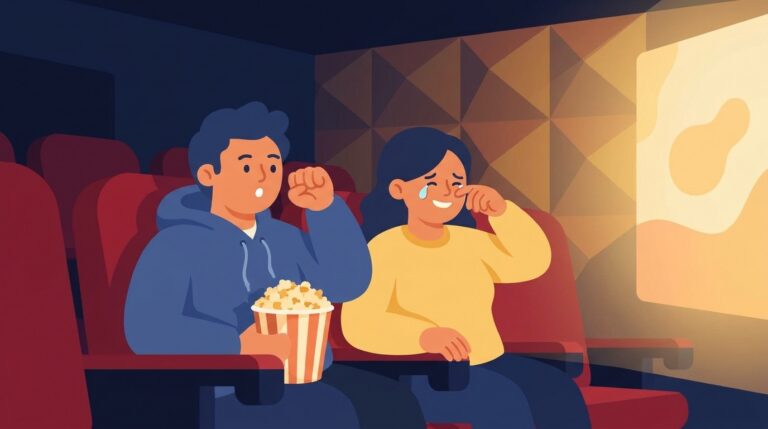
Picture this: You are sitting in a packed theater in downtown Seoul with a tub of half-caramel, half-garlic popcorn. You are watching a legendary Korean “10-Million-Viewer Film” (천만 영화, cheonman yeonghwa) like Train to Busan, Extreme Job, or Miracle in Cell No. 7. For the first forty minutes, your knuckles turn white as zombies charge down the corridor or detectives bungle an undercover stakeout. Then, out of nowhere, you are bursting into uncontrollable laughter at a snappy punchline. Fast forward to the final twenty minutes: the theater is dead silent except for the synchronized sound of sniffles, jacket sleeves wiping away tears, and quiet gasps as family bonds take center stage. You walk out of the theater emotionally exhausted, thoroughly entertained, and wondering: How did one single movie put me through an entire emotional decathlon?
If you have ever tried to discuss this wild rollercoaster with Korean friends, you might have felt stuck saying basic sentences like “영화가 아주 재미있었어요” (The movie was very fun). While grammatically correct, it completely misses the soul of how Koreans experience and talk about films! Korean cinema is celebrated worldwide for seamlessly defying genre boundaries—mixing edge-of-your-seat tension with belly laughs and gut-wrenching family melodrama. Today, we will unpack the exact vocabulary, cultural subtexts, and natural conversational beats you need to critique blockbuster hits just like a savvy local cinephile.
Phase 2: Top 3 Core Expressions Deep Dive
1. 손에 땀을 쥐게 해요 (Sone ttameul jwige haeyo)
- Pronunciation: [Sone ttameul jwige haeyo] (Think: “Sohn-eh ttam-eul jwee-geh hae-yo”)
- Meaning: Literal: “It makes you clench sweat in your hands” / Actual Nuance: “It keeps you on the edge of your seat; it’s an absolute nail-biter.”
- K-Culture Moment: Used when describing heart-stopping chase scenes through train cars in Train to Busan or tense psychological interrogations in crime thrillers.
- Editor’s Insight: While English speakers bite their nails, Koreans physically clench their fists so tightly from adrenaline that sweat gathers in their palms. It denotes visceral, physical suspense.
- Situation Spectrum:
- Casual: ✅ 손에 땀을 쥐게 해 (Sone ttameul jwige hae)
- Semi-formal: ✅ 손에 땀을 쥐게 해요 (Sone ttameul jwige haeyo)
- Formal: ✅ 손에 땀을 쥐게 합니다 (Sone ttameul jwige hamnida)
- 🤔 Think About It: Does your native language focus on fingernails, seats, or something else when describing suspense? What does “holding sweat in the fist” say about somatic Korean descriptions?
2. 웃기다가도 가슴이 뭉클해요 (Utgidagado gaseumi mungkeulhaeyo)
- Pronunciation: [Utgidagado gaseumi mungkeulhaeyo] (Think: “Oot-gee-da-ga-doh gah-seum-ee moong-keul-hae-yo”)
- Meaning: Literal: “Even while making you laugh, the chest swells” / Actual Nuance: “It makes you laugh out loud, yet still tugs deeply at your heartstrings.”
- K-Culture Moment: Perfect for action comedies like Extreme Job or Exit, where ridiculous slapstick gives way to touching moments of solidarity and sacrifice.
- Editor’s Insight: The mimetic adjective 뭉클하다 (mungkeulhada) describes that distinct warm, heavy lump in your chest right before tears well up. Pairing it with 웃기다가도 (-dagado) reflects the beloved Korean storytelling rhythm of balancing sweet and savory moods.
- Situation Spectrum:
- Casual: ✅ 웃기다가도 뭉클해 (Utgidagado mungkeulhae)
- Semi-formal: ✅ 웃기다가도 가슴이 뭉클해요 (Utgidagado gaseumi mungkeulhaeyo)
- Formal: ✅ 웃기다가도 가슴이 뭉클해집니다 (Utgidagado gaseumi mungkeulhaejimnida)
- 🤔 Think About It: Many Western films treat comedy and severe melodrama as separate genres. Why do you think Korean blockbusters blend them so unapologetically?
3. 신파 요소가 있는데 감동적이에요 (Sinpa yosoga inneunde gamdongjeogieyo)
- Pronunciation: [Sinpa yosoga inneunde gamdongjeogieyo] (Think: “Sheen-pah yo-so-gah een-neun-deh gahm-dong-jeok-ee-eh-yo”)
- Meaning: Literal: “It has sinpa elements, but it is moving” / Actual Nuance: “It relies on classic tearjerker melodrama tropes, but it still genuinely touches your heart.”
- K-Culture Moment: Used when discussing major crowd-pleasers like Along with the Gods or Ode to My Father, where the emotional climax unapologetically aims for your tear ducts.
- Editor’s Insight: 신파 (Sinpa) originally referred to modern theater adapted from Japan in early 20th-century Korea, but today it refers to overt, tear-jerking family melodrama. While modern film critics sometimes use sinpa critically, everyday moviegoers admit that even if a scene is formulaic, its emotional punch is irresistible.
- Situation Spectrum:
- Casual: ✅ 신파 느낌인데 감동적이야 (Sinpa neukkiminde gamdongjeogiya)
- Semi-formal: ✅ 신파 요소가 있는데 감동적이에요 (Sinpa yosoga inneunde gamdongjeogieyo)
- Formal: ✅ 신파적 요소가 있음에도 감동을 줍니다 (Sinpajeok yosoga isseum-edo gamdongeul jumnida)
- 🤔 Think About It: Is emotional directness in movies viewed as manipulative or authentic in your culture? How do you react to tearful family climaxes?
Phase 3: Textbook Korean vs. Real Korean
Situation 1: Describing a gripping, tense scene
- 📖 교과서 한국어 (Textbook Korean): 영화가 매우 긴장감 넘쳤어요. (Yeonghwaga maeu ginjanggam neomcheosseoyo. – “The movie was overflowing with tension.”)
- 🗣️ 진짜 한국어 (Real Korean): 진짜 숨도 못 쉬고 봤잖아요! (Jinjja sumdo mot swigo bwatjanayo! – “I literally could not even breathe while watching it!”)
- 💡 왜 다를까? (Why is it different?): Textbook phrases lean heavily on abstract Hanja nouns like 긴장감 (tension). Real native speakers convey emotional intensity by describing physical sensations—like suffocating suspense or holding one’s breath.
Situation 2: Talking about a movie’s emotional climax
- 📖 교과서 한국어 (Textbook Korean): 결말이 무척 슬퍼서 눈물이 났습니다. (Gyeolmari mucheok seulpeoseo nunmuri natseumnida. – “The ending was very sad, so tears came out.”)
- 🗣️ 진짜 한국어 (Real Korean): 마지막에 눈물 콧물 다 뺐어요. (Majimage nunmul konmul da ppaesseoyo. – “At the end, I cried my eyes out, nose running and all!”)
- 💡 왜 다를까? (Why is it different?): Koreans playfully use visceral humor (눈물 콧물, tears and runny nose) to affectionately surrender to a film’s overwhelming emotional tear-trigger without sounding overly stiff or dramatic.
Phase 4: K-Culture Deep Dive & Non-verbal Manners
4-1. Nunchi & Cinema Etiquette
Korean movie theaters have an interesting social balance. During quiet dramatic moments or nail-biting suspense, audiences remain eerily still—silently sipping drinks and suppressing popcorn crunches out of consideration (눈치, nunchi). However, when a comedic beat hits or a terrifying jump-scare happens, the collective reaction is palpable.
- The Gesture: When remarking that a film was thrilling, Koreans often ball their hands into light fists near their chests and give a slight, sharp nod while saying “손에 땀을 쥐다”. When confessing that a scene made them emotional (뭉클하다), placing your open palm softly flat over your heart communicates genuine sincerity without overdramatizing.
4-2. The Anatomy of a “10-Million-Ticket” Phenomenon (천만 영화)
In South Korea—a country of roughly 51 million people—a movie that sells over 10 million tickets means that essentially one out of every five citizens bought a ticket. To pull off this staggering feat, a film cannot appeal solely to young cinephiles; it must capture three generations at once: grandparents, parents, and teenagers.
This cross-generational necessity explains the famous “Korean Blockbuster Formula”:
1. A gripping, high-concept premise that delivers nail-biting thrills.
2. Accessible, witty banter rooted in everyday social frustrations (workplace hierarchy, housing prices, or bureaucratic absurdities).
3. A powerful family emotional anchor (가족애, gajok-ae), often climaxing in sacrificial love that triggers a shared communal cry in the theater.
Phase 5: Real-World Roleplay Scenario
Setting: A lively indie cafe next to CGV Yongsan I’Park Mall right after catching an afternoon screening of a record-breaking Korean summer blockbuster.
Characters:
* You (Intermediate Korean learner and passionate film enthusiast)
* Hye-jin (혜진) (Your Korean movie-buff friend who loves analyzing film plot twists)
Turn 1
혜진: 와, 우리 방금 나온 거 맞죠? 아직도 심장이 두근거려요!
(Wa, uri banggeum naon geo matjyo? Ajikdo simjangi dugeungeoryeoyo!)
“Whoa, did we really just walk out of the theater? My heart is still pounding!”
🎭 Eyes wide, pressing both hands against her chest in excitement
Turn 2
나: 맞아요, 진짜 손에 땀을 쥐게 하더라고요!
(Majayo, jinjja sone ttameul jwige hadeoragoyo!)
“I know, right? It honestly kept me on the edge of my seat the whole time!”
🎭 Clenching fists lightly with an energized grin
Turn 3
혜진: 맞죠! 중간에 형사들이 치킨 튀길 땐 배꼽 빠지게 웃었잖아요.
(Matjyo! Junggane hyeongsadeuri chikin twigil ttaen baekkop ppajige useotjanayo.)
“Exactly! When the detectives were undercover frying chicken midway through, I laughed so hard my stomach hurt.”
🎭 Leaning back in her chair, laughing affectionately
Turn 4
나: 저도요! 그런데 후반부에는 완전 반전이었어요.
(Jeodoyo! Geureonde hubanbueneun wanjeon banjeonieosseoyo.)
“Same here! But the second half was such a total plot twist.”
🎭 Leaning forward, lowering voice slightly for dramatic effect
Turn 5
혜진: 맞아요. 아빠랑 딸 이야기 나올 때 솔직히 울컥하지 않았어요?
(Majayo. Apparang ttal iyagi naol ttae soljiki ulkkeokhaji anasseoyo?)
“Totally. Honestly, didn’t you get choked up when the storyline with the father and daughter came up?”
🎭 Tilting head inquiringly, searching your eyes for empathy
Turn 6
나: 신파 요소가 살짝 있는데도 가슴이 뭉클했어요.
(Sinpa yosoga saljjak inneundedo gaseumi mungkeulhaesseoyo.)
“Even though it had a slight touch of melodrama tropes, my heart swelled with emotion.”
🎭 Nodding thoughtfully with an open hand over your heart
Turn 7
혜진: 바로 그거예요! 한국 천만 영화는 온 가족 ‘눈물 버튼’이 필수라니까요.
(Baro geugeoyeyo! Hanguk cheonman yeonghwaneun on gajok ‘nunmul beoteun’i pilssuranikkayo.)
“That’s precisely it! In Korean 10-million blockbusters, that whole-family ‘tear button’ is an absolute requirement.”
🎭 Snapping fingers with a knowing smile
Turn 8
나: 긴장감, 유머, 감동이 다 섞여 있어서 진짜 시간 가는 줄 몰랐어요.
(Ginjanggam, yumeo, gamdongi da seokkyeo isseoseo jinjja sigan ganeun jul mollasseoyo.)
“Blending tension, humor, and deep feelings together, I truly lost all track of time.”
🎭 Taking a relaxed sip of iced coffee with a satisfied breath
🔀 Interactive Branching Point
Hye-jin asks: “다음 주말에 천만 관객 찍은 또 다른 명작 볼래요? 신파 강도 10점 만점에 10점짜리인데!” (Do you want to watch another 10-million hit next weekend? The tearjerker level is a solid 10 out of 10!)
- Option A: “좋아요! 손수건 챙겨서 갈게요. 단짠 매력에 빠져볼래요!” (Sounds great! I will pack a handkerchief. I’m ready for the sweet-and-salty emotional ride!)
- 👉 Feedback [Best Choice]: Fantastic response! Demonstrates cultural wit by referencing a handkerchief and using the slang 단짠 (danjjan, sweet and salty mood shifts).
- Option B: “신파는 너무 뻔해서 싫어요. 보지 맙시다.” (Melodrama is too predictable and cliché. Let’s not watch it.)
- 👉 Feedback [Bad Choice]: Overly blunt and dismissive. In Korean interpersonal conversations, shutting down a friend’s enthusiasm without softer hedges sounds curt and unfriendly.
- Option C: “우는 건 부끄러운데… 그래도 혜진 씨가 추천하면 볼게요.” (Crying is embarrassing… but if Hye-jin recommends it, I’ll watch.)
- 👉 Feedback [Risk Choice]: Acceptable, but a little timid. Friendly bantering about crying during movies creates much warmer bonding!
Phase 6: 10-Second Emotion Shadowing Drill
Practice these natural rhythm pauses (/) while matching the emotional markers:
[😲 Breathless excitement]
진짜 / 손에 땀을 쥐게 / 하더라고요!
(Jinjja / sone ttameul jwige / hadeoragoyo!)
Pause briefly after 진짜 and stress 땀을 before smoothly landing on 하더라고요.-
[😂 Genuine amusement turning to tenderness]
웃기다가도 / 마지막엔 / 가슴이 뭉클해요.
(Utgidagado / majimagen / gaseumi mungkeulhaeyo.)
Start with a bright, bouncy tone on 웃기다가도, then lower pitch with warmth on 뭉클해요. -
[🥺 Thoughtful acknowledgment]
뻔한 신파인 줄 알았는데, / 완전 감동받았잖아요.
(Ppeonhan sinpain jul aranneunde, / wanjeon gamdongbadatjanayo.)
Slight pause after 알았는데, emphasize 완전 with heartfelt delivery.
Phase 7: K-Culture Mini Dictionary
-
천만 영화 (Cheonman Yeonghwa)
Translation: “10-Million-Viewer Film”
Usage: The golden milestone of cultural ubiquity in Korea. When a film hits this number, everyone from taxi drivers to high school students will be referencing its punchlines for months. -
신파 (Sinpa)
Translation: Melodrama / Tearjerker tropes
Usage: Used in everyday reviews. While it sometimes hints that emotional scenes are slightly exaggerated or predictable, it also fondly acknowledges the irresistible catharsis of a hearty cry. -
눈물 버튼 (Nunmul Beoteun)
Translation: “Tear Button” (Emotional Trigger)
Usage: Slang referring to specific themes that inevitably make someone cry (e.g., “Mom is my tear button” – 엄마 이야기는 제 눈물 버튼이에요). -
단짠 전개 (Danjjan Jeongae)
Translation: Sweet-and-salty plot progression
Usage: Borrowed from food slang (단짠, sweet and salty), this describes films that oscillate rapidly between gut-busting comedic scenes and deeply touching emotional sequences.
Phase 8: Traveler’s Survival Kit
Top 3 Survival Expressions for the Cinema
-
가장 좋은 자리로 추천해 주세요. (Gajang joeun jariro chucheonhae juseyo.)
Meaning: “Please recommend the best available seats.”
Pro Tip: If booking in person at the box office ticket desk, staff will often suggest the prime optical center (usually rows F through H in standard multiplex halls). -
휴지 좀 더 주실 수 있나요? (Hyuji jom deo jusil su innayo?)
Meaning: “Could I get some extra napkins/tissues?”
Pro Tip: Ask this at the concession stand if you know you are about to watch a renowned sinpa blockbuster! -
쿠키 영상 있어요? (Kuki yeongsang isseoyo?)
Meaning: “Is there a mid-credit or post-credit scene?”
Pro Tip: Koreans refer to after-credit or mid-credit bonus scenes as “cookie clips” (쿠키 영상). Asking theater ushers this as the credits roll saves you from leaving early.
Editor’s Travel Note
- Ticketing Apps: Rather than wandering into a theater blindly, check seating maps beforehand using official booking platforms such as the CGV 모바일 예매 공식 사이트 or 메가박스 영화 예매 플랫폼. While non-resident foreign cards can occasionally face payment gateways online, ticketing kiosks inside cinema lobbies feature full English interfaces for on-site credit card purchases.
Phase 9: “One Step Deeper” (Cultural Reflection)
Why does the Korean mega-hit formula prioritize intense collective emotion? In Korean cultural history, two foundational sentiments often intertwine: 한 (Han), a deep, lingering sorrow born from historical adversity and collective struggle, and 흥 (Heung), an irrepressible joy, humor, and resilience that rises above hardship. Korean blockbusters reflect this dynamic balance. By taking audiences through nail-biting suspense and playful laughter, they soften defensive barriers so that when the emotional climax arrives, the cathartic release of tears feels unifying. In a fast-paced society where vulnerability is often masked in daily routines, the dark hall of a movie theater offers a socially approved space to weep together.
💬 Your Turn: What movie from your home culture made you laugh and weep at the same time? How would you describe its “tear button” using the phrases we learned today? Share your thoughts below in Korean!
Phase 10: FAQ & Common Mistakes
Q: Is calling a movie “신파 (Sinpa)” always considered an insult?
A: Not necessarily! While professional film critics might occasionally use 신파적이다 (sinpajeogida) to criticize heavy-handed, manipulative weeping scenes, everyday moviegoers often use it affectionately. Saying “신파인 거 아는데도 엄청 울었어요” (I knew it was total melodrama, but I still cried so much) is a very common and relatable compliment in Korea.
Q: How do I distinguish “손에 땀을 쥐다” from just “무섭다” (to be scared)?
A: 무섭다 (museopda) is the pure emotion of fear (like seeing a ghost in a horror movie). 손에 땀을 쥐다 (sone ttameul jwida) describes physical suspense, excitement, and adrenaline. You use it for thrillers, tight sports matches, and dramatic chase sequences where you are anxious to see what happens next.
Q: Can “뭉클하다” be used for romantic situations?
A: It can, but 뭉클하다 (mungkeulhada) leans more toward profound gratitude, family love, overcoming hardship, or emotional awe rather than fluttering romantic butterflies (설레다, seolleda). If your partner surprises you with a deeply thoughtful gesture that acknowledges your long struggles, 가슴이 뭉클해요 is wonderful.
🚨 Common Mistakes Board
- Mistake: Saying “손이 땀나요” to mean exciting suspense.
Correction: That just literally means “My hands are sweaty!” To convey cinematic suspense, always use the idiomatic phrase 손에 땀을 쥐게 해요. - Mistake: Using “슬퍼요” for every tender or tearful movie moment.
Correction: If you weren’t merely depressed, but deeply moved by family sacrifice, upgrade your vocabulary to 가슴이 뭉클해요 or 감동적이에요. - Mistake: Forgetting that “천만 관객” refers to tickets sold, not monetary revenue.
Correction: In Korea, box office status is measured by audience head-count (관객 수), not dollar amounts. Always specify audience numbers when discussing box office records.
Phase 11: Action Missions
- 🥉 Bronze Mission: Stand in front of your mirror and practice the 3 expressions from Phase 2 out loud twice, mimicking the fist-clenching and chest-holding gestures.
- 🥈 Silver Mission: Find a trailer of a 10-million Korean film (such as Extreme Job or Train to Busan) on YouTube, and leave a one-sentence comment in Korean using either 손에 땀을 쥐다 or 가슴이 뭉클하다.
- 🥇 Gold Mission: Next time you chat with a Korean friend or language exchange partner about movies, ask: “어떤 영화가 가장 눈물 버튼이에요?” (Which movie is your biggest tear button?) and listen to their story.
- 🎮 K-Culture Mission: Watch a famous Korean comedy-thriller this week and spot the exact minute where the plot transitions from slapstick laughs to family emotional stakes!
Phase 12: Interactive Quiz Challenge
Test your understanding of Korean cinema conversational nuances!
Question 1: Situation Judgment
Your Korean coworker asks how you liked the newly released historical action thriller. You want to convey that the sword-fighting chases were relentlessly suspenseful. Which phrase is best?
* A) 영화가 너무 지루해서 졸렸어요.
* B) 칼싸움 장면이 진짜 손에 땀을 쥐게 하더라고요!
* C) 그냥 슬프고 눈물 콧물 다 뺐어요.
👉 Click to view the Answer & Explanation
Correct Answer: B
Explanation: “손에 땀을 쥐게 하더라고요!” perfectly highlights the heart-stopping adrenaline of the sword-fighting sequences. Choice A means it was boring, while Choice C refers to crying uncontrollably.
Question 2: Fill-in-the-Blank
Complete the sentence describing a film that starts as an absurd comedy but ends with a deeply moving family scene:
“초반에는 배꼽 빠지게 웃겼는데, 후반부에는 가족애 때문에 가슴이 _________.”
* A) 미지근했어요
* B) 뭉클했어요
* C) 시원했어요
👉 Click to view the Answer & Explanation
Correct Answer: B (뭉클했어요)
Explanation: “가슴이 뭉클했어요” expresses that deep, heartwarming lump in the throat brought on by family love and emotional climaxes.
Question 3: Cultural True or False
Statement: In South Korea, calling a film a “천만 영화” (Cheonman Yeonghwa) means it earned 10 million US dollars at the box office.
* [ ] True
* [ ] False
👉 Click to view the Answer & Explanation
Correct Answer: False
Explanation: “천만” signifies 10 million viewers (tickets sold), which represents roughly 20% of the entire national population. Box office prestige in Korea is measured by total attendance rather than monetary gross!
🎬 Watch Our Daily Videos! (Daily Hangul Official Instagram)
Review the expressions you learned in this article with our fun daily short videos! Check out native pronunciation and real-life nuances in action.
- Instagram @dailyhangul_en







