

Phase 1: Empathy (Real-World Dilemma in K-Business)
안녕하세요! 매일한글 에디터입니다.
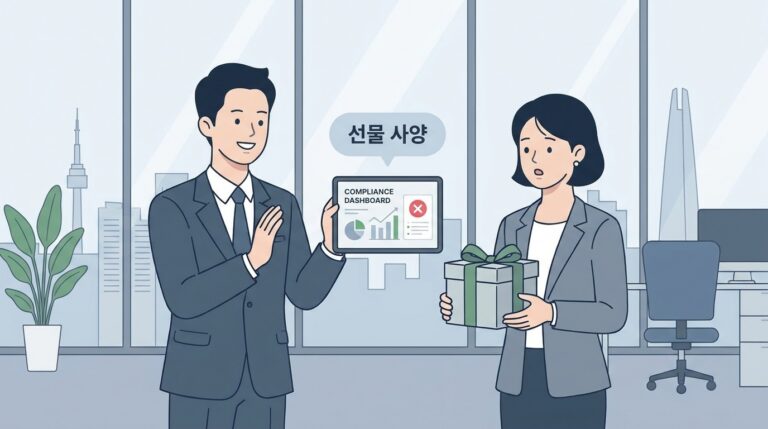
Picture this: You are wrapping up a high-stakes partner meeting in Gangnam. The counterpart executive smiles broadly, pats your shoulder, and gestures toward a sleek black car waiting outside to take your team to an exclusive, $300-a-head Hanwoo beef restaurant—followed by premium gift sets of wild ginseng. In many traditional K-drama scenes, declining this gesture would be depicted as cold, disrespectful, or an outright dealbreaker that shatters inmaek (인맥, business networking).
However, in today’s multinational corporate reality, accepting that dinner or luxury gift could trigger severe alarms under the Foreign Corrupt Practices Act (FCPA) and Korea’s own notorious Anti-Graft Act (the Kim Young-ran Act). When you frantically message your local compliance officer, you realize your global ERP system will flatly reject the expense claim, or worse, trigger an internal audit. How do you draw a rock-solid legal boundary without crushing the professional relationship or humiliating your Korean partner?
Drawing on over a decade of navigating boardroom cultural friction and coaching foreign corporate leaders in Seoul, this guide gives you the precise, polished C1-level Korean you need to reject over-the-cap hospitality smoothly, shifting the accountability seamlessly onto automated compliance systems while preserving mutual respect.
Phase 2: Core Expressions Deep Dive
1. 저희 내부 컴플라이언스 시스템상 접대 및 선물 한도가 엄격히 제한되어 있습니다.
- Pronunciation: Jeohui naebu keompeullai-eonseu siseutem-sang jeopdae mit seonmul handoga eomgyeok-hi jehandoe-eo itseumnida. (Sound analog: think of jeohui like “jaw-hee”, eomgyeok-hi like “um-gyaw-key”)
- Meaning: Literally: “According to our internal compliance system, limits for entertainment and gifts are strictly restricted.” Nuance: “We deeply appreciate the sentiment, but our automated corporate governance legally prohibits us from taking part in this expense.”
- K-Culture Moment: Seen in tense boardrooms in corporate thrillers like Misaeng or Agency, where an executive neutralizes an aggressive favor by invoking the untouchable authority of automated global audits.
- Editor’s Insight: Framing the refusal around the system (시스템상) rather than your personal preference depersonalizes the rejection. In Korean high-context culture, this spares the other party’s che-myeon (체면, face).
- Situation Spectrum: Casual 🚫 | Semi-formal ⚠️ | Formal ✅
- 🤔 Think About It: In Western corporate culture, saying “I cannot accept this due to company policy” is straightforward. Why does attributing the limit to an automated IT/audit system soften the blow even more in Korea?
2. 청탁금지법 및 FCPA 규격에 저촉될 소지가 있어 정중히 사양하겠습니다.
- Pronunciation: Cheongtakgeumjibeop mit FCPA gyugyeoge jeochokdoel sojiga isseo jeongjunghi sayanghagetseumnida. (Sound analog: cheong-tak sounds like “chawng-tahk”, jeo-chok like “jaw-choke”)
- Meaning: Literally: “As this could run afoul of the Anti-Graft Act and FCPA standards, I respectfully decline.”
- K-Culture Moment: The signature line of an incorruptible legal counsel in legal dramas like Stranger (비밀의 숲), establishing an uncrossable statutory perimeter.
- Editor’s Insight: Jeochokdoel soji (저촉될 소지, potential to breach a statute) is quintessential C1 legal phrasing. Paired with jeongjunghi sayanghagetseumnida (정중히 사양하겠습니다, I politely and formally decline), it represents the pinnacle of executive diplomacy.
- Situation Spectrum: Casual 🚫 | Semi-formal ⚠️ | Formal ✅
- 🤔 Think About It: How does invoking statutory terminology protect both parties from legal liability while formalizing mutual integrity?
3. 사전 승인 절차를 거치지 않은 경비는 전산상 처리가 불가합니다.
- Pronunciation: Sajeon seung-in jeolchareul geochiji aneun gyeongbineun jeonsansang cheoriga bulgahamnida. (Sound analog: sajeon sounds like “sah-juhn”, jeon-san like “juhn-sahn”)
- Meaning: Literally: “Expenses that have not undergone prior approval procedures cannot be processed in the computer system.”
- K-Culture Moment: Spoken by an internal auditor or CFO refusing to reimburse an unauthorized off-the-books client reception.
- Editor’s Insight: Jeonsansang (전산상, electronically / system-wise) is your best shield. It signals that human intervention cannot override the software architecture, ending any persistent peer pressure.
- Situation Spectrum: Casual 🚫 | Semi-formal ✅ | Formal ✅
- 🤔 Think About It: Notice how the passive phrasing cheoriga bulgahamnida (processing is impossible) removes personal blame compared to “I won’t approve your expense.”
Phase 3: Textbook Korean vs. Real Korean
Situation 1: Declining an extravagant holiday gift box sent to your desk
- 📖 교과서 한국어 (Textbook): 이 선물은 법률에 위반되므로 받을 수 없습니다. (I cannot accept this gift because it violates the law.)
- 🗣️ 진짜 한국어 (Real-World C1): 마음만 감사히 받고, 사내 규정 및 법적 한도 때문에 이번 건은 정중하게 반려해야 할 것 같습니다. (We appreciate your warm thought, but due to internal compliance caps and statutory limits, we must respectfully return this item.)
- 💡 왜 다를까? (Why the difference?): Declaring outright that someone’s gift violates the law treats them like an active criminal. A native business leader always accepts the maeum (마음, warm intention) first, then attributes the return to regulatory caps using the sophisticated verb ballyeohada (반려하다, to formally return/reject an item or document).
Situation 2: Briefing your sales team before an external client dinner
- 📖 교과서 한국어 (Textbook): 식사비가 한도를 초과하지 않도록 조심하십시오. (Be careful so that dining costs do not exceed the limit.)
- 🗣️ 진짜 한국어 (Real-World C1): 인당 식대 한도 칼같이 체크하시고, 컴플라이언스 시스템에 사전 결재 올려두는 거 잊지 마세요. (Keep an razor-sharp eye on the per-head dining limit and make sure you submit prior approval via the compliance system without fail.)
- 💡 왜 다를까? (Why the difference?): Real corporate settings favor vivid operational idioms like kalgati (칼같이, razor-sharp / strictly to the penny) and sajeon gyeoljae (사전 결재, formal prior sign-off) over vague textbook warnings.
Phase 4: K-Culture Deep Dive & Non-Verbal Manners
4-1. Nunchi & Executive Body Language
When invoking anti-graft restrictions, your non-verbal cues must counteract any impression of personal coldness:
* The Two-Handed Decline: Never push a gift or a corporate credit card away with one hand. Place both hands gently near your chest or lightly atop the table, palms angled slightly outward, accompanied by a polite 30-degree bow of the head.
* The Apologetic Smile (Songgu-ham): Pair your firm verbal refusal with a slightly softened gaze that communicates: “I personally value our partnership immensely, but our regulatory systems tie our hands.”
* Immediate Substitute Value: Never leave an empty refusal hanging in the air. Immediately follow up with a compliant alternative: “대신 저희 회사 카페테리아에서 커피 한잔 모시겠습니다.” (Allow me to treat you to a nice coffee at our company lounge instead.)
4-2. Cultural Code: The Shift from “Jeong” to Transparent Governance
Historically, Korean business ran on jeong (정, emotional bonding) solidified over lavish feasts (jeopdae, 접대) and holiday gift bundles (myeongjeol seonmul). The enactment of the Kim Young-ran Act (청탁금지법) in 2016 dramatically altered the corporate ecosystem, instituting the strict 3·5·10 rule (now modified to specific legal thresholds for meals, agricultural gifts, and congratulations/condolences). Modern Korean enterprises, acutely sensitive to ESG metrics and fair-trade crackdowns, now welcome counterparts who adhere to strict statutory caps. Enforcing compliance is no longer viewed as an insult; it is respected as the hallmark of a world-class enterprise.
Phase 5: Real-World Business Roleplay
- Setting: A high-end private dining lounge in Yeouido. Managing Director Choi (최 상무) from your Korean joint venture partner has just ordered a second round of rare single-malt whisky and gestures to pay the entire bill.
-
최 상무: 오늘 프로젝트 논의가 아주 생산적이었습니다! 우리 파트너십의 성공을 위해서 이 자리는 저희 측에서 전부 모시겠습니다. 부담 갖지 마시죠.
(Oneul peurojekteu non-uiga aju saengsan-jeogieotseumnida! Uri pateuneosip-ui seong-gongeul wihae seo i jarineun jeohui cheuk-eseo jeonbu mosigetseumnida. Budam gatji masijyo.)
“Today’s project discussion was remarkably productive! To celebrate our partnership’s success, our firm will take care of the entire bill tonight. Please don’t feel burdened at all.” -
🎭 행동 지문: [Smiles warmly, leans forward, placing a reassuring hand near your arm.]
-
You: 최 상무님, 오늘 보내주신 성의에는 진심으로 감사드립니다.
(Choe sangmunim, oneul bonaejusin seong-uineneun jinsimeuro gamsadeurimnida.)
“Director Choi, I am sincerely grateful for the gracious hospitality you have extended today.” -
🎭 행동 지문: [Gently places both hands flat on the table, maintaining steady, warm eye contact.]
-
최 상무: 하하, 글로벌 파트너 사이에 이 정도 식사 대접은 당연한 예의입니다. 자, 한 잔 더 받으시죠.
(Haha, geullobeol pateuneo saie i jeongdo siksa daejeobeun dang-yeonhan ye-ui-imnida. Ja, han jan deo badeusijyo.)
“Haha, between global partners, this level of hospitality is common courtesy. Come, let me pour you another drink.” -
🎭 행동 지문: [Lifts the premium whisky bottle toward your glass.]
-
You: 상무님의 배려는 귀하지만, 저희 본사 컴플라이언스 기준과 FCPA 규정상 접대비 상한이 시스템적으로 강력히 통제되고 있습니다.
(Sangmunim-ui baeryeoneun gwijunghajiman, jeohui bonsa keompeullai-eonseu gijun-gwa FCPA gyujeongsang jeopdaebi sanghan-i siseutemjeogeuro gangnyeok-hi tongjedoego itseumnida.)
“While your consideration is invaluable, our global compliance guidelines and FCPA provisions enforce strict automated limits on our hospitality expenses.” -
🎭 행동 지문: [Gently touches the base of your glass with both fingers, declining the top-up with an apologetic tilt of the head.]
-
최 상무: 아, 그렇습니까? 외국계 기업이라 내부 통제가 꽤 까다롭군요. 그래도 외부 손님 대접인데 너무 경직된 것 아닙니까?
(A, geureoseumnikka? Oegukgye gieob-ira naebu tongjega kkwae kkadaro-upgunyo. Geuraedo oebu sonnim dajeob-inde neomu gyeongjikdoen geot animnikka?)
“Ah, is that so? Internal controls are quite rigorous in multinational companies. But isn’t that a bit rigid when hosting an external counterpart?” -
🎭 행동 지문: [Sets the bottle down, showing a momentary flicker of disappointment.]
-
You: 규정이 다소 엄격해 보이지만, 두 회사의 파트너십을 법적 리스크 없이 투명하게 지속하기 위한 필수 조치입니다. 오늘은 각자 분할 결제(각자내기)를 진행하도록 전산 등록을 이미 마쳤습니다.
(Gyujeong-i daso eomgyeokhae bo-ijiman, du hoesa-ui pateuneosibeul beopjeok riseukeu eopsi tumyeonghage jisokhagi wihan pilsu jochi-imnida. Oneureun gakja bunhal gyeolje(gakjanaegi)reul jinhaenghadorok jeonsan deungrogeul imi machyeotseumnida.)
“While the policy might appear strict, it is an indispensable measure to maintain our partnership transparently without legal exposure. We have already logged this in our ERP system to proceed with split billing tonight.” -
🎭 행동 지문: [Presents your corporate card alongside his to the server with a confident, respectful posture.]
-
최 상무: 과연 철저하십니다. 양사의 투명한 미래를 위해서라면 당연히 협조해야지요. 좋은 선례를 만들어 갑시다!
(Gwayeon cheoljeohasimnida. Yangsa-ui tumyeonghan miraereul wihaeseoramyeon dang-yeonhi hyeopjohaeyajiyo. Joeun seollyereul mandeureo gapsida!)
“Thorough indeed. If it is for the transparent future of both firms, I shall gladly cooperate. Let us set a commendable precedent!” - 🎭 행동 지문: [Nods approvingly, raising his glass for a toast to mutual integrity.]
🔀 Interactive Decision Branch
What if Director Choi pushes harder, saying: “Just this once, nobody will ever find out!” How do you respond?
* Option A: “법을 어기면 큰일 나니까 절대 안 됩니다.” (Under no circumstances, breaking the law causes huge trouble.)
* 👉 Feedback (Bad): Accusatory and harsh. It frames Director Choi as an instigator of illegal activity, ruining the negotiation atmosphere.
* Option B: “이번만 상무님 성의를 봐서 조용히 넘어가겠습니다.” (Just this once, I will overlook it in light of your kindness.)
* 👉 Feedback (Risk): Catastrophic corporate liability. FCPA violations carry extraterritorial penalties and reputational devastation.
* Option C: “상무님의 깊은 뜻은 감사하지만, 전산 감사 추적(Audit Trail)이 연동되어 있어 시스템 예외 승인이 원천적으로 불가능합니다.” (I appreciate your heartfelt intent, but our live audit trail system fundamentally precludes any manual override.)
* 👉 Feedback (Best!): Professional and impenetrable. It leaves zero room for debate by citing automated, auditable software safeguards.
Phase 6: 10-Second Emotion Shadowing Drill
Master the executive rhythm by pausing at each / and embodying the designated emotional tone:
[💼 단호하면서도 품격 있게 / Firm and dignified]- 저희 회사는 / 준법경영 가이드라인에 따라 / 모든 접대 내역을 / 시스템으로 실시간 모니터링하고 있습니다.
(Jeohui hoesaneun / junbeop-gyeong-yeong gaideurain-e ttara / modeun jeopdae naeyeogeul / siseutem-euro silsigan monitheoring-hago itseumnida.)
- 저희 회사는 / 준법경영 가이드라인에 따라 / 모든 접대 내역을 / 시스템으로 실시간 모니터링하고 있습니다.
[🤝 정중하고 신뢰감 넘치게 / Courteous and trustworthy]- 배려해 주신 마음만 감사히 받고, / 식대는 각자 부담하는 것이 / 양사의 컴플라이언스 기준에 부합합니다.
(Baeryeohae jusin maeum-man gamsahi batgo, / sikdaeneun gakja budamhaneun geosi / yangsa-ui keompeullai-eonseu gijun-e buhaphamnida.)
- 배려해 주신 마음만 감사히 받고, / 식대는 각자 부담하는 것이 / 양사의 컴플라이언스 기준에 부합합니다.
[🛡️ 차분하고 설득력 있게 / Calm and persuasive]- 사전 상신되지 않은 고액 지출은 / 전산 감사상 / 즉각 소명 대상이 되므로 / 양해 부탁드립니다.
(Sajeon sangsindoeji aneun go-aek jichureun / jeonsan gamsasang / jeukgak somyeong daesang-i doemeuro / yanghae butakdeurimnida.)
- 사전 상신되지 않은 고액 지출은 / 전산 감사상 / 즉각 소명 대상이 되므로 / 양해 부탁드립니다.
Phase 7: K-Culture Mini Dictionary
- 김영란법 (Kim-young-ran-beop) | The Improper Solicitation and Graft Act
- Formal name: 부정청탁 및 금품등 수수의 금지에 관한 법률. Colloquially named after the former Supreme Court Justice who authored it. It strictly caps spending on meals, gifts, and celebratory/condolence money for public officials, educators, and journalists.
- 접대비 (Jeopdaebi) | Corporate Entertainment Expenses / Hospitality Budget
- The formal ledger category for hosting clients. In modern Korean accounting, this line item is subjected to the highest scrutiny by the National Tax Service.
- 상신 (Sangsin) | To Submit an Official Approval Draft Upward
- A high-frequency office verb used when filing an expense plan or business proposal into an electronic approval system (e-결재) prior to spending.
- 반려 (Ballyeo) | Formal Rejection / Return of an Application or Gift
- Distinguishable from casual refusal (geobol, 거절); ballyeo implies that an official item, form, or parcel has been formally turned back due to procedural non-compliance.
Phase 8: Expat Executive Survival Kit
Top 3 Survival Phrases
- 1. 영수증 분할 발행 부탁드립니다. (Yeongsujeung bunhal balhaeng butakdeurimnida.)
- Pro Tip: Use this at restaurants to request split billing by individual receipt to ensure you stay under internal per-person ceilings.
- 2. 클린카드(Clean Card) 한도 초과로 결제가 제한됩니다. (Keullin-kadeu hando chogwaro gyeoljega jehandoemnida.)
- Pro Tip: Korean corporations issue restricted corporate credit cards (“Clean Cards”) that automatically block payments at luxury dining or nightlife establishments.
- 3. 소명 자료 제출을 위해 증빙이 필요합니다. (Somyeong jaryo jechureul wihae jeungbing-i piryohamnida.)
- Pro Tip: When you must formally explain an expense to the audit team, this phrase requests itemized invoices and attendee lists.
Editor’s Travel & Operations Note
When organizing business meetings in Seoul, leverage corporate tools like the Kakao T for Business app to automate and trace corporate taxi spend, eliminating unverified cash receipts. For verifying up-to-date statutory caps on business gifts, always reference the official portal of the Anti-Corruption and Civil Rights Commission (국민권익위원회) to stay abreast of legislative adjustments.
Phase 9: A Step Deeper (한 발 더 깊이)
Korean business culture has historically prioritized Gwangye (관계, reciprocal human relationships), where sharing an extravagant meal was seen as genuine investment in a partner’s welfare. However, modern corporate Korea has synthesized this relational warmth with uncompromising global regulatory standards (Beop-chi, 법치, Rule of Law). Refusing an excessive gift is no longer an insult; it shows you care enough about the partnership to protect both companies from ruinous legal fallout. True executive maturity lies in honoring the intent of the relationship while honoring the letter of the compliance system.
💬 Your Turn: How does corporate hospitality regulation in your home country compare to Korea’s Kim Young-ran Act and the FCPA? Share your thoughts and experiences in the comments below!
Phase 10: FAQ & Common Mistakes
Q: Can I accept luxury Korean beef (Hanwoo) if it is sent during the traditional Chuseok holiday?
A: If your company interfaces with public enterprises, government bodies, or media, strict Kim Young-ran Act ceilings apply (often capped between 100,000 to 150,000 KRW for agricultural products, subject to seasonal amendments). If you fall under FCPA jurisdiction, accepting anything designed to secure an improper business advantage is strictly prohibited. When in doubt, log the gift into your corporate compliance registry and return it with a polite, automated system refusal notice.
Q: Does a split bill (각자내기) offend an older Korean business partner?
A: Not anymore. While older executives may initially posture to pay out of habit or prestige, politely reiterating that your expense system mandates itemized split billing (gakjanaegi) for transparent auditing relieves them of social pressure without loss of face.
Q: What is the single safest phrase to decline an over-budget meal?
A: State: “저희 전산 규정상 사전 승인 한도가 정해져 있어 각자 계산해야 감사 추적에 문제가 없습니다.” (Our automated regulations enforce a pre-approved ceiling, requiring split billing to ensure clean audit trails.)
🚨 Common Mistakes Alert
- Mistake: Flatly saying “그거 불법이에요!” (That is illegal!).
Correct Action: Shift blame to the process: “시스템상 처리가 제한되어 있습니다.” (Our system restricts processing this.) - Mistake: Accepting a gift discreetly and hiding it in your office.
Correct Action: Immediately register it with your compliance team and generate an official receipt of return (반려 확인서). - Mistake: Failing to get itemized receipts showing the exact number of diners.
Correct Action: Always ask the venue for a sangse yeongsujeung (상세 영수증, detailed itemized receipt) showing attendee counts to verify per-person limits.
Phase 11: Action Missions
- 🥉 Bronze Mission (Solo Mastery): Practice saying the Phase 6 shadowing sentences out loud three times, matching the cadence of an uncompromising yet polite corporate executive.
- 🥈 Silver Mission (Professional Social Share): Leave a comment below utilizing the phrase 시스템상 처리가 불가합니다 in a simulated business scenario.
- 🥇 Gold Mission (Real-World Application): In your next vendor dinner or gift exchange, confidently articulate your firm’s compliance parameters using the phrase 정중히 사양하겠습니다 (jeongjunghi sayanghagetseumnida).
- 🎮 K-Culture Mission: Watch an episode of a Korean legal/corporate drama (Stranger, Vincenzo, or Suits Korea) and identify how characters handle corporate gifts or entertainment invitations!
Phase 12: Interactive Quiz Challenge
Test your executive compliance instincts with these three scenarios!
- Situation Judgment: A client brings an expensive brand-name pen set to your contract signing and says, “작은 성의이니 부담 없이 받아주세요.” What is your best response?
- A) “이런 뇌물은 제 양심상 용납할 수 없습니다.”
- B) “마음만 감사히 받고, 사내 컴플라이언스 규정상 정중히 사양하겠습니다.”
- C) “누가 볼 수 있으니 제 가방에 얼른 넣어주세요.”
- Fill in the Blank: 사전 승인을 거치지 않은 접대비는 (________) 처리가 불가하오니 유의하시기 바랍니다.
(Hint: referring to electronic/computer systems) -
True / False: Under Korean compliance standards, telling a counterpart that an automated ERP system prevents you from accepting lavish entertainment causes them deep personal offense. (True / False)
👉 Click here to check the answers & explanations!
- Answer: B. Option A is overly aggressive and accuses them of bribery; Option C is a serious compliance breach. Option B gracefully acknowledges the goodwill while citing compliance regulations.
- Answer: 전산상 (jeonsansang – system-wise / electronically). Complete sentence: 사전 승인을 거치지 않은 접대비는 전산상 처리가 불가하오니 유의하시기 바랍니다.
- Answer: False. In modern corporate Korea, attributing spending limits to automated systems (시스템상 / 전산상) depersonalizes the refusal and preserves the counterpart’s professional dignity (che-myeon).
🎬 Watch Our Daily Videos! (Daily Hangul Official Instagram)
Review the expressions you learned in this article with our fun daily short videos! Check out native pronunciation and real-life nuances in action.
- Instagram @dailyhangul_en







