

Phase 1: Empathy (Story-Driven Opening)
안녕하세요! 매일한글 에디터입니다. (Hello! I’m your Daily Hangul editor.)
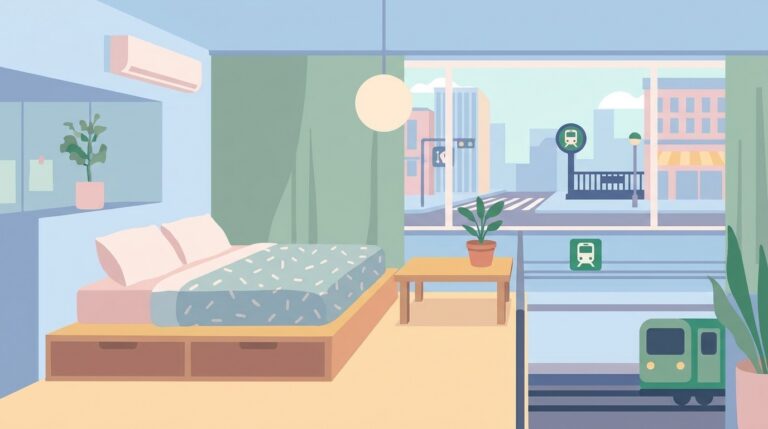
Picture this: You just landed in Seoul, ready to live your best K-drama life. You stroll through a lively alley in Mapo or Sinchon, dragging your luggage, dreaming of a cute, cozy studio like the ones in Because This Is My First Life (이번 생은 처음이라). But reality hits the second you stand in front of a local real estate agency—the legendary 부동산 (budongsan). The glass windows are plastered with hundred of bright yellow paper slips scribbled with mysterious codes: 보증금 1000 / 월세 60, 역 5분, 풀옵션. You nervously open the door, a chime rings, and a friendly realtor in glasses spins around on their rolling chair, asking, “어떤 방 찾으세요?” (What kind of room are you looking for?).
Your mind goes completely blank. You know you want a place close to the subway so your winter commute doesn’t freeze your toes off, and you definitely need a bed and a washing machine already inside. But how do you say that without sounding like a robotic translation app? Many of our Daily Hangul learners tell us that walking into a Korean realtor is far more intimidating than ordering street food at Gwangjang Market! Don’t worry. This guide is built directly from real student experiences and field-tested survival tips. By the end of this lesson, you’ll walk in with total confidence and ask for your dream room in natural, natural A2-level Korean!
Phase 2: Deep Dive into 3 Core Expressions
1. 지하철역에서 걸어서 10분 이내에 있는 집 있어요? (Jihacheol-yeog-eseo georeoseo sip-bun inaee inneun jip isseoyo?)
- Pronunciation: [Jee-ha-cheol-yeo-ge-seo geo-reo-seo sheep-boon ee-nae-ae eeng-neun jeep ee-sseo-yo?] (Think of ‘inaee’ like ‘in-a-day’ without the ‘d’ sound!)
- Meaning: Literal: “Is there a house within 10 minutes walking from the subway station?” | Real Nuance: “Do you have anything within a 10-minute walk from the station?”
- K-Culture Moment: In urban Korean life, walking distance to a subway line dictates your morning sanity. In dramas, tired office workers always sigh with relief when their tiny one-room is just a stone’s throw from the turnstiles.
- Editor’s Insight: In Korea, 10 minutes walking (걸어서 10분) is the golden standard for reasonable convenience. If it’s over 15 minutes, locals often look for a village bus (마을버스).
- Situation Spectrum: Casual (⚠️ 지하철역에서 걸어서 10분 거리 있어? – only with close friends) | Semi-formal (✅ 지하철역에서 걸어서 10분 이내에 있는 집 있어요?) | Formal (✅ 지하철역 도보 10분 이내 매물이 있습니까?)
- 🤔 Think About It: In your hometown, do people measure distance in minutes walked or in miles/kilometers driven? In dense Seoul, walking time to the nearest transit hub is the primary measure of real estate value.
2. 풀옵션 원룸 찾고 있어요 (Pul-opsyeon won-rum chatgo isseoyo)
- Pronunciation: [Pool-op-syeon won-room chat-goh ee-sseo-yo]
- Meaning: Literal: “I am looking for a full-option one-room.” | Real Nuance: “I’m looking for a fully furnished studio.”
- K-Culture Moment: The staple setting for college students and rookie office workers in K-webtoons. It signifies a studio that comes pre-packed with a fridge, washing machine, stove, and air conditioner.
- Editor’s Insight: 풀옵션 (Full-option) is Konglish (Korean-style English), but universally understood. However, be careful: a bed (침대) and desk (책상) are often not guaranteed in every ‘full-option’, so you must double-check!
- Situation Spectrum: Casual (⚠️ 풀옵션 원룸 찾아) | Semi-formal (✅ 풀옵션 원룸 찾고 있어요) | Formal (✅ 풀옵션 원룸을 찾고 있습니다)
- 🤔 Think About It: Notice how Korean borrows English words like ‘One-room’ and ‘Option’ to create brand new lifestyle categories. How does your language adapt foreign words for housing?
3. 관리비 포함이에요? (Gwallibi poham-ieyo?)
- Pronunciation: [Gwal-lee-bee poh-hahm-ee-ae-yo?]
- Meaning: Literal: “Is the maintenance fee included?” | Real Nuance: “Does the monthly rent include the maintenance fee?”
- K-Culture Moment: The classic scene where a naive character thinks they got a bargain on rent, only to find the building maintenance bill doubles their monthly payment!
- Editor’s Insight: In Korea, rent (월세) and maintenance (관리비) are negotiated separately. A 500,000 KRW room can quickly become 650,000 KRW once internet, water, and building cleanup fees are tacked on. Always ask this question!
- Situation Spectrum: Casual (⚠️ 관리비 포함이야?) | Semi-formal (✅ 관리비 포함이에요?) | Formal (✅ 관리비가 포함되어 있습니까?)
- 🤔 Think About It: Hidden fees exist everywhere, but in Korea, clarifying communal maintenance upfront is considered practical and smart, not stingy.
Phase 3: Textbook Korean vs. Real-World Korean
Situation 1: Describing proximity to the station
- 📖 교과서 한국어 (Textbook): 지하철역 근처에 위치한 거주 공간을 원합니다. (Jihacheol-yeok geuncheo-e wichi-han geoju gong-gan-eul wonhamnida.) – “I desire a residential space situated near the subway station.”
- 🗣️ 진짜 한국어 (Real-World): 역에서 가까운 역세권 원룸 있어요? (Yeog-eseo gakkaun yeoksegwon won-rum isseoyo?) – “Do you have a studio close to the station in the station zone?”
- 💡 왜 다를까? (Why the difference?): Textbooks often use formal Sino-Korean nouns (거주 공간 = residence). Real Koreans naturally use the buzzword 역세권 (yeoksegwon – transit area) to sound direct, natural, and snappy.
Situation 2: Checking what appliances come with the room
- 📖 교과서 한국어 (Textbook): 어떤 가구와 전자제품이 구비되어 있습니까? (Eotteon gagu-wa jeonjajepum-i gubi-doeeo itseumnikka?) – “What furniture and electronics are equipped?”
- 🗣️ 진짜 한국어 (Real-World): 옵션에 뭐 뭐 들어가 있어요? (Opsyeon-e mwo mwo deureoga isseoyo?) – “What specific things are included in the options?”
- 💡 왜 다를까? (Why the difference?): Repeating 뭐 뭐 (mwo-mwo) is a charming spoken Korean habit meaning “what kind of specific items exactly.” It sounds infinitely more natural than robotic formal listings.
Phase 4: K-Culture Deep Dive & Non-Verbal Etiquette
4-1. 눈치 (Nunchi) & Body Language at the Realtor
When you step inside a budongsan, small physical habits set a wonderful first impression:
1. The Instant Coffee Ritual: The agent will almost certainly offer you a warm paper cup of Maxim Gold instant coffee (믹스커피). Always receive it with two hands and take a polite sip, even if you prefer iced Americanos. It shows respect and friendliness.
2. The House Tour Shoe Etiquette: When visiting prospective studios, take your shoes off at the entryway (현관). Always turn your shoes around so the toes face the door you entered from—this shows great manners (예의).
3. Permission Before Touching: Never open built-in closet doors or turn on water taps without a quick nod and polite query: “물 좀 틀어봐도 될까요?” (May I try turning on the water?).
4-2. Cultural Code: The ‘Yeoksegwon’ Obsession
In Seoul, subway lines are cultural lifelines. Stations aren’t just transit stops; they are ecosystems of convenience stores, dry cleaners, study cafes, and late-night noodle shops. Koreans coined terms ending in -segwon (sphere): 역세권 (near subway), 편세권 (near 24hr convenience store), and even 스세권 (near Starbucks)! When you say 지하철역에서 걸어서 10분, the realtor immediately knows you value everyday convenience and efficiency.
Phase 5: Real-Life Roleplay Scenario
Setting: A bustling real estate office near Sinchon Station. Winter wind is blowing outside. Inside, the warm aroma of barley tea fills the air. Agent Kim (김 소장님), a friendly 50-something local expert with spectacles around her neck, welcomes you.
- 김 소장 (Agent Kim): 어서 오세요! 날씨가 많이 춥죠? 편하게 앉으세요. (Eoseo oseyo! Nalssi-ga mani chupjyo? Pyeonhage anjeuseyo.)
- 🎭 행동 지문: Hands you a steaming paper cup with a warm smile.
- “Welcome! It’s very cold outside, isn’t it? Please take a comfortable seat.”
- 나 (You): 감사합니다. 저, 방 좀 알아보려고 왔어요. (Gamsahamnida. Jeo, bang jom araboryeogo wasseoyo.)
- 🎭 행동 지문: Sits down gently, holding the cup with both hands.
- “Thank you. Um, I came by to look for a room.”
- 김 소장 (Agent Kim): 네! 생각해 두신 조건이 있으신가요? (Ne! Saenggakhae dusin jogeon-i isseusingayo?)
- 🎭 행동 지문: Clicks a ballpoint pen and pulls out an empty notepad.
- “Sure! Do you have specific conditions in mind?”
- 나 (You): 지하철역에서 걸어서 10분 이내에 있는 풀옵션 원룸 찾고 있어요. (Jihacheol-yeog-eseo georeoseo sip-bun inaee inneun pul-opsyeon won-rum chatgo isseoyo.)
- 🎭 행동 지문: Looks directly into her eyes and speaks clearly.
- “I am looking for a fully furnished studio within a 10-minute walk from the subway station.”
- 김 소장 (Agent Kim): 역 10분 이내 풀옵션이요. 보증금이랑 월세는 어느 정도 생각하세요? (Yeok sip-bun inae pul-opsyeon-iyo. Bojeung-geum-irang weolse-neun eoneu jeongdo saenggakhaseyo?)
- 🎭 행동 지문: Writes down notes quickly, nodding approvingly.
- “Full-option within 10 minutes of the station. About how much are you thinking for deposit and monthly rent?”
- 나 (You): 보증금 1000(천)만 원에 월세 60(육십)만 원 정도요. 관리비 포함이면 좋겠어요. (Bojeung-geum cheon-man won-e weolse yuk-sip-man won jeongdoyo. Gwallibi poham-imyeon jokess-eoyo.)
- 🎭 행동 지문: Shows a polite, hopeful smile.
- “Around 10 million won deposit and 600,000 won rent. It would be great if maintenance is included.”
- 김 소장 (Agent Kim): 마침 역 7분 거리에 깔끔한 신축 원룸이 하나 나왔는데, 지금 보러 갈래요? (Machim yeok chil-bun geori-e kkalkkeum-han sinchuk won-rum-i hana nawanneunde, jigeum boreo gallaeyo?)
- 🎭 행동 지문: Jiggles a ring of room keys with an enthusiastic grin.
- “As it happens, a clean newly-built studio just 7 minutes from the station came out. Do you want to go see it right now?”
- 나 (You): 네, 지금 바로 보여주세요! (Ne, jigeum baro boyeojuseyo!)
- 🎭 행동 지문: Stands up eagerly and buttons coat.
- “Yes, please show me right away!”
🔀 Interactive Decision Point
The agent says the room has no washing machine installed yet, but the landlord might buy one if you sign today. What do you reply?
- Choice A: 세탁기 옵션으로 넣어주시면 계약할게요. (Setakgi opsyeon-euro neoheojusimyeon gyeyakhalke-yo. – If you put in a washing machine as an option, I will sign the contract.)
- 👉 Feedback: [Best Option! 🌟] Perfectly polite, firm, and customary. In Korean rental culture, small appliances can often be negotiated before signing.
- Choice B: 세탁기 없으면 그냥 안 살래요. (Setakgi eopseumyeon geunyang an sallae-yo. – If there is no washing machine, I just won’t live here.)
- 👉 Feedback: [Bad ❌] A bit too blunt and dismissive. You might burn a bridge with a helpful realtor.
- Choice C: 세탁기는 제가 제 돈으로 살게요. (Setakgi-neun jega je don-euro salke-yo. – I will just buy the washing machine with my own money.)
- 👉 Feedback: [Risk ⚠️] High financial risk! You will have to bear the cost and hassle of moving or selling heavy appliances later when your lease ends.
Phase 6: 10-Second Emotional Shadowing Drill
Practice these lines out loud with the rhythm slashes (/) and emotional cues:
[😊 희망차고 또박또박 / Bright & Clear]
지하철역에서 / 걸어서 10분 이내에 있는 / 원룸 찾고 있어요.
(Jihacheol-yeog-eseo / georeoseo sip-bun inaee inneun / won-rum chatgo isseoyo.)-
[🤔 진지하고 신중하게 / Serious & Inquiring]
월세에 / 관리비가 / 포함되어 있나요?
(Weolse-e / gwallibi-ga / poham-doeeo innayo?) -
[✨ 기대감 가득하게 / Full of Excitement]
채광이 좋은 방으로 / 보여주실 수 있을까요?
(Chaegwang-i joeun bang-euro / boyeojusil su isseulkkayo? – “Could you show me a room with good natural sunlight?”)
Phase 7: K-Culture Mini Dictionary
- 보증금 (Bojeunggeum): Security deposit. In Korea, this is a substantial sum (often 5,000,000 to 20,000,000 KRW for a studio) returned upon moving out, used as leverage for lower monthly rent.
- 관리비 (Gwallibi): Building maintenance fee. Covers elevator electricity, hallway cleaning, and sometimes water or internet. Always clarify what bills are included.
- 역세권 (Yeoksegwon): The coveted area within a 5-10 minute walk of a subway station. Living in a yeoksegwon guarantees vibrant nightlife, safety, and swift transit.
- 풀옵션 (Pul-opsyeon): Studio containing basic appliances (fridge, washing machine, AC, induction stove). Essential vocabulary for short-to-midterm expats.
Phase 8: Survival Kit for Travelers & Expats
Top 3 Survival Expressions
- 1. 수압 확인해 봐도 돼요? (Su-ap hwagin-hae bwado dwaeyo?)
- Romanization: Su-ap hwagin-hae bwado dwaeyo?
- Pro Tip: Water pressure (수압) in high-density studios can vary. Test the shower and flush the toilet during your viewing!
- 2. 햇빛 잘 들어요? (Haetbit jal deureoyo?)
- Romanization: Haetbit jal deureoyo?
- Pro Tip: Many Seoul one-rooms face narrow alleyways. Asking about sunlight helps avoid damp, dark basement-feel rooms.
- 3. 즉시 입주 가능해요? (Jeuksi ipju ganeunghaeyo?)
- Romanization: Jeuksi ipju ganeunghaeyo?
- Pro Tip: Use this if you need to move in immediately without waiting for existing tenants to pack up.
Editor’s Travel Note
Before heading into neighborhoods, download housing search apps to browse price averages. Start by checking listings through the 직방 앱 다운로드 or explore realistic commuter walks with the 네이버 지도 앱 다운로드. Always bring an alien registration card or passport and ask a Korean-speaking friend to review final contracts.
Phase 9: A Step Deeper (Reflective Insight)
In Western real estate, people often dream of sprawling backyards, quiet suburban lawns, and spacious living rooms. But in Seoul, the concept of 집 (Jip – Home) for young urbanites is intimately tied to speed, connection, and communal efficiency. A one-room studio isn’t designed for entertaining 15 guests; the vibrant city streets, themed cafes, and 24-hour convenience stores outside your front door act as your extended living room. That is why being 10 minutes from the subway isn’t just about commuting—it is about having the entirety of Seoul at your fingertips.
💬 Your Turn: What is your #1 priority when looking for a home—spacious square footage, or being right in the center of the action? Tell us in the comments below!
Phase 10: FAQ & Misconceptions
Q: Can foreigners sign a studio rental contract without a Korean co-signer?
A: Yes! Most realtors only require a valid Passport/ARC (Alien Registration Card) and proof of funds for the deposit (보증금). Major university areas (Sinchon, Anam, Hyehwa) deal with international tenants daily.
Q: What is the difference between 원룸 (One-room) and 오피스텔 (Officetel)?
A: A 원룸 is typically located in a smaller residential villa building (cheaper maintenance, fewer amenities). An 오피스텔 is a high-rise hybrid studio (commercial + residential) with security guards, elevators, and sleek built-ins, but higher monthly maintenance fees.
Q: Does ‘풀옵션 (Full-option)’ always include a bed?
A: Surprisingly, no! In Korea, mattresses and beds are considered personal sanitary furniture. Many 풀옵션 studios include AC, fridge, and washer, but expect you to provide your own mattress topper or foldable bed.
🚨 흔한 실수 (Common Mistakes) Warning Board
- Mistake: Forgetting to check the maintenance fee breakdown.
- Correct Action: Always ask, “관리비에 인터넷이랑 수도세 포함이에요?” (Does the maintenance include internet and water?).
- Mistake: Believing walking times posted on flyer ads blindly.
- Correct Action: Open your map navigation and walk the path yourself to check steep hills or dark alleys.
- Mistake: Agreeing verbally without checking the official property registry (등기부등본).
- Correct Action: Ask the realtor to show that the landlord has no overwhelming debt before transferring any deposit.
Phase 11: Action Missions
- 🥉 Bronze Mission (Solo Mastery): Stand in front of your mirror and practice saying: “지하철역에서 걸어서 10분 이내에 있는 풀옵션 원룸 찾고 있어요” smoothly within 5 seconds.
- 🥈 Silver Mission (Social Share): Share your favorite K-drama studio apartment on social media and tag
#DailyHangulHouseHuntexplaining why you’d love to live there. - 🥇 Gold Mission (Real Life Action): Open a Korean property app or walk past a local Korean town agency and identify at least three handwritten terms: 월세, 전세, and 풀옵션.
- 🎮 K-Culture Mission: Watch an episode of Fight for My Way or Because This Is My First Life and spot the rooftop room (옥탑방) or officetel scenes where characters discuss rent!
Phase 12: Interactive Quiz Challenge
1. Situation Quiz
You want a studio that already has an air conditioner, refrigerator, and washer installed. What phrase must you emphasize to the realtor?
a) 옥탑방 주세요 (Ok-tap-bang juseyo)
b) 풀옵션 원룸 찾고 있어요 (Pul-opsyeon won-rum chatgo isseoyo)
c) 전세로만 알아보고 있어요 (Jeonse-ro-man araboryeogo isseoyo)
👉 Click to view Answer & Explanation
Correct Answer: b) 풀옵션 원룸 찾고 있어요
Explanation: ‘풀옵션 (Full option)’ indicates the studio comes equipped with essential home appliances. (a) means rooftop room, and (c) means looking strictly for Jeonse lump-sum lease.
2. Fill-in-the-Blank
“Is there a room within a 10-minute walk from the station?”
👉 지하철역에서 걸어서 10분 [ ______ ]에 있는 집 있어요?
👉 Click to view Answer & Explanation
Correct Answer: 이내 (inae)
Explanation: 이내 means ‘within’ or ‘inside the limit of’. ’10분 이내’ translates directly to ‘within 10 minutes’.
3. True / False Cultural Quiz
Statement: In Korea, the monthly maintenance fee (관리비) is always automatically included in the listed monthly rent (월세).
👉 Click to view Answer & Explanation
Correct Answer: False (X)
Explanation: Rent and maintenance fees are nearly always billed separately! You must verify whether utility bills or internet are included in the maintenance fee.
🎬 Watch Our Daily Videos! (Daily Hangul Official Instagram)
Review the expressions you learned in this article with our fun daily short videos! Check out native pronunciation and real-life nuances in action.
- Instagram @dailyhangul_en







