

We Talked for Three Hours! Decoding Korean Blind Dates and Asking for Date Number Two
Phase 1: 공감 (Story-Driven Opening)
안녕하세요! 매일한글 에디터입니다! (Hello! This is your Daily Hangul editor!)
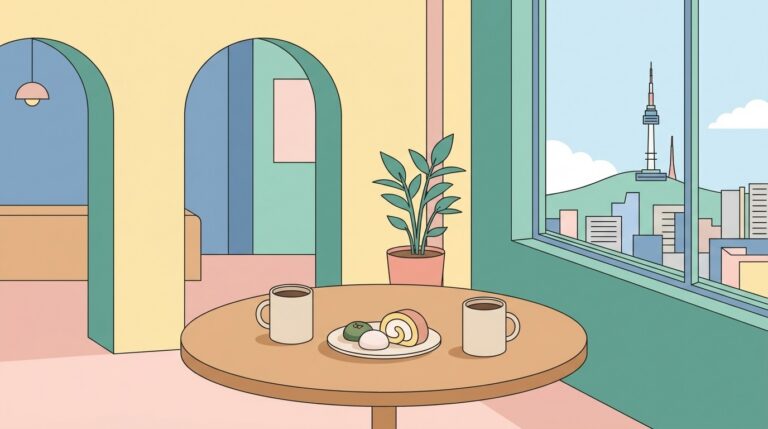
Picture this: You are sitting in a stylish cafe in Yeonnam-dong, Seoul. Across from you is your date, introduced through a mutual friend. What was supposed to be a quick one-hour coffee meetup turns into laughter, shared music playlists, and three full hours flying by in the blink of an eye. You look at the clock, panicked that it is already 9 PM, but your date smiles and says, “시간 가는 줄 몰랐어요 (I didn’t realize how much time passed).” Before you even part ways at the subway station, your phone chimes with a text suggesting dinner next weekend. Congratulations, you just experienced a classic Korean sogaeting success!
Navigating romantic waters in a new language can feel intimidating, especially when you want to express romantic interest without sounding too blunt or textbook-stiff. Many Korean learners tell me, “I know how to say ‘I like you,’ but how do I naturally say that I really enjoyed our conversation?” That is exactly why this guide exists. Based on real interactions and feedback from our elementary (A2) learners, today we will unlock the exact phrases, cultural green lights, and etiquette needed to turn a great conversation into that magical second date.
Phase 2: 핵심 표현 3선 심층 분석 (Top 3 Key Expressions)
1. 시간 가는 줄 몰랐어요 (Sigan ganeun jul mollasseoyo)
- Pronunciation: [See-gahn gah-neun jool mohl-lahs-seo-yo] (Sounds like see-gun + ga-noon + jool + mol-lah-suh-yo)
- Meaning: Literal: “I did not know time was passing.” / Nuance: “Time flew by because I was having so much fun with you!”
- K-Culture Moment: The iconic rom-com scene where the couple realizes the cafe is closing and the chairs are being stacked around them.
- Editor’s Insight: This is the ultimate “green light” compliment in Korea. Saying this shows that the conversation was captivating without being overly aggressive.
- Situation Spectrum: Casual: ✅ | Semi-formal: ✅ | Formal: ⚠️
- 🤔 Think About It: In English, we often say “Time flies!” In Korean, emphasizing your lack of awareness (mollasseoyo) highlights your deep immersion in the other person.
2. 말이 정말 잘 통해요 (Mari jeongmal jal tonghaeyo)
- Pronunciation: [Mah-ree jung-mahl jahl tong-hae-yo] (Rhymes with tongue + hay-yo)
- Meaning: Literal: “Words flow/connect really well.” / Nuance: “We click so well; we are totally on the same wavelength.”
- K-Culture Moment: When two characters in a dating show find out they share the same niche hobby and look at each other with sparkling eyes.
- Editor’s Insight: In Korean culture, emotional connection is often measured by how smoothly communication flows. Tonghada means to connect or flow through.
- Situation Spectrum: Casual: ✅ | Semi-formal: ✅ | Formal: 🚫
- 🤔 Think About It: Why do you think Korean uses the verb “to flow/connect” (tonghada) rather than simply saying “we share the same opinions”?
3. 다음에 맛있는 거 먹으러 가요 (Daeume masinneun geo meogeureo gayo)
- Pronunciation: [Dah-eum-eh mah-sheen-neun guh muh-geu-ruh gah-yo]
- Meaning: Literal: “Next time, let’s go eat something delicious.” / Nuance: “I’d love to go on a second date with you!”
- K-Culture Moment: The heartwarming post-date text message sent right as you board the subway train home.
- Editor’s Insight: In Korean dating, asking directly “Will you be my partner?” on date one is too fast, but asking to share a delicious meal is the universal code for asking for an After (애프터 – second date).
- Situation Spectrum: Casual: ✅ | Semi-formal: ✅ | Formal: ⚠️
- 🤔 Think About It: Food is central to Korean hospitality and bonding. Proposing a meal is both non-threatening and intimate.
Phase 3: 교과서 한국어 vs 진짜 한국어 (Textbook vs. Real Korean)
Situation 1: Saying You Had a Great Time
- 📖 교과서 한국어 (Textbook Korean): 오늘 매우 즐거웠습니다. (Oneul maeu jeulgeowosseumnida. / “Today was very joyful.”)
- 🗣️ 진짜 한국어 (Real Korean): 오늘 진짜 재미있었어요! (Oneul jinjja jaemiisseosseoyo! / “I had such a great time today!”)
- 💡 왜 다를까? (Why the difference?): While the textbook version sounds like a business meeting closing remark, jinjja jaemiisseosseoyo expresses genuine warmth and youthful energy.
Situation 2: Asking for a Second Date
- 📖 교과서 한국어 (Textbook Korean): 다음 주말에 다시 만날 수 있습니까? (Daeum jumare dasi mannal su itseumnikka? / “Can we meet again next weekend?”)
- 🗣️ 진짜 한국어 (Real Korean): 다음 주말에 시간 어때요? (Daeum jumare sigan eottaeyo? / “How is your schedule next weekend?”)
- 💡 왜 다를까? (Why the difference?): Asking sigan eottaeyo (how is your time?) softens the request, showing politeness and consideration for the other person’s schedule.
Phase 4: K-Culture 딥다이브 & 비언어적 매너 (Deep Dive & Non-Verbal Cues)
4-1. 눈치 (Nunchi) & Gestures on a First Date
- The Payment Dance: Even if you plan to split the bill, offering to buy the second round (like dessert or cafe drinks after dinner) is the smoothest move in Korean dating etiquette.
- The Station Farewell: Accompanying your date all the way to the subway turnstile or waiting until their bus arrives demonstrates attentiveness (baeryeo).
- The Safe-Return Text: Sending a quick message like “집에 잘 들어갔어요? (Jibe jal deureogasseoyo? / Did you get home safe?)” within 30 minutes of parting is the golden standard.
4-2. Culture Code: The “After” (애프터)
In Korea, a blind date arranged by friends or colleagues is called a sogaeting (소개팅). A successful first meeting leads to an After (애프터). If someone asks for an After within 24 hours, it means they are genuinely interested. If they wait 3 to 4 days or send vague replies, it is a polite Korean brush-off known as reading the room.
Phase 5: 실전 롤플레이 시나리오 (Interactive Roleplay)
- Setting: A warm, quiet cafe near Hongik University Station. 8:50 PM.
- Characters: Minho (your date, considerate and attentive) & You.
- Minho: 벌써 아홉 시네요! 시간 진짜 빠르다. (Beolsseo ahop sineyo! Sigan jinjja ppareuda.)
🎭 Looking down at his watch with genuine surprise
“It’s already nine o’clock! Time really flew.” - You: 맞아요, 세 시간이나 지났어요! 시간 가는 줄 몰랐어요. (Majayo, se siganina jinasseoyo! Sigan ganeun jul mollasseoyo.)
🎭 Smiling brightly with eye contact
“Right? Three hours have passed! I didn’t realize how fast time went.” - Minho: 저도요. 우리 이야기할 때 말이 정말 잘 통하는 것 같아요. (Jeodoyo. Uri iyagihal ttae mari jeongmal jal tonghaneun geot gatayo.)
🎭 Taking a sip of his tea and smiling shyly
“Me too. I feel like we really click when we talk.” - You: 저도 그렇게 느껴요. 오늘 대화 너무 즐거웠어요. (Jeodo geureoke neukkyeoyo. Oneul daehwa neomu jeulgeowosseoyo.)
🎭 Nodding gently
“I feel the same way. I really enjoyed our conversation today.” - Minho: 혹시 파스타 좋아하세요? 아까 좋아하는 음식 이야기했잖아요. (Hoksi paseuta joahaseyo? Akka joahaneun eumsik iyagihaetjanayo.)
🎭 Leaning forward with curious eyes
“By any chance, do you like pasta? You mentioned your favorite foods earlier.” - You: 네, 파스타 완전 좋아해요! (Ne, paseuta wanjeon joahahaeyo!)
🎭 Answering enthusiastically
“Yes, I totally love pasta!” - Minho: 그럼 다음에 맛있는 파스타 먹으러 가요. 다음 주말에 시간 어때요? (Geureom daeume masinneun paseuta meogeureo gayo. Daeum jumare sigan eottaeyo?)
🎭 Asking with hopeful anticipation
“Then let’s go eat delicious pasta next time. How is your time next weekend?” - You: [Your Turn to Choose!]
🔀 인터랙티브 분기점 (Choose Your Response):
- Option A: 좋아요! 다음 주 토요일에 만나요. (Joayo! Daeum ju toyoire mannayo.)
- Editor’s Feedback [BEST]: Perfect! Clear, enthusiastic, and seals the second date without hesitation.
- Option B: 글쎄요, 스케줄 보고 연락할게요. (Geulsseyo, seukejul bogo yeonrakhalgeyo.)
- Editor’s Feedback [RISK]: “I’ll check my schedule and call” is often interpreted in Korea as a polite soft rejection.
- Option C: 파스타는 별로인데 다른 건 없어요? (Paseutaneun byeolloinde dareun geon eopseoyo?)
- Editor’s Feedback [BAD]: Too blunt! Even if you prefer something else, appreciate the invitation first.
Phase 6: 10초 감정 섀도잉 드릴 (Emotional Shadowing Drill)
- [😊 Joyful & Surprised]
벌써 세 시간이나 / 지났어요? / 시간 가는 줄 몰랐어요!
(Beolsseo se siganina / jinasseoyo? / Sigan ganeun jul mollasseoyo!) -
[🥰 Warm & Sincere]
우리 / 진짜 / 말이 잘 통하는 것 같아요.
(Uri / jinjja / mari jal tonghaneun geot gatayo.) -
[🥺 Flirty & Expectant]
다음에 / 맛있는 거 / 꼭 먹으러 가요!
(Daeume / masinneun geo / kkok meogeureo gayo!)
Phase 7: K-Culture 미니 사전 (Mini Dictionary)
- 소개팅 (Sogaeting) | Blind Date through an Acquaintance
A setup arranged by a mutual friend. Unlike casual dating app matches, sogaeting comes with social accountability. - 애프터 (Aep-teo) | Asking for a Second Date
Borrowed from the English word “after.” Getting an after request confirms high mutual interest. - 티키타카 (Tikitaka) | Great Conversational Chemistry
Derived from soccer; refers to smooth, effortless back-and-forth verbal banter. - 썸 (Ssom) | The “Talking Stage” / Mutual Attraction
Short for “something.” The exciting pre-relationship phase where feelings are mutual but not yet official.
Phase 8: 여행자를 위한 생존 키트 (Traveler’s Survival Kit)
- Survival Phrase 1: 사진 찍어 드릴까요? (Sajin jjigeo deurilkkayo? / “Shall I take a photo for you?”)
Pro Tip: Offering to take a photo of your date at an aesthetic cafe wins instant points. - Survival Phrase 2: 여기 진짜 분위기 좋네요. (Yeogi jinjja bunwigi jonneyo. / “The vibe here is truly wonderful.”)
Pro Tip: Complimenting the venue validates your date’s effort in choosing the location. -
Survival Phrase 3: 조심히 들어가세요! (Josimhi deureogaseyo! / “Get home safely!”)
Pro Tip: The essential polite parting phrase for goodbyes at night. -
Editor’s Travel Note: When picking dating spots in Seoul, search on local apps rather than generic search engines. Check recommendations directly through the 네이버 지도 앱 다운로드 to find cozy cafes in Yeonnam-dong, Ikseon-dong, or Seongsu-dong.
Phase 9: “한 발 더 깊이” (Cultural Essay)
In Korean society, establishing emotional warmth doesn’t happen through grand romantic declarations right away. Instead, it is woven through mutual attentiveness, rhythm in conversation (tikitaka), and showing genuine curiosity about small daily preferences. A phrase like mari tonghada reveals that Koreans value harmony and mutual understanding above all else in romance.
💬 Your Turn: Have you ever experienced a date where time flew by so fast? How do you express “we click” in your native language? Share your story in the comments below!
Phase 10: FAQ & 오해 방지 (FAQ & Mistakes)
Q: Does asking to split the bill on a first date ruin my chances?
A: Not at all! In modern Korean dating, splitting the bill or alternating (one pays for dinner, the other pays for cafe/dessert) is very common and appreciated.
Q: How soon should I message someone after a date?
A: Within 30 minutes to an hour after reaching home. Waiting days to text to “play hard to get” is seen as a sign of disinterest in Korea.
Q: Can I use Banmal (informal speech) if we are the same age?
A: Wait until you ask for permission! Say: “우리 말 편하게 할까요? (Uri mal pyeonhage halkkayo? / Shall we speak comfortably?)” before dropping honorifics.
🚨 Common Mistakes Warning Board
- Mistake 1: Calling your date Chingu (친구 – friend).
Correction: Use their name with -ssi (e.g., Minho-ssi) or simply polite speech. Calling them chingu places them in the friend-zone. - Mistake 2: Using overly dramatic love phrases from historical dramas like Sarang-ha-o.
Correction: Keep it grounded with Jeulgeowosseoyo (I had fun). - Mistake 3: Not replying to text messages for hours on purpose.
Correction: Prompt texting is considered basic courtesy and a sign of interest in Korea.
Phase 11: 액션 미션 & 참여 유도 (Action Missions)
- 🥉 Bronze Mission (Solo Drill): Practice saying “시간 가는 줄 몰랐어요!” out loud 5 times using the emotional shadowing audio cues.
- 🥈 Silver Mission (Community): Write down your ideal type (isang-hyeong) in simple Korean and post it in the comment section.
- 🥇 Gold Mission (Real Life): Use “다음에 맛있는 거 먹으러 가요” with a Korean friend or language exchange partner this week!
- 🎮 K-Culture Mission: Watch a Korean dating show like Heart Signal or Transit Love and spot when someone says mari jal tonghada.
Phase 12: 인터랙티브 퀴즈 챌린지 (Interactive Quiz)
1. Situation Quiz: Your date says, “벌써 10시네요! (It’s already 10 o’clock!)” What is the most natural, charming response?
(A) 네, 늦었으니 빨리 가세요.
(B) 정말요? 시간 가는 줄 몰랐어요!
(C) 시계가 고장 났나 봐요.
2. Fill-in-the-Blank: “우리 대화할 때 말이 정말 잘 [ ].” (We click so well when talking.)
3. True or False: In Korea, waiting three days before sending a follow-up text is the recommended dating etiquette. (True / False)
🔍 Click here to reveal the answers and explanations!
- Answer: (B)
Explanation: Responding with “시간 가는 줄 몰랐어요!” shows that you were completely engaged in the conversation and enjoyed their company. - Answer: 통해요 (tonghaeyo)
Explanation: The idiom is mari tonghada (to click / understand each other effortlessly). - Answer: False
Explanation: In Korea, you should text the same evening to check if they got home safely. Waiting three days will be interpreted as a polite rejection!
🎬 Watch Our Daily Videos! (Daily Hangul Official Instagram)
Review the expressions you learned in this article with our fun daily short videos! Check out native pronunciation and real-life nuances in action.
- Instagram @dailyhangul_en







