

Finding Your Own Path: How to Talk About Life Turning Points in Korean
Phase 1: 공감 (A Heart-to-Heart Opening)
안녕하세요! I’m your Daily Hangul editor.
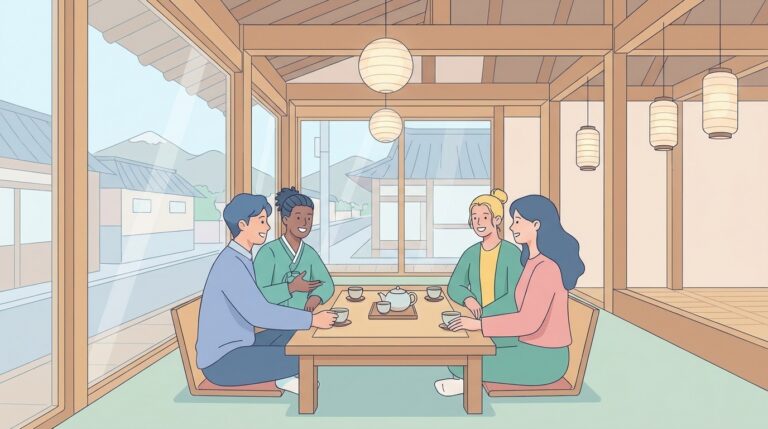
Picture this: You are sitting on a breezy rooftop cafe overlooking the eclectic streets of Itaewon or the quiet alleyways of Euljiro. You’re sharing iced Americanos with friends from three different continents. As someone recounts quitting their corporate job to become a potter, another talks about moving across the world with just two suitcases. Suddenly, you feel a deep, quiet shift inside you.
Growing up, or living in modern society, it is so easy to fall into the trap of thinking there is only one “correct path” to happiness—get good grades, enter a reputable company, get married by thirty, buy an apartment. In Korea, this pressure is palpable; it even has a name: 정답 사회 (the “Right Answer” Society). But listening to your friends, you realize with crystalline clarity: life isn’t a standardized multiple-choice test. There isn’t just one right answer.
You want to share this profound realization in Korean with your local friends over chimaek (chicken and beer), but suddenly you hesitate. How do you move beyond beginner phrases like “저는 친구가 많아요” (I have many friends) to express personal philosophical growth, vulnerability, and shifts in your core values?
As a Korean cultural navigator who has guided hundreds of intermediate learners, I hear this frustration all the time: “My Korean is fine for ordering coffee, but when the conversation gets deep, I sound like an elementary school student.” Don’t worry. Today, we will bridge that exact gap. By the end of this guide, you will master the vocabulary and conversational nuance needed to articulate your life’s turning points with grace, depth, and cultural resonance.
Phase 2: 핵심 표현 3선 심층 분석 (3 Core Expressions)
Let’s unpack three cornerstone expressions that will instantly elevate your Korean from transactional to meaningful.
1. 세상에 정답은 하나만 있는 게 아니라는 걸 깨달았어요
- Pronunciation: [Sesang-e jeongdab-eun hanaman inneun ge aniraneun geol kkaedallasseoyo] (Sounds like: Seh-sahng-eh jung-dahb-eun ha-na-mahn een-neun geh ah-nee-rah-neun gul kkeh-dahl-lah-ssuh-yo)
- Meaning: Literal: “I realized that in the world, there isn’t only one correct answer.” / Actual Nuance: “I learned that life isn’t one-size-fits-all, and everyone has their own valid path.”
- K-Culture Moment: You will hear this phrase in healing youth dramas like Twenty-Five Twenty-One or Summer Strike, where ambitious characters finally let go of societal expectations to embrace their authentic selves.
- Editor’s Insight: The noun phrase
~라는 걸 깨달았어요(~raneun geol kkaedalat-eoyo) is your golden key at the B1 level.깨닫다means to come to an organic, heartfelt realization—not just memorizing a fact, but experiencing an internal epiphany. - Situation Spectrum:
- Casual (반말): 세상에 정답은 하나만 있는 게 아니라는 걸 깨달았어. (✅ with close friends)
- Semi-formal (해요체): 세상에 정답은 하나만 있는 게 아니라는 걸 깨달았어요. (✅ perfect for standard heart-to-hearts)
- Formal (하십시오체): 세상에 정답은 하나만 존재하는 것이 아니라는 점을 깨달았습니다. (✅ for essays or formal interviews)
- 🤔 Think About It: Does your native culture emphasize a single “standard track” for adulthood, or is forging an unconventional path normalized? How does naming this realization in Korean alter your perception of it?
2. 제 인생의 큰 전환점이 되었어요
- Pronunciation: [Je insaeng-ui keun jeonhwanjeomi doe-eosseoyo] (Sounds like: Jeh een-seng-ee koon jun-hwahn-jum-ee dway-uh-ssuh-yo)
- Meaning: Literal: “It became a big turning point of my life.” / Actual Nuance: “It was a pivotal moment that fundamentally changed my trajectory.”
- K-Culture Moment: Often heard on talk shows like You Quiz on the Block, where guests reflect on the single decision, encounter, or failure that redefined their entire outlook.
- Editor’s Insight:
전환점(jeonhwanjeom) combines전환(shift/transition) and점(point). It conveys emotional weight without sounding overly dramatic. It signals to your listener: “What I’m about to tell you genuinely shaped who I am today.” - Situation Spectrum:
- Casual: 내 인생의 진짜 큰 전환점이었어. (✅)
- Semi-formal: 제 인생의 큰 전환점이 되었어요. (✅)
- Formal: 제 인생의 중대한 전환점이 되었습니다. (✅)
- 🤔 Think About It: What was the last major event that altered your outlook? If you had to describe it as a single point on a map, where would it be?
3. 시야가 확 넓어졌어요
- Pronunciation: [Siyaga hwak neolbeojyeosseoyo] (Sounds like: Shee-yah-gah hwahk nul-buh-jyuh-ssuh-yo)
- Meaning: Literal: “My field of vision suddenly became wide.” / Actual Nuance: “My perspective broadened dramatically / It blew my worldview wide open.”
- K-Culture Moment: Used by travel creators, documentary hosts, or idols when returning from their first world tours or volunteer trips abroad.
- Editor’s Insight: Notice the mimetic adverb
확(hwak). It implies a sudden, refreshing burst of change—like opening a window on a spring morning and letting the breeze rush in. It transforms a sterile sentence about “gaining perspective” into an active sensory experience. - Situation Spectrum:
- Casual: 시야가 확 넓어졌어! (✅)
- Semi-formal: 시야가 확 넓어졌어요. (✅)
- Formal: 시야를 넓히는 계기가 되었습니다. (✅)
- 🤔 Think About It: Languages often connect vision with wisdom (e.g., “seeing the light,” “broadening your horizons”). Why do you think visual clarity is universally tied to personal maturity?
Phase 3: 교과서 한국어 vs 진짜 한국어 (Textbook vs. Real-Life Korean)
Intermediate learners often memorize rigid, written-style sentences that make casual hangouts feel like a university lecture. Let’s compare standard textbook lines with how natural Koreans actually express personal transformations.
Situation 1: Talking about how your thoughts have changed
- 📖 교과서 한국어 (Textbook):
다양한 사람들을 만나서 제 생각이 많이 바뀌었습니다.
(Dae-yanghan saramdeureul mannaseo je saenggagi mani bakkwieotseumnida.)
“I met diverse people and my thoughts changed a lot.” - 🗣️ 진짜 한국어 (Natural Native):
여러 나라 친구들을 만나면서 시야가 확 트였어요.
(Yeoreo nara chingudeureul mannamyeonseo siyaga hwak teuyeosseoyo.)
“Meeting friends from various countries completely opened up my horizons.” - 💡 왜 다를까? (Why the difference?):
While the textbook version is grammatically flawless,시야가 확 트이다(to have one’s perspective burst wide open) captures the liberating emotional release of letting go of insular thinking.
Situation 2: Expressing that life has no singular path
- 📖 교과서 한국어 (Textbook):
인생에는 오직 하나의 정답만 존재하는 것이 아닙니다.
(Insaeng-eneun ojik hanaui jeongdamman jonjaehaneun geosi animnida.)
“Only one correct answer does not exist in life.” - 🗣️ 진짜 한국어 (Natural Native):
살아보니까 인생에 정해진 답은 없더라고요.
(Sara-bonikka insaeng-e jeonghaejin dabeun eopdeoragoyo.)
“Having lived a bit, I’ve realized life has no set answers.” - 💡 왜 다를까? (Why the difference?):
The sentence ending~더라고요(-deoragoyo) is one of the most polite, humble ways to express a personal realization. Instead of sounding like you are lecturing others about universal truths, it gently shares what you personally discovered through experience.
Phase 4: K-Culture 딥다이브 & 비언어적 매너 (Cultural Nuances & Manners)
4-1. 눈치 (Nunchi) & Body Language: How to Share Personal Truths
In Korean conversational culture, sharing deep values requires a delicate balance of vulnerability and modesty. When discussing how your mindset has matured:
1. The Reflective Gaze: Do not lock aggressive, unwavering eye contact while talking about personal philosophy; it can feel confrontational or self-righteous. Look slightly downward or diagonally for a second when saying 깨달았어요 (I realized), then bring your gaze warmly back to the listener. This shows introspective reflection.
2. Hand on Heart / Modest Gestures: Keep your hand gestures contained. Touching your chest lightly or keeping palms softly facing upward signals sincere authenticity.
3. The Shared Sigh of Empathy: When talking about the pressure of societal standards, a subtle, collective sigh (휴~) accompanied by a slow nod creates instant emotional solidarity.
4-2. Cultural Code: Moving Past the “정답 사회” (The Right-Answer Society)
South Korea’s rapid post-war economic miracle was fueled by a hyper-standardized roadmap: study tirelessly for the 수능 (Suneung / college entrance exam), enter a prestigious university, join a conglomerate (대기업), get married, and purchase an apartment in Seoul. This intense track created incredible efficiency, but also fostered a society where straying off the beaten path was historically branded as “wrong” (틀린 것) rather than “different” (다른 것).
Today, Korea’s younger generations are challenging this paradigm. In hit media like Work Later, Drink Now (술꾼도시여자들) or travel variety shows like Adventure by Accident (태어난 김에 세계일주), audiences celebrate figures who carve out quirky, autonomous lives. When you share that meeting diverse people showed you life has no single answer, you aren’t just practicing Korean—you are striking an empathetic chord at the very heart of contemporary Korean youth culture.
Phase 5: 실전 롤플레이 시나리오 (Real-World Roleplay)
Setting: A dimly lit, cozy LP vinyl bar in Euljiro. The scent of roasted nuts and old paper fills the air. You are sitting with Minho (민호), your Korean colleague and close friend, winding down after a busy week.
- Turn 1 (민호):
유나 씨, 요즘 보면 표정이 훨씬 편안해 보여요. 예전에는 일 때문에 항상 불안해 보였는데.
(Yuna ssi, yojeum bomyeon pyojeongi hwolssin pyeon-anhae boyeoyo. Yejeoneneun il ttaemune hangsang buranhae boyeonneunde.)
“Yuna, these days you look so much more at peace. You used to seem so anxious about work before.”
🎭 따뜻한 미소를 지으며 맥주잔을 내려놓는다.(Sets down his beer glass with a warm smile.) -
Turn 2 (You):
맞아요, 민호 씨. 사실 예전에는 정해진 대로만 살아야 하는 줄 알았거든요.
(Majayo, Minho ssi. Sasil yejeoneneun jeonghaejin daeroman saraya haneun jul aratgeodeunyo.)
“You’re right, Minho. To be honest, I used to think I had to live strictly according to a set blueprint.”
🎭 고개를 살짝 끄덕이며 회상하듯 말한다.(Nods slightly as if reminiscing.) -
Turn 3 (민호):
정해진 대로요? 어떤 계기가 있었어요?
(Jeonghaejin daeroyo? Eotteon gyegiga isseosseoyo?)
“A set blueprint? Did something happen to change that?” -
Turn 4 (You):
지난해에 다양한 국적과 배경을 가진 친구들과 프로젝트를 함께 했잖아요. 그게 제 인생의 큰 전환점이 되었어요.
(Jinanhae-e da-yanghan gukjeokgwa baegyeong-eul gajin chingudeulgwa peurojekteureul hamkke haetjanayo. Geuge je insaeng-ui keun jeonhwanjeomi doe-eosseoyo.)
“Last year, remember how I did that project with friends from various nationalities and backgrounds? That became a major turning point in my life.”
🎭 차분하게 눈을 맞추며 진심 어린 목소리로 말한다.(Makes gentle eye contact and speaks with sincere warmth.) -
Turn 5 (민호):
오, 그래요? 그 친구들과 지내면서 생각이 많이 달라졌나 봐요?
(O, geuraeyo? Geu chingudeulgwa jinaemyeonseo saenggagi mani dallajyeonna bwayo?)
“Oh, really? I guess your perspective shifted a lot while hanging out with them?” -
Turn 6 (You):
네. 각자 살아가는 방식이 다 다른데, 다들 행복해 보이더라고요. 세상에 정답은 하나만 있는 게 아니라는 걸 깨달았어요.
(Ne. Gakja saraganeun bangsigi da dareunde, dadeul haengbokhae boideoragoyo. Sesang-e jeongdabeun hanaman inneun ge aniraneun geol kkaedallasseoyo.)
“Yeah. They all live so differently, yet every one of them looked genuinely happy. I realized that there isn’t just one right answer in life.”
🎭 가슴에 손을 가볍게 얹으며 미소 짓는다.(Rests a hand lightly on the chest with a serene smile.) -
Turn 7 (민호):
와… 그 말 진짜 와닿네요. 저도 늘 남들 기준에 맞추느라 지쳤었나 봐요. 시야가 넓어진 유나 씨가 부러워요.
(Wa… geu mal jinjja wadanneyo. Jeodo neul namdeul gijune matchuneura jichyeosseonna bwayo. Siyaga neolbeojin Yuna ssiga bureowoyo.)
“Wow… that really hits home. I think I’ve also been exhausted from constantly conforming to others’ standards. I envy how broad your perspective has become.” -
Turn 8 (You):
민호 씨도 지금 충분히 잘하고 있어요! 우리만의 정답을 찾아가면 되죠.
(Minho ssido jigeum chungbunhi jalhago isseoyo! Urimanui jeongdabeul chajagamyeon doejo.)
“You’re doing great as you are, Minho! We just need to find our own right answers as we go.”
🎭 맥주잔을 가볍게 들어 건배를 제안한다.(Lifts beer glass lightly to propose a toast.)
🔀 Interactive Decision Point
How would you reply if Minho asks: “Do you ever regret breaking away from the safe, standard path?”
- Option A: “전혀 후회 안 해요. 남들처럼 사는 건 바보 같아요.” (I don’t regret it at all. Living like everyone else is stupid.)
- Option B: “불안할 때도 있지만, 제 선택 덕분에 세상을 보는 눈이 훨씬 넓어졌어요.” (I get anxious sometimes, but thanks to my choice, my view of the world has grown much wider.)
- Option C: “한국에서는 그냥 시키는 대로 사는 게 제일 안전해요.” (In Korea, just doing what you’re told is the safest bet.)
Feedback:
* Option A (Risk): Harsh and judgmental. Calling mainstream life “바보 같다” invalidates the hardworking choices of your Korean peers.
* Option B (Best Choice): Perfect B1 balance. Acknowledging emotional vulnerability (불안할 때도 있지만) followed by positive insight (세상을 보는 눈이 넓어졌어요) shows maturity and high cultural EQ.
* Option C (Bad): Defeatist. It drops the deep emotional rapport you just spent the conversation building.
Phase 6: 10초 감정 섀도잉 드릴 (10-Second Emotional Shadowing Drill)
Practice reading these out loud. Pay strict attention to the pauses (/) and the emotional cues in brackets.
[😌 차분하고 진솔하게 / Calmly and genuinely]
“지난해 만난 친구들이 / 제 인생의 / 큰 전환점이 되었어요.”
(Jinanhae mannan chingudeuri / je insaeng-ui / keun jeonhwanjeomi doe-eosseoyo.)-
[✨ 눈을 반짝이며 깨달음을 얻은 듯이 / Eyes glowing with fresh realization]
“세상에 정답은 / 하나만 있는 게 아니라는 걸 / 깨달았어요.”
(Sesang-e jeongdabeun / hanaman inneun ge aniraneun geol / kkaedallasseoyo.) -
[🌿 편안하고 깊은 울림으로 / Relaxed with deep resonance]
“살아보니까 / 인생에 정해진 답은 / 없더라고요.”
(Sara-bonikka / insaeng-e jeonghaejin dabeun / eopdeoragoyo.)
Phase 7: K-Culture 미니 사전 (Mini Dictionary)
- 전환점 (Jeonhwanjeom) | Turning point / inflection point
- Used both in personal life storytelling and business analysis to denote a critical event that reverses or changes a directional trajectory.
- 정답 사회 (Jeongdap sahoe) | “Correct Answer” Society
- A socio-cultural critique term describing environments that pressure individuals to conform to identical life milestones.
- 시야 (Siya) | Field of vision / mental horizon
- Literally one’s eyesight boundary, but metaphorically used in 90% of philosophical conversations to mean intellectual/emotional perspective.
- 인생관 (Insaeng-gwan) | Life philosophy / worldview
- Combines
인생(life) and관(viewpoint). Used when asking friends about what core values drive their daily decisions.
- Combines
Phase 8: 여행자를 위한 생존 키트 (Traveler’s Survival Kit)
When traveling off the beaten path in Korea—whether staying at a temple stay in Gyeongju or volunteering at an organic farm in Jeju—these survival expressions help you express appreciation for alternative lifestyles.
Top 3 Survival Phrases
- 솔직히 말씀드리면… (Soljiki malsseumdeurimyeon…)
- Meaning: “To be completely honest with you…”
- Pro Tip: Use this before sharing personal struggles or doubts. It signals deep intimacy and respect for the listener’s time.
- 그런 관점도 있네요! (Geureon gwanjeomdo inneyo!)
- Meaning: “I never thought of it from that perspective!”
- Pro Tip: The ultimate polite conversation builder when someone shares a worldview completely opposite to your own.
- 사람마다 기준이 다르니까요. (Saram-mada gijuni dareunikkayo.)
- Meaning: “Everyone has different personal standards, after all.”
- Pro Tip: An elegant way to diffuse debates about career success, marriage age, or wealth.
Editor’s Travel Note: Finding Korea’s Contemplative Spaces
If you want a space to reflect on your own life turning points away from tourist crowds, head to the independent bookshops in Mangwon-dong or hike along the historic Seoul City Wall at Naksan Park during sunset. Make sure you install the Naver Map App Download to navigate the hidden uphill alleys easily, and carry a reliable T-money card or climate card for seamless public transport transfers.
Phase 9: “한 발 더 깊이” (One Step Deeper)
In the Korean language, the distinction between ‘다르다’ (different) and ‘틀리다’ (wrong) is a fascinating cultural battlefield. For decades, native speakers colloquially said “너랑 나랑 생각이 틀려” (You and I have “wrong” thoughts) when they actually meant “우리 생각이 달라” (Our thoughts are different). This slip of the tongue reflects a historical collective impulse to treat differences as mistakes.
However, modern Korean youth are passionately reclaiming this boundary. When you deliberately say, “우린 틀린 게 아니라, 서로 다른 길을 걷고 있는 거예요” (We aren’t wrong; we are simply walking different paths), you are participating in a profound linguistic evolution toward empathy, diversity, and self-definition.
💬 Your Turn: What was a defining turning point that changed how you view life? Have you ever felt freed from the “right answer” pressure? Leave a comment below using the phrase ~라는 걸 깨달았어요!
Phase 10: FAQ & 흔한 실수 (FAQ & Common Mistakes)
Q: Can I use ~더라고요 when describing my own internal emotions?
A: Be careful! ~더라고요 (-deoragoyo) is used to report a fact or situation you witnessed or experienced retrospectively. You cannot use it for immediate first-person active decisions (e.g., saying “내가 밥을 먹더라고요” sounds like you were having an out-of-body experience watching yourself eat!). However, it is perfectly natural when reporting an objective realization about the world, such as “세상에 정답은 없더라고요” (I observed/realized that life has no set answers).
Q: What is the exact difference between 전환점 (jeonhwanjeom) and 계기 (gyegi)?
A: 계기 (gyegi) means a “catalyst” or “trigger”—the specific spark that caused you to do something (e.g., “한국에 오게 된 계기” = the reason/trigger for coming to Korea). 전환점 (jeonhwanjeom) is much bigger: it is the dramatic pivot or “turning point” that changed the entire direction of your life story.
Q: Is it considered disrespectful to disagree with a Korean elder about life paths?
A: In traditional settings, direct confrontation can be perceived as aggressive. Instead of saying “그건 틀렸어요” (That’s wrong), use the softening technique: “그렇게 생각하실 수도 있겠네요. 하지만 요즘은 다양한 길을 가는 사람들도 많은 것 같아요” (I see how you could think that. However, these days it seems there are also many people taking diverse paths).
🚨 Common Mistakes Alert (흔한 실수 TOP 3)
| ❌ Wrong Expression | Why It’s Problematic | ✅ Correct Action | Meaning |
|---|---|---|---|
| 생각이 틀려요 (Saenggagi teullyeoyo) | Confuses “wrong” with “different”. Sounds combative. | 생각이 달라요 (Saenggagi dallayo) | “Our thoughts are different.” |
| 인생의 터닝포인트를 만들었어요 | Over-relying on Konglish (“turning point”) in emotional talks. | 인생의 큰 전환점이 되었어요 | “It became a major turning point in my life.” |
| 정답이 없어요! (shouted bluntly) | Too blunt; can sound dismissive or nihilistic without context. | 정해진 답은 없더라고요 | “I’ve realized life has no single set answer.” |
Phase 11: 액션 미션 & 참여 유도 (Action Missions)
- 🥉 Bronze Mission (Solo Shadowing):
Record yourself on your smartphone voice memo saying: “세상에 정답은 하나만 있는 게 아니라는 걸 깨달았어요.” Listen back and check if you paused naturally at the/markers from Phase 6. - 🥈 Silver Mission (Community Sharing):
Post a photo of a place, book, or scenery that brought you peace on Instagram or your study blog. Caption it with: “시야가 확 넓어졌던 순간 ✨ #매일한글 #DailyHangul” - 🥇 Gold Mission (Real-World Practice):
Next time you have a coffee or beer with a Korean friend or language partner, ask them: “인생의 가장 큰 전환점이 언제였어요?” (When was the biggest turning point of your life?). Watch how their eyes light up at such a meaningful question! - 🎮 K-Culture Scavenger Hunt:
Watch an episode of any slice-of-life K-drama (like Hospital Playlist or My Liberation Notes). Listen for the moment a character uses the words달라(different),포기(give up), or깨달았어(realized). Note down the scene context!
Phase 12: 인터랙티브 퀴즈 챌린지 (Interactive Quiz)
Test what you’ve learned before you head out into the real world!
Q1. Situation Judgment
You are chatting with a Korean acquaintance who is feeling stressed about not having a high-paying corporate job by age 30. Which response is the most empathetic, natural, and culturally mindful?
1. “어쩔 수 없네요. 한국 사회가 원래 그래요.”
2. “너무 자책하지 마세요. 살아보니까 인생에 정해진 답은 없더라고요.”
3. “그 회사는 틀렸으니까 당장 그만두세요.”
Q2. Fill-in-the-Blank
Fill in the missing particles and vocabulary:
“외국인 친구들을 만나면서 제 ( )가 확 넓어졌어요.”
(Hint: field of vision / perspective)
Q3. True or False
In conversational Korean, using ~더라고요 is considered arrogant because it forces your personal opinion onto the listener as an absolute rule. (True / False)
💡 Click to reveal the answer and explanations!
Answers & Explanations
- Q1 Answer: 2번!
Why: Option 2 uses the comforting and humble~더라고요pattern to gently reassure your friend that diverse paths exist. Option 1 is overly fatalistic, and Option 3 is dangerously inappropriate. - Q2 Answer: 시야 (Siya)
Sentence: “외국인 친구들을 만나면서 제 시야가 확 넓어졌어요.” (Meeting international friends widened my perspective dramatically.) - Q3 Answer: False!
Why: Quite the opposite!~더라고요is a soft, non-imposing grammar structure used to recount a personal finding or observation without claiming authority over the listener’s choices.
🎬 Watch Our Daily Videos! (Daily Hangul Official Instagram)
Review the expressions you learned in this article with our fun daily short videos! Check out native pronunciation and real-life nuances in action.
- Instagram @dailyhangul_en







