

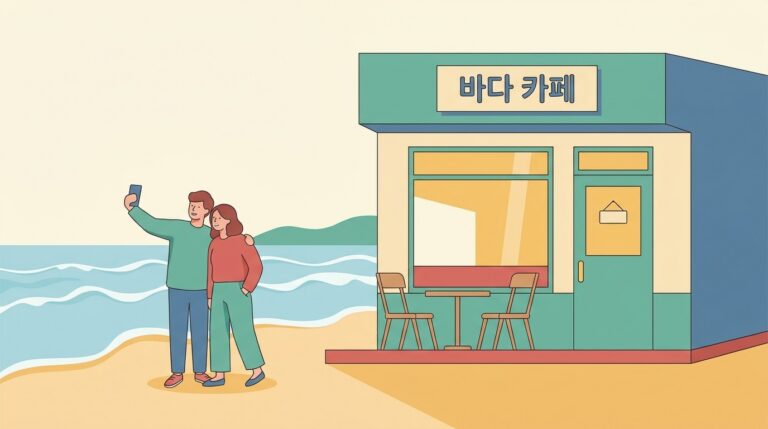
Phase 1: Empathy (Story-Immersive Opening)
안녕하세요! (Annyeonghaseyo!) I am your editor from Daily Hangul.
Have you ever binge-watched a K-drama late at night, looked at the screen, and whispered, “I have to go there!”? Maybe it was that dramatic seaside breakwater from Goblin with the red scarf, or that quaint coastal cafe in Hometown Cha-Cha-Cha where the salty ocean breeze meets a warm iced Americano. When you finally travel to Korea, you pack your bags, hop on an express bus or the KTX train, and make your dream pilgrimage to that exact beach.
But here comes the tricky part. On Monday morning, your Korean friends or coworkers ask, “주말에 뭐 했어요? (Jumare mwo haesseoyo? – What did you do over the weekend?)” You want to proudly tell them you visited that famous drama spot, drank coffee by the sea, and took a million aesthetic photos. Instead, your mind freezes. You search for words like “filming spot” and end up saying something stiff like “I visited the broadcast location.”
Don’t worry! Talking about your favorite dramas and weekend getaways is the ultimate icebreaker in Korea. Based on real feedback from hundreds of elementary learners at Daily Hangul, we have crafted this practical, beginner-friendly guide. Today, you will learn the exact lively expressions locals use to talk about drama pilgrimages, snap worthy photos, and share travel memories naturally!
Phase 2: Core Expressions (3 Top Picks)
1. 성지순례 다녀왔어요 (Seongji-sunrye danyeowasseoyo)
- Pronunciation: [Seong-ji-sun-rye da-nyeo-wa-sseo-yo] (Sounds like sung-jee + soon-ray + dah-nyuh-wah-ssuh-yo)
- Meaning: Literal: “I came back from a religious pilgrimage.” / Actual Nuance: “I visited a famous pop-culture spot (a drama filming site, idol cafe, or famous restaurant)!”
- K-Culture Moment: Fans visiting the red lighthouse where their favorite rom-com lead cried, or the bus stop made famous by a K-pop music video.
- Editor’s Insight: Originally a religious term for visiting holy lands, Korean netizens adapted 성지 (seongji) to mean any iconic pop-culture location. Saying 성지순례 다녀왔어요 (Seongji-sunrye danyeowasseoyo) instantly shows that you understand modern Korean pop slang.
- Situation Spectrum: Casual: ✅ | Semi-formal: ✅ | Formal: ⚠️
- 🤔 Think About It: Why do you think Korean fans adopted a spiritual word like “pilgrimage” for drama spots? Does your native language have a special word for visiting movie spots?
2. 인생샷 건졌어요 (Insaengsyat geonjyeosseoyo)
- Pronunciation: [In-saeng-syat geon-jyeo-sseo-yo] (Sounds like in-sang-shot + gun-jyuh-ssuh-yo)
- Meaning: Literal: “I fished out a life-shot.” / Actual Nuance: “I captured a once-in-a-lifetime photo!”
- K-Culture Moment: Standing on the rocks by the Gangneung ocean, matching the drama pose while your friend takes 50 photos until you get that single masterpiece for Instagram.
- Editor’s Insight: 인생 (Insaeng) means “life”, and 샷 (syat) comes from the English word “shot”. The verb 건지다 (geonjida) literally means to scoop or fish something out of water. Together, it means you successfully retrieved an incredible photo out of dozens of bad takes.
- Situation Spectrum: Casual: ✅ | Semi-formal: ✅ | Formal: 🚫
- 🤔 Think About It: How much does photo-taking influence your travel plans? In Korea, taking an 인생샷 (insaengsyat) is considered an essential part of weekend travel!
3. 화면이랑 똑같아요 (Hwamyeon-irang ttokgatayo)
- Pronunciation: [Hwa-myeon-i-rang ttok-ga-ta-yo] (Sounds like hwa-myun-ee-rang + ttoh-gah-tah-yo)
- Meaning: Literal: “It is identical to the screen.” / Actual Nuance: “It looks just like it did on TV!”
- K-Culture Moment: Walking into that pastel-colored seaside bakery and realizing the counter, view, and lighting look identical to the drama scene.
- Editor’s Insight: 화면 (Hwamyeon) means “screen”, and 똑같아요 (Ttokgatayo) means “exactly the same”. It sounds spontaneous and lively, expressing pleasant surprise.
- Situation Spectrum: Casual: ✅ | Semi-formal: ✅ | Formal: ✅
- 🤔 Think About It: When places look different in person than on camera, disappointment follows. Using this phrase celebrates that the magic of TV felt real in person!
Phase 3: Textbook Korean vs Real Korean
Situation 1: Explaining your weekend trip to a filming spot
- 📖 Textbook Korean: 주말에 드라마 촬영 장소를 방문했습니다. (Jumare de 드라마 chwaryeong jangso-reul bangmun-haetseumnida.) – “I visited the drama filming location over the weekend.”
- 🗣️ Real Korean: 주말에 드라마 촬영지 성지순례 다녀왔어요! (Jumare de drama chwaryeongji seongji-sunrye danyeowasseoyo!) – “I went on a drama pilgrimage over the weekend!”
- 💡 Why the Difference? While “방문했습니다 (bangmun-haetseumnida)” sounds like a news anchor reporting a diplomatic visit, locals use “다녀왔어요 (danyeowasseoyo)” for trips and “성지순례 (seongji-sunrye)” to convey fandom excitement.
Situation 2: Praising how scenic the spot is
- 📖 Textbook Korean: 풍경이 방송 화면과 완전히 일치합니다. (Punggyeongi bangsong hwamyeon-gwa wanjeonhi ilchihamnida.) – “The scenery completely matches the broadcast screen.”
- 🗣️ Real Korean: 와, 진짜 화면이랑 똑같아요! (Wa, jinjja hwamyeon-irang ttokgatayo!) – “Wow, it looks just like the drama screen!”
- 💡 Why the Difference? Words like “일치합니다 (ilchihamnida – to coincide)” belong in research papers. Adding natural exclamations like “와 (Wa)” and conversational words like “진짜 (jinjja)” makes your Korean warm and alive.
Phase 4: K-Culture Deep Dive & Non-verbal Manners
4-1. Nunchi (눈치) & Photo Etiquette at Filming Locations
When visiting a famous coastal cafe or seaside wharf featured in a hit drama, you will quickly notice something very Korean: an orderly, unspoken line (줄서기 – julseogi). Even on windy shores, fans patiently wait their turn to stand on the exact spot where the main characters stood.
* The 2-Minute Nunchi Rule: Take your photos efficiently. If a queue forms behind you, quickly take your shots and step aside. Spending 15 minutes posing while twenty people wait in the cold winds is a big 눈치 없음 (nunchi eopseum – lack of social awareness).
* Mutual Photo Favor: If you are traveling solo, gently make eye contact with the person behind you and say: “사진 한 장 찍어 드릴까요? (Sajin han jang jjigeo deurilkkayo? – Would you like me to take a photo of you?)” They will gladly return the favor and take your 인생샷 (insaengsyat)!
4-2. The Power of “Seongji-Sunrye” Tourism
In Korea, small seaside towns like Gangneung, Sokcho, and Pohang have transformed into vibrant cultural hubs thanks to K-dramas. Local cafes preserve the interior props, offer signature drinks named after character lines, and set up photo zones. Visiting these filming locations is not just for superfans; it is a mainstream weekend pastime (주말 나들이 – jumal nadeuri) for couples, families, and friends alike.
Phase 5: Real-World Roleplay Scenario
Setting: Monday morning break room at work. Min-jun (민준), a friendly Korean colleague, notices your new beach lock-screen wallpaper.
- 민준 (Min-jun): 어? 화면에 바다 사진 예쁘네요! 주말에 어디 다녀왔어요? (Eo? Hwamyeone bada sajin yeppeuneyo! Jumare eodi danyeowasseoyo?)
- 🎭 Leans in with curiosity, pointing at your phone screen.
- “Oh? The beach photo on your screen is pretty! Where did you go over the weekend?”
- You: 강릉에 다녀왔어요! 드라마 촬영지 성지순례 다녀왔어요. (Gangneunge danyeowasseoyo! Deurama chwaryeongji seongji-sunrye danyeowasseoyo.)
- 🎭 Smiling proudly and showing the lock screen closer.
- “I went to Gangneung! I went on a K-drama pilgrimage.”
- 민준 (Min-jun): 아, 혹시 그 유명한 로맨스 드라마 바닷가 카페요? (A, hoksi geu yumyeonghan romaenseu deurama badatga kapeyo?)
- 🎭 Eyes widen with recognition.
- “Ah, by any chance, that famous beach cafe from the romance drama?”
- You: 네, 맞아요! 바다 바로 앞 카페예요. 화면이랑 진짜 똑같아요. (Ne, majayo! Bada baro ap kapeyeyo. Hwamyeon-irang jinjja ttokgatayo.)
- 🎭 Nodding enthusiastically with a bright smile.
- “Yes, exactly! It is the cafe right by the sea. It looks just like on screen.”
- 민준 (Min-jun): 와, 사람 많지 않았어요? 사진 찍기 힘들었을 텐데요. (Wa, saram manchi anasseoyo? Sajin jjikgi himdeureosseul tendeyo.)
- 🎭 Chuckles sympathetically while taking a sip of his coffee.
- “Wow, wasn’t it super crowded? It must have been hard to take photos.”
- You: 조금 기다렸지만, 그래도 인생샷 건졌어요! (Jogeum gidaryeotjiman, geuraedo insaengsyat geonjyeosseoyo!)
- 🎭 Chuckling happily and swiping to show the picture.
- “We waited a bit, but still got a once-in-a-lifetime shot!”
- 민준 (Min-jun): 대박! 진짜 드라마 주인공처럼 나왔네요! (Daebak! Jinjja deurama ju-ingongcheoreom nawanneyo!)
- 🎭 Thumbs up with an amazed reaction.
- “Awesome! You really look like the main character of the drama!”
- You: 고마워요! 날씨가 좋아서 정말 힐링하고 왔어요. (Gomawoyo! Nalssiga joaseo jeongmal hillinghago wasseoyo.)
- 🎭 Beaming with satisfaction.
- “Thank you! The weather was great, so it was truly healing.”
🔀 Interactive Decision Point
How would you respond if Min-jun asks: “커피 맛은 어땠어요? (Keopi maseun eottaesseoyo? – How was the coffee taste?)”
- Option A: “커피도 맛있고 뷰도 최고였어요! (Keopido masitgo byudo choegoyeosseoyo! – The coffee was delicious and the view was the best!)”
- Editor Feedback: [Best Choice] Smooth, positive, and naturally combines food and scenery.
- Option B: “음료수를 상업적으로 구매했습니다. (Eumnyosureul sang-eopjeogeuro gumaehaetseumnida. – I commercially purchased beverages.)”
- Editor Feedback: [Bad Choice] Unnaturally mechanical. Nobody talks like a legal contract during coffee breaks!
- Option C: “너무 비싸서 화가 났어요! (Neomu bissaseo hwaga nasseoyo! – It was too expensive, so I got angry!)”
- Editor Feedback: [Risk Choice] While honesty is fine, sounding overly aggressive over cafe prices might dampen the cheerful mood.
Phase 6: 10-Second Emotion Shadowing Drill
Practice these natural rhythm pauses marked with /. Try mimicking the emotions!
[😊 Proud & Excited]- 주말에 / 드라마 촬영지 / 성지순례 다녀왔어요!
- (Jumare / deurama chwaryeongji / seongji-sunrye danyeowasseoyo!)
- “Over the weekend / to the drama filming spot / I went on a pilgrimage!”
[✨ Wide-eyed Wonder]- 우와, / 진짜 / 화면이랑 똑같아요!
- (Uwa, / jinjja / hwamyeon-irang ttokgatayo!)
- “Whoa, / seriously / it looks just like on screen!”
[📸 Joyful Triumph]- 줄 서서 기다렸는데, / 인생샷 건졌어요!
- (Jul seoseo gidaryeonneunde, / insaengsyat geonjyeosseoyo!)
- “I waited in line, but / I caught the photo of my life!”
Phase 7: K-Culture Mini Dictionary
- 성지순례 (Seongji-sunrye)
- Meaning: Pilgrimage to sacred sites / Pop-culture locations.
- Real Usage: Used whenever K-pop or K-drama fans visit filming spots, music video sets, or idol-recommended diners.
- 인생샷 (Insaengsyat)
- Meaning: Once-in-a-lifetime photo / The best photo of your life.
- Real Usage: Commonly used when asking a friend: “인생샷 찍어 줘! (Insaengsyat jjigeo jwo! – Take a life-shot for me!)”
- 촬영지 (Chwaryeongji)
- Meaning: Filming location / Shooting set.
- Real Usage: Often typed into Korean navigation apps: “드라마 촬영지 (deurama chwaryeongji)” to pinpoint exact outdoor locations.
- 본방사수 (Bonbang-sasu)
- Meaning: Watching the original broadcast live.
- Real Usage: Fans say this to promise they won’t wait for re-runs: “오늘 밤 본방사수 할 거예요! (Oneul bam bonbangsasu hal geoyeyo! – I will watch the premiere live tonight!)”
Phase 8: Traveler’s Survival Kit
Top 3 Survival Phrases for Filming Spot Cafes
- 여기 드라마 나온 곳 맞아요? (Yeogi deurama naon got majayo?)
- Pronunciation: Yeo-gi deu-ra-ma na-on got ma-ja-yo?
- Pro Tip: Ask the cafe staff or shopkeeper to confirm you arrived at the exact filming spot.
- 여기서 사진 찍어도 돼요? (Yeogiseo sajin jjigeodo dwaeyo?)
- Pronunciation: Yeo-gi-seo sa-jin jji-geo-do dwae-yo?
- Pro Tip: Always ask before filming private restaurant areas or other customers.
- 저 사진 한 장만 찍어 주실 수 있나요? (Jeo sajin han jangman jjigeo jusil su innayo?)
- Pronunciation: Jeo sa-jin han jang-man jji-geo ju-sil su in-na-yo?
- Pro Tip: The polite standard phrase when requesting a photo from a friendly bystander.
Editor’s Travel Note
- Navigation Guide: Google Maps often has limited walking details in South Korea. Before heading out to coastal villages, be sure to use the Naver Map navigation application to search bus routes and exact cafe names.
- Express Trains: For popular East Sea drama filming spots like Gangneung, book your train weekend tickets in advance via the Korail Talk mobile booking app.
Phase 9: “한 발 더 깊이” (Deep Thinking)
In many cultures, entertainment is consumed and quickly archived. But in Korea, watching a drama is an active, communal experience. Fans do not just watch a story; they step into the characters’ shoes by drinking the same coffee, standing by the exact ocean railing, and sharing their journey on social media under the banner of 성지순례 (seongji-sunrye). It turns fleeting broadcast moments into tangible real-life memories.
💬 Your Turn: Which K-drama filming spot is at the very top of your Korea travel bucket list? Let us know in the comments below!
Phase 10: FAQ & Common Mistakes
Q: Can I use 성지순례 (seongji-sunrye) for restaurants too?
A: Yes! If a restaurant became famous because a celebrity visited or it was featured on a famous TV show like Delicious Rendezvous, Koreans gladly call eating there a 성지순례 (seongji-sunrye).
Q: What is the difference between 촬영지 (chwaryeongji) and 세트장 (seteujang)?
A: 촬영지 (Chwaryeongji) refers to real-world outdoor locations like cafes, beaches, or parks. 세트장 (Seteujang) refers to an artificial indoor studio or historical drama open set built specifically for filming.
Q: Is 인생샷 (insaengsyat) appropriate to say to older adults or bosses?
A: It is slightly informal youth slang. With older bosses in formal business situations, prefer saying “좋은 사진 많이 찍었습니다 (Joeun sajin mani jjigeotseumnida – I took many great photos).”
🚨 Common Mistakes Alert
- Mistake: Saying “드라마 집 (deurama jip)” when looking for a filming spot.
- Correct Action: Say “드라마 촬영지 (deurama chwaryeongji)” so people clearly understand you.
- Mistake: Using “인생 사진을 낚았어요 (Insaeng sajineul nakkasseoyo)” (literal fishing).
- Correct Action: The fixed idiomatic verb is always 건졌어요 (geonjyeosseoyo).
- Mistake: Greeting busy staff by demanding photos first.
- Correct Action: Order a drink or snack first, then politely ask: “사진 찍어도 돼요? (Sajin jjigeodo dwaeyo?)”.
Phase 11: Action Mission & Challenge
- 🥉 Bronze Mission (Solo Practice): Say “성지순례 다녀왔어요! (Seongji-sunrye danyeowasseoyo!)” out loud three times in the mirror with a proud smile.
- 🥈 Silver Mission (Social Share): Post your favorite drama landscape photo on your Instagram story with the caption: “화면이랑 똑같아요! (Hwamyeon-irang ttokgatayo!)”.
- 🥇 Gold Mission (Real Life): When your Korean tutor or language exchange partner asks about your weekend or vacation, use 인생샷 건졌어요 (Insaengsyat geonjyeosseoyo) naturally in conversation.
- 🎮 K-Culture Mission: Watch the ending credits of your favorite K-drama episode and spot the logo or place name in the 장소협조 (Location Sponsorship) credits!
Phase 12: Interactive Quiz Challenge
Quiz 1: Situational Choice
You visited the beach breakwater where an iconic drama was filmed and want to tell your coworker that the location looked identical to the TV show. What do you say?
* A) 화면이랑 똑같아요! (Hwamyeon-irang ttokgatayo!)
* B) 성지순례가 비싸요! (Seongji-sunryega bissayo!)
* C) 본방사수 했습니다! (Bonbangsasu haetseumnida!)
Quiz 2: Fill in the Blank
줄 서서 기다렸지만, 드디어 멋진 ________ 건졌어요! (I waited in line, but I finally scooped up a once-in-a-lifetime photo!)
* (Hint: In-saeng-syat)
Quiz 3: True or False
In Korean culture, calling a drama filming trip a 성지순례 (seongji-sunrye) is considered offensive and strictly limited to religious churches.
* (True / False)
👉 Click here to check the Answers & Explanations!
- Quiz 1 Answer: A) 화면이랑 똑같아요! (It means “It looks just like on screen!”. B means “Pilgrimage is expensive”, and C means “I watched the live broadcast”.)
- Quiz 2 Answer: 인생샷 (Insaengsyat). Combined with 건지다, it creates the popular idiom 인생샷 건졌어요.
- Quiz 3 Answer: False. While it originated as a religious term, modern Koreans widely and cheerfully use it for pop-culture visits to drama sets, concert venues, and famous cafes!
🎬 Watch Our Daily Videos! (Daily Hangul Official Instagram)
Review the expressions you learned in this article with our fun daily short videos! Check out native pronunciation and real-life nuances in action.
- Instagram @dailyhangul_en







