

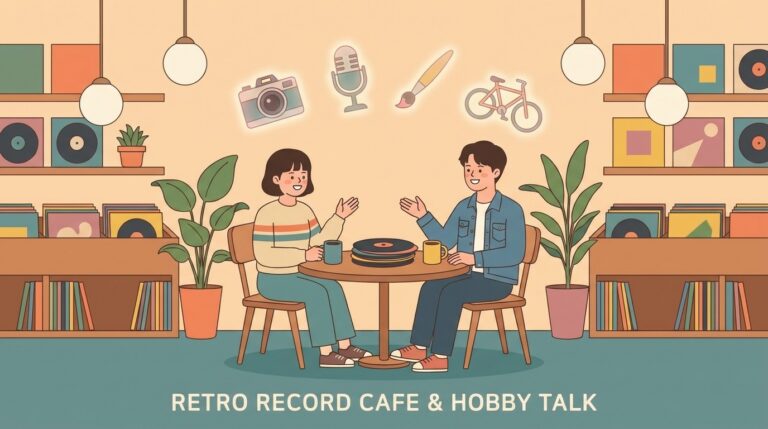
The Secret Korean Slang for Passionate Geeks: Why Being a Deokhu Is a Compliment
Phase 1: Empathy & Storytelling Opening
안녕하세요! 매일한글 에디터입니다. (Hello! This is your Daily Hangul editor.)
Have you ever spent hours researching every single Easter egg in a K-drama, hunting down a limited-edition photocard, or scouring Mapo-gu to find the absolute crispiest pajeon in Seoul? Back home, someone might tease you with, “Why are you so obsessed?” or label you a total nerd. For years, language learners have nervously asked us: “If I call someone an ‘otaku’ or tell people I’m obsessed with something in Korean, will I sound weird or anti-social?”
Here is the great news: modern Korean youth culture has flipped that script upside down. Today, having an intense, expert-level passion isn’t something to hide—it is celebrated as a superpower! In Korea, calling someone a 덕후 (Deokhu) or a 장인 (Jang-in) is one of the coolest compliments you can give. Based on real questions from hundreds of our intermediate learners, this guide will unlock the deep slang of Korean fandoms, taking you far beyond stiff textbook vocabulary and straight into the beating heart of genuine K-Culture conversations.
Phase 2: Deep Breakdown of 3 Core Expressions
1. 덕후 (Deokhu)
- Pronunciation: [Deok-hu] (Sounds like “duck-who”, but softer on the ‘d’)
- Meaning: Literal: Shortened and localized from the Japanese loanword Otaku (오타쿠 → 오덕후 → 덕후). / Real Nuance: An affectionate badge of honor for a passionate specialist, devoted fan, or niche expert.
- K-Culture Moment: On variety shows like Omniscient Interfering View, when a celebrity shows their massive collection of sneakers, watches, or vintage coffee grinders, the screen displays captions like: “진정한 장비 덕후 등장!” (A true gear-deokhu appears!)
- Editor’s Insight: While otaku once carried a recluse stereotype, deokhu has been completely reclaimed. You can attach it to almost any noun: 커피 덕후 (coffee fanatic), 빵 덕후 (bread connoisseur), or 아이돌 덕후 (K-pop idol fan).
- Situation Spectrum: Casual: ✅ | Semi-formal: ✅ | Formal: ⚠️
- 🤔 Think About It: In your native culture, do words for passionate hobbyists (like geek or nerd) carry positive or negative undertones? How does society’s view of hyper-focus shape language?
2. 과몰입 (Gwamorip)
- Pronunciation: [Gwa-mo-rip] (Rhymes like “gwa-moe-leap” with a gentle ‘p’ stop)
- Meaning: Literal: Over-immersion or excessive absorption. / Real Nuance: Being so emotionally invested in a drama plot, celebrity dynamic, or hobby storyline that it genuinely impacts your daily mood.
- K-Culture Moment: In dating reality shows like EXchange (환승연애), panel hosts openly cry and yell at the TV screen, saying: “저 지금 완전 과몰입했어요!” (I am completely over-immersed right now!)
- Editor’s Insight: This word is rarely negative among friends. Saying you are in 과몰입 state means a show or music video is so masterpieces-level good that you cannot stop thinking about it.
- Situation Spectrum: Casual: ✅ | Semi-formal: ✅ | Formal: 🚫
- 🤔 Think About It: Why do you think Korean storytelling thrives on creating emotional 과몰입 among audiences? Is your media consumption equally intense?
3. 장인 (Jang-in)
- Pronunciation: [Jang-in] (Pronounced like “jahng-een”)
- Meaning: Literal: Master artisan or traditional craftsman. / Real Nuance: Someone whose everyday skill in a specific, often casual niche is so insanely polished they deserve a medal.
- K-Culture Moment: When an idol or content creator excels at taking flawless smartphone portraits or creates hilarious meme reaction images, fans flood social media comments with: “사진 장인 인정!” (Acknowledged as a master photographer!)
- Editor’s Insight: Traditionally reserved for sword-smiths or potters, Gen Z Koreans now use 장인 playfully: 짤 장인 (master of funny meme images), 맛집 장인 (curator of legendary hidden eateries).
- Situation Spectrum: Casual: ✅ | Semi-formal: ✅ | Formal: ✅
- 🤔 Think About It: How does elevating everyday internet culture with traditional titles of honor reflect the Korean desire for playful respect and community validation?
Phase 3: Textbook Korean vs. Real Korean
Situation 1: Talking about your extreme binge-watching habit
- 📖 교과서 한국어 (Textbook): 저는 이 드라마를 아주 좋아해서 밤을 새웠습니다. (Jeoneun i deuramareul aju joahaeseo bameul saewossseumnida. / I like this drama very much, so I stayed up all night.)
- 🗣️ 진짜 한국어 (Real Korean): 저 이 드라마에 완전 과몰입해서 밤샜잖아요. (Jeo i deurama-e wanjeon gwamorip-haeseo bamsaetjanayo. / I got so crazy immersed in this drama that I ended up pulling an all-nighter!)
- 💡 왜 다를까?: Textbook phrasing sounds like a report for a teacher. Native speakers use emotional slang like 과몰입 and the interactive ending -잖아요 to invite friendly empathy.
Situation 2: Complimenting someone’s niche expertise
- 📖 교과서 한국어 (Textbook): 민수 씨는 맛있는 식당에 대해 많이 압니다. (Minsu ssineun masinneun sikdange daehae mani amnida. / Minsu knows a lot about delicious restaurants.)
- 🗣️ 진짜 한국어 (Real Korean): 민수 씨, 완전 숨은 맛집 발굴 장인이네요! (Minsu ssi, wanjeon sumeun matjip balgul jang-inineyo! / Minsu, you are a legit master at unearthing hidden local foodie spots!)
- 💡 왜 다를까?: Stating that someone “knows a lot” sounds dry. Calling someone a 장인 acknowledges their deep effort and elevates simple knowledge into genuine talent.
Phase 4: K-Culture Deep Dive & Non-Verbal Manners
4-1. 눈치 (Nunchi) & Gestures
When acknowledging someone as a 덕후 or 장인, your body language completes the message. If someone praises your specialized knowledge, Korean modesty etiquette requires a self-deprecating wave of both hands near your chest while slightly dipping your head: “아니에요, 그냥 덕질 좀 하는 거예요” (No, I just do a little fandom fun). Never cross your arms or boast arrogantly. When complimenting a friend, an energetic thumbs-up paired with wide eyes makes the word 장인 feel like an Oscar award.
4-2. Cultural Code: From “Otaku Stigma” to “Respecting Tastes (취향 존중)”
In the early 2000s, borrowing the Japanese concept of otaku carried heavy connotations of social withdrawal. However, as the Korean creative economy exploded—spurred by K-Pop album concept lore, webtoon world-building, and high-end specialty coffee—Korean youth embraced the culture of 취존 (Chwijon, short for 취향 존중 / Respecting Personal Tastes). In contemporary Korean society, having zero passions is seen as dull, whereas being a hyper-dedicated deokhu demonstrates curiosity, diligence, and genuine authenticity.
Phase 5: Real-Life Roleplay Scenario
Setting: A hip retro LP vinyl bar in the back alleys of Euljiro, Seoul. Soft neon lights illuminate rows of thousands of dusty Korean 1980s city-pop records.
Characters: Alex (an intermediate Korean learner who loves analog audio) and Min-jun (a local vinyl enthusiast friend).
- Min-jun: 🎭 [Takes a sip of craft beer, pointing toward a shelf of rare vintage albums] 와, 이 앨범을 여기서 찾다니 대박이다! (Wa, i aelbeomeul yeogiseo chatdani daebagida! / Wow, finding this album here is insane!)
- Alex: 🎭 [Eyes widening, leaning in] 그 앨범 엄청 귀한 거예요? (Geu aelbeom eomcheong gwihan geoyeyo? / Is that album super rare?)
- Min-jun: 🎭 [Chuckles passionately] 1988년에 딱 500장만 찍어낸 초판본이거든. (Cheon-gubaek-palsip-palnyeone ttak obak-jangman jjigeonaen chopanbon-igeodeun. / It is the original 1988 first edition with only 500 copies ever pressed.)
- Alex: 🎭 [Nodding with deep admiration] 민준 씨 진짜 LP 덕후 맞네요! (Min-jun ssi jinjja LP deokhu manneyeo! / Min-jun, you truly are a genuine LP geek!)
- Min-jun: 🎭 [Waving hands humbly, smiling] 아이고, 덕후까지는 아니고 취미죠. (Aigo, deokhukkajineun anigo chwimijyo. / Oh gosh, not quite a hardcore deokhu, just a little hobby.)
- Alex: 🎭 [Pointing to the turntable needle] 제가 보기엔 완전 이 분야 장인인데요? (Jega bogien wanjeon i bun-ya jang-in-indeyo? / From what I see, you are a complete master in this field!)
- Min-jun: 🎭 [Beaming with pride, adjusting his glasses] 그렇게 말해주니 뿌듯하네요. 오늘 명곡으로 싹 틀어줄게요! (Geureoke malhaeju-ni ppudeuthTransformation-haeneyo. Oneul myeong-gogeuro ssak teureojulgeyo! / Hearing you say that makes my day. I will spin absolute masterpieces for you tonight!)
- Alex: 🎭 [Clinking glasses with a grin] 오늘 밤 감성에 과몰입해 보겠습니다! (Oneul bam gamseong-e gwamorip-hae bogesseumnida! / I’m ready to get fully over-immersed in tonight’s vibe!)
🔀 Interactive Decision Point
Min-jun pulls out an obscure, crackly record and begins explaining the bassist’s career history for 10 straight minutes. How do you respond?
- Option A: “민준 씨, 이제 그만 말하고 음악이나 들어요.” (Min-jun, stop talking now and just listen to the music.)
- Option B: “우와, 디테일 장인이시네요! 들을수록 더 흥미진진해요.” (Wow, you are a master of details! The more I listen, the more fascinating it gets.)
- Option C: “오타쿠 같아요.” (You look like an otaku.)
Feedback:
- Option A (Bad): Cuts off your Korean friend’s passion abruptly and violates conversational harmony (눈치).
- Option B (Best!): Perfect usage of 장인! It praises his storytelling effort and deepens social rapport instantly.
- Option C (Risk): While related to deokhu, saying raw 오타쿠 directly to someone’s face can still sound derogatory and blunt compared to the playful 덕후.
Phase 6: 10-Second Emotional Shadowing Drill
Practice reading these aloud with real human emotion! Follow the slash marks (/) for natural rhythm breaks.
[🔥 Passionate & Amazed]
우와, / 이걸 다 모았다고요? / 완전 수집 장인이시네요!
(Uwa, / igeol da moatdagoyo? / Wanjeon sujip jang-in-isineyo! / Wow, / you collected all of this? / You are an absolute collection master!)-
[🥺 Relatable & Dramatic Dramatic Drama Fan]
주인공 서사가 너무 슬퍼서 / 하루 종일 / 과몰입 중이에요.
(Juin-gong seosaga neomu seulpeoseo / haru jong-il / gwamorip jung-ieyo. / The main character’s backstory is so heartbreaking / that all day long / I’m stuck in hyper-immersion mode.) -
[😊 Proud & Modest]
제가 다른 건 몰라도, / 떡볶이 맛집 찾는 건 / 진짜 덕후 수준이에요!
(Jega dareun geon mollado, / tteokbokki matjip channeun geon / jinjja deokhu sujun-ieyo! / I might not know other things, / but when it comes to finding top tteokbokki joints, / I am truly on a deokhu level!)
Phase 7: K-Culture Mini Dictionary
-
덕질 (Deokjil) | Fandom Activities / Geeking Out
The action form of being a fan. Combining 덕후 with the action suffix -질. Used constantly in daily conversation: “주말에 덕질하느라 바빴어요” (I was busy geeking out over my hobby this weekend). -
성덕 (Seongdeok) | Successful Fan
Short for 성공한 덕후. Refers to someone who loved an idol or artist and ended up collaborating with them, or turned their niche passion into a dream career. -
입덕 (Ipdeok) | Entering a Fandom
The magical moment you fall head-over-heels for a new hobby, group, or drama: “그 뮤직비디오 보고 바로 입덕했어요” (Watching that music video made me join the fandom immediately). -
주접 (Jujeop) | Over-the-Top Affectionate Praise
Hilarious, dramatic, poetic exaggeration used by fans to praise their favorite artist or friend’s photo: “주접 댓글 읽기” (Reading exaggerated fan love letters).
Phase 8: Traveler’s Survival Kit
TOP 3 Survival Phrases for Hobby Lovers
-
혹시 추천해주실 만한 시그니처 메뉴 있나요?
(Hoksi chucheon-hae-jusil manhan sigeunicheo menyu itnayo?)
“By any chance, is there a signature menu item you recommend?”
👉 Pro Tip: When visiting specialized coffee roasteries in Seongsu-dong, asking for their signature shows you value their craftsmanship. -
여기 사진 진짜 잘 나오네요! 사진 장인이세요.
(Yeogi sajin jinjja jal naoneyo! Sajin jang-in-iseyo.)
“The lighting and photos turn out amazing here! You’re a true photo master.” -
한정판 굿즈는 어디서 살 수 있나요?
(Hanjeongpan gutjeuneun eodiseo sal su itnayo?)
“Where can I purchase the limited-edition merchandise?”
Editor’s Travel Note
If you want to witness real Korean hobby culture in Seoul, step away from typical tourist zones and explore specialized subculture hubs. Dive into Hongdae AK Plaza for anime, gaming, and collectible figures, or visit Dongmyo Flea Market and Euljiro retro vinyl cafes for vintage gems. To effortlessly navigate underground subways and pinpoint tiny back-alley vinyl basements that Google Maps often misses, make sure to read our recommended Naver Map app installation guide. Remember: in Korea, many specialty indie hobby shops require contactless card payment or Naver Pay rather than physical cash!
Phase 9: “One Step Deeper” (Cultural Reflection)
In historically collective societies, standing out with unconventional eccentricities was frequently discouraged by societal pressure. Yet today, Korean society has evolved to embrace specialized micro-communities where people celebrate genuine devotion. Calling someone a 장인 or 덕후 reflects a modern cultural shift from rigid academic hierarchy toward respecting deep, self-driven mastery. Passion is now viewed as cultural capital.
💬 Your Turn: What is one topic, hobby, or pop-culture obsession that makes you a proud 덕후? Leave a comment below introducing your passion using the phrase: “저는 [Hobby] 덕후예요!”
Phase 10: FAQ & Misconception Prevention
Q: Is calling an older Korean person or a boss a ‘덕후’ considered disrespectful?
A: Yes, absolutely avoid calling superiors or elders a 덕후! Even though it has a positive and friendly connotation among peers and Gen Z, older generations may still associate it with the anti-social nuance of the original Japanese word otaku. With seniors, stick to respectful terms like 전문가 (expert) or 애호가 (enthusiast/aficionado).
Q: What is the exact difference between ‘과몰입’ (over-immersion) and ‘뇌절’ (overdoing it)?
A: 과몰입 is positive or emotionally relatable—it means you love a fictional world or topic so much that you feel it deeply. In contrast, 뇌절 (Noejeol) is negative slang meaning someone took a joke or action way too far until people became annoyed and exhausted.
Q: Can ‘장인’ be used for everyday funny skills?
A: Yes! While 장인 formally means a traditional master craftsman, Korean youth frequently apply it to humorous, relatable talents: 밀당 장인 (a master of playing hard-to-get in dating) or 포토샵 장인 (a Photoshop wizard).
🚨 Common Mistakes Alert
- Calling someone directly an ‘오타쿠’ (Otaku) instead of ‘덕후’ (Deokhu):
Correction: Always use 덕후 for peers. 오타쿠 sounds harsh and outdated. - Confusing ‘성덕’ (Successful Fan) with ‘성덕’ (Saint):
Correction: In casual modern slang, 성덕 is almost always 성공한 덕후 (a fan who succeeded in meeting their idol or achieving a dream). - Using ‘주접’ in serious situations:
Correction: 주접 means dramatic, funny hyperbole for someone you adore. Do not use it when giving formal workplace compliments!
Phase 11: Action Missions
- 🥉 Bronze Mission (Solo Practice): Stand before a mirror and practice introducing your personal hobby: “안녕하세요, 저는 케이팝 덕후입니다!” (Hello, I am a K-pop deokhu!)
- 🥈 Silver Mission (Social Media): Find a Korean creator or friend on Instagram or X (Twitter) who posted high-quality photography, and comment: “와, 완전 사진 장인이시네요!” (Wow, you are a complete photo master!)
- 🥇 Gold Mission (Real-Life Connection): The next time you visit a Korean café, restaurant, or hobby shop, compliment the owner or staff using: “여기 완전 [커피/디저트] 장인 맛집이네요!”
- 🎮 K-Culture Mission: Watch an episode of a Korean variety show (like Running Man or Going SEVENTEEN) and spot the moment the caption on screen uses the word 과몰입 or 덕후.
Phase 12: Interactive Quiz Challenge
Test what you’ve learned! Think through your answers before checking the accordion below.
- [Situational Judgment] Your Korean friend spent the entire weekend organizing and cataloging their photocards into 10 binders. Which praise is the most natural and complimentary?
- A) “진짜 한심하네요.” (That’s truly pathetic.)
- B) “완전 정리 장인이자 진정한 덕후네요!” (You are a total organizing master and a true deokhu!)
- C) “너무 뇌절하는 것 같아요.” (I think you are overdoing it in an annoying way.)
- [Fill-in-the-Blank] Complete the sentence with the right slang for being emotionally overwhelmed by a drama:
- “이 드라마 결말 보고 너무 슬퍼서 아직도 _______ 중이에요.”
(Hint: Over-immersion)
- “이 드라마 결말 보고 너무 슬퍼서 아직도 _______ 중이에요.”
- [True or False] The word ‘장인’ can only be legally used for government-certified traditional artisans.
- True / False
👉 Click to reveal answers & explanations!
- Answer: B
Explanation: Pairing 장인 (master) with 덕후 (passionate enthusiast) shows deep respect and friendly warmth for their hobby! -
Answer: 과몰입 (Gwamorip)
Explanation: When you cannot detach your emotions from a fictional storyline or character, you are in a state of 과몰입! -
Answer: False
Explanation: While its historical dictionary meaning refers to traditional master craftsmen, modern Korean slang freely uses 장인 to praise anyone with elite everyday skills.
🎬 Watch Our Daily Videos! (Daily Hangul Official Instagram)
Review the expressions you learned in this article with our fun daily short videos! Check out native pronunciation and real-life nuances in action.
- Instagram @dailyhangul_en







