

Phase 1: Empathy (Storytelling Opening)
안녕하세요! 매일한글 에디터입니다. (Hello! I’m your Daily Hangul editor.)
Remember watching K-dramas where the main character moves into a cozy Seoul rooftop apartment (oktapbang), decorating it with fairy lights and sipping iced Americano while gazing at the city skyline? Living alone in Korea—known as 자취 (jachwi)—feels like the ultimate badge of adult freedom at first. You can eat spicy ramyeon at 2 AM, leave your clothes on the drying rack for days, and play K-pop at full volume.
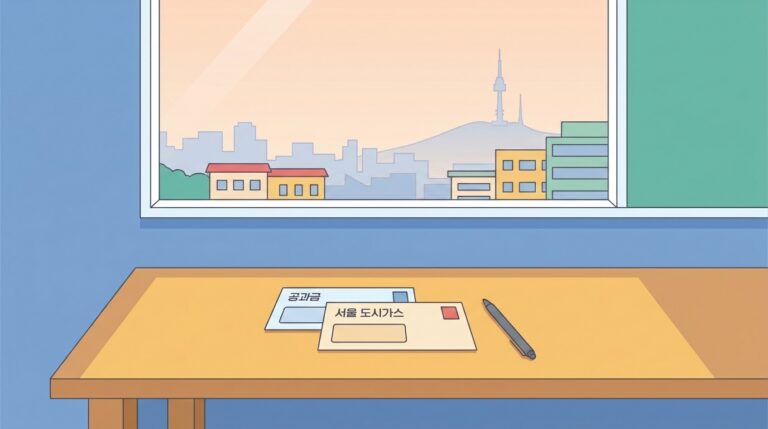
Then, the 25th of the month arrives. Your phone buzzes with notification after notification: 월세 (wolse – monthly rent), 관리비 (gwallibi – maintenance fee), and a stack of color-coded slips in your mailbox for electricity, gas, and water. Suddenly, you realize: groceries, toilet paper, trash bags, and heating are all entirely on your shoulders. You find yourself standing in front of the convenience store discount shelf thinking, “Is breathing this expensive?!”
If you have ever felt overwhelmed trying to express this distinct adult struggle to your Korean friends or coworkers, this guide is crafted specifically for you. Based on real questions from our intermediate learners navigating life in Korea, here is how you talk about the real financial weight of independent living with natural nuance and humor.
Phase 2: Core 3 Expressions
1. 생활비를 혼자 감당하기가 만만치 않아요 (Saenghwalbireul honja gamdanghagiga manmanchi anayo)
- Pronunciation: [Saeng-hwal-bi-reul hon-ja gam-dang-ha-gi-ga man-man-chi a-na-yo] (Sounds like “sang-hwal-bee” with a soft, trailing “an-ah-yo”)
- Meaning: “Covering living expenses all by myself is no joke / quite formidable.”
- K-Culture Moment: Seen in relatable youth web dramas like Work Later, Drink Now when junior office workers gather over somaek to vent about their monthly paychecks vanishing into thin air.
- Editor’s Insight: 만만치 않다 (manmanchi anta) is a brilliant intermediate expression. Literally, 만만하다 means “easy to deal with or handle casually.” Negating it (만만치 않다) means a situation is formidable, tough, or not to be taken lightly. Combining it with 감당하다 (gamdanghada – to shoulder/bear) gives a mature, articulate tone rather than just saying “너무 힘들어요 (It’s too hard).”
- Situation Spectrum:
- Casual: ⚠️ (Better to use informal endings: 만만치 않아)
- Semi-formal: ✅ (Perfect for coworkers and acquaintances)
- Formal: ✅ (Used frequently in interviews and workplace chats)
- 🤔 Think About It: In English, we often say “Money is tight.” In Korean, the imagery focuses on bearing the physical weight (감당하다) of the household. Why do you think Korean uses physical burden metaphors for financial realities?
2. 숨만 쉬어도 돈이 나간다는 말이 딱 맞아요 (Summan swieodo doni nagandaneun mari ttak majayo)
- Pronunciation: [Sum-man swi-eo-do do-ni na-gan-da-neun ma-ri ttak ma-ja-yo] (Crisp ‘ttak’ sound, like tapping your finger on a desk)
- Meaning: “The saying ‘money leaves just by breathing’ is totally spot on.”
- K-Culture Moment: A legendary running joke in Korean variety shows like I Live Alone (나 혼자 산다) whenever a celebrity guest checks their heating bill in mid-winter.
- Editor’s Insight: This is a beloved cultural idiom. Even if you stay home all weekend wrapped in a blanket doing nothing, the base utility fees, rent, and Wi-Fi bills tick on. Using ~라는 말이 딱 맞다 (the saying is spot on) proves you understand everyday Korean idioms beyond textbook vocabulary.
- Situation Spectrum:
- Casual: ✅ (말이 딱 맞아)
- Semi-formal: ✅ (말이 딱 맞아요)
- Formal: ⚠️ (Slightly humorous, keep to friendly networking)
- 🤔 Think About It: Does your native language have a humorous expression for the constant baseline cost of existence?
3. 월세에 관리비까지 내고 나면 남는 게 없어요 (Wolsee gwallibikkaji naego namyeon namneun ge eopseoyo)
- Pronunciation: [Wol-se-e gwal-li-bi-kka-ji nae-go na-myeon nam-neun ge eop-seo-yo] (Pronounce ‘gwallibi’ smoothly like ‘gwal-lee-bee’)
- Meaning: “After paying rent and on top of that maintenance fees, there’s nothing left.”
- K-Culture Moment: Overheard in every Gangnam or Hongdae subway station café around payday when millennials check their banking apps.
- Editor’s Insight: Notice the particle ~까지 (~kkaji). Rather than just listing items with 하고 (and), attaching ~까지 to 관리비 emphasizes that maintenance fees feel like an extra punch in the gut after paying heavy rent.
- Situation Spectrum:
- Casual: ✅ (남는 게 없어)
- Semi-formal: ✅
- Formal: 🚫 (A bit too candid for formal business reports)
- 🤔 Think About It: How does attaching “even/up to” (~까지) change the emotional intensity compared to a neutral list?
Phase 3: Textbook Korean vs. Real Korean
Situation 1: Talking about how heavy solo expenses feel
- 📖 교과서 한국어 (Textbook): 혼자 살면 지출이 너무 많아서 부담스럽습니다. (Honja salmyeon jichuri neomu manaseo budamseureopseumnida. – When living alone, expenditures are excessive so it is burdensome.)
- 🗣️ 진짜 한국어 (Real Native): 혼자 사니까 생활비 감당하기가 진짜 빡세요. (Honja sanikka saenghwalbi gamdanghagiga jinjja ppakseyo. – Living alone, keeping up with living costs is seriously tough.)
- 💡 왜 다를까? (Why the difference?): While 지출 (expenditures) and 부담스럽습니다 sound like an economic report, native speakers under 40 use 빡세다 (ppakseda) to express that something is grinding, demanding, or intense.
Situation 2: Describing an empty bank balance after bill payments
- 📖 교과서 한국어 (Textbook): 공과금을 지불한 후에 은행 계좌에 잔액이 적습니다. (Gonggwageumeul jibulhan hue eunhaeng gyejwae janaegi jeokseumnida. – After paying utility bills, the balance in my bank account is small.)
- 🗣️ 진짜 한국어 (Real Native): 공과금 빠져나가고 나니까 통장이 그냥 ‘텅장’ 됐어요. (Gonggwageum ppajyeonagago nanikka tongjangi geunyang ‘teongjang’ dwaesseoyo. – Utilities auto-debited and my bank account literally turned into an empty account.)
- 💡 왜 다를까? (Why the difference?): Koreans created the clever pun 통장 (tongjang – bankbook) $\rightarrow$ 텅장 (teongjang – empty bankbook), derived from 텅 비다 (to be completely hollow/empty).
Phase 4: K-Culture Deep Dive & Non-Verbal Manners
4-1. 눈치 (Nunchi) & Gestures
When talking about money struggles in Korea, social harmony requires modesty and empathy:
* The “Double-Hand Sigh”: While uttering “숨만 쉬어도 돈이 나가요,” lightly rest both hands around your warm mug, drop your shoulders slightly, and let out an audible, gentle sigh (하~). This signals you are venting relatable human fatigue, not genuinely whining.
* Checking the Mood (Nunchi): Never complain about rent costs to someone who has an even tougher living situation (e.g., someone commuting 2 hours from an outer province). In Korea, self-deprecating humor about living expenses is a bonding ritual, but only when everyone is on a similar footing.
4-2. Cultural Code Analysis: The Reality of “자취생 (Jachwisaeng)”
In Korean culture, someone living on their own before marriage is affectionately termed a 자취생 (jachwisaeng). Unlike Western notions where moving out is simply default adulthood, jachwi carries romantic nostalgia mixed with collective sympathy. When a senior colleague discovers you are a jachwisaeng, their immediate instinct is often to ask: “밥은 잘 챙겨 먹고 다녀? (Are you eating proper meals?)”
Why? Because Koreans know that balancing 월세 (rent), 관리비 (building cleaning/elevator fees), and soaring vegetable prices often leads solo dwellers to survive on instant cup noodles. Acknowledging the financial hustle of jachwi life is one of the quickest ways to build deep camaraderie in Korean society.
Phase 5: Real-Life Roleplay Scenario
Setting: A quiet café in Mangwon-dong on a rainy Sunday afternoon. You are catching up with your Korean coworker, Minjun, who also lives alone in a studio apartment (one-room).
- 민준 (Minjun): 요즘 얼굴이 조금 피곤해 보여요. 자취 생활은 좀 어때요? 할 만해요?
(Yojeum eolguri jogeum pigonhae boyeoyo. Jachwi saenghwareun jom eottaeyo? Hal manhaeyo?)
“You look a bit tired lately. How is solo living? Manageable?” -
나 (You): 🎭 (Sipping coffee with a rueful smile)
자유로운 건 정말 좋은데, 생활비를 혼자 감당하려니 만만치 않네요.
(Jayuroun geon jeongmal joeunde, saenghwalbireul honja gamdangharyeoni manmanchi anneyo.)
“The freedom is great, but shouldering living costs all by myself is definitely no joke.” -
민준 (Minjun): 🎭 (Nodding emphatically in agreement)
아, 맞아요! 첫 자취면 처음에 진짜 깜짝 놀라죠. 뭐가 제일 부담돼요?
(A, majayo! Cheot jachwimyeon cheoeume jinjja kkamjjak nollajo. Mwoga jeil budamdoeyo?)
“Ah, totally! If it’s your first time living alone, it’s such a shock. What feels like the biggest burden?” -
나 (You): 🎭 (Counting softly on your fingers)
월세에 관리비까지 내고 나면 남는 게 거의 없어요. 식비도 무섭고요.
(Wolsee gwallibikkaji naego namyeon namneun ge geoui eopseoyo. Sikbido museopgoyo.)
“After paying rent and building fees, there’s barely anything left. Groceries are scary too.” -
민준 (Minjun): 공감해요. 진짜 숨만 쉬어도 돈이 나간다는 말이 딱 맞다니까요.
(Gonggamhaeyo. Jinjja summan swieodo doni nagandaneun mari ttak matdanikkayo.)
“I feel you. The saying that money leaves just by breathing is literally spot on.” -
나 (You): 🎭 (Laughing wryly while showing your banking screen)
월급날인데 제 통장이 하루 만에 텅장이 돼 버렸어요.
(Wolgeumnarinde je tongjangi haru mane teongjangi dwae beoryeosseoyo.)
“It’s payday, but my bank account turned completely empty in just one single day.” -
민준 (Minjun): 🎭 (Chuckling warmly)
다 똑같네요! 오늘 커피는 자취 선배인 제가 살게요. 힘내요!
(Da ttokgatneyo! Oneul keopineun jachwi seonbaein jega salgeyo. Himnaeyo!)
“We’re all in the same boat! As your senior in solo living, coffee is on me today. Hang in there!” -
나 (You): 🎭 (Bowing head politely with genuine gratitude)
정말요? 선배님 덕분에 오늘 식비 굳었어요. 감사합니다!
(Jeongmalyo? Seonbaenim deokbune oneul sikbi gudeosseoyo. Gamsahamnida!)
“Really? Thanks to you, I saved money on food today. Thank you so much!”
🔀 Interactive Choice Point
How would you respond if Minjun asked: “요즘 난방비도 많이 올랐는데 괜찮아요? (Did your heating bill spike too?)”
- Option A: “아니요, 저는 돈이 많아서 아무 걱정 없어요.” (No, I have lots of money so no worries at all.)
- Feedback [Bad]: Breaks the communal mood of shared empathy and sounds arrogant.
- Option B: “보일러 켜기가 무서워서 집에서도 롱패딩 입고 지내요!” (I’m terrified of turning on the boiler, so I wear a long padded coat inside!)
- Feedback [Best]: Humorous, relatable, culturally accurate, and shows self-deprecating wit.
- Option C: “돈 문제는 개인적인 거니까 물어보지 마세요.” (Money is private, so please do not ask.)
- Feedback [Risk]: Abruptly aggressive and damages interpersonal relations (인간관계).
Phase 6: 10-Second Emotional Shadowing Drill
Read aloud, matching the pause markers (/) and feeling the emotional cadence:
[😮 막막하고 지친 한숨을 쉬며 - Overwhelmed and weary]
월세에 / 관리비에 / 공과금까지 내니까 / 진짜 남는 게 없어요.
(Wolsee / gwallibie / gonggwageumkkaji naenikka / jinjja namneun ge eopseoyo.)-
[😅 헛웃음을 지으며 유쾌하게 - Chuckling wryly at the absurdity]
숨만 쉬어도 / 돈이 줄줄 나간다는 말이 / 뭔지 알겠어요.
(Summan swieodo / doni juljul nagandaneun mari / mwonji algesseoyo.) -
[💪 씩씩하게 다짐하듯이 - Resolute and determined]
감당하기 만만치 않지만 / 그래도 혼자 사니까 / 자유로워서 좋아요!
(Gamdanghagi manmanchi anchiman / geuraedo honja sanikka / jayurowoseo joayo!)
Phase 7: K-Culture Mini Dictionary
- 자취 (Jachwi)
- Translation: Living alone away from home (usually renting an apartment/studio).
- Nuance: Implies cooking, cleaning, and budgeting independently. Distinct from 독립 (dongnip), which sounds like total legal/life autonomy.
- 관리비 (Gwallibi)
- Translation: Building maintenance fee.
- Nuance: The monthly fee paid to the building office for hallway lights, elevator upkeep, trash disposal, and security. Often a surprise expense for foreigners!
- 공과금 (Gonggwageum)
- Translation: Public utility bills.
- Nuance: Covers city gas (도시가스), electricity (전기세), and water (수도세). In Korea, these usually arrive as separate bills.
- 텅장 (Teongjang)
- Translation: An emptied-out bank account.
- Nuance: Slang portmanteau of 텅 비다 (empty) + 통장 (bank account). Universally understood by Korean young adults.
Phase 8: Survival Kit for Expats & Travelers
TOP 3 Survival Phrases for Housing Inquiries
- 관리비에 어떤 항목이 포함되어 있나요?
(Gwallibie eotteon hangmogi pohamdoeeo innayo?)
“Which items are included in the maintenance fee?”
Pro Tip: Crucial when signing a studio lease so you aren’t blindsided by separate internet or water bills. - 공과금은 보통 한 달에 얼마나 나와요?
(Gonggwageumeun botong han dare eolmana nawayo?)
“Roughly how much do utilities cost per month?”
Pro Tip: Ask current tenants or real estate agents (부동산) before moving in. - 자동이체 신청은 어떻게 하나요?
(Jadong-iche sincheongeun eotteoke hanayo?)
“How do I set up automatic bank transfers?”
Pro Tip: Setting up auto-debit prevents late penalty fees (연체료) on your utilities.
Editor’s Travel Note
When looking for apartments or calculating studio utility costs in Korea, check real listings via the 네이버 부동산 공식 웹사이트. Remember: utility payment slips in Korea feature convenient 가상계좌 (virtual accounts), meaning you can pay utility bills in 10 seconds via your local banking app simply by transferring to the personalized account number printed on the bill!
Phase 9: “One Step Deeper” (Reflective Question)
For generations, Korean culture centered around multi-generational extended families where domestic expenses and meal preparations were pooled collectively. Today, over 35% of all households in South Korea are 1인 가구 (single-person households). This rapid social shift creates a unique psychological tension: the exhilarating liberation of personal privacy contrasted with the cold reality of shouldering rent, cooking alone, and paying bills entirely in isolation. When Koreans gather over drinks to complain about 관리비 and 텅장, they aren’t merely discussing finances—they are seeking connection and reaffirming solidarity in a changing society.
💬 Your Turn: In your home country, is it more common to live with family or live alone? How do you and your friends discuss the financial burden of rent?
Phase 10: FAQ & Avoiding Misunderstandings
Q: What is the exact difference between 관리비 and 공과금?
A: 관리비 (Gwallibi) is the property maintenance fee paid to the landlord or management office for shared spaces (cleaning, elevator, security, shared Wi-Fi). 공과금 (Gonggwageum) refers strictly to public utilities calculated based on your personal consumption: electricity (한전 전기요금), city gas (도시가스), and tap water (수도요금).
Q: Can I use the expression “만만치 않다” in formal work emails?
A: Yes! Unlike slang words like 빡세다, 만만치 않다 is fully recognized standard Korean. You can write: “이번 프로젝트는 예산 관리가 만만치 않을 것으로 예상됩니다 (It is anticipated that managing the budget for this project will be formidable).”
Q: Why do Koreans ask “Did you eat?” when I say living alone is tough?
A: In Korean culture, food is the ultimate barometer of well-being. For a jachwisaeng, skipping meals or surviving on instant food is the first sign of being financially or emotionally drained. Answering honestly (“대충 라면 먹었어요” or “잘 챙겨 먹고 있어요”) deepens your bond.
🚨 Common Mistakes Warning Board
- ❌ Mistake 1: Using 독립 (dongnip) when talking about daily student/studio life.
- Correct Action: Use 자취 (jachwi). 독립 sounds like national liberation or permanent financial separation from parents after marriage.
- ❌ Mistake 2: Saying 빡세다 (ppakseda) to your landlord or university professor.
- Correct Action: Keep 빡세다 strictly for peers. With elders, say “감당하기가 쉽지 않네요 (It is not easy to handle).”
- ❌ Mistake 3: Saying “돈이 죽었어요” to mean “I have no money.”
- Correct Action: Money doesn’t “die” in Korean! Say “돈이 다 떨어졌어요 (I ran out of money)” or “남는 게 없어요 (There is nothing left).”
Phase 11: Action Missions & Community Engagement
- 🥉 Bronze Mission (Solo Practice): Stand in front of your mirror and practice the 10-second shadowing drill with the proper shrug and sigh.
- 🥈 Silver Mission (Social Media): Post a photo of your desk, grocery receipt, or cozy room with the caption: “자취 생활, 감당하기 만만치 않네요! #매일한글 #자취생”
- 🥇 Gold Mission (Real Life): Next time a Korean friend asks how your apartment life is going, drop the phrase: “숨만 쉬어도 돈이 나간다는 말이 딱 맞아요!” and watch their surprised, nodding reaction.
- 🎮 K-Culture Mission: Watch an episode of MBC’s variety show 나 혼자 산다 (I Live Alone). Listen carefully for how many times the cast mentions 월세, 배달비 (delivery fee), or 식비!
Phase 12: Interactive Quiz Challenge
Test your real-life comprehension below!
- Situational Judgment: You want to tell your coworker politely that your monthly rent and utilities are quite heavy this month. Which sentence is most natural?
- A) 내 돈이 다 죽었어요.
- B) 생활비를 혼자 감당하려니 만만치 않아요.
- C) 집주인한테 돈 주기 싫어요.
- Fill in the Blank: Payday arrived, but after all utility debits, my bank account is hollow:
- “월급날인데 공과금 빠져나가고 나니까 통장이 [ ? ]이 됐어요.”
- True or False: 관리비 (gwallibi) always includes your winter heating and city gas bill automatically across all Korean apartments.
- True / False
👉 Click to reveal answers & explanations!
- Answer: B
- Explanation: Option B is polite, natural, and articulate. Option A is unnatural Korean, and Option C is impolite and childish.
- Answer: 텅장 (Teongjang)
- Explanation: The witty blend of 텅 비다 (empty) and 통장 (bankbook).
- Answer: False
- Explanation: In most Korean studio apartments (one-room / officetel), city gas for floor heating (난방비) is billed separately through your local gas provider, not in the standard maintenance fee.
🎬 Watch Our Daily Videos! (Daily Hangul Official Instagram)
Review the expressions you learned in this article with our fun daily short videos! Check out native pronunciation and real-life nuances in action.
- Instagram @dailyhangul_en







