

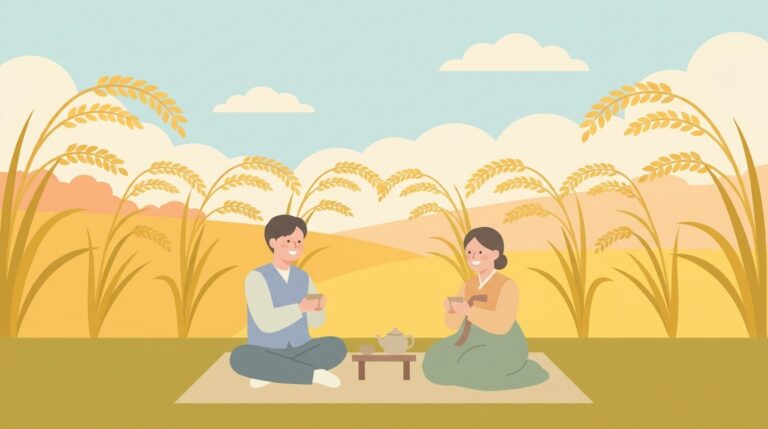
Phase 1: 공감 (Story-driven Opening)
안녕하세요! 매일한글 에디터입니다.
Have you ever witnessed a moment in a Korean workplace or drama—like Misaeng (미생) or Hospital Playlist (슬기로운 의사생활)—where a brilliant project leader clinches a multimillion-won contract, yet instead of soaking in personal applause, they step back, clasp their hands, and attribute every shred of success to their teammates? Or perhaps you have worked in a multinational team in Seoul and felt a strange friction when speaking directly about your achievements, wondering why asserting your competence felt like stepping on invisible landmines.
In Western business discourse, you are often coached to sell your individual value proposition boldly. In Korean professional society, however, true high-level influence is governed by an entirely different aesthetic: the harmony between ferocious collective effort and profound intellectual humility. When advanced learners hit the C1 threshold, the biggest wall is no longer grammar—it is knowing when to subordinate the ego to empower the group, and phrasing that modesty so artfully that it commands instant respect. This guide draws upon years of coaching senior executives, foreign diplomats, and advanced Korean learners who wanted to transition from ‘grammatically correct’ to ‘culturally mesmerizing.’ By mastering these three venerable proverbs, you will unlock the emotional rhythm of Korean leadership: lifting together, bowing when ripe, and never disowning your humble beginnings.
Phase 2: 핵심 표현 3선 심층 분석 (Top 3 Proverbs in Depth)
1. 백지장도 맞들면 낫다 (Baekjijangdo matdeulmyeon natda)
- Pronunciation: [Baek-jee-jang-do mat-deul-myeon nat-da] (Think: “Beck-jee-jahng-doh maht-deul-myeon naht-dah”—crisp, balanced cadence)
- Meaning: Literal: Even a sheet of white paper is lighter when lifted together. / Nuance: No matter how trivial or monumental an endeavor appears, collective synergy and collaborative solidarity invariably produce a better outcome.
- K-Culture Moment: In corporate and sports entertainment like Physical: 100 or reality startup competitions, you will see leaders rally exhausted members facing an impossible challenge by whispering this phrase to instill shared responsibility.
- Editor’s Insight: Notice the word 백지장 (baekjijang), an ultra-thin sheet of traditional mulberry paper that practically weighs nothing. If even weightless paper benefits from two pairs of hands, imagine how essential mutual support is for actual hardships. Use this when you want to offer help without making the other person feel incompetent.
- Situation Spectrum: Casual: ✅ | Semi-formal: ✅ | Formal: ✅
- 🤔 Think About It: Does your native culture prize individual heroism over collective participation, or is shared labor seen as a sign of weakness?
2. 벼는 익을수록 고개를 숙인다 (Byeoneun ikeulsurok gogaereul suginda)
- Pronunciation: [Byeo-neun i-keul-soo-rok go-gae-reul su-gin-da] (Think: “Byuh-neun eek-eul-soo-rohk goh-gae-reul soo-geen-dah”)
- Meaning: Literal: The riper the rice grain becomes, the lower it bows its head. / Nuance: The more accomplished, knowledgeable, and socially elevated you become, the more modest, unpretentious, and respectful you must carry yourself.
- K-Culture Moment: Frequently quoted during high-profile awards speeches (like the Baeksang Arts Awards) when veteran actors accept Grand Prizes (대상) and dedicate the honor to the crew, warning younger stars to remain grounded.
- Editor’s Insight: This agricultural metaphor reflects the heart of East Asian virtue ethics. Empty stalks of rice (unripe grains) stand stiff, upright, and arrogant because they contain no weight. Weightiness of intellect and achievement naturally brings downward physical and linguistic posture.
- Situation Spectrum: Casual: ⚠️ (Can sound didactic if said to close friends) | Semi-formal: ✅ | Formal: ✅
- 🤔 Think About It: In many modern digital spaces, aggressive self-branding is rewarded. How does this traditional virtue of ‘voluntary bowing’ challenge modern definitions of success?
3. 개구리 올챙이 적 생각 못 한다 (Gaeguri olchaengi jeok saenggak mot handa)
- Pronunciation: [Gae-gu-ri ol-chaeng-i jeok saeng-gak mot han-da] (Think: “Gae-goo-ree ohl-chaeng-ee juhk saeng-gahk moht hahn-dah”)
- Meaning: Literal: The frog cannot remember its days as a tadpole. / Nuance: A sharp, biting critique aimed at someone who, having attained power, wealth, or status, acts haughty and forgets the hardships and mistakes of their earlier rookie days.
- K-Culture Moment: In office dramas like Agency (대행사), an arrogant senior director berates an intern over an honest typo, and the observant colleagues mutter this proverb at the pantry.
- Editor’s Insight: While the first two proverbs inspire elevation, this one serves as a cautionary moral mirror. It is an empathetic plea for perspective-taking (역지사지). When you step into senior positions, invoking this proverb about yourself (“I never want to become the frog who forgets his tadpole days”) demonstrates supreme self-awareness.
- Situation Spectrum: Casual: ✅ | Semi-formal: ⚠️ (Directly applying it to a superior is suicidal) | Formal: 🚫 (Unless used as general life philosophy)
- 🤔 Think About It: When was the last time you felt frustrated by a junior colleague or newcomer, forgetting that you once struggled with the exact same fundamentals?
Phase 3: 교과서 한국어 vs 진짜 한국어 (Textbook vs. Real Native Korean)
Situation 1: Calling a colleague to brainstorm a complex proposal together
- 📖 교과서 한국어: 우리 함께 협력하여 이 보고서를 완성합시다. (Uri hamkke hyeomnyeokhayeo i bogoseoreul wanseonghapsida. / “Let us cooperate together to complete this report.”)
- 🗣️ 진짜 한국어: 백지장도 맞들면 낫다는데, 우리 머리 맞대고 딱 한 시간만 같이 털어볼까요? (Baekjijangdo matdeulmyeon natdaneunde, uri meori matdaego ttak han siganman gachi teoreobolkkayo? / “They say even a sheet of paper is lighter together; shall we put our heads together and hammer this out for just an hour?”)
- 💡 왜 다를까? C1 native speakers rarely use dry, bureaucratic Sino-Korean verbs like 협력하다 (to cooperate) in daily teamwork. Instead, they frame the initiative using a proverb followed by active colloquial idioms such as 머리를 맞대다 (put heads together) and 털어보다 (thrash out/tackle).
Situation 2: Deflecting grand compliments after leading a high-revenue campaign
- 📖 교과서 한국어: 칭찬해 주셔서 감사합니다. 저는 열심히 노력했습니다. (Chingchanhae jusyeoseo gamsahamnida. Jeoneun yeolsimhi noryeokhaessumnida. / “Thank you for the compliment. I made diligent efforts.”)
- 🗣️ 진짜 한국어: 과찬이세요. 팀원들이 든든하게 받쳐준 덕분이죠. 벼는 익을수록 고개 숙인다는데, 아직 배울 게 훨씬 많습니다. (Gwachaniseyo. Timwondeuri deundeunhage batchyeojun deokbunijyo. Byeoneun ikeulsurok gogae sugindaneunde, ajik baeul ge hwolssin manseumnida. / “You flatter me. It was entirely thanks to my team backing me up solidly. As they say, ripe rice bows low; I still have so much more to learn.”)
- 💡 왜 다를까? Direct acceptance of praise (“I worked hard”) can unintentionally sound conceited in a high-context Korean workspace. Skillful communicators deflect ego toward the collective unit (팀원들이 받쳐준 덕분) and reaffirm personal humility through traditional agrarian metaphors.
Phase 4: K-Culture 딥다이브 & 비언어적 매너 (Nunchi & Cultural Depth)
4-1. 눈치 (Nunchi) & Non-Verbal Manners
When uttering proverbs centered on humility and solidarity, your physical delivery communicates 70% of the intent:
1. The Posture of Modesty: When receiving commendations, never maintain unbroken, rigid eye contact. Drop your gaze slightly downward to a 45-degree angle for a second, accompanied by a subtle head tilt and gentle self-deprecating smile. This manifests the biological equivalent of 벼는 익을수록 고개를 숙인다.
2. The Two-Handed Anchor: If you are passing a file, drinking water at the board table, or pointing to a collaborative slide, support your right elbow or forearm lightly with your left hand. It visually telegraphs respect, reinforcing that you see yourself as part of an interdependent web rather than an isolated soloist.
3. Tone Modulation: Say 백지장도 맞들면 낫다는데 not in a loud, commanding decree, but in a warm, inviting cadence—as though offering someone a warm cup of barley tea on a snowy morning.
4-2. Cultural Code Analysis: The Communal DNA of Pumasi and Jeong
Why are cooperation and humility so deeply intertwined in Korean social psychology? Historically, Korean agrarian survival hinged on 품앗이 (Pumasi)—an institutionalized system of reciprocal labor exchange where entire villages rotated planting and harvesting each family’s paddy fields. In this hyper-interdependent ecosystem, a farmer who acted like a lone genius or failed to show up when his neighbor was in need was socially ostracized.
Even today, in high-tech conglomerates in Pangyo or creative entertainment agencies in Gangnam, this archetype survives. A star performer who isolates themselves and hogs credit creates organizational 불협화음 (dissonance). Conversely, an exceptional leader who practices 역지사지 (Yeokjisaji – perspective taking) and honors their team’s ‘tadpole days’ generates fierce 정 (Jeong)—the emotional bond that makes people willing to stay through long nights and cross finish lines together.
Phase 5: 실전 롤플레이 시나리오 (Interactive Strategic Roleplay)
Setting: A sleek glass conference room overlooking the Han River in Yeouido. You are Alex (Min-woo), a Senior Cross-Border Strategy Consultant. Your department has just pulled off a monumental cross-border merger, and Director Park (박 이사), known for his notoriously sharp standards and old-school corporate instincts, is evaluating the team’s attitude.
- 박 이사: 민우 씨, 이번 글로벌 합병 프로젝트, 본사 임원진 반응이 아주 뜨거워요. 민우 씨가 혼자 밤새워 만든 프레임워크가 결정적이었지? (Min-woo ssi, ibeon geulleobeol hapbyeong peurojekteu, bonsa imwonjin baneungi aju tteugeowoyo. Min-woo ssiga honja bamsaewo mandeun peureimwokeuga gyeoljeongjeogieotji? / “Min-woo, the executive board’s reaction to this global merger project is tremendous. That framework you stayed up all night building alone was decisive, wasn’t it?”)
- 나 (Alex): 🎭 [두 손을 가볍게 모으고 엷은 미소를 띠며] 이사님, 과찬이십니다. 제 프레임워크는 뼈대일 뿐이었고, 팀원들이 밤낮으로 실무 데이터를 메워주지 않았다면 불가능했을 일입니다. (Isanim, gwachanisibnida. Je peureimwokeuneun ppyodaeil ppunieotgo, timwondeuri bamnajeuro silmu deiteoreul meweojuji anatdamyeon bulganeunghaesseul irimnida. / [Lightly clasping hands together with a gentle smile] “Director, you flatter me. My framework was merely a bare skeleton; had our team not filled it day and night with practical operational data, it would have been impossible.”)
- 박 이사: 허허, 그래도 기획서 독창성은 자네 아이디어였잖아. 다들 자네만 칭찬하던데? (Heoheo, geuraedo gihoekseo dokchangseongeun jane aidieoyeotjana. Dadeul janeman chingchanhadeonde? / “Haha, still, the originality of the proposal was your idea. Everyone was singing only your praises.”)
- 나 (Alex): 🎭 [시선을 살짝 내리며 겸손한 어조로] 백지장도 맞들면 낫다고 하잖아요. 동료들의 피드백이 없었다면 혼자서는 시야가 좁아져서 절대 이 결과를 못 냈을 겁니다. (Baekjijangdo matdeulmyeon natdago hajanayo. Dongryodeurui pideubaegi eopseotdamyeon honjaseoneun siyaga jobajyeoseo jeoldae i gyeolgwareul mot naesseul geomnida. / [Lowering gaze slightly in a modest tone] “As the saying goes, even a sheet of paper is lighter together. Without my colleagues’ real-time feedback, my perspective would have narrowed and I could never have produced this outcome alone.”)
- 박 이사: 듣고 보니 그렇군. 그런데 저기 신입 김 사원이 요즘 데이터 검증에서 잔실수가 잦던데, 민우 씨가 보기엔 어때요? (Deutgo boni geureokun. Geurende jeogi sinip Gim sawoni yojeum deiteo geomjeungeseo jansilsuga jatdeonde, Min-woo ssiga bogien eottaeyo? / “Come to think of it, you’re right. By the way, rookie Associate Kim has been making frequent minor errors in data verification lately. How do you see it?”)
- 나 (Alex): 🎭 [따뜻하지만 단호한 눈빛으로 진심을 담아] 김 사원이 의욕이 넘치다 보니 긴장한 것 같습니다. 저도 개구리 올챙이 적 생각하면 처음에 온갖 실수로 선배님들 속을 썩였거든요. (Gim sawoni uiyogi neomchida boni ginjanghan geot gatseumnida. Jeodo gaeguri olchaengi jeok saenggakhamyeon cheoeume ongat silsuro seonbaenimdeul sogeul sseogyeotgeodeunyo. / [With a warm yet steady gaze, conveying sincerity] “Associate Kim is overflowing with enthusiasm, which seems to make him tense. When I remember my own tadpole days, I caused endless headaches for my seniors with all sorts of blunders.”)
- 박 이사: 🎭 [흐뭇하게 끄덕이며 찻잔을 내려놓는다] 허, 민우 씨는 벼는 익을수록 고개를 숙인다는 말을 몸소 실천하는구만. 자네 같은 선배 밑에서 김 사원도 곧 자리를 잡겠어. (Heo, Min-woo ssineun byeoneun ikeulsurok gogaereul sugindaneun mareul momso silcheonhaneunguman. Jane gateun seonbae mit-eseo Gim sawondo got jarireul japgesseo. / [Nodding with warm approval, setting down teacup] “Ha, Min-woo, you truly embody the virtue of the ripening rice bowing low. Under a mentor like you, Associate Kim will find his footing in no time.”)
- 나 (Alex): 믿고 지켜봐 주셔서 감사합니다, 이사님. 신입 사원과 합을 맞춰서 다음 단계도 차질 없이 완수하겠습니다. (Mitgo jikyeobwa jusyeoseo gamsahamnida, isanim. Sinip sawongwa habeul matchwoseo daeum dangyedo chajil eopsi wansuhagesseumnida. / “Thank you for trusting and watching over us, Director. I will harmonize our pace with the junior staff and carry out the next phase without a single hitch.”)
🔀 인라인 분기점 (Interactive Decision Matrix)
Now, imagine Director Park asks: “민우 씨, 이번 프로젝트 성공 인센티브 분배는 어떻게 하는 게 맞을까요?” (Min-woo, how should we distribute the project success incentives?)
- Option A: “기여도에 따라 제가 70%를 받고, 나머지를 팀원들이 나누는 게 합리적입니다.” (Based on contribution, it is rational that I take 70% and the team shares the rest.)
- Outcome (Bad): You trigger immediate alarm bells. Director Park will view you as transactional, selfish, and lacking the collaborative maturity required for executive promotion.
- Option B: “백지장도 맞들면 낫다는 말처럼 모두가 고생했으니, 팀 전원에게 균등하게 분배되었으면 좋겠습니다.” (As they say even paper is lighter together, everyone suffered; I hope it is shared evenly across all members.)
- Outcome (Risk): Culturally safe and kind, but as a strategic lead, completely flattening rewards ignores individual effort and might appear naive or avoidant of leadership responsibility.
- Option C (Best): “핵심 뼈대를 잡은 제 몫도 감사하지만, 밤샘 분석을 버텨준 주니어들의 공이 큽니다. 성과 기여분을 명확히 하되, 팀원들이 효능감을 느낄 수 있도록 특별 보너스를 안배해 주시면 감사하겠습니다.” (While grateful for my share in framing the core, the juniors who endured all-night data crunching deserve immense credit. Please structure the merit rewards fairly while ensuring our juniors receive an empowering recognition bonus.)
- Outcome (Best): Perfect calibration of C1 corporate finesse! You recognize performance while protecting the team, demonstrating the posture of a ripe rice stalk who empowers the next generation.
Phase 6: 10초 감정 섀도잉 드릴 (10-Second Emotional Shadowing Drill)
Read these aloud at native pace, paying sharp attention to breathing marks (/) and internalizing the specific psychological resonance in brackets.
[🤝 동료를 진심으로 북돋우며]
백지장도 / 맞들면 낫다는데, / 우리 조금만 더 힘내서 / 같이 마무리해 볼까요?
(Baekjijangdo / matdeulmyeon natdaneunde, / uri jogeumman deo himnaeseo / gachi mamurihae bolkkayo?)
(“They say even a sheet of paper is lighter together; shall we muster a bit more strength and finish this up side by side?”)-
[🌾 칭찬 앞에서 정중하고 의연하게]
벼는 익을수록 / 고개를 숙인다는데, / 제가 아직 모자란 점이 많아 / 팀원들에게 빚진 기분입니다.
(Byeoneun ikeulsurok / gogaereul sugindaneunde, / jega ajik mojaran jeomi mana / timwondeurege bitjin gibunimnida.)
(“As the ripe rice grain bows low, I still have many shortcomings and feel profoundly indebted to my team.”) -
[😌 후배의 실수를 감싸며 따뜻하게]
개구리 올챙이 적 / 생각 못 한다더니, / 저도 신입 땐 / 매일 실수 연발이었습니다. / 기운 내세요!
(Gaeguri olchaengi jeok / saenggak mot handadeoni, / jeodo sinip ttaen / maeil silsu yeonbarieotseumnida. / Giun naeseyo!)
(“People say the frog forgets its tadpole days, but back when I was a rookie, I made non-stop mistakes every single day. Keep your head up!”)
Phase 7: K-Culture 미니 사전 (Mini Dictionary)
-
역지사지 (Yeok-ji-sa-ji)
- Meaning: Putting oneself in the other person’s shoes; bilateral empathy.
- Usage: Essential in negotiation and workplace conflict resolution. Used to de-escalate tension: “역지사지의 마음으로 상대 부서의 입장도 한번 헤아려 봅시다.” (Let us consider the other department’s perspective through the lens of empathy.)
- 겸양의 미덕 (Gyeom-yang-ui Mi-deok)
- Meaning: The virtue of modesty and yielding honor to others.
- Usage: The core philosophical foundation behind bowing and deflecting individual compliments in Korean professional hierarchies.
- 품앗이 (Pum-a-si)
- Meaning: Traditional mutual labor-swapping; modernly used to describe cross-team collaboration or reciprocal professional favors.
- Usage: “이번엔 우리 팀이 도와줄 테니 다음 분기엔 품앗이해 주세요!” (Our team will help you this time, so pay us back with a collaborative favor next quarter!)
- 내로남불 (Nae-ro-nam-bul)
- Meaning: Modern satirical portmanteau: 내가 하면 로맨스, 남이 하면 불륜 (“If I do it, it’s romance; if someone else does it, it’s adultery”—double standards).
- Usage: The modern socio-political cousin of the “tadpole” proverb, describing people who harshly judge in others what they excuse in themselves.
Phase 8: 여행자와 주재원을 위한 생존 키트 (Survival Kit for Professionals & Travelers)
Practical Survival Trio
- Phrase 1: 함께해 주셔서 든든합니다. (Hamkkehae jusyeoseo deundeunhamnida. / “Having you with me gives me great reassurance.”)
- Pro Tip: Say this when a local Korean friend or colleague helps you navigate a convoluted booking or office task. It honors their solidarity far more deeply than a plain 고마워요.
- Phrase 2: 제가 한 수 배웠습니다. (Jega han su baewotseumnida. / “I have learned a master move from you.”)
- Pro Tip: Originating from the board game Baduk (Go), this is the supreme phrase of intellectual humility when someone points out an error or shares a brilliant work shortcut.
- Phrase 3: 제가 아직 서툴러서 그런데, 한 번만 도와주실 수 있나요? (Jega ajik seotulleoseo geureonde, han beonman dowajusil su innayo? / “I am still rather clumsy at this; could you lend a hand just once?”)
- Pro Tip: A disarming opening that eliminates defensive barriers instantly at subway stations, district offices (구청), or hotel lobbies.
Editor’s Travel & Living Note
Navigating real Korean life requires knowing both language and infrastructure:
* Navigation: Google Maps is severely restricted in South Korea due to national security spatial mapping laws. Make sure to complete your [Naver Map app download for local transit] before arrival to navigate subway transfers, bus arrival times, and pedestrian alleys flawlessly.
* Transit & Tipping: Korea is a 100% tip-free society. Attempting to tip a taxi driver or restaurant server can cause intense awkwardness or insult. True gratitude is expressed with a crisp two-handed card exchange and a heartfelt “정말 감사합니다, 편안하게 왔습니다” (Thank you so much, it was a very comfortable ride).
Phase 9: “한 발 더 깊이” (Deep Cultural Reflection)
In Western individualist discourse, personal competence is often vocalized loudly because visibility directly dictates market value. However, Korean communication operates on the concept of 신독 (Sindeok) and collective containment—a belief that true brilliance is like a deep fragrance that permeates the room without shouting. When you voluntarily step down from the spotlight and celebrate the collective, Koreans do not perceive you as lacking confidence. Paradoxically, they perceive you as immensely powerful, psychologically secure, and worthy of holding immense social authority.
💬 Your Turn: Have you ever experienced a moment where downplaying your achievement or offering credit to your group actually earned you more trust and respect? Share your story in the comments below! (여러분의 소중한 경험을 댓글로 들려주세요!)
Phase 10: FAQ & 흔한 실수 경고판 (FAQ & Common Mistakes)
Q: Can I use “개구리 올챙이 적 생각 못 한다” directly to my boss if they are being hypocritical?
A: Absolutely not! Unless your immediate goal is to resign in spectacular disgrace. This proverb carries an inherent moral judgment. Applying it to someone older or higher in status is considered a severe breach of hierarchical decorum. You should only use it in three safe contexts: (1) about yourself to demonstrate humility, (2) to a peer when consoling an intern behind closed doors, or (3) as an abstract philosophical observation about third parties.
Q: Does deflecting praise with “벼는 익을수록 고개를 숙인다” make me sound weak or lacking self-esteem?
A: Never at the C1 level. In Korean sociolinguistics, only someone who has demonstrably achieved genuine success can credibly quote this proverb. If an underperformer uses it, it sounds comical. If a high performer uses it, it demonstrates 덕 (Deok – moral virtue) and elevates their perceived leadership tier.
Q: Is “백지장도 맞들면 낫다” only appropriate for physical work?
A: Not at all. While the proverb stems from manual village labor, it is universally applied today to intellectual, strategic, and emotional cooperation—from debugging lines of code together to consoling a friend through relationship heartbreak.
🚨 흔한 실수 (Common Mistakes) 경고판
- Mistake 1: Replying “네, 제가 아주 잘했죠?” (Yes, didn’t I do great?) to senior praise.
- Correct Action: Even if intended as humorous confidence, it often registers as crude arrogance. Replace with: “모두 팀원들이 도와준 덕분입니다” (It was all thanks to my teammates’ help).
- Mistake 2: Using “백지장” incorrectly in negative contexts.
- Correct Action: Don’t say it when you want someone to stay out of your business. It is exclusively an invitation for solidarity, never exclusion.
- Mistake 3: Literal translation of “Walk in someone’s shoes.”
- Correct Action: Never say “그 사람의 신발을 신고 걸어봐라.” Koreans will take it literally and assume foot hygiene issues! Always use the four-character idiom 역지사지 (Yeokjisaji).
Phase 11: 액션 미션 & 참여 유도 (Action Missions)
- 🥉 Bronze Mission (Solitary Muscle Memory): Stand before a mirror. Practice the 10-second shadowing drill from Phase 6, paying close attention to softening your gaze and coordinating the slight bow of the head with the word 숙인다.
- 🥈 Silver Mission (Social Connection): Drop a comment below using the phrase 역지사지 in a full Korean sentence describing a situation where empathy resolved a conflict.
- 🥇 Gold Mission (Real-world Execution): In your next Korean interaction (at work, language exchange, or a community meetup), deflect a compliment using: “과찬이세요, 다 여러분 덕분입니다.”
- 🎮 K-Culture Mission: Watch an episode of a workplace K-drama (like Misaeng or Good Manager) and spot how junior and senior colleagues physically position their bodies during collaborative breakthroughs!
Phase 12: 인터랙티브 퀴즈 챌린지 (Interactive Quiz Challenge)
Test your situational mastery below! Think carefully before opening the answers.
- Situational Judgment: You are a senior team lead. A newly hired junior employee is terrified because they accidentally sent an incomplete draft to a client. Which proverb is most therapeutically appropriate to ease their shame while reminding them to learn from it?
- (A) 벼는 익을수록 고개를 숙인다
- (B) 개구리 올챙이 적 생각 못 한다
- (C) 백지장도 맞들면 낫다
- Fill-in-the-Blank: Complete the classic collaborative proverb:
- “아무리 쉬운 일이라도 함께 힘을 모으면 훨씬 수월해진다는 뜻으로, [ ________ ]도 맞들면 낫다고 한다.”
- True or False Cultural Nuance:
- Calling your direct supervisor “개구리 올챙이 적 생각 못 하는 사람” in a polite conference room voice is acceptable because it uses traditional proverbial wisdom. (True / False)
👉 Click here for Answers & Explanations (정답 및 해설 보기)
- Answer: (B) 개구리 올챙이 적 생각 못 한다.
- Explanation: By saying, “저도 올챙이 적 생각하면 신입 땐 더 심했어요” (Remembering my own tadpole days, I was even worse as a rookie), you instantly dissipate their panic through empathetic solidarity.
- Answer: 백지장 (Baekjijang).
- Explanation: Baekjijang refers to a sheer sheet of white mulberry paper, symbolizing even the lightest burdens.
- Answer: False.
- Explanation: Never point this proverb upward toward authority figures. It is considered a direct personal critique of their hypocrisy and will irreparably damage your relationship.
- Explanation: Never point this proverb upward toward authority figures. It is considered a direct personal critique of their hypocrisy and will irreparably damage your relationship.
🎬 Watch Our Daily Videos! (Daily Hangul Official Instagram)
Review the expressions you learned in this article with our fun daily short videos! Check out native pronunciation and real-life nuances in action.
- Instagram @dailyhangul_en







