

Phase 1: Empathy & Story Opening
안녕하세요! 매일한글 에디터입니다. (Hello! I’m your Daily Hangul editor.)
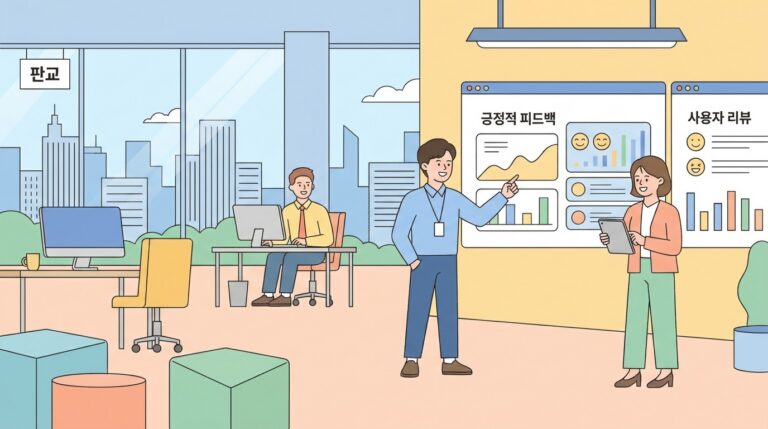
Picture this: You are sitting at a bustling open-office lounge in Pangyo Techno Valley—Korea’s bustling Silicon Valley—sipping an iced Americano while staring at a chaotic Jira board. You’ve sifted through hundreds of VOC (Voice of Customer) tickets. Among the routine bug reports, one user’s message catches your eye: “The current white screen hurts my eyes during late-night study sessions. Could you please add a dark mode?”
Fast forward four sprints. Your engineering team finally deploys the new dark mode feature. Now comes the defining moment of product management in Korea: do you just publish a generic patch note, or do you reach back out directly to that user?
When a Korean user receives a personalized note stating, “고객님께서 지난달 건의해 주신 다크 모드 기능이 이번 버전에 반영되었습니다! (The dark mode feature you suggested last month has officially launched in this version!)”, something magical happens. They don’t just say “thanks”; they screenshot your email, post it onto online tech communities like Blind and DC Inside, and transform overnight into an evangelist for your brand. In the fast-paced Korean app ecosystem, closing the feedback loop with warmth and precision isn’t just customer support—it’s the cornerstone of building community loyalty (찐팬 문화). This guide draws directly on real product operations in Seoul to help you master nuanced, empathetic B2 business Korean.
Phase 2: Core Expressions Deep Dive
1. 고객님께서 건의해 주신 기능이 이번 업데이트에 반영되었습니다.
- Pronunciation: Gogaengnimkkeseo geon-uihae jusin gineung-i ibeon eopde-iteue banyeongdoe-eotsseumnida. (Sounds like: go-gang-neem-ggeh-seo gun-ui-hae joo-shin gee-neung-ee ee-beon up-day-teu-eh bahn-young-dweh-ut-sseum-nee-dah)
- Meaning: “The feature you suggested has been reflected in this update.”
- K-Culture Moment: Think of the K-Drama Start-Up (스타트업), where Dal-mi’s team spends sleepless nights responding to early app reviews to prove their startup values every single user voice.
- Editor’s Insight: Notice the double layer of respect:
-께서(-kkeseo) is the honorific subject particle replacing-이/가, paired with건의해 주신(suggested for our benefit). It makes the user feel like a respected co-creator rather than just a ticket number. - Situation Spectrum:
- Casual: 🚫 (Too heavy for friends)
- Semi-formal: ⚠️ (Requires a slightly softer ending for chat)
- Formal (Official product notice/email): ✅
- 🤔 Think About It: In English, we often say “We launched your requested feature.” Why do you think Korean centers the user with
고객님께서at the very front of the sentence?
2. 소중한 피드백 덕분에 서비스가 한 단계 더 발전할 수 있었습니다.
- Pronunciation: Sojunghan pideubaek deokbune seobiseuga han dangye deo baljeonhal su isseotsseumnida. (Sounds like: so-joong-hahn pee-deu-back duck-boo-neh suh-bee-seu-gah hahn dahn-gyeh duh bahl-juhn-hahl soo eet-ssum-nee-dah)
- Meaning: “Thanks to your precious feedback, our service was able to take another step forward.”
- K-Culture Moment: When a Korean indie band releases a polished studio album and thanks their fandom on Instagram Live for every single critique during their busking days.
- Editor’s Insight:
덕분에(thanks to) is one of the most heartwarming linguistic tools in Korean. It shifts all the credit for the product’s progress onto the user’s generosity. - Situation Spectrum:
- Casual: 🚫
- Semi-formal: ⚠️
- Formal: ✅
- 🤔 Think About It: When someone tells you “thanks to you,” it creates an emotional bond (정 – Jeong). How does this differ from the transactional tone common in Western corporate SaaS emails?
3. 앞으로도 애정 어린 시선으로 지켜봐 주세요.
- Pronunciation: Apeurodo aejeong eorin siseoneuro jikyeobwa juseyo. (Sounds like: ah-pro-doh eh-jung uh-reen she-sun-oo-roh jee-kyo-bwah joo-seh-yoh)
- Meaning: Direct: “Please watch over us with an affectionate gaze.” / Nuance: “Please continue to stay with us and root for our growth.”
- K-Culture Moment: A beloved K-pop idol leader ending a showcase speech to their fans, asking them to keep supporting the group through future ups and downs.
- Editor’s Insight: In Korean business relationships, asking for
애정(affection) is not considered unprofessional. It signifies that the company and users share a long-term journey. - Situation Spectrum:
- Casual: ⚠️ (A bit dramatic for peers)
- Semi-formal: ✅
- Formal: ✅
- 🤔 Think About It: Why does Korean customer communication embrace emotional vocabulary like “affection” and “warm gaze” instead of purely rational metrics?
Phase 3: Textbook Korean vs. Real Korean
Scenario 1: Notifying about completed feature requests
- 📖 교과서 한국어 (Textbook Korean): 귀하의 요청 사항 처리가 완료되었습니다. (Gwiha-ui yocheong sahang cheoriga wanryodoe-eotsseumnida. – “Processing of your request has been completed.”)
- 🗣️ 진짜 한국어 (Real Korean): 고객님의 소중한 의견을 쏙쏙 반영해 이번 버전에 챙겨 넣었어요! (Gogaengnim-ui sojunghan uigyeoneul ssokssok banyeonghae ibeon beojeone chaenggyeo neoeosseoyo! – “We gathered your thoughtful suggestions and tucked them right into this release!”)
- 💡 왜 다를까?: Traditional textbooks rely on legalistic Sino-Korean terms like
귀하(your honored self) and완료(completion), which make a modern product sound like a government tax bureau. Modern tech companies favor vivid mimetic adverbs like쏙쏙(smoothly/one by one) and conversational verbs like챙겨 넣다(to thoughtfully include) to spark joy.
Scenario 2: Announcing the dark mode roll-out
- 📖 교과서 한국어 (Textbook Korean): 다크 모드가 출시되었으니 이용 바랍니다. (Dakeu modeuga chulshidoe-eosseuni iyong baramnida. – “Dark mode is released, so please use it.”)
- 🗣️ 진짜 한국어 (Real Korean): 오래 기다리셨죠? 밤에도 눈이 편안한 다크 모드가 드디어 오픈되었습니다! (Orae gidarisyeotjyo? Bamedo nuni pyeon-anhan dakeu modeuga deudieo opeundoe-eotsseumnida! – “You waited a while, didn’t you? The eye-friendly dark mode is finally live!”)
- 💡 왜 다를까?: Real Korean tech copy acknowledges the user’s anticipation (
오래 기다리셨죠?) and addresses the tangible, human benefit (eye comfort at night) before calling the user to action.
Phase 4: K-Culture Deep Dive & Non-Verbal Manners
4-1. 눈치 (Nunchi) & Digital Etiquette in Customer Communications
When communicating product fixes in Korea, tone modulation (말투) carries immense weight:
1. Punctuation Sensitivity: In Korean corporate messaging, ending a sentence with a bare period (.) can read as cold or defensive. Adding an exclamation mark (!) or a gentle tilde (~) softens the message, signaling active enthusiasm.
2. The 3-Second Rule for Honorific Conjugation: Before sending an update notification, conduct a quick nunchi check on your verbs. Ensure you haven’t elevated the company instead of the customer. For example, never say 저희가 해주셨습니다 (incorrectly elevating the company); say 저희가 준비했습니다 and elevate the user’s act with 고객님께서 남겨 주신.
4-2. The Culture Code: Turning Users into 찐팬 (Superfans)
Korean consumer culture thrives on community loyalty. The concept of 고객 감동 (stirring the customer’s heart) goes beyond baseline satisfaction. When startups in Seongsu-dong or Pangyo translate customer VOC into product updates, they treat those users like co-founders. A user whose opinion changes the product isn’t merely a subscriber; they become part of the brand’s inner circle. Korean tech companies frequently send surprise coffee gift cards (e.g., KakaoTalk Gift vouchers) alongside update messages to seal this bond.
Phase 5: Real-World Roleplay Scenario
Setting: The product lounge of ‘HaruApp’ in Gangnam. Product Manager Ji-won is reviewing customer feedback tickets with Mark, a foreign associate product manager, right after a major app update.
- Turn 1: Ji-won
마크 씨, 지난달에 다크 모드 요청했던 고객님 리스트 정리 끝났어요?
(Makeu ssi, jinandare dakeu modeu yocheonghaetdeon gogaengnim riseuteu jeongni kkeutnasseoyo?)
“Mark, did you finish compiling the list of users who requested dark mode last month?”
🎭 Looking over her laptop screen with an expectant, encouraging smile. -
Turn 2: Mark
네, 지원 님! 총 스물세 분이 남겨 주셨더라고요. 티켓 다 분류해 두었습니다.
(Ne, Jiwon nim! Chong seumulse buni namgyeo jusyeotdeoragoyo. Tiket da bunryuhae dueotseumnida.)
“Yes, Ji-won! A total of 23 users left comments. I have sorted all the tickets.”
🎭 Proudly turning his monitor around to show the neatly organized spreadsheet. -
Turn 3: Ji-won
너무 좋아요! 이제 이분들께 개별 알림 메시지를 보내야 해요.
(Neomu joayo! Ije ibundeulkke gaebyeol allim mesijireul bonaeya haeyo.)
“Awesome! Now we need to send personalized notification messages to them.”
🎭 Tapping the desk gently to emphasize the importance of this step. -
Turn 4: Mark
단순히 ‘다크 모드가 추가되었습니다’라고 보내면 될까요?
(Dansunhi ‘dakeu modeuga chugadoe-eotseumnida’rago bonaemyeon doelkkayo?)
“Should we just send, ‘Dark mode has been added’?”
🎭 Tipping his head in genuine curiosity. -
Turn 5: Ji-won
안 돼요! 그렇게 보내면 기계 같잖아요. ‘고객님이 제안해 주신 덕분에 만들었다’는 점을 콕 집어야 해요.
(An dwaeyo! Geureoke bonaemyeon gigye gatjanayo. ‘Gogaengnimi je-anhae jusin deokbune mandeureotda’neun jeomeul kok jibeoya haeyo.)
“No way! If we send it like that, it sounds like an automated bot. We must pinpoint that we built it thanks to their suggestion.”
🎭 Shaking her pen playfully with an expressive, passionate expression. -
Turn 6: Mark
아! ‘고객님의 목소리가 실제로 프로덕트에 반영되었습니다’라고 쓰면 되겠네요!
(Ah! ‘Gogaengnim-ui moksoriga siljero peurodeokteue banyeongdoe-eotseumnida’rago sseumyeon doegenneyo!)
“Ah! So we can write: ‘Your voice has been genuinely reflected in our product!'”
🎭 Nodding vigorously with a spark of realization. -
Turn 7: Ji-won
바로 그거예요! ‘소중한 의견 덕분에 더 나은 서비스로 성장할 수 있었다’는 감사 인사도 덧붙여 주세요.
(Baro geugeoyeyo! ‘Sojunghan uigyeon deokbune deo na-eun seobiseuro seongjanghal su isseotda’neun gamsa insado deotbutyeo juseyo.)
“Spot on! Please also add our thanks, explaining that thanks to their valuable input, we could grow into a better service.”
🎭 Giving a double thumbs-up with genuine appreciation. -
Turn 8: Mark
알겠습니다. 고객님들이 감동해서 진짜 팬이 되실 수 있도록 정성껏 써 볼게요!
(Algetseumnida. Gogaengnimdeuri gamdonghaeseo jinjja paeni doesil su itdorok jeongseongkkeot sseo bolgeyo!)
“Got it. I’ll craft it with sincere care so our users are moved and become true superfans!”
🎭 Adjusting his chair, typing enthusiastically.
🔀 Interactive Decision Point
How should Mark begin the title of the individual notification email?
- Option A: [공지] 다크 모드 기능 추가 안내 ([Notice] Information regarding dark mode addition)
- Option B: 고객님께서 건의해 주신 다크 모드가 드디어 도착했어요! 🌙 (The dark mode you suggested has finally arrived! 🌙)
- Option C: 귀하의 건의사항을 처리 완료하였음을 보고합니다. (We report that your suggestion has completed processing.)
Feedback on Choices:
* Option A (Risk): While professional, it looks like a generic system-wide announcement. The user might archive it without realizing their personal voice made it happen.
* Option B (Best): Perfect! It acknowledges the user’s specific initiative, introduces warmth with conversational phrasing, and uses an appropriate emoji to spark delight.
* Option C (Bad): Far too stiff and administrative. 보고합니다 (we report to you) sounds like a military transmission rather than a modern consumer-tech dialog.
Phase 6: 10-Second Emotion Shadowing Drill
Read these sentences aloud, matching the marked pauses (/) and emotional tone!
[😊 감격스럽고 따뜻하게 / Moved & Warm]
고객님께서 남겨 주신 한 줄의 건의가 / 이번 업데이트의 시작이었습니다.
(Gogaengnimkkeseo namgyeo jusin / han jului geon-uiga / ibeon eopde-iteu-ui sijagieosseumnida.)
“The single suggestion you left for us / was the very spark / of this entire update.”-
[✨ 자신감 넘치고 경쾌하게 / Confident & Upbeat]
오래 기다려 주신 만큼 / 더 완벽한 다크 모드로 / 준비했습니다!
(Orae gidaryeo jusin mankeum / deo wanbyeokan dakeu modeuro / junbihaetseumnida!)
“As long as you have waited / we prepared an even more polished dark mode / just for you!” -
[🤝 정중하고 신뢰감 있게 / Polite & Trustworthy]
앞으로도 불편하신 점은 / 언제든 편하게 / 말씀해 주세요.
(Apeurodo bulpyeonhasin jeomeun / eonjedeun pyeonhage / malsseumhae juseyo.)
“If you encounter any inconveniences in the future / please feel free / to let us know at any time.”
Phase 7: K-Culture Mini Dictionary
-
건의사항 (Geon-uisahang) | Constructive Suggestion / Feature Request
Unlike불만(complaint) or항의(protest), this word carries a respectful tone implying a helpful recommendation aimed at making the service better. -
백로그 반영 (Baengnogeu Banyeong) | Product Backlog Integration
A tech-industry staple in Korea. Combining the English loanword백로그with the Sino-Korean verb반영하다(to reflect/implement), this phrase describes turning raw customer voice into concrete sprint tasks. -
찐팬 (Jjinpaen) | True Superfan / Brand Evangelist
Formed by pairing찐(authentic/real slang) with팬(fan). In Korean startup circles, building a base of 1,000 jjinpaen through personalized feedback loops is considered far more valuable than paid ad acquisition. -
소통 (Sotong) | Two-way Mutual Communication
A massive buzzword across Korean society and corporate culture. It means genuinely listening and closing the loop, contrasting with one-way broadcasting (일방적인 소통).
Phase 8: Survival Kit for Travelers & Professionals
Top 3 Business Survival Expressions
-
피드백 남겨 주셔서 진심으로 감사드립니다.
(Pideubaek namgyeo jusyeoseo jinsimeuro gamsadeurimnida.)
“Thank you from the bottom of our hearts for leaving your feedback.”
Pro Tip: Use진심으로(sincerely) to cut through the clinical tone of automated helpdesks. -
담당 부서에 전달하여 긍정적으로 검토하겠습니다.
(Damdang buseo-e jeondalhayeo geungjeongjeogeuro geomtohagessumnida.)
“I will forward this to the relevant department for a constructive review.”
Pro Tip: When a feature request cannot be built right away, this phrase provides professional reassurance without over-promising. -
고객님의 의견 덕분에 더 스마트해졌어요!
(Gogaengnim-ui uigyeon deokbune deo seumateuhaejyeosseoyo!)
“Thanks to your idea, we got even smarter!”
Pro Tip: Excellent for in-app push notifications or modal pop-ups after an update.
Editor’s Work & Travel Note
When collaborating with Korean teams or running beta tests in Seoul, check out popular professional channels. For discovering real feedback workflows and seeing how top brands interact with users, download the 원티드(Wanted) 채용 및 커리어 플랫폼 앱 to observe contemporary job postings, or test how apps run on local networks with 네이버 지도 앱 다운로드 to see how seamless local UX operates in everyday Korean commutes.
Phase 9: A Step Deeper (한 발 더 깊이)
In many Western organizational frameworks, customer support and product development sit behind distinct silos. A ticket is resolved, a metrics board updates, and the cycle ends. But in Korean business culture, service is deeply rooted in the concept of Jeong (정)—a lingering, shared emotional bond developed through repeated interaction.
When you notify a user that their specific dark mode request was built, you aren’t just resolving a backlog item. You are validating their presence in your company’s communal story. By applying honorifics like -께서 and relational markers like 덕분에, you transform a digital app into an interactive relationship. The user ceases to be a passive consumer; they become an advocate who feels personally responsible for your success.
💬 Your Turn: Have you ever experienced customer service that made you feel like a collaborator rather than just a customer? How would you express that feeling in Korean? Let us know in the comments below!
Phase 10: FAQ & Avoiding Misunderstandings
Q: Can I use 너의 의견 when writing a friendly notification to young users?
A: Absolutely not. Even if your brand persona is casual and playful (like Toss or Zigzag), never address a user with the informal pronoun 너 (you). Always address them respectfully as 고객님 (valued customer) or use their registered nickname + 님 (e.g., 민수 님).
Q: What is the difference between 의견을 반영하다 and 의견을 적용하다?
A: 적용하다 (to apply) is technical and utilitarian, like applying a filter to an image. 반영하다 (to reflect) carries the nuance that the user’s idea was carefully mirrored and embodied into the final creation. In VOC updates, 반영하다 sounds far more thoughtful.
Q: When should I use formal -습니다 endings versus polite -어요 endings in app updates?
A: Use formal -습니다 for official system notices, security disclaimers, and emails. Use polite -어요 for friendly in-app push notifications, celebration popups, and community comments where emotional closeness is desired.
🚨 Common Mistakes Warning Board
- Mistake: Elevating the company with honorifics: 저희 회사께서 만들었습니다.
Correction: Never use-께서on yourself or your company. Say 저희가 정성껏 만들었습니다. - Mistake: Calling customer feedback 불평 (complaint) in internal emails shared with stakeholders.
Correction: Use neutral or constructive terms like VOC, 고객 피드백, or 개선 건의사항 to maintain an objective and empathetic perspective. - Mistake: Using generic automated email titles like [무응답 처리] 티켓이 종료되었습니다.
Correction: Korean users appreciate context. Soften with 고객님의 소중한 문의가 해결되었기를 바라며 안내드립니다.
Phase 11: Action Mission & Engagement
- 🥉 Bronze Mission (Solo Practice): Write down sentence #1 from Phase 2 in a notebook. Replace
다크 모드 기능with another feature you love (e.g.,알림 끄기 기능– mute notifications) and recite it smoothly 5 times. - 🥈 Silver Mission (Social Connection): Head to your favorite Korean app’s Instagram or YouTube update post. Leave a short Korean comment: “이 기능 건의했던 사람인데 반영해 주셔서 감사해요! 대박 나세요!” (I’m one of the people who suggested this feature, thanks for reflecting it! Hope you hit it big!)
- 🥇 Gold Mission (Real-world Implementation): Draft a short 3-sentence release note email in Korean using
고객님께서 건의해 주신,덕분에, and반영되었습니다to announce a feature change to a coworker or language partner. - 🎮 K-Culture Mission: Watch an episode of a Korean business reality or startup drama. Spot whenever someone uses the phrase
소중한 의견during a team meeting or client pitch!
Phase 12: Interactive Quiz Challenge
Quiz 1: Situational Judgment
Which sentence is the most polite and natural way to inform a customer via KakaoTalk notification that their suggested feature is live?
1. 당신이 말한 기능을 이제 만들었으니 확인해.
2. 고객님께서 제안해 주신 기능이 드디어 서비스에 반영되었습니다!
3. 귀사의 건의사항을 완료 처리하였으니 참고 바랍니다.
👉 Click to reveal Answer & Explanation
Answer: 2
Explanation: Sentence 2 uses the respectful particle -께서, the humble auxiliary verb 주신, and the polite yet enthusiastic ending -반영되었습니다!. Option 1 is impolite (반말), and Option 3 treats the individual consumer as a company (귀사) with an excessively bureaucratic tone.
Quiz 2: Fill in the Blank
Complete the sentence using the honorific form of ‘give’ (to suggest for our benefit):
고객님께서 지난달에 건의해 ________ (주신 / 드린) 다크 모드가 드디어 오픈되었습니다!
👉 Click to reveal Answer & Explanation
Answer: 주신
Explanation: The customer is performing the action of giving a suggestion to the company. Therefore, use 주신 (the honorific form of giving to us). 드린 is used when the speaker gives something to an elevated person.
Quiz 3: True or False (K-Culture Etiquette)
True or False: In modern Korean product communications, asking customers to keep watching over the product with an “affectionate gaze” (애정 어린 시선) is considered unprofessional and should never be used.
👉 Click to reveal Answer & Explanation
Answer: False
Explanation: Phrases like 애정 어린 시선으로 지켜봐 주세요 are widely celebrated in Korean corporate and tech culture. They reflect warmth (Jeong) and invite the customer into a long-term, supportive relationship.
🎬 Watch Our Daily Videos! (Daily Hangul Official Instagram)
Review the expressions you learned in this article with our fun daily short videos! Check out native pronunciation and real-life nuances in action.
- Instagram @dailyhangul_en







