

Master the PRD Review: How to Vet Feasibility and Freeze Specs in Korean IT Teams
Phase 1: Empathy (A Startup Story from Pangyo)
안녕하세요! 매일한글 에디터입니다. (Hello! I’m your Daily Hangul editor.)
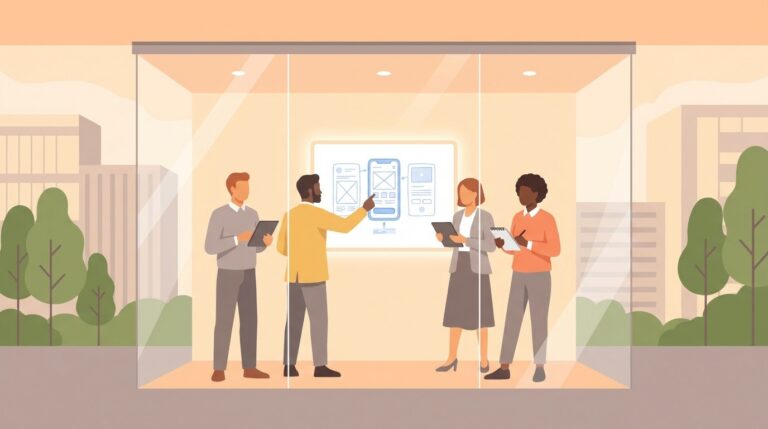
Imagine this: You are standing in front of a sleek glass conference room in Pangyo Techno Valley—Korea’s Silicon Valley, just like the bustling high-tech offices in the K-Drama Start-Up. In your hands is the Product Requirements Document (PRD) you worked late into the night perfecting. You tap the screen, sharing your slides. Across the table sits Min-su, the veteran backend lead with an iced Americano in hand; Su-jin, the UI/UX designer known for pixel-perfect aesthetics; and Hyeon-woo, the eagle-eyed QA engineer.
Everything seems smooth until you propose an elaborate real-time notification animation. Min-su pushes his glasses up, looks at the wireframe, and mutters with a gentle head tilt: “이거 이번 스프린트에 넣기엔 공수가 너무 큰데요…” (The dev effort for this is way too heavy for this sprint…). Su-jin counters that user delight hinges on this micro-interaction, while Hyeon-woo brings up critical edge cases on older Android models. Your heart beats faster. How do you facilitate this debate, assess technical feasibility fairly, and negotiate a spec freeze—all in polished, professional Korean without sounding abrasive?
If you’ve ever felt paralyzed trying to find the sweet spot between polite business honorifics and sharp tech jargon, you’re not alone. Our international PM community constantly tells us that technical reviews are where language textbooks fail them the most. This guide combines real feedback from foreign PMs navigating Korean tech giants with battle-tested cultural strategies. Let’s make sure your next PRD review isn’t stressful, but a triumph of teamwork!
Phase 2: Core Expressions Deep Dive
Here are the three foundational power phrases every product manager needs when leading cross-functional reviews in Korea.
1. 구현 가능성 (Guhyeon ganeungseong)
- Pronunciation: [Guhyeon ganeungseong] (Think goo-hyeon gah-neung-seong, with seong rhyming with “song”)
- Meaning: Technical Feasibility / Implementability (Literal: “Implementation possibility”)
- K-Culture Moment: Just like tech founder Nam Do-san in Start-Up calculating server load before committing to an investor demo, Korean engineers always evaluate “구현 가능성” before agreeing to complex features.
- Editor’s Insight: Asking a developer directly “Can you build this?” can sound like you are questioning their personal skill. Using “구현 가능성” depersonalizes the problem into an objective engineering evaluation. Pair it with the polite questioning form: “구현 가능성을 먼저 검토해 볼까요?” (Guhyeon ganeungseongeul meonjeo geomtohae bolkkayo? / Shall we review technical feasibility first?).
- Situation Spectrum: Casual ⚠️ | Semi-formal ✅ | Formal ✅
- 🤔 Think About It: Why does Sino-Korean terminology (구현 = realization/implementation) create emotional distance and safety in collaborative discussions compared to native verbs?
2. 공수 대비 효율 (Gongsu daebi hyoyul)
- Pronunciation: [Gongsu daebi hyoyul] (Gong-soo deh-bee hyo-yool)
- Meaning: Effort-to-Impact Ratio / Cost-Benefit (Literal: “Man-hours versus efficiency”)
- K-Culture Moment: Picture a team huddled during a midnight release in a Pangyo office, deciding whether polishing a setting page toggle is worth burning out two developers for three days.
- Editor’s Insight: The word “공수” (gongsu) originally stems from industrial engineering meaning “person-days/man-hours.” In contemporary Korean IT, it is the universal currency of developer bandwidth. When an engineer flags high effort, validate it by saying: “공수 대비 효율을 따져보고 이번 스코프에서 뺄지 결정하죠.” (Gongsu daebi hyoyureul ttajyeobogo ibeon seukopeueseo ppaelji gyeoljeonghajyo. / Let’s weigh the effort-to-impact ratio and decide if we cut it from this scope).
- Situation Spectrum: Casual ⚠️ | Semi-formal ✅ | Formal ✅
- 🤔 Think About It: In your home culture, do you measure engineering tasks primarily by monetary cost, story points, or developer time? How does “공수” bridge human effort and strategic business outcomes?
3. 스펙 동결 (Seupek donggyeol)
- Pronunciation: [Seupek donggyeol] (Speck dong-gyeol)
- Meaning: Feature Spec Freeze (Literal: “Specification freezing”)
- K-Culture Moment: When marketing drops a “quick tweak” request two days before product rollout, the senior PM heroically slams the metaphorical door by invoking this sacred boundary.
- Editor’s Insight: “스펙” is Konglish for product specifications, and “동결” means freezing/lockdown. To preserve sprint stability while maintaining goodwill, combine it with a shared commitment: “오늘 논의한 내용으로 이번 주 금요일까지 스펙 동결하겠습니다.” (Oneul nonuihan naeyong-euro ibeon ju geum-yoil-kkaji seupek donggyeolhagess-eumnida. / We will freeze the feature specs by this Friday based on today’s discussion).
- Situation Spectrum: Casual ⚠️ | Semi-formal ✅ | Formal ✅
- 🤔 Think About It: Why is a visual word like “freezing” (동결) psychologically reassuring to developers and QA specialists entering a testing sprint?
Phase 3: Textbook Korean vs. Real Tech Korean
Bridge the gap between sterile dictionary Korean and the real rhythm of agile startups.
Situation 1: Asking if a feature can be coded
- 📖 교과서 한국어 (Textbook): 이 기능을 개발할 수 있습니까? (I gineung-eul gaebalhal su itsseumnikka? / Are you able to develop this feature?)
- 🗣️ 진짜 한국어 (Real Tech): 이 부분 백엔드 구현 가능성 어떻게 보시나요? (I bubun baegendeu guhyeon ganeungseong eotteoke bosinayo? / How do you view the backend feasibility for this part?)
- 💡 왜 다를까? (Why the difference?): The textbook line sounds blunt and interrogative, subtly implying doubt in the developer’s capability. The natural tech phrasing asks for their expert perspective (“어떻게 보시나요?”) on system constraints.
Situation 2: Deciding to deprioritize a complex feature
- 📖 교과서 한국어 (Textbook): 시간이 너무 많이 걸리니 만들지 맙시다. (Sigani neomu mani geollini mandeulji mapsida. / It takes too much time, so let’s not make it.)
- 🗣️ 진짜 한국어 (Real Tech): 공수 대비 임팩트가 낮아서 다음 페이즈로 넘기는 게 어떨까요? (Gongsu daebi impaekteuga najaseo daeum peyijeuro neomgineun ge eotteolkkayo? / Since the impact is low compared to the dev effort, how about we defer this to the next phase?)
- 💡 왜 다를까? (Why the difference?): Tech teams avoid harsh negatives like “하지 맙시다” (let’s not do it). Instead, they frame scope cuts around data, “impact,” and phased rollouts using softening suggestion patterns (“~는 게 어떨까요?”).
Phase 4: K-Culture Deep Dive & Non-Verbal Tech Etiquette
4-1. 눈치 (Nunchi) & Tech Meeting Body Language
- The Head Tilt (갸우뚱 – Gyauttung): When an engineer or QA tilts their head 15 degrees and pauses before replying, it is code for: “There is a massive hidden edge case or technical debt you aren’t seeing.” Never rush them. Acknowledge the cue by saying: “혹시 마음에 걸리는 엣지 케이스가 있으실까요?” (Hoksi maeume geollineun etji keiseuga itseusilkkayo? / Do you have any concerning edge cases in mind?).
- Virtual Meeting Etiquette: When screen sharing a Figma board or PRD document, standard etiquette requires asking: “화면 잘 공유되고 있나요?” (Hwamyeon jal gong-yudoego innayo? / Can everyone see my screen clearly?) before diving in. Also, keep Slack or KakaoWork notifications muted to respect everyone’s focus.
4-2. The Culture Code: Pangyo Coffee Walks and Flat Titles
In Korean tech hubs like Pangyo, Gangnam, and Seongsu, hierarchical barriers soften through two unique staples:
1. The Post-Lunch Coffee Walk (커피 타임): Many crucial technical compromises aren’t finalized in the boardroom; they are soft-negotiated holding an Iced Americano (아아) during a 15-minute walk around the company park. If a PRD review gets heated, invite the developer for a quick coffee to align privately.
2. Flat Communication with Respect: Startups often adopt English nicknames (e.g., “Alex-nim” or “Sarah-nim”) to dismantle rigid age and rank seniority, yet they maintain polite sentence endings (-요 or -시-). This balance ensures psychological safety while honoring mutual respect.
Phase 5: Real-Life Roleplay Scenario
Setting: A hybrid meeting room at Neul Labs, a fintech startup in Pangyo. Whiteboards are filled with user flows.
Characters:
* You (PM): Leading the PRD walkthrough.
* Min-su (Backend Lead): Practical, cautious about technical debt.
* Su-jin (Product Designer): User experience advocate.
* Hyeon-woo (QA Engineer): Thorough, always hunting for unhandled exceptions.
- Turn 1 (You):
자, 이번 신규 온보딩 기능 PRD에서 기술적 구현 가능성을 중점적으로 검토해 보겠습니다.
(Ja, ibeon singyu onboding gineung PRD-eseo gisuljeok guhyeon ganeungseong-eul jungjeomjeogeuro geomtohae bogesseumnida.)
“Now, let’s review the technical feasibility focusing primarily on this new onboarding PRD.”
🎭 (Opening the document on the main display while making calm eye contact with everyone) -
Turn 2 (Min-su):
이 애니메이션 인터랙션은 사용자 반응에 따라 실시간 렌더링을 해야 해서, 공수가 꽤 많이 들 것 같은데요.
(I aenimeisyeon inteoraeksyeoneun sayongja baneung-e ttara silsigan rendeoring-eul haeya haeseo, gongsuga kkwae mani deul geot gateundeyo.)
“Since this animated interaction requires real-time rendering based on user inputs, the dev effort looks quite heavy.”
🎭 (Furrowing eyebrows slightly while scanning the API dependency diagram) -
Turn 3 (Su-jin):
하지만 이 인터랙션이 빠지면 첫 결제 전환율이 떨어질 수 있어서 디자이너 입장에서는 꼭 챙겨가고 싶어요.
(Hajiman i inteoraeksyeoni ppajimyeon cheot gyeolje jeonhwanyuri tteoreojil su isseoseo dijaineo ipjang-eseoneun kkok chaenggyeogago sipeoyo.)
“However, if we drop this interaction, first-time payment conversion could dip, so from a design standpoint, I really want to keep it.”
🎭 (Leaning forward, pointing to the UX flow chart) -
Turn 4 (Hyeon-woo):
저사양 기기에서 프레임 드랍이 생기면 QA 테스트 단계에서 병목이 생길 가능성도 높습니다.
(Jeosayang gigieseo peureim deurabi saenggimyeon QA teseuteu dangye-eseo byeongmogi saenggil ganeungseongdo nopseumnida.)
“If frame drops occur on low-spec devices, it’s very likely to cause a major bottleneck during QA testing.”
🎭 (Checking device coverage data on his laptop and tapping the table gently) -
Turn 5 (You):
다들 좋은 지적 감사합니다. 그럼 공수 대비 효율을 따져서, 1차 배포 때는 기본 트랜지션으로 가고 반응을 보면 어떨까요?
(Dadeul joeun jijeok gamsahamnida. Geureom gongsu daebi hyoyureul ttajyeoseo, ilcha baepo ttaeneun gibon teuraenjisyeoneuro gago baneung-eul bomyeon eotteolkkayo?)
“Thank you all for the great points. How about we consider the effort-to-impact ratio, stick to a basic transition for V1, and assess user feedback?”
🎭 (Nodding supportively to both Su-jin and Min-su to bridge the compromise) -
Turn 6 (Min-su):
기본 트랜지션이라면 기존 컴포넌트를 재활용할 수 있어서 개발 일정을 사흘 정도 단축할 수 있습니다.
(Gibon teuraenjisyeon-iramyeon gijon keomponeonteureul jaehwalyonghal su isseoseo gaebal iljeong-eul saheul jeongdo danchukhal su itsseumnida.)
“If it’s a basic transition, we can reuse existing components, shaving about three days off the dev schedule.”
🎭 (Relaxing his shoulders and smiling in approval) -
Turn 7 (Su-jin):
전환 지표를 트래킹할 수 있는 이벤트 로그만 확실히 심어주신다면 저도 동의합니다!
(Jeonhwan jipyoreul teuraekinghal su inneun ibenteu rogeuman hwaksilhi simeojusindamyeon jeodo dong-uihamnida!)
“As long as we ensure the event logs for tracking conversion metrics are properly implemented, I agree!”
🎭 (Nodding affirmatively and taking notes) -
Turn 8 (You):
좋습니다! 그럼 온보딩 모션 스펙을 수정한 뒤, 오늘 오후 5시에 최종 스펙 동결하도록 하겠습니다.
(Jotseumnida! Geureom onboding mosyeon seupegeul sujeonghan dwi, oneul ohu daseotsie choejong seupek donggyeolhadorok hagess-eumnida.)
“Awesome! Then after revising the onboarding motion spec, we will officially freeze the specs at 5 PM today.”
🎭 (Summarizing the action items and typing the conclusion in the meeting document)
🔀 Interactive Branching Point
At Turn 5, Min-su expressed concerns over heavy dev effort. What would you say?
- Choice A: “개발자님이 야근해서라도 일정 맞춰주시면 안 되나요?” (Gaebaljanimi yageunhaeseorado iljeong matchwojusimyeon an doenayo? / Can’t you just work overtime to meet the schedule?)
- 🚫 Feedback (Bad): Major relationship breakdown! Demanding overtime ruins team trust, ignores engineering reality, and destroys psychological safety.
- Choice B: “디자인이 가장 중요하니까 일단 개발 시작하고 나중에 생각하죠.” (Dijaini gajang jung-yohanikka ildan gaebal sijakhago najung-e saenggakhajyo. / Design is most important, so let’s start developing and figure it out later.)
- ⚠️ Feedback (Risk): High risk of scope creep and severe QA delays. Leaving specs ambiguous guarantees technical debt down the line.
- Choice C: “공수 대비 효율을 고려해서 필수 기능 중심으로 MVP 범위를 줄여볼까요?” (Gongsu daebi hyoyureul goryeohaeseo pilsu gineung jungsim-euro MVP beomwireul juryeobolkkayo? / Considering the effort-to-impact ratio, shall we narrow our MVP scope to essential features?)
- ✅ Feedback (Best!): Professional and collaborative. You validate developer constraints while protecting the team’s velocity and product viability.
Phase 6: 10-Second Emotion Shadowing Drill
Read these aloud, pausing at the slashes / and matching the emotion inside the brackets.
[🤔 진지하고 신중하게 - Serious & Deliberate]
이 피처의 / 기술적 구현 가능성을 / 우선적으로 검토해야 합니다.
(I picheoui / gisuljeok guhyeon ganeungseong-eul / useonjeogeuro geomtohaeya hamnida.)
“We must first review / the technical feasibility / of this feature.”-
[🤝 조율하며 부드럽게 - Negotiating & Collaborative]
공수 대비 효율이 / 떨어지는 기능은 / 과감하게 덜어내시죠.
(Gongsu daebi hyoyuri / tteoreojineun gineung-eun / gwagamhage deoreonaesijyo.)
“Features with low effort-to-impact ratios / should be boldly / trimmed away.” -
[🚀 단호하고 확신에 차서 - Firm & Decisive]
합의된 내용 바탕으로 / 오늘 자정까지 / 스펙 동결하겠습니다.
(Hab-uidoen naeyong batangg-euro / oneul jajong-kkaji / seupek donggyeolhagess-eumnida.)
“Based on our agreed consensus / we will freeze feature specs / by midnight today.”
Phase 7: K-Culture Mini Dictionary
| Word (Hangul + Romanization) | Translation | Real Tech Context & Usage |
|---|---|---|
| 1. 공수 (Gongsu) | Effort / Man-hours | Measure of technical bandwidth. Example: “이 작업은 3공수 정도 잡으면 될까요?” (Will this take about 3 man-days?). |
| 2. 엣지 케이스 (Etji keiseu) | Edge Case | Unusual scenarios or exceptions that break systems. QA engineers use this constantly during PRD reviews. |
| 3. 핑퐁 (Pingpong) | Back-and-forth alignment | Rapid cross-functional discussion to resolve blockers. Example: “슬랙에서 길게 이야기하지 말고 허들로 핑퐁하죠.” (Let’s huddle and ping-pong quickly rather than typing long Slack threads). |
| 4. 배포 / 릴리즈 (Baepo / Rillijeu) | Deployment / Release | Shipping code to production. Example: “배포 직전에는 추가 스펙 변경이 어렵습니다.” (Additional spec changes are difficult right before release). |
Phase 8: Expat & Tech Nomad Survival Kit
Survival Expressions TOP 3
- 회의록 정리해서 슬랙으로 공유해 드릴게요.
(Hoeyirok jeongnihaeseo seullaeg-euro gong-yuhae deurilgeyo.)
“I will summarize the meeting notes and share them via Slack.”
Pro Tip: Following up meetings with written bullet points prevents subtle misunderstandings in multi-language environments. - 이 티켓은 다음 스프린트 백로그로 넘길게요.
(I tikeseun daeum seupeurinteu baegneoguro neomgilgeyo.)
“I will move this Jira ticket to the next sprint backlog.”
Pro Tip: Keeps the current sprint agile without making designers or stakeholders feel their ideas are discarded forever. - 크리티컬한 블로커가 없다면 이대로 픽스하시죠.
(Keuritikeolhan beullokeoga eopdamyeon idaero pikseuhasijyo.)
“If there are no critical blockers, let’s fix the decision as is.”
Pro Tip: The English loanword “픽스하다” (to fix/finalize) is widely accepted across all Korean product teams.
Editor’s Tech Nomad Travel Note
- Navigating Tech Hubs: Visiting Pangyo, Teheran-ro in Gangnam, or the creative tech cluster in Seongsu? Download the KakaoMap app or Naver Map app rather than Google Maps, which lacks real-time walking and interior building navigation in South Korea.
- Local Meeting Fuel: In Korean tech clusters, you will notice long lines in front of Mega Coffee, Compose Coffee, or Paik’s Coffee between 11:45 AM and 12:45 PM. Grabbing an extra Iced Americano (아메리카노 테이크아웃) for an engineer before a review meeting is an instant social hack.
Phase 9: One Step Deeper (Reflections on Consensus)
In Western product organizations, PMs are often celebrated as individualistic “mini-CEOs” who make unilateral judgment calls. In Korea, however, a successful product manager acts as an empathetic facilitator of “합의” (hab-ui – collective consensus). Korean teams value psychological safety and shared ownership. If an engineer feels steamrolled into building a feature without genuine buy-in, team morale plummets.
True leadership in a Korean tech office isn’t about imposing your authority; it is about demonstrating deep respect for engineering craft and QA diligence through thoughtful framing, careful listening, and balanced negotiation.
💬 Your Turn: Have you ever experienced a clash between design ambitions and engineering bandwidth? What is your personal philosophy when facilitating trade-offs between creative teams?
Phase 10: FAQ & Avoiding Misunderstandings
Q: Can I use informal Banmal (반말) if developers and designers are younger than me?
A: Absolutely not! In professional corporate or startup environments, Korean colleagues always speak in polite 존댓말 (Jondaetmal) using -요 or -ㅂ니다, regardless of age, until deep personal friendships develop outside work.
Q: What is the polite way to reject a designer or developer’s suggestion during a review?
A: Avoid direct words like “안 됩니다” (That is not allowed) or “틀렸습니다” (That is wrong). Instead, soften your rejection using: “좋은 아이디어지만, 이번 스프린트 목표와 일정상 다음 분기에 재검토하는 건 어떨까요?” (That’s a great idea, but given our sprint goals and timeline, how about we re-examine it next quarter?).
Q: What does “얼라인하다” mean when colleagues say it constantly?
A: It is a Korean tech loanword derived from the English word “align.” It means ensuring everyone shares the same understanding and expectations: “모든 이해관계자와 얼라인을 마쳤습니다.” (We have aligned with all stakeholders).
🚨 Common Mistakes Board
- ❌ Mistake 1: Saying “왜 안 돼요?” (Wae an dwaeyo? / Why can’t you do it?) to an engineer. It sounds aggressive and accusatory.
- ✅ Correct Action: Ask “기술적으로 어떤 제약 사항이 있는지 자세히 들려주실 수 있나요?” (Could you share more details about the technical constraints?).
- ❌ Mistake 2: Announcing a sudden spec change verbally in the hallway.
- ✅ Correct Action: Always record spec updates in writing on Jira or Confluence and tag relevant engineers with clear version tags.
- ❌ Mistake 3: Translating “freeze” as “얼다” (physical freezing of ice).
- ✅ Correct Action: Use Sino-Korean “동결” (donggyeol) or the loanword “스펙 픽스” (spec fix).
Phase 11: Action Missions
- 🥉 Bronze Mission (Solo Shadowing): Practice saying the Phase 6 shadowing sentences out loud three times while timing yourself. Focus on sounding polite yet firm.
- 🥈 Silver Mission (Social Post): Write a mock Slack announcement freezing specs in Korean, screenshot it, and share it with your language exchange partner or on your study feed with
#DailyHangulTech. - 🥇 Gold Mission (Real Life Application): In your next standup or tech exchange meeting, replace “Can we build this?” with “구현 가능성을 검토해 볼까요?” and observe how your Korean peers respond!
- 🎮 K-Culture Mission: Watch Episode 5 of the K-Drama Start-Up (or any workplace drama like Search: WWW). Spot at least two scenes where characters debate feature priority or MVP scope.
Phase 12: Interactive Quiz Challenge
Test your tech Korean mastery below!
- Situational Judgement: You notice the backend dev looks hesitant about your proposed payment flow during a PRD walkthrough. What is the most culturally adept response?
- (A) “왜 대답을 안 하세요?” (Why aren’t you answering?)
- (B) “혹시 구현상 병목이 될 만한 부분이 있을까요?” (Is there any part that might cause an implementation bottleneck?)
- (C) “어차피 개발해야 하니까 그냥 하세요.” (You have to build it anyway, so just do it.)
- Fill-in-the-Blank: “이 기능은 개발 ( ) 대비 비즈니스 임팩트가 낮아서 제외하기로 했습니다.”
- (A) 공수 (Gongsu)
- (B) 간식 (Gansik)
- (C) 여행 (Yeohaeng)
- True / False Culture Quiz: In modern Pangyo IT startups, because colleagues address each other using English nicknames, you do not need to use honorific grammar like
-시-or-요.- (True / False)
👉 Click to reveal answers & explanations!
- Answer: (B)
Explanation: Option B demonstrates empathetic Nunchi, allowing the developer to explain technical bottlenecks without feeling attacked. - Answer: (A) 공수 (Gongsu)
Explanation: “공수 대비 임팩트” (Effort vs. Impact) is the standard metric used when prioritizing product backlogs. - Answer: False
Explanation: English names eliminate hierarchical barriers, but polite honorific grammar (-요,-시-) remains essential for professional respect.
🎬 Watch Our Daily Videos! (Daily Hangul Official Instagram)
Review the expressions you learned in this article with our fun daily short videos! Check out native pronunciation and real-life nuances in action.
- Instagram @dailyhangul_en







