

Master Street Food Korean: How to Ask ‘Do You Have Cash?’ Like a Local
Phase 1: Empathy (Story-Driven Opening)
안녕하세요! (Hello!) Daily Hangul editor here, your 10-year local culture navigator and Korean bestie.
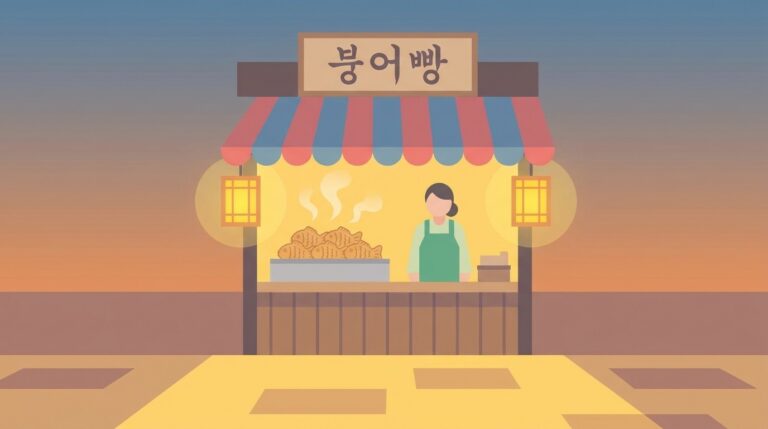
Picture this: It is a crisp, chilly evening in Seoul. You are walking through the buzzing alleyways of Euljiro, and the sweet, irresistible scent of golden bungeoppang (fish-shaped pastry stuffed with warm red bean) stops you in your tracks. Your mouth waters. You step up to the small street cart, watch the steam swirl into the night air, and order three pastries. But when you pull out your shiny international Visa card, the friendly vendor taps an empty counter with a warm, apologetic smile.
Panic sets in! You scramble through your mental phrasebook, but textbook grammar freezes right on your tongue. How do you ask if they take cards, or tell your friend you don’t have cash? Korea is nearly 99% cashless, yet the most magical authentic food spots—cozy street carts, bustling flea markets, and late-night tent bars (pojangmacha)—still operate in the world of paper bills.
Based on feedback from hundreds of beginner students at Daily Hangul, mastering just two magic verbs—있어요 (isseoyo) and 없어요 (eopseoyo)—instantly dissolves this stress. By the end of this guide, you will navigate cash, cards, and everyday existence in Korean with effortless street confidence!
Phase 2: Top 3 Core Expressions Deep Dive
Let’s break down the three lifesaver phrases you will use constantly across Korea.
1. 현금 있어요? (Hyeongeum isseoyo?)
- Pronunciation: Hyeon-geum ee-sseo-yo? (Sounds like “hyun-gum” + “east-saw-yo?” with a gentle lift at the end)
- Meaning: Literal: “Does cash exist?” | Real Nuance: “Do you have cash?” or “Is there cash?”
- K-Culture Moment: In K-dramas, whenever friends grab a spontaneous late-night snack at a traditional cart, one character always turns to the other, patting their coat pockets, asking, “현금 있어요? (Hyeongeum isseoyo?)”
- Editor’s Insight: Notice there is no word for “you”! Korean naturally drops subjects. Simply stating the item followed by 있어요? asks if it exists in the situation or if someone has it.
- Situation Spectrum:
- Casual (Friends): 현금 있어? (Hyeongeum isseo?) ✅
- Polite/Everyday: 현금 있어요? (Hyeongeum isseoyo?) ✅
- Formal: 현금 있으십니까? (Hyeongeum isseusimnikka?) ⚠️ (A bit too stiff for a food cart!)
- 🤔 Think About It: English focuses on the owner (“Do you have it?”), whereas Korean focuses on whether the item exists in the shared space. How does this shift your perspective from personal ownership to shared reality?
2. 현금 없어요. (Hyeongeum eopseoyo.)
- Pronunciation: Hyeon-geum eop-seo-yo. (Sounds like “hyun-gum” + “up-saw-yo”, falling tone)
- Meaning: Literal: “Cash does not exist.” | Real Nuance: “I don’t have cash” or “There’s no cash.”
- K-Culture Moment: When a taxi driver’s card machine acts up or a vendor asks for bills, locals scratch their heads sheepishly and say, “어쩌죠, 현금 없어요… (Eojjeojyo, hyeongeum eopseoyo… – What should I do, I have no cash…)”
- Editor’s Insight: 없어요 (eopseoyo) is the opposite of 있어요 (isseoyo). It’s a complete word on its own. You don’t need a negative helper word like “don’t” or “not”!
- Situation Spectrum:
- Casual (Friends): 현금 없어. (Hyeongeum eopseo.) ✅
- Polite/Everyday: 현금 없어요. (Hyeongeum eopseoyo.) ✅
- Formal: 현금 없습니다. (Hyeongeum eopseumnida.) ✅
- 🤔 Think About It: In English, you combine “have” + “no” or “do not have”. In Korean, non-existence has its own standalone verb. Doesn’t that make sentence construction so much faster?
3. 카드 돼요? (Kadeu dwaeyo?)
- Pronunciation: Kah-deu dwae-yo? (“Card” + “dway-yo?”)
- Meaning: Literal: “Does card work / become?” | Real Nuance: “Do you take card?” / “Can I pay with card?”
- K-Culture Moment: Seen at boutique shops, pop-up stores in Seongsu, or vintage markets where card acceptance varies.
- Editor’s Insight: 돼요? (dwaeyo?) comes from the verb 되다 (to work/be allowed). Paired with 카드 (kadeu), it is the ultimate smooth payment question.
- Situation Spectrum:
- Casual: 카드 돼? (Kadeu dwae?) ⚠️ (Only with close friends)
- Polite/Standard: 카드 돼요? (Kadeu dwaeyo?) ✅ (Perfect for 99% of shops)
- Formal: 카드 결제 되나요? (Kadeu gyeolje doenayo?) ✅
- 🤔 Think About It: Why ask “Is card possible?” rather than “Do you take cards?” Notice how Korean politely centers the transaction method rather than commanding or questioning the seller directly.
Phase 3: Textbook Korean vs. Real Korean
Let’s see how school books compare to vibrant street talk:
Situation 1: Asking if the shop accepts cash or cards
- 📖 교과서 한국어 (Textbook): 당신은 신용카드를 받습니까? (Dangsin-eun sin-yong-kadeu-reul batseumnikka? — “Do you receive credit cards?”)
- 🗣️ 진짜 한국어 (Real Street Korean): 카드 돼요? (Kadeu dwaeyo? — “Card okay?”)
- 💡 왜 다를까? (Why the difference?): Using “당신 (dangsin – you)” in real life can sound confrontational or like a translated screenplay. Locals cut straight to the point without pronouns!
Situation 2: Telling someone you don’t have paper money
- 📖 교과서 한국어 (Textbook): 저는 현금을 소유하고 있지 않습니다. (Jeoneun hyeongeum-eul soyuhago itji anseumnida. — “I am not in possession of currency.”)
- 🗣️ 진짜 한국어 (Real Street Korean): 아, 현금이 없어요! (A, hyeongeum-i eopseoyo! — “Ah, no cash!”)
- 💡 왜 다를까? (Why the difference?): The grammar 소유하다 (to possess) is reserved for legal deeds or business contracts. For everyday life, 없어요 (eopseoyo) is king.
Phase 4: K-Culture Deep Dive & Non-Verbal Manners
4-1. Nunchi (눈치) & Gestures
- Two Hands Rule: When handing over cash or an old-fashioned physical card, always offer it with both hands, or support your right forearm with your left hand. Tossing bills on the counter with one hand is seen as dismissive.
- Reading the Signs (눈치): Look around the cart before asking. Most traditional vendors have a laminated paper stuck to the wall showing a bank account number and bank logo. That’s your visual clue that they accept local bank transfers (계좌이체) or cash only!
4-2. Culture Code: The 3,000 Won Rule
In Korea, winter is officially “Bungeoppang Season.” Locals share a common joke: “Always keep 3,000 won in cash inside your pocket during winter, because you never know when you will meet a bungeoppang stall.” While Korea is a global leader in contactless and mobile payments, street vendors, subway sock stalls, and neighborhood fortune-tellers remain charming cash-friendly sanctuaries.
Phase 5: Real-World Roleplay Scenario
Setting: A chilly street corner near Hongdae Station Exit 9. A warm street stall surrounded by happy customers chewing on spicy rice cakes (tteokbokki) and crispy fish cakes (eomuk).
NPC: Friendly cart owner (이모 – Imo, meaning “Auntie”).
- You: 떡볶이 1인분 주세요! (Tteokbokki il-inbun juseyo!)
🎭 Action: Smiling brightly and holding up one finger.
Translation: “One serving of tteokbokki, please!” -
Imo: 네, 맛있게 해줄게요! (Ne, mas-itge hae-julgeyo!)
🎭 Action: Scooping generous rice cakes into a bowl with a warm grin.
Translation: “Sure, I will make it delicious for you!” -
You: 저, 혹시 카드 돼요? (Jeo, hoksi kadeu dwaeyo?)
🎭 Action: Gently holding up your card with both hands.
Translation: “Excuse me, by any chance, is card okay?” -
Imo: 아유, 미안해요. 여긴 카드 기계가 없어요. (Ayu, mianhaeyo. Yeogin kadeu gigyega eopseoyo.)
🎭 Action: Shaking her head apologetically and wiping the counter.
Translation: “Oh dear, sorry. We don’t have a card machine here.” -
You: 아, 현금만 있어요? (A, hyeongeum-man isseoyo?)
🎭 Action: Opening your wallet to peek inside.
Translation: “Ah, only cash?” -
Imo: 응, 현금이나 계좌이체만 돼요! 현금 있어요? (Eung, hyeongeum-ina gyejwai-che-man dwaeyo! Hyeongeum isseoyo?)
🎭 Action: Pointing to the cardboard sign with an account number written in marker.
Translation: “Yes, only cash or bank transfer! Do you have cash?” -
You: 네, 현금 있어요! 여기요. (Ne, hyeongeum isseoyo! Yeogiyo.)
🎭 Action: Handing a crisp 5,000-won bill with both hands and a slight bow.
Translation: “Yes, I have cash! Here you go.” -
Imo: 고마워요, 잔돈 1,000원 줄게요! (Gomawoyo, jandon cheon-won julgeyo!)
🎭 Action: Handing back change with two hands and a warm smile.
Translation: “Thank you, here is 1,000 won in change!”
🔀 Interactive Decision Fork
Imagine you opened your wallet in turn 7, but only saw receipts and zero bills. What do you say?
- Choice A: “죄송해요, 현금 없어요! 근처에 편의점 있어요?” (Joesonghaeyo, hyeongeum eopseoyo! Geuncheo-e pyeon-uijeom isseoyo? – I’m sorry, I have no cash! Is there a convenience store nearby?)
- Outcome (BEST): Perfect! Convenience stores have ATMs where you can withdraw cash. The vendor will gladly keep your food warm while you run over.
- Choice B: “카드 안 돼요? 그냥 카드 받으세요!” (Kadeu an dwaeyo? Geunyang kadeu badeuseyo! – Card doesn’t work? Just take the card!)
- Outcome (BAD): Rude and culturally insensitive. Small vendors genuinely do not possess physical POS card terminals.
- Choice C: “돈 없어요, 그냥 갈게요.” (Don eopseoyo, geunyang galgeyo. – I have no money, I’ll just leave.)
- Outcome (RISKY): Blunt and awkward if she already scooped the food into the bowl.
Phase 6: 10-Second Emotion Shadowing Drill
Practice matching the cadence and emotional weight of native speakers. Slash marks (/) indicate natural breath pauses.
[😊 Friendly & Inquiring]
저기요, / 현금 있어요?
(Jeogiyo, / hyeongeum isseoyo?)-
[🥺 Apologetic & Soft]
죄송해요, / 지금 현금이 없어요.
(Joesonghaeyo, / jigeum hyeongeum-i eopseoyo.) -
[✨ Hopeful & Polite]
혹시 / 카드 결제 돼요?
(Hoksi / kadeu gyeolje dwaeyo?) -
[🙌 Relieved & Cheerful]
다행이다, / 만 원짜리 지폐 있어요!
(Dahaeng-ida, / man won-jjari jipye isseoyo!)
Phase 7: K-Culture Mini Dictionary
- 현금 (Hyeongeum) | Cash / Physical Bills
Essential word for traditional markets, street stalls, and subway card recharge machines. - 계좌이체 (Gyejwai-che) | Direct Bank Transfer
Korea’s favorite alternative payment. Locals with Korean banking apps simply wire the exact bill amount instantly by scanning a vendor’s QR code or typing their account number. - 붕어빵 (Bungeoppang) | Fish-shaped Sweet Pastry
The quintessential winter street snack filled with sweet red bean, custard cream, or sweet potato. - 영수증 (Yeongsujeung) | Receipt
You will hear clerks ask: “영수증 드릴까요? (Yeongsujeung deurilkkayo? – Would you like a receipt?)”
Phase 8: Traveler’s Survival Kit
Top 3 Survival Phrases
- 영수증 버려주세요. (Yeongsujeung beoryeo-juseyo.)
Romanization: Yeong-su-jeung beo-ryeo-ju-se-yo.
Pro Tip: Means “Please throw away the receipt.” Locals say this when they don’t need a paper slip. - ATM 어디 있어요? (ATM eodi isseoyo?)
Romanization: E-ti-em eo-di ee-sseo-yo?
Pro Tip: Use this at convenience stores or subway stations to locate the cash machine. - 잔돈 없어요. (Jandon eopseoyo.)
Romanization: Jan-don eop-seo-yo.
Pro Tip: Means “I don’t have small change.” Helpful if you only hold a 50,000-won bill.
Editor’s Travel Note
Before stepping out, ensure you set up your mobile travel utilities. If you need to pinpoint the closest cash dispenser or food market, open the Naver Map app download for foreign travelers. Major bank ATMs (like Shinhan, Hana, or KB) with a Global ATM label accept international cards (Visa, Mastercard, Plus). Keep a crisp 10,000-won or 5,000-won bill in your phone case as a backup!
Phase 9: “One Step Deeper” (Reflective Cultural Essay)
In English, we say “I have cash,” planting ourselves firmly as the master and owner of the object. But in the Korean worldview, 있어요 (isseoyo) describes presence and relational existence. When you say “현금 있어요?”, you are literally asking: “In this shared encounter of ours, does cash exist?” This subtle grammatical beauty softens self-assertion, elevating collective harmony. By stepping away from the Western “I vs. You” dichotomy, everyday Korean invites you to look at the world as an interconnected space where items and people simply exist together.
💬 Your Turn: Have you ever encountered a payment mix-up while traveling in Korea or watching a drama? Drop your story in the comments below!
Phase 10: FAQ & Common Mistakes
Q: Can I pay with Apple Pay or Google Pay at street stalls in Korea?
A: Generally, no. While Apple Pay is gradually expanding in big franchises (like convenience stores and Olive Young), street vendors and traditional stalls do not support NFC terminals. Always carry physical Korean won notes for market strolls.
Q: Does 있어요 only mean ‘to have’?
A: No! It means both “to have (possession)” and “to be located / to exist (location)”. For example, “친구 있어요 (Chingu isseoyo)” can mean “I have a friend,” while “화장실 어디 있어요? (Hwajangsil eodi isseoyo?)” means “Where is the restroom located?”
Q: What is the difference between 현금 (hyeongeum) and 돈 (don)?
A: 돈 (don) is the general word for money in all forms. 현금 (hyeongeum) specifically refers to cash (paper notes and coins). At a stall, both work, but 현금 is more precise when distinguishing from card payments.
🚨 Common Mistakes Alert
- Mistake: Saying “나는 현금 가지고 있어요” (I am holding cash).
Correct Action: Drop the pronoun and verbosity! Just say “현금 있어요 (Hyeongeum isseoyo)”. - Mistake: Adding “안 (not)” before 있어요, like “현금 안 있어요” ❌.
Correct Action: Korean has a dedicated verb for non-existence! Always use 없어요 (eopseoyo) ✅. - Mistake: Handing cash with one hand while looking away on your phone.
Correct Action: Make brief eye contact, bow slightly, and offer the bill with both hands.
Phase 11: Action Missions & Community Challenge
- 🥉 Bronze Mission (Solo Mastery): Stand in front of your mirror or check your wallet. Out loud, state whether cash exists: “현금 있어요!” or “현금 없어요!” with natural pronunciation.
- 🥈 Silver Mission (Social Sharing): Share this guide or post an Instagram story of your favorite Korean snack with the caption: “붕어빵 먹고 싶어요! 현금 있어요?” Tag @DailyHangul!
- 🥇 Gold Mission (Real-World Test): Next time you visit a Korean convenience store or local Korean restaurant, ask the clerk “영수증 있어요?” or “카드 돼요?” using two-handed etiquette.
- 🎮 K-Culture Mission: Watch an episode of a slice-of-life drama (like Reply 1988 or Hospital Playlist). Spot how many times characters say 있어? or 없어? in casual dialogue!
Phase 12: Interactive Quiz Challenge
Test your street-readiness before your next trip to Seoul!
Q1. Situational Judgment: You are ordering hot tteokbokki at Gwangjang Market. You want to ask politely if cards are accepted. What should you say?
* A) 현금 있어요?
* B) 카드 돼요?
* C) 카드 없어요.
Q2. Fill in the Blank: Fill in the correct opposite verb:
* 지갑(wallet)이 있어요? — 아니요, 지갑이 [ ].
Q3. Culture True or False: In Korea, giving bills to an elderly market vendor with one hand while holding your iced Americano in the other is considered good, relaxed street manners.
* True / False
👉 Click for Answers & Explanations
- A1: B) 카드 돼요? (Asking ‘Card okay?’ is the standard natural way to check for card acceptance.)
- A2: 없어요 (eopseoyo) (The opposite of 있어요 is always 없어요—never use ‘안 있어요’!).
- A3: False (Always use both hands or support your right forearm with your left hand when handing over money or cards to show respect!).
🎬 Watch Our Daily Videos! (Daily Hangul Official Instagram)
Review the expressions you learned in this article with our fun daily short videos! Check out native pronunciation and real-life nuances in action.
- Instagram @dailyhangul_en







