

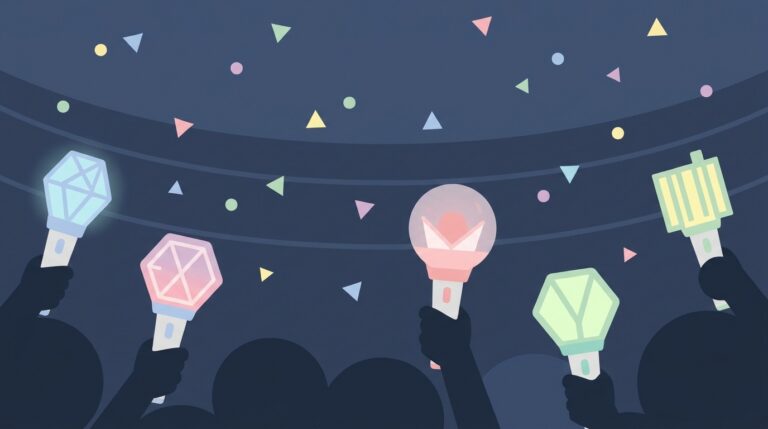
Speak Like a True K-Pop Fan: How to Cheer at Concerts Without Freezing Up
Phase 1: Empathy (Story Immersion Opening)
안녕하세요! 매일한글 에디터입니다. (Hello! This is your Daily Hangul editor.)
Picture this: You are standing inside the KSPO Dome in Seoul. The bass drops so hard your chest vibrates, silver confetti drifts from the ceiling, and your ultimate K-pop bias just crushed an impossible high note while executing pinpoint choreography. The arena is shaking. The Korean fan standing right beside you turns to you, eyes glowing with adrenaline, screaming in utter euphoria. You want to bond. You want to share this magical second. But your brain freezes. The only sentence coming to mind from your textbook is: “공연이 대단히 인상적이었습니다” (The performance was remarkably impressive). You sound like a university professor grading a thesis instead of a hyped fan at a live concert!
Don’t worry—almost every international fan experiences this exact moment of cultural freeze. That is why we built this survival guide based on real feedback from global K-pop lovers attending music shows like Inkigayo and world tour stadium stops in Seoul. By the end of this quick lesson, you will react naturally, passionately, and effortlessly in real-time concert Korean.
Phase 2: Core Expressions (핵심 표현 3선)
1. 오늘 무대 완전 찢었다! (Oneul mudae wanjeon jjijeotda!)
- Pronunciation: [Oh-neul moo-dae wahn-jeon jee-jut-dah] (Sound analogy: Think of wanjeon like “one-John”, and jjijeotda sounds punchy like “jee-jut-dah”)
- Meaning: Literal: “They completely ripped today’s stage!” | Actual Nuance: “They totally tore up the stage today! / They absolutely slayed!”
- K-Culture Moment: Used by fans immediately after an energetic dance break, or by music show hosts and Twitter/X fandoms reviewing a comeback stage.
- Editor’s Insight: The verb 찢다 (to rip/tear) metaphorically expresses an energy so explosive that the physical stage could not hold it. In slang, it represents top-tier praise.
- Situation Spectrum: Casual ✅ | Semi-formal ⚠️ | Formal 🚫
- 🤔 Think About It: In English, we say “slayed” or “killed it,” using violent metaphors for greatness. Korean uses “ripped the stage.” Why do humans connect intense destruction with artistic perfection?
2. 진짜 대박이다! (Jinjja daebak-ida!)
- Pronunciation: [Jeen-jjah dae-bahk-ee-dah] (Sound analogy: Jinjja starts with a crisp ‘J’, and daebak sounds like “day-bahk”)
- Meaning: Literal: “This is real big jackpot!” | Actual Nuance: “This is totally insane! / Absolutely incredible!”
- K-Culture Moment: Spoken involuntarily when your idol appears in an unexpected outfit or performs a surprise encore track.
- Editor’s Insight: While 대박 (daebak) is a popular beginner word, adding 진짜 (jinjja – really/truly) deepens your sincerity from casual slang to heartfelt awe.
- Situation Spectrum: Casual ✅ | Semi-formal ✅ | Formal ⚠️
- 🤔 Think About It: “Daebak” originally referred to hitting a jackpot in gambling or ships carrying huge cargo. How does this reveal Korea’s dynamic history of dreaming big?
3. 라이브 미쳤다! (Ra-i-beu michyeotda!)
- Pronunciation: [Rah-ee-beu mee-chyut-dah] (Sound analogy: Ra-i-beu is Korean phonetics for “Live”, michyeotda sounds like “me-chut-dah”)
- Meaning: Literal: “The live has gone crazy!” | Actual Nuance: “Their live vocals are out of this world!”
- K-Culture Moment: Whispered in disbelief during raw, acoustic stages or unbacked mic moments on music shows.
- Editor’s Insight: 미쳤다 (to be crazy) is informal and carries intense punch. Paired with “live,” it proves you value real vocal skill, winning instant respect from Korean fans.
- Situation Spectrum: Casual ✅ | Semi-formal ⚠️ | Formal 🚫
- 🤔 Think About It: Is describing something brilliant as “insane” or “crazy” common in your language too?
Phase 3: Textbook Korean vs. Real Korean (교과서 한국어 vs 진짜 한국어)
Situation 1: Reacting right after a jaw-dropping dance performance
- 📖 교과서 한국어: 공연이 참 재미있었습니다. (Gong-yeoni cham jaemi-isseotseumnida. / The performance was very interesting.)
- 🗣️ 진짜 한국어: 오늘 무대 완전 찢었다! (Oneul mudae wanjeon jjijeotda! / They totally tore up the stage today!)
- 💡 왜 다를까? (Why is it different?): Textbook Korean emphasizes polite neutrality, which dampens excitement. Real concert Korean relies on punchy idioms that mirror the physical rush of live music.
Situation 2: Praising your favorite singer’s raw vocals
- 📖 교과서 한국어: 가수분이 노래를 매우 잘 부릅니다. (Gasubuni noraereul maeu jal bureumnida. / The singer sings songs very well.)
- 🗣️ 진짜 한국어: 성량 미쳤다, 소름 돋았어! (Seongnyang michyeotda, soreum dodasseo! / Their vocal volume is crazy, I got goosebumps!)
- 💡 왜 다를까? (Why is it different?): Native speakers talk about bodily reactions (goosebumps, crazy volume) rather than stiff, formal evaluations.
Phase 4: K-Culture Deep Dive & Non-verbal Manners
4-1. 눈치 (Nunchi) & Concert Etiquette
Korean concerts are famous for collective harmony. Good Nunchi (social intuition) means being loud at the right times, and considerate at all times:
* The Chest-Height Lightstick Rule: Never raise your 응원봉 (eung-won-bong / lightstick) above your shoulders. Raising it too high blocks the view of the person behind you.
* The Slogan Event Timing: Keep official paper slogans rolled up under your seat until the designated encore VCR cue. Holding it up early ruins the surprise planned for the artists!
* Water & Candy Sharing: Passing a throat lozenge or mini candy to the person seated next to you is the universal K-pop sign of friendship.
4-2. Cultural Code: The Magic of 사녹 (Sa-nok) and 떼창 (Tte-chang)
South Korean music shows feature 사녹 (sanok – pre-recordings) happening as early as 4:00 AM. Fans wait in freezing cold or blistering heat to give the artist explosive 3-minute screams. When fans chant every lyric together, it is called 떼창 (ttechang – collective singing). Idols often state that hearing ttechang gives them the adrenaline rush needed to deliver legendary stages.
Phase 5: Real-Life Roleplay Scenario (실전 롤플레이)
Setting: Outside KSPO Dome right as the house lights turn on after the final encore. Silver streamers carpet the floor.
Characters: You (excited global fan) & Minji (민지 – seasoned Korean concertgoer with a glowing lightstick).
- 민지: 헉… 오늘 진짜 장난 아니지 않았어요? (Heok… oneul jinjja jangnan aniji anatseoyo?)
🎭 Catching her breath, fanning her face with her concert ticket.
“OMG… wasn’t today completely insane?” -
You: 맞아요! 오늘 무대 완전 찢었어요! (Majayo! Oneul mudae wanjeon jjijeosseoyo!)
🎭 Clapping your hands together in excitement.
“Totally! They completely tore up the stage today!” -
민지: 인정! 특히 마지막 댄스 브레이크 보셨어요? (Injeong! Teukhi majimak daenseu beure-ikeu bosyeosseoyo?)
🎭 Nodding vigorously with wide eyes.
“Agreed! Especially that last dance break, did you see that?” -
You: 네! 라이브도 진짜 대박이었어요! (Ne! Ra-i-beu-do jinjja daebak-ieosseoyo!)
🎭 Holding your lightstick at your chest, shaking it gently.
“Yes! And their live vocals were totally amazing too!” -
민지: 목소리 안 쉬었어요? 응원 소리 진짜 크시던데요! (Moksori an swieosseoyo? Eung-won sori jinjja keusideondeyo!)
🎭 Smiling warmly and offering you a mint.
“Isn’t your throat sore? Your cheering was so loud and awesome!” -
You: 감사합니다! 응원법 열심히 외웠어요. (Gamsahamnida! Eung-won-beop yeolsimhi oewosseoyo.)
🎭 Accepting the candy politely with both hands.
“Thank you! I memorized the fan chants really hard.” -
민지: 대단해요! 오늘 콘서트 같이 봐서 너무 좋았어요. (Daedanhaeyo! Oneul konseoteu gachi bwaseo neomu joasseoyo.)
🎭 Giving a cheerful thumbs-up.
“That’s amazing! I was so happy to watch today’s concert next to you.” -
You: 저도요! 오늘 진짜 최고였어요! (Jeodoyo! Oneul jinjja choegoyeosseoyo!)
🎭 Waving goodbye warmly.
“Me too! Today was truly the best!”
🔀 Interactive Choice Point
The encore just finished and Minji turns to you in tears of joy. What do you say?
* Option A: “오늘 무대 완전 찢었다! 대박!” (Oneul mudae wanjeon jjijeotda! Daebak!)
* Option B: “공연이 종료되었습니다. 안녕히 가세요.” (Gong-yeoni jongryodweeotseumnida. Annyeonghi gaseyo.)
* Option C: “조용히 해주세요, 귀가 아파요.” (Joyonghi hae-juseyo, gwiga apayo.)
- Option A Feedback [BEST]: Perfect! You match her emotion, validate the artist’s hard work, and use natural slang. Instant friendship unlocked!
- Option B Feedback [BAD]: Too stiff. You sound like a venue security guard reading an automated closing announcement.
- Option C Feedback [RISK]: Critical and harsh. It ruins the collective joy of the crowd and will make the atmosphere awkward.
Phase 6: 10-Second Emotion Shadowing Drill (10초 감정 섀도잉)
Practice these aloud! Pause at each / mark and embody the emotion:
[🔥 With high adrenaline]
오늘 무대 / 완전 찢었다!
(Oneul mudae / wanjeon jjijeotda!)-
[😲 With pure disbelief and awe]
와, / 라이브 / 진짜 대박이다!
(Wa, / ra-i-beu / jinjja daebak-ida!) -
[🥹 With heartfelt warmth and teary eyes]
오늘 공연 / 진짜 최고였어… / 감동이야.
(Oneul gong-yeon / jinjja choegoyeosseo… / gamdong-iya.)
Phase 7: K-Culture Mini Dictionary (미니 사전)
-
입덕 (Ip-deok)
Meaning: Becoming a fan of a group or person (entering the fandom).
Usage: “오늘 무대 보고 입덕했어!” (I fell into the fandom after watching today’s stage!) -
사녹 (Sa-nok)
Meaning: Abbreviation for 사전 녹화 (Pre-recording for music shows).
Usage: Early morning broadcasts where fans enter music studios via official fan club lotteries. -
응원법 (Eung-won-beop)
Meaning: Official fan chant written by agencies for fans to shout along to songs.
Usage: Shouted rhythmically between vocal lines during live stages. -
막콘 (Mak-kon)
Meaning: Abbreviation for 마지막 콘서트 (The final day of a concert tour).
Usage: Known for the longest encores and the most emotional tears.
Phase 8: Traveler’s Survival Kit (여행자를 위한 생존 키트)
Top 3 Survival Phrases
- 물품보관함 어디에 있어요? (Mulpum-bogwanham eodie isseoyo?)
“Where are the coin lockers?”
Pro Tip: Arenas fill up lockers hours before showtime. Ask venue staff early. - 응원봉 배터리 있어요? (Eung-won-bong baeteori isseoyo?)
“Do you sell lightstick batteries?”
Pro Tip: AAA batteries always sell out near stadiums. Buy them at convenience stores beforehand. - 사진 한 장만 찍어주실 수 있나요? (Sajin han jangman jjigeojusil su innayo?)
“Could you take one photo of me?”
Pro Tip: Ask fellow fans holding lightsticks—they will gladly take multiple great angles for you!
Editor’s Travel Note
- Essential App Download: Before heading to the concert hall, make sure to download the Naver Map navigation app. Google Maps often lags with Korean transit directions, but Naver Map shows real-time subway arrivals and stadium gate exits.
- Late Night Transit Tip: Major concerts in Seoul (KSPO Dome, Jamsil) end around 9:30–10:30 PM. Thousands will flood the nearest subway entrance. T-money transit cards or mobile payment cards save you 20 minutes of waiting in line at automated ticket machines!
Phase 9: “One Step Deeper” (한 발 더 깊이)
Korean concert spaces are not passive spectator events; they are collaborative rituals. In traditional Korean culture, the concept of 흥 (heung – spontaneous joy and communal rhythm) has brought communities together through song and dance for centuries. When you shout “오늘 무대 완전 찢었다!”, you aren’t just complimenting the artists on stage—you are validating the shared sweat, hours of cheering, and unified energy of everyone in the arena. You are an active creator of that unforgettable night.
💬 Your Turn: Who is your ultimate K-pop group, and which of their stages totally “ripped the stage” (찢었다)? Tell us in the comments below!
Phase 10: FAQ & Avoiding Misunderstandings (FAQ)
Q: Can I say “찢었다” (Jjijeotda) directly to an idol if I meet them at a fansign?
A: Yes, but add politeness! Say: “오늘 무대 완전 찢으셨어요!” (Oneul mudae wanjeon jjijeosyeosseoyo!). The infix “-시-” adds respect to your compliment.
Q: Is “대박” (Daebak) rude to say around older Korean people?
A: It is casual slang. While not offensive, using it with your boss or an elderly stranger can sound overly informal. Stick to peers, friends, or concert settings.
Q: What is the difference between “막콘” and “첫콘”?
A: 첫콘 (Cheot-kon) is the first day of the concert tour, full of surprises and first reveals. 막콘 (Mak-kon) is the final concert, famous for intense encores and emotional speeches.
🚨 Common Mistakes Alert
- Mistake: Shouting “당신 최고!” (Dangsin choego!).
Why: “당신” (you) can sound confrontational in spoken Korean.
Correct Action: Use the idol’s name or title instead: “오빠/언니/멤버이름 최고!” - Mistake: Raising lightsticks above head height during slow ballads.
Why: It blocks the stage for fans behind you and breaks the calm mood.
Correct Action: Sway gently with the lightstick kept at chest height. - Mistake: Using textbook formal language (“공연이 유익했습니다” – The concert was informative).
Why: Sounds like a lecture review rather than a fan reaction.
Correct Action: Keep it short: “진짜 최고였어요!” (It was truly the best!).
Phase 11: Action Mission & Engagement (액션 미션)
- 🥉 Bronze Level: Stand in front of the mirror, pump your fist, and say “오늘 무대 완전 찢었다!” 3 times with raw concert excitement.
- 🥈 Silver Level: Go to YouTube, search for your favorite idol’s recent live performance, and leave a Korean comment: “오늘 라이브 완전 찢었다! 대박!”
- 🥇 Gold Level: At your next K-pop concert or fan meetup, turn to a fellow fan and deliver one of our Phase 2 expressions with a warm smile.
🎮 K-Culture Mission: Watch any backstage music show video (such as behind-the-scenes clips on YouTube). Listen for the moment idols say “찢었다” or “수고하셨습니다” to their dancers and crew!
Phase 12: Interactive Quiz Challenge (인터랙티브 퀴즈)
Q1. Which expression means “They totally tore up the stage today!”?
① 오늘 밥 맛있었다!
② 오늘 무대 완전 찢었다!
③ 집에 가고 싶다!
Q2. Fill in the blank:
“와, 노래 너무 잘한다! 라이브 ______!” (Wow, they sing so well! Their live is crazy!)
[대박이다 / 미쳤다 / 재미있다]
Q3. True or False?
In a Korean concert, holding your lightstick high over your head is considered polite because it shows maximum passion for the artist.
[True / False]
👉 Click to view answers and explanations!
- Q1 Answer: ② 오늘 무대 완전 찢었다! (Expression ① means “Today’s meal was delicious!” and ③ means “I want to go home!”).
- Q2 Answer: 미쳤다 (Michyeotda). While “대박이다” also fits, “라이브 미쳤다” is the exact, natural native collocation for mind-blowing live vocals!
- Q3 Answer: False! Holding lightsticks above chest/shoulder height blocks the sightline of fans sitting behind you. Proper concert etiquette (Nunchi) means keeping lightsticks at chest level.
🎬 Watch Our Daily Videos! (Daily Hangul Official Instagram)
Review the expressions you learned in this article with our fun daily short videos! Check out native pronunciation and real-life nuances in action.
- Instagram @dailyhangul_en







