

Phase 1: Empathy & Immersion
안녕하세요! 매일한글 에디터입니다. (Hello! This is your Daily Hangul editor.)
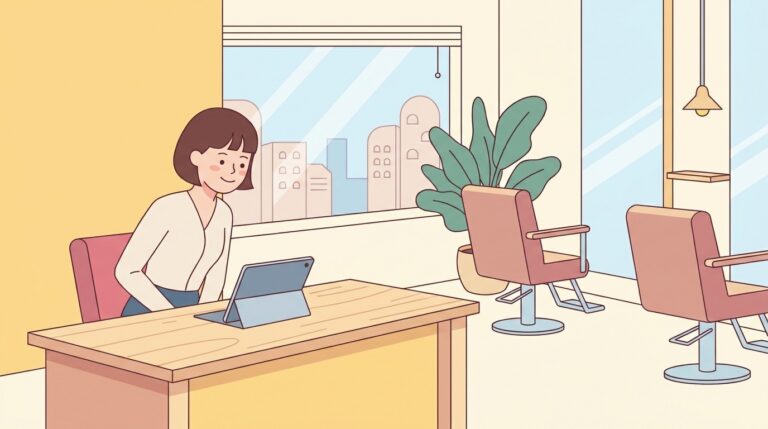
Picture this: You are walking down the vibrant, tree-lined streets of Hongdae or Seongsu on a breezy afternoon. Your hair has gotten a little unruly from your travels, and you decided it is finally time to experience that legendary Korean salon magic you’ve seen all over your social feed. You bravely navigated Naver Map earlier, tapped through the stylish stylist profiles, and booked an appointment for 3:00 PM.
You arrive at the sleek glass door of the salon. Upbeat K-indie music flows through the speakers, chic stylists are creating effortless glass-hair looks, and the receptionist looks up with a warm, welcoming smile: “어떻게 오셨어요? (Eotteoke osyeosseoyo? – How can I help you?)”
Suddenly, your mind goes blank. Your palms sweat as you frantically unlock your phone. Do you just thrust your screen in their face? Do you freeze up and stutter in English? Many of our Daily Hangul learners tell us that checking in at a Korean salon is one of their most nerve-wracking travel experiences. But here is the secret: salon check-ins in Korea follow a very predictable, friendly script. Mastering just one or two natural sentences will transform you from an overwhelmed tourist into a confident, savvy local who receives top-tier service. Let’s walk through the exact phrases and etiquette together!
Phase 2: Core Expressions Deep Dive
1. 네이버 예약으로 예약했어요 (Neibeo yeyageuro yeyakaesseoyo)
- Pronunciation: Nei-beo ye-yak-eu-ro ye-yak-hae-sseo-yo (Sounds like: Nay-ver yea-yahk-oo-ro yea-yahk-hae-ssuh-yo)
- Meaning: Literal: “I booked through Naver reservation.” | Nuance: “Hi! I already have a confirmed digital booking via Naver.”
- K-Culture Moment: You will hear this everywhere in modern Seoul—from trendy nail salons in Gangnam to pet groomers in Hannam-dong. In K-dramas, busy working leads casually say this while breezing past busy reception desks.
- Editor’s Insight: The particle -으로 (-euro) means “by means of” or “via.” Mentioning Naver immediately tells the receptionist where to search their iPad system without asking unnecessary questions.
- Situation Spectrum: Casual: 🚫 | Semi-formal (Polite): ✅ | Formal: ✅
- 🤔 Think About It: In your home country, do people mention the booking platform (like Yelp or Google) at check-in, or just say their name? Why is specifying the app so helpful in a hyper-digital society like South Korea?
2. 오늘 오후 3시 커트 예약이에요 (Oneul ohu sesi keoteu yeyagieyo)
- Pronunciation: Oh-neul oh-hoo seh-shee kuh-teu yea-yahg-ee-eh-yo (Rhymes with: Oh-neul oh-who say-she coat-eu yea-yahg-ee-eh-yo)
- Meaning: Literal: “It is a 3 PM haircut booking today.” | Nuance: “I am here for my 3:00 PM haircut appointment.”
- K-Culture Moment: The English loanword 커트 (keoteu) is used instead of pure Korean words for hair cutting. From variety shows to beauty vloggers, everyone refers to hair trims and styling as keoteu.
- Editor’s Insight: Notice how time comes first (오늘 오후 3시), followed by the service type (커트), and finished with the soft copula -이에요 (-ieyo). This gives the listener the critical reference points right away.
- Situation Spectrum: Casual: ⚠️ | Semi-formal (Polite): ✅ | Formal: ✅
- 🤔 Think About It: Notice that you don’t even need to say “I” (저는/제가). Korean naturally drops the subject when context is clear. How does omitting “I” change the feeling of a request?
3. [이름]으로 예약되어 있어요 ([Name]-euro yeyakdoe-eo isseoyo)
- Pronunciation: [Name]-oo-ro ye-yak-dweh-uh ee-ssuh-yo
- Meaning: Literal: “It is booked under [Name].” | Nuance: “The reservation is under the name [Name].”
- K-Culture Moment: Whenever a K-drama character arrives to pick up a reservation made by an assistant or friend, they use this passive phrasing to clarify the account holder’s identity.
- Editor’s Insight: 예약되어 있어요 (yeyakdoe-eo isseoyo) uses the passive form (-되어 있다), meaning “it stands reserved.” It sounds very polished and smooth for A2 learners!
- Situation Spectrum: Casual: 🚫 | Semi-formal (Polite): ✅ | Formal: ✅
- 🤔 Think About It: English speakers often say “I am under the name…” whereas Korean focuses on the status of the booking itself. What does this tell us about directness in Korean conversation?
Phase 3: Textbook Korean vs. Real-World Korean
Situation 1: Announcing your arrival at the reception desk
- 📖 Textbook Korean: 저는 오늘 오후 3시에 미용실 예약을 신청했습니다. (Jeoneun oneul ohu sesie miyongsil yeyageul sincheonghaesseumnida. – “I applied for a beauty salon reservation today at 3:00 PM.”)
- 🗣️ Real-World Korean: 저 네이버로 3시 예약하고 왔어요! (Jeo neibeoro sesi yeyakhago wasseoyo! – “I booked for 3:00 via Naver and just arrived!”)
- 💡 Why the difference? Textbook phrasing uses heavy, bureaucratic verbs like sincheonghada (to apply/register). Real speakers in Seoul use ~하고 왔어요 (I did [action] and came), which sounds warm, light, and natural.
Situation 2: Clarifying which stylist you booked
- 📖 Textbook Korean: 저의 담당 미용사 선생님은 누구이십니까? (Jeoui damdang miyongsa seonsaengnimeun nugu-isimnikka? – “Who is my assigned hairdresser teacher?”)
- 🗣️ Real-World Korean: 민지 디자이너님으로 예약했어요. (Minji dijaineonimeuro yeyakaesseoyo. – “I booked with Designer Minji.”)
- 💡 Why the difference? In modern Korean hair salons, hair artists are addressed with the trendy title 디자이너님 (dijaineo-nim) rather than the generic miyongsa. Adding -님 (-nim) is polite and respectful.
Phase 4: K-Culture Deep Dive & Non-Verbal Manners
4-1. Nunchi & Salon Etiquette
When you open the salon door, you will immediately hear a chorus of “어서오세요! (Eoseo oseyo! – Welcome!)” from the staff. Here is how to handle your first 30 seconds smoothly:
* Slight Bow (인사): Give a polite 15-degree head nod as you walk toward the counter.
* The Two-Handed Phone Display: Don’t shove your smartphone into the receptionist’s face. If they ask to verify your booking, hold your phone with both hands, tilt the screen comfortably toward them, and let them read your Naver confirmation screen.
* The Cloakroom Hand-off: Almost immediately, staff will offer to take your coat and heavy bag. They will place them in a personal locker and hand you a small locker key (often attached to a wristband) along with a stylish salon robe (가운 – gaun). Slip into the robe and keep your key safe!
4-2. Cultural Insight: The Digital Revolution of Korean Salons
In South Korea, Naver Reservation (네이버 예약) is king. Most salons in trendy districts like Cheongdam, Garosu-gil, and Mangwon offer discounts (often 10% to 20%) if you book through Naver and write a short review with a photo afterward. Furthermore, many salons have added a genius option called 조용한 시술 (joyonghan sisul – quiet treatment) in their booking memos, catering to introverts who prefer not to make small talk during their haircut. Korean beauty culture emphasizes both peak efficiency and hyper-personalized comfort!
Phase 5: Real-Life Roleplay Scenario
Setting: Atelier Bom, a trendy, sunlit hair salon in Yeonnam-dong. Alex arrives at the minimalist marble front desk.
Characters:
* 민지 (Minji): The friendly front-desk stylist wearing an apron with scissors.
* 알렉스 (Alex): A foreign traveler who booked a cut via Naver.
- 민지: 어서 오세요! 예약하고 오셨어요?
(Eoseo oseyo! Yeyakhago osyeosseoyo?)
“Welcome! Did you come with a reservation?”
🎭 Hands clasped neatly in front, smiling warmly. -
알렉스: 네, 네이버 예약으로 오늘 오후 3시 커트 예약했어요.
(Ne, Neibeo yeyageuro oneul ohu sesi keoteu yeyakaesseoyo.)
“Yes, I booked a 3 PM haircut today through Naver Reservation.”
🎭 Holds phone gently with both hands and offers a light nod. -
민지: 아, 네! 성함이 어떻게 되세요?
(A, ne! Seonghami eotteoke doeseyo?)
“Ah, wonderful! May I ask your name?”
🎭 Taps the salon iPad screen ready to search. -
알렉스: 알렉스로 예약되어 있어요.
(Alex-ro yeyakdoe-eo isseoyo.)
“It is booked under Alex.”
🎭 Shows the reservation details screen politely. -
민지: 네, 알렉스 님 확인되셨습니다! 짐이랑 외투 맡아드릴게요.
(Ne, Alex nim hwagindoesyeosseumnida! Jim-irang oetu mata-deurilgeyo.)
“Yes, confirmed, Alex-nim! I will take your bag and coat.”
🎭 Reaches out gracefully with two hands to receive the jacket. -
알렉스: 감사합니다. 여기 있어요.
(Gamsahamnida. Yeogi isseoyo.)
“Thank you. Here you go.”
🎭 Hands the coat over using both hands. -
민지: 가운 입으시고 이쪽 대기석에서 잠깐만 기다려 주세요!
(Gaun ibeusigo ijjok daegiseogeseo jamkkanman gidaryeo juseyo!)
“Please put on this robe and wait briefly in this seating area!”
🎭 Helps drape the robe and gestures toward comfortable lounge chairs. -
알렉스: 네, 알겠습니다!
(Ne, algesseumnida!)
“Yes, sounds good!”
🎭 Smiles and takes a seat in the waiting lounge.
🔀 Interactive Decision Point
Suppose Minji looks at the iPad and says: “어? 죄송한데 3시에 알렉스 님 이름이 안 보이네요… (Uh? I am sorry, but I don’t see the name Alex at 3 PM…)”
How should Alex respond?
- Option A: “아니요! 예약했어요! 이거 봐요! (Aniyo! Yeyakhaesseoyo! Igeo bwayo! – No! I booked! Look at this!)”
Feedback: 🚫 Risk! This sounds accusatory and blunt. Even if you are right, igeo bwayo feels like you are scolding the staff. - Option B: “제가 화면 보여드릴게요. 혹시 이 매장 맞나요? (Jega hwamyeon boyeodeurilgeyo. Hoksi i maejang mannayo? – Let me show you the screen. Is this the right salon location?)”
Feedback: 🌟 Best! Polite, super helpful, and checks if you accidentally booked a different branch (e.g., Hongdae Branch 1 vs. Branch 2, a very common tourist mistake!). - Option C: Silent panic, turning around to leave the salon.
Feedback: ⚠️ Bad. Don’t give up! Korean salons often have your English name transliterated into Hangul, or your phone number might just need checking.
Phase 6: 10-Second Emotion Shadowing Drill
Practice reading these out loud with rhythm pauses (/) and real emotions!
[😊 Bright and polite greeting]
안녕하세요! / 네이버 예약으로 / 오늘 3시 커트 예약했어요.
(Annyeonghaseyo! / Neibeo yeyageuro / oneul sesi keoteu yeyakaesseoyo.)
Check-in like a confident local customer! Pause slightly after “네이버 예약으로”.-
[🙋 Clear and helpful]
제 이름은 알렉스고요, / [이름]으로 / 예약되어 있어요.
(Je ireumeun Alex-goyo, / [Name]-euro / yeyakdoe-eo isseoyo.)
Smoothly connect your name with the polite particle. -
[🥺 Inquiring gently]
혹시 / 조금 일찍 왔는데 / 지금 바로 가능할까요?
(Hoksi / jogeum iljjik wanneunde / jigeum baro ganeunghalkkayo?)
“By any chance, I arrived a bit early; would it be possible to start now?” Soft and considerate tone.
Phase 7: K-Culture Mini Dictionary
- 네이버 예약 (Neibeo Yeyak) | Naver Reservation
Korea’s primary booking system integrated into search and maps. Used for beauty salons, medical clinics, pop-up stores, and fine dining. - 커트 (Keoteu) | Haircut
Derived from the English word “cut.” In Korea, it refers specifically to cutting and shaping hair (as opposed to 펌 / perm or 염색 / dyeing). - 디자이너 지명 (Dijaineo Jimyeong) | Stylist Designation / Request
Choosing a specific hair designer when booking. Top-ranking stylists (like 실장님 / Chief Stylist or 원장님 / Director) often carry higher service fees. - 가운 & 락커 (Gaun & Rakkeo) | Robe & Locker
Standard equipment at any Korean hair salon. You are given a silky robe to protect your clothes from stray hair and water during shampooing, and a private locker key.
Phase 8: Traveler’s Survival Kit
Top 3 Survival Expressions for the Salon Floor
- 샴푸 할 때 물 온도 괜찮으세요? (Sampu hal ttae mul ondo gwaenchaneuseyo?)
Meaning: Is the water temperature okay while shampooing?
Pro Tip: Answer with “네, 좋아요! (Ne, joayo! – Yes, it’s good!)” or “조금만 따뜻하게 해주세요 (Jogeumman ttatteuthage hae-juseyo – Please make it slightly warmer).” - 사진 보여드릴게요 (Sajin boyeodeurilgeyo)
Meaning: I will show you a photo (of the hairstyle I want).
Pro Tip: The ultimate lifesaver! Korean hair designers love visual references. Keep 2–3 photos saved on your phone. - 앞머리는 눈썹 가리게 잘라주세요 (Apmmeorineun nunsseop garige jallajuseyo)
Meaning: Please cut my bangs so they cover my eyebrows.
Pro Tip: Crucial for getting that trendy Korean curtain-bang or see-through bang look!
Editor’s Travel Note
- Essential App: Download the official Naver Map app on iOS and Android. While KakaoMap is also great, Naver Map directly holds your Naver Reservation confirmation tabs, making check-in foolproof!
- Deposit System (예약금): Many salons require a small deposit (typically 10,000 KRW to 20,000 KRW) via Naver Pay when booking. This deposit will automatically be deducted from your final bill at checkout.
- No Tipping: Tipping does not exist in Korean salons! The price on your receipt is the exact total you pay.
Phase 9: A Deeper Step (Cultural Reflection)
In South Korea, digital reservations are far more than just a convenience—they are a cultural manifestation of mutual consideration (배려 – baeryeo). Korea’s fast-paced society values efficiency, but respecting someone’s reserved time is taken very seriously. Showing up 5 to 10 minutes early with your digital reservation ready allows the salon to prepare your tools, warm towels, and tea service without delaying the next customer. By confirming your booking in polite Korean, you are participating in a quiet system of trust and professional respect.
💬 Your Turn: Have you ever visited a hair salon while traveling abroad? What made you most nervous about the language barrier? Drop your thoughts in the comments below!
Phase 10: FAQ & Common Mistakes
Q: Can I book on Naver Reservation if I don’t have a Korean phone number?
A: Yes! You can create an international Naver account using your foreign phone number. However, some salons require Korean domestic payment (Naver Pay) for upfront deposits. If you run into payment walls, look for salons labeled “현장 결제 (Hyeonjang gyeolje – Pay on-site)” or send them a DM on Instagram.
Q: What if I am running 5–10 minutes late?
A: Korean salons have tight schedules. Call or message them immediately with: “조금 늦을 것 같아요, 죄송합니다! (Jogeum neujeul geot gatayo, joesonghamnida! – I think I will be a little late, I am sorry!)”. If you are more than 15 minutes late, your slot may be automatically cancelled as a no-show.
Q: How do I tell them I just want a simple trim?
A: Say: “다듬기만 해주세요 (Dadeumgiman hae-juseyo – Please just tidy/trim it up).” This tells the stylist to preserve your current shape and only snip split ends.
🚨 Common Mistakes Warning Board
- Mistake 1: Calling the stylist “웨이터 (Waiter)” or “아줌마 (Ajumma)”
Correction: Never use these! Always address your stylist as 선생님 (Seonsaengnim) or 디자이너님 (Dijaineonim). - Mistake 2: Showing your reservation screen aggressively without speaking
Correction: Always say a friendly greeting (“안녕하세요!”) before offering your phone screen. Eye contact and a short sentence build instant goodwill. - Mistake 3: Forgetting to take off your glasses before shampooing
Correction: Stylists will ask you to remove your glasses before washing your hair. Place them in your robe pocket or the provided tray.
Phase 11: Action Missions
- 🥉 Bronze Mission (Solo Practice): Stand in front of your bathroom mirror. Hold up your phone and say: “네이버 예약으로 오늘 오후 3시 커트 예약했어요!” out loud 3 times without stumbling.
- 🥈 Silver Mission (Social Share): Share this phrase on your Instagram story or language journal, tagging @DailyHangul with your favorite K-drama hairstyle inspiration.
- 🥇 Gold Mission (Real-World Execution): Next time you visit Korea (or an authentic Korean-run salon in your city), check in exclusively using our Phase 2 phrases and report back how the receptionist reacted!
🎮 K-Culture Mission: Watch any episode of a salon-makeover show or beauty vlog on YouTube (search “한국 미용실 브이로그”). Listen for the moment the guest arrives at the desk and see if you can spot the words 예약 (booking) and 커트 (haircut)!
Phase 12: Interactive Quiz Challenge
Test your new Korean salon superpowers!
1. Situational Judgment:
You walk into the salon at 2:55 PM for your 3:00 PM appointment. The receptionist greets you with “어떻게 오셨어요?” Which response is the most natural and polite?
a) 커트 줘. (Keoteu jwo.)
b) 네이버 예약으로 3시 커트 예약하고 왔어요. (Neibeo yeyageuro sesi keoteu yeyakhago wasseoyo.)
c) 왜 물어보세요? (Wae mureoboseyo?)
2. Fill in the Blank:
Complete the sentence to say “It is booked under the name Sarah”:
사라 이름_____ 예약되어 있어요.
(Sarah ireum_____ yeyakdoe-eo isseoyo.)
3. True or False:
In South Korea, it is customary to leave a 15% cash tip on top of the haircut price.
(True / False)
👉 Click here to reveal answers and explanations!
- Answer: b
Explanation: Option (b) is the golden standard for polite, natural speech. Option (a) uses rude informal language (반말), and Option (c) means “Why are you asking?” -
Answer: 으로 (-euro)
Full Sentence: 사라 이름으로 예약되어 있어요. (Sarah ireum-euro yeyakdoe-eo isseoyo.)
Explanation: The particle 으로 shows specification/instrument (“under / by the name of”). -
Answer: False
Explanation: South Korea is a strictly non-tipping culture! Tipping at a salon is not expected and can even cause confusion at the register.
🎬 Watch Our Daily Videos! (Daily Hangul Official Instagram)
Review the expressions you learned in this article with our fun daily short videos! Check out native pronunciation and real-life nuances in action.
- Instagram @dailyhangul_en







