

Transition to a Multicultural Society: Unifying Fragmented Immigration Policy Under a Control Tower
Phase 1: 공감 (Story Immersion Opening)
안녕하세요! 매일한글 에디터입니다. (Hello! This is your Daily Hangul editor.)
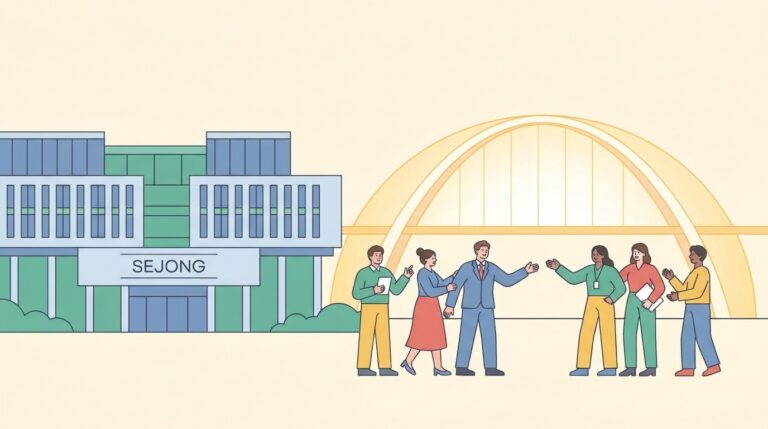
Picture this: You are sitting in a conference room in Sejong City, surrounded by policy researchers, civic leaders, and government directors. The debate is getting heated over South Korea’s demographic tipping point. Someone mentions that a foreign worker seeking visa extensions must deal with the Ministry of Justice, yet labor protections fall under the Ministry of Employment and Labor, and local settlement and family support are managed separately by the Ministry of Gender Equality and Family. You want to speak up. You want to articulate that without an integrated central “control tower,” Korea’s transition into a truly intercultural society will remain stalled by bureaucratic bottlenecks. But how do you say that in sophisticated, natural, C1-level Korean without sounding like you just fed an editorial through automated translation?
As a long-term resident or advanced professional in Korea, hitting this administrative ceiling is an all-too-common pain point. Navigating immigration offices (출입국관리사무소) is exhausting enough, but discussing structural governance reform requires an entirely different linguistic toolkit. Based on dozens of coaching sessions with international policy analysts, NGO directors, and foreign professionals living in Korea, we have tailored this guide to help you express nuanced, top-level arguments on immigration governance with authority and cultural resonance.
Phase 2: 핵심 표현 3선 심층 분석 (3 Core Expressions)
1. 총괄 컨트롤타워를 구축하다 (Chong-gwal keon-teu-rol-ta-wo-reul gu-chuk-ha-da)
- Pronunciation: [Chong-gwal keon-teu-rol-ta-wo-reul gu-chuk-ha-da] (Sounds like “chong-gwal” [clear chime] + “control tower” + “goo-chook-ha-da”)
- Meaning: Literal: To construct an overarching control tower. / Actual nuance: To establish a single, unified governing agency that centralizes multi-ministerial decisions.
- K-Culture Moment: You will hear this phrase constantly in current affairs roundtables on JTBC or KBS when anchors analyze state responses to demographic crises or public health governance.
- Editor’s Insight: Koreans love the loanword “컨트롤타워” in administrative and corporate contexts. Pairing it with the pure Sino-Korean verb “구축하다” (to construct/establish) elevates your speech to policy-level fluency.
- Situation Spectrum: Casual 🚫 | Semi-formal ⚠️ | Formal ✅
- 🤔 Think About It: In English, we often say “centralized body” or “lead agency.” Why does contemporary Korean public discourse borrow the vivid aviation metaphor of a “control tower” to represent bureaucratic authority?
2. 부처 간 칸막이 행정을 혁파하다 (Bu-cheo gan kan-mag-i haeng-jeong-eul hyeok-pa-ha-da)
- Pronunciation: [Bu-cheo-gan kan-ma-gi haeng-jeong-eul hyeok-pwa-ha-da] (Think of “kan-mak-ee” like a physical cubicle wall, and “hyeok-pa” with a decisive, crisp burst)
- Meaning: Literal: To break down the partition administration between ministries. / Actual nuance: To eliminate ministerial silos and bureaucratic red tape.
- K-Culture Moment: Featured prominently in political drama speeches (like Designated Survivor: 60 Days) when reforming obsolete institutional habits.
- Editor’s Insight: “칸막이” refers to room dividers or cubicles. “칸막이 행정” is the quintessential Korean term for “departmental silos.” Adding “혁파하다” (to overhaul/eradicate) turns a passive complaint into a commanding structural proposal.
- Situation Spectrum: Casual 🚫 | Semi-formal ⚠️ | Formal ✅
- 🤔 Think About It: How does the spatial metaphor of “partitions” (칸막이) reflect Korea’s densely organized office culture?
3. 일방적 동화를 넘어 상호문화주의로 나아가다 (Il-bang-jeok dong-hwa-reul neo-meo sang-ho-mun-hwa-ju-ui-ro na-a-ga-da)
- Pronunciation: [Il-bang-jeok dong-hwa-reul neo-meo sang-ho-moon-hwa-ju-ui-ro na-ah-gah-da] (Flow smoothly over “sang-ho”, holding a thoughtful cadence)
- Meaning: Literal: Moving beyond one-sided assimilation toward interculturalism. / Actual nuance: Rejecting policies that force migrants to erase their heritage, and instead advocating for mutual cultural adaptation.
- K-Culture Moment: Frequently cited in human rights seminars, NGO statements, and university lectures discussing Korea’s demographic transformation.
- Editor’s Insight: Note the distinction between “다문화주의” (multiculturalism—often treated in Korea as simple coexistence or assistance for foreign spouses) and “상호문화주의” (interculturalism—emphasizing interactive, reciprocal cultural growth).
- Situation Spectrum: Casual 🚫 | Semi-formal ✅ | Formal ✅
- 🤔 Think About It: Korean discourse often used “동화주의” (assimilation) historically. Reflect on how shifting from “assimilation” to “interculturalism” challenges the deep-rooted myth of ethnic homogeneity (단일민족).
Phase 3: 교과서 한국어 vs 진짜 한국어 (Textbook vs. Real Korean)
Situation 1: Pointing out policy fragmentation between ministries
- 📖 교과서 한국어: 여러 부서에서 외국인 정책을 따로 집행해서 비효율적입니다. (Yeo-reo bu-seo-e-seo oe-guk-in jeong-chaek-eul tta-ro jip-haeng-hae-seo bi-hyo-yul-jeok-im-ni-da.) — Because various departments execute foreigner policies separately, it is inefficient.
- 🗣️ 진짜 한국어: 지금처럼 부처 간 칸막이가 높은 상태에선 정책 간에 엇박자가 날 수밖에 없어요. (Ji-geum-cheo-reom bu-cheo gan kan-mag-i-ga nop-eun sang-tae-e-seon jeong-chaek gan-e eot-bak-ja-ga nal su-bak-e eop-seo-yo.) — With inter-ministerial silos as high as they are now, policies inevitably clash out of sync.
- 💡 왜 다를까?: Textbook phrasing relies on literal, dry terms like “비효율적” (inefficient). Native policy professionals prefer evocative idioms like “칸막이가 높다” (partitions are high) and musical metaphors like “엇박자가 나다” (fall out of sync / mistimed beat).
Situation 2: Suggesting centralized agency reform
- 📖 교과서 한국어: 이민 정책을 담당하는 통합 기구를 만들어야 합니다. (I-min jeong-chaek-eul dam-dang-ha-neun tong-hap gi-gu-reul man-deul-eo-ya ham-ni-da.) — We need to make an integrated agency in charge of immigration policy.
- 🗣️ 진짜 한국어: 컨트롤타워가 딱 중심을 잡고 비자부터 정주 여건까지 원스톱으로 교통정리를 해줘야 합니다. (Keon-teu-rol-ta-wo-ga ttak jung-sim-eul jap-go bi-ja-bu-teo jeong-ju yeo-geon-kkaji won-seu-top-eu-ro gyo-tong-jeong-ri-reul hae-jwo-ya ham-ni-da.) — The control tower must firmly take center stage and streamline everything from visas to settlement conditions like managing traffic.
- 💡 왜 다를까?: Real policy debates frequently utilize dynamic verbs like “중심을 잡다” (anchor the core) and urban metaphors like “교통정리를 하다” (sort out conflicting priorities / direct traffic).
Phase 4: K-Culture 딥다이브 & 비언어적 매너 (Deep Dive & Non-Verbal Manners)
4-1. 눈치 (Nunchi) & Administrative Body Language
When delivering structural critiques in Korean institutional environments, direct assertiveness can trigger bureaucratic defensiveness.
* Posture: Maintain an upright seated posture with both hands clasped lightly over your notes or placed calmly on the table. Avoid pointing fingers or sweeping arm gestures.
* Softening Prefaces (Cushion Language): Before proposing reforms, soften the intervention with phrases like “물론 각 부처의 고충도 충분히 이해합니다만…” (While we fully understand the constraints of each ministry…).
* Eye Contact: Alternate gentle eye contact between the lead speaker and other panel members, nodding subtly (끄덕임) during others’ remarks to establish consensus before speaking.
4-2. Cultural Code Analysis: The Transition Beyond “Danil-Minjok”
For decades, South Korea’s social solidarity leaned heavily on the narrative of 단일민족 (a single, homogenous ethnic family). However, with severe birthrate declines and labor shortages, public discourse has pivoted radically. In media representations—such as documentary specials on KBS or civic features in The Hankyoreh—the concept of 상호문화주의 (interculturalism) has replaced outdated “support-only” charity frameworks. Expressing this transition reveals that you understand modern Korean policy trends not merely as an outsider requiring a visa, but as an informed participant shaping Korea’s future demographic fabric.
Phase 5: 실전 롤플레이 시나리오 (Real-World Roleplay)
- Setting: An open public policy forum on immigration reform at the Government Complex Sejong.
- Characters:
- Alex (C1 Foreign Policy Fellow at a civic think tank)
- Director Han (Senior Director from the Ministry of Public Administration)
Turn 1: Alex
🎭 Leaning forward slightly, speaking with measured confidence
현재 한국의 이민 정책은 비자는 법무부, 노동은 노동부, 정착은 여가부로 파편화되어 있어 현장 혼선이 큽니다.
(Hyeon-jae Han-guk-ui i-min jeong-chaek-eun bi-ja-neun beop-mu-bu, no-dong-eun no-dong-bu, jeong-chak-eun yeo-ga-bu-ro pa-pyeon-hwa-doe-eo it-seo hyeon-jang hon-seon-i keum-ni-da.)
“Currently, Korea’s immigration policy is fragmented across Justice for visas, Labor for employment, and Gender Equality for settlement, causing massive operational confusion on the ground.”
Turn 2: Director Han
🎭 Nodding thoughtfully while taking notes
공감하는 부분입니다만, 부처마다 법적 근거와 정책 목적이 달라 통합이 쉽지 않은 현실도 있습니다.
(Gong-gam-ha-neun bu-bun-im-ni-da-man, bu-cheo-ma-da beop-jeok geun-geo-wa jeong-chaek mok-jeok-i dal-ra tong-hap-i swip-ji an-eun hyeon-sil-do it-seum-ni-da.)
“I empathize with that, but the reality is that each ministry operates under different legal mandates and policy goals, making integration complex.”
Turn 3: Alex
바로 그렇기 때문에 개별 정책을 조율할 총괄 컨트롤타워 구축이 시급합니다.
(Ba-ro geu-reoh-gi ttae-mun-e gae-byeol jeong-chaek-eul jo-yul-hal chong-gwal keon-teu-rol-ta-wo gu-chuk-i si-geup-ham-ni-da.)
“Precisely because of that, establishing an overarching control tower to harmonize individual policies is of the utmost urgency.”
Turn 4: Director Han
컨트롤타워가 들어서면 실질적인 변화를 체감할 수 있을까요?
(Keon-teu-rol-ta-wo-ga deul-eo-seo-myeon sil-jil-jeok-in byeon-hwa-reul che-gam-hal su it-seul-kka-yo?)
“If a control tower is introduced, would we truly feel tangible changes on the ground?”
Turn 5: Alex
물론입니다. 비자 발급부터 지역사회 정주까지 유기적으로 연결되면 행정 비용도 대폭 절감됩니다.
(Mul-ron-im-ni-da. Bi-ja bal-geup-bu-teo ji-yeok-sa-hoe jeong-ju-kkaji yu-gi-jeok-eu-ro yeon-gyeol-doe-myeon haeng-jeong bi-yong-do dae-pok jeol-gam-doem-ni-da.)
“Certainly. When everything from visa issuance to local community settlement is organically linked, administrative overhead will decrease significantly.”
Turn 6: Director Han
하지만 단순한 제도 통합을 넘어 국민적 공감대를 형성하는 것도 과제입니다.
(Ha-ji-man dan-sun-han je-do tong-hap-eul neo-meo gung-min-jeok gong-gam-dae-reul hyeong-seong-ha-neun geot-do gwa-je-im-ni-da.)
“However, beyond mere systemic unification, building national public consensus remains a major challenge.”
Turn 7: Alex
맞습니다. 그래서 일방적인 시혜성 지원이나 동화주의가 아닌, 상호문화주의적 관점으로의 패러다임 전환이 동반되어야 합니다.
(Mat-seum-ni-da. Geu-rae-seo il-bang-jeok-in si-hye-seong ji-won-i-na dong-hwa-ju-ui-ga a-nin, sang-ho-mun-hwa-ju-ui-jeok gwan-jeom-eu-ro-ui pae-reo-da-im jeon-hwan-i dong-ban-doe-eo-ya ham-ni-da.)
“Exactly. That is why this must be accompanied by a paradigm shift toward interculturalism, rather than unilateral paternalistic subsidies or assimilationism.”
Turn 8: Director Han
🎭 Looking visibly impressed, setting down the pen
아주 설득력 있는 지적이군요. 이번 정례 보고서에 반영하도록 검토하겠습니다.
(A-ju seol-deuk-ryeok it-neun ji-jeok-i-gun-yo. I-beon jeong-rye bo-go-seo-e ban-yeong-ha-do-rok geom-to-ha-get-seum-ni-da.)
“That is a very compelling point. I will review it for inclusion in our upcoming periodic policy report.”
🔀 인터랙티브 분기점 (Interactive Branching Decision)
When Director Han asks in Turn 6 about public sentiment (“국민적 공감대를 형성하는 것도 과제입니다”), how do you follow up?
- Choice A (Best): “맞습니다. 그래서 일방적인 시혜성 지원이나 동화주의가 아닌, 상호문화주의적 관점으로의 패러다임 전환이 동반되어야 합니다.” (Acknowledges institutional complexity while proposing an elevated conceptual vision: intercultural paradigm shift.)
- Choice B (Bad): “국민들이 반대해도 정부가 밀어붙여야죠. 다른 나라들은 다 그렇게 합니다.” (Dismisses public consensus completely; perceived as arrogant and oblivious to Korean democratic dynamics.)
- Choice C (Risk): “여론 조사를 해보면 다들 찬성할 테니 걱정할 필요 전혀 없습니다.” (Naive and unsubstantiated; overlooks genuine domestic debates over immigration in Korea.)
Phase 6: 10초 감정 섀도잉 드릴 (10-Second Emotional Shadowing Drill)
Practice these core sentences aloud. Pay attention to the pause markers (/) and adopt the indicated emotional mindset.
[💼 단호하고 확신에 차서]
파편화된 이민 정책을 하나로 묶어줄 / 총괄 컨트롤타워 구축이 / 시급합니다.
(Pa-pyeon-hwa-doen i-min jeong-chaek-eul ha-na-ro muk-eo-jul / chong-gwal keon-teu-rol-ta-wo gu-chuk-i / si-geup-ham-ni-da.)
“Unifying fragmented immigration policies under / an overarching control tower / is an urgent priority.”-
[🤔 깊은 문제의식을 담아 신중하게]
단순한 동화주의를 넘어 / 상호문화주의적 접근이 이루어져야 / 진정한 사회통합이 가능합니다.
(Dan-sun-han dong-hwa-ju-ui-reul neo-meo / sang-ho-mun-hwa-ju-ui-jeok jeop-geun-i i-ru-eo-jyeo-ya / jin-jeong-han sa-hoe-tong-hap-i ga-neung-ham-ni-da.)
“Only when we move beyond simple assimilation / toward an intercultural approach / can genuine social integration be achieved.” -
[🤝 정중하면서도 결단력 있게]
부처 간 칸막이를 걷어내고 / 비자와 정주 정책을 / 원스톱으로 연계해야 합니다.
(Bu-cheo gan kan-mag-i-reul geot-eo-nae-go / bi-ja-wa jeong-ju jeong-chaek-eul / won-seu-top-eu-ro yeon-gye-hae-ya ham-ni-da.)
“We must tear down ministerial silos / and organically link visa and settlement policies / into a one-stop system.”
Phase 7: K-Culture 미니 사전 (4 Key Terms)
- 이민청 (I-min-cheong) | Proposed Central Immigration Agency
- The recurring term in Korean politics referring to an independent immigration administrative agency (often discussed as 출입국·이민관리청) intended to serve as the unified control tower.
- 사회통합프로그램 (Sa-hoe-tong-hap-peu-ro-geu-raem – KIIP) | Korea Immigration & Integration Program
- Run by the Ministry of Justice, this standardized educational curriculum tests Korean language proficiency and societal understanding for permanent residency and citizenship.
- 정주 여건 (Jeong-ju yeo-geon) | Living & Settlement Conditions
- A vital policy term referring to housing, education, healthcare, and infrastructure required for migrants and foreign residents to settle down long-term rather than merely work short-term contracts.
- 시혜적 관점 (Si-hye-jeok gwan-jeom) | Paternalistic / Charity-based Perspective
- Frequently criticized in modern sociology; refers to viewing foreigners and multicultural families solely as recipients of state handouts rather than active civic contributors.
Phase 8: 여행자 & 체류자를 위한 생존 키트 (Survival Kit)
Top 3 Administrative Survival Phrases
- 관련 부처 간 협의가 진행 중인가요? (Gwan-ryeon bu-cheo gan hyeop-ui-ga jin-haeng jung-in-ga-yo?)
- Pro Tip: Ask this at immigration offices or civic desks when your visa or permit is stuck between differing departmental regulations.
- 사회통합프로그램 이수 내역이 전산으로 자동 연동되나요? (Sa-hoe-tong-hap-peu-ro-geu-raem i-su nae-yeok-i jeon-san-eu-ro ja-dong yeon-dong-doe-na-yo?)
- Pro Tip: Confirms whether your KIIP stage completion has synched across government portals without manual paperwork.
- 비자 연장과 정주 자격 심사는 원스톱으로 처리할 수 있습니까? (Bi-ja yeon-jang-gwa jeong-ju ja-gyeok sim-sa-neun won-seu-top-eu-ro cheo-ri-hal su it-seum-ni-kka?)
- Pro Tip: Use this formal question when exploring permanent residency (F-5) or long-term residency (F-2) channels.
Editor’s Expat Note
If you are dealing with multi-ministry administration in Korea, do not rely on phone calls alone. Bookmark the [HiKorea Official Online Reservation Portal] for immigration and visa procedures, and check the [Government24 Central Administrative Portal] for residency verification certificates. Save digital copies of all applications on your cloud storage, as local district offices (Gu-cheong) and immigration branches (Chul-ip-guk) do not always share real-time databases.
Phase 9: “한 발 더 깊이” (Reflective Humanities Essay)
For generations, the bedrock of South Korean civic pride was rooted in 단일민족 (ethnic homogeneity), a concept that fostered resilience during post-war reconstruction but no longer fits the reality of a globalized, hyper-aging society. Today, true social sustainability demands moving away from “benevolent assimilation”—where foreigners are expected to blend in quietly without changing the host culture—and stepping into 상호문화주의 (interculturalism). In an intercultural society, difference is not an administrative burden to regulate, but a social asset that actively revitalizes the community. As Korea establishes its future immigration control tower, language itself is shifting from bureaucratic control to mutual coexistence.
💬 Your Turn: In your home country, is immigration handled by a single unified agency, or is it split across multiple departments like in Korea? Share your observations in the comments below!
Phase 10: FAQ & 흔한 실수 (FAQ & Common Mistakes)
Q: What is the difference between 다문화주의 (Damunhwajuui) and 상호문화주의 (Sanghomunhwajuui)?
A: While 다문화주의 (multiculturalism) often implies multiple cultures coexisting side-by-side (sometimes leading to cultural enclaves or passive tolerance), 상호문화주의 (interculturalism) emphasizes active dialogue, mutual interaction, and reciprocal transformation between the host society and immigrant communities.
Q: Why do Korean news outlets constantly refer to a “컨트롤타워” instead of a Korean word?
A: While pure Korean alternatives like 총괄 기구 (chong-gwal gi-gu) exist, 컨트롤타워 emphasizes operational speed, crisis response, and immediate executive decision-making. It has become an established buzzword in political and administrative reporting.
Q: When can I use the word “혁파하다” (hyeok-pa-ha-da)?
A: 혁파하다 carries significant gravitas. Use it when discussing outdated institutional systems, persistent bureaucratic evils, or rigid regulations. Avoid it in daily conversations with friends, as it will sound like an election speech!
🚨 흔한 실수 (Common Mistakes) 경고판
- Mistake: Calling all foreign community support centers “외국인 복지관”.
- Correct Action: Differentiate between 출입국관리사무소 (Immigration Office), 가족센터 (Family Center, formerly Multicultural Family Support Center), and 외국인근로자지원센터 (Foreign Worker Support Center).
- Mistake: Using “동화” (assimilation) positively when advocating for immigrant dignity.
- Correct Action: Use 사회통합 (social integration) or 상호문화적 공존 (intercultural coexistence). In contemporary discourse, 동화 carries the negative overtone of forced cultural erasure.
- Mistake: Saying “다문화 사람” (multicultural person).
- Correct Action: Say 이주민 (migrant), 외국인 주민 (foreign resident), or 다문화가정 구성원 (member of a multicultural family). Calling an individual a “다문화” is considered grammatically incorrect and culturally insensitive.
Phase 11: 액션 미션 & 참여 유도 (Action Missions)
- 🥉 Bronze Mission (Solo): Read the Phase 6 Shadowing Sentences aloud 3 times, checking your intonation using the pause slashes (
/). - 🥈 Silver Mission (Community): Write a 2-sentence comment below using the phrase “부처 간 칸막이” or “총괄 컨트롤타워” to describe an administrative issue in your own country.
- 🥇 Gold Mission (Real Life): Next time you read a Korean newspaper article or watch an Arirang / KBS current affairs debate, take note of how many times terms like 이민청 or 인구절벽 (demographic cliff) appear, and summarize the panel’s stance using today’s expressions.
- 🎮 K-Culture Mission: Watch an episode of a Korean legal/political drama (e.g., Stranger or Queenmaker) and look for moments where officials discuss inter-agency friction (기싸움 or 관할 다툼).
Phase 12: 인터랙티브 퀴즈 챌린지 (Interactive Quiz Challenge)
Test your mastery of C1 administrative and intercultural Korean!
1. 상황 판단 (Context Assessment)
You are speaking at a civil society symposium on immigrant rights. Which sentence is the most professional and forward-thinking?
* (1) 외국인은 한국 문화를 무조건 따라야 사회가 안정됩니다.
* (2) 각 부처 간 칸막이 행정을 혁파하고, 일방적 동화주의를 넘어 상호문화주의로 나아가야 합니다.
* (3) 여가부와 법무부가 싸우지 말고 그냥 친하게 지내면 문제가 해결됩니다.
🔍 정답과 해설 확인하기 (Click for Answer)
정답: (2)
* 해설: (2) is sophisticated, accurate C1 policy Korean. (1) promotes obsolete unilateral assimilation (일방적 동화). (3) uses childish phrasing (싸우지 말고 친하게 지내면) that destroys credibility in a formal setting.
2. 빈칸 채우기 (Fill in the Blank)
비자 발급, 노동 허가, 정주 지원 등이 여러 기관에 흩어져 있는 상태를 가리켜 정책이 ( )되어 있다고 표현합니다.
* Hint: Starts with “파” (fragmented).
🔍 정답과 해설 확인하기 (Click for Answer)
정답: 파편화 (파편화되어 있다 / pa-pyeon-hwa-doe-eo it-da)
* 해설: “파편화” means fragmentation. When administrative duties are split into disorganized shards across various ministries, we say 정책이 파편화되어 있다.
3. True / False 문화 퀴즈
In modern South Korean policy discourse, the term “동화주의” (assimilationism) is universally praised as the ideal goal for future social unity.
🔍 정답과 해설 확인하기 (Click for Answer)
정답: False
* 해설: Today, 동화주의 is recognized as a one-directional demand for immigrants to surrender their roots. Progressive demographic and governance discourse actively promotes 상호문화주의 (interculturalism) and 사회통합 (social integration) instead.
🎬 Watch Our Daily Videos! (Daily Hangul Official Instagram)
Review the expressions you learned in this article with our fun daily short videos! Check out native pronunciation and real-life nuances in action.
- Instagram @dailyhangul_en






